The Elena Necklace: Technical Deep Dive & Styling Guide
Explore the anatomy of the Elena necklace. We break down bezel settings, chain gauges, clasp mechanics, and material grades for this iconic pendant.

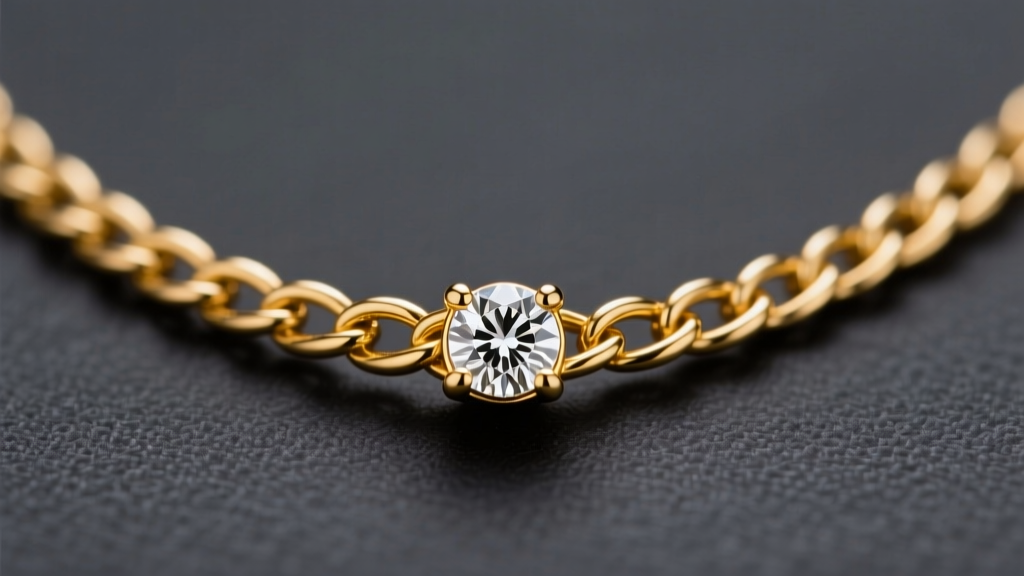
Defining the Elena Necklace Archetype
In the lexicon of contemporary fine jewelry, the term 'elena necklace' has evolved from a specific designer's signature piece into a widely recognized industry archetype. As we navigate the 2026 jewelry market, the Elena style is defined by a highly specific triad of components: a low-profile bezel-set solitaire gemstone (typically 3mm to 5mm), a hidden micro-jump ring bail, and a delicate micro-cable chain. Unlike traditional prong-set pendants that elevate the stone, the Elena design prioritizes a flush, skin-skimming silhouette that maximizes everyday wearability while minimizing snagging. However, the simplicity of its design belies the complex metallurgical and gemological engineering required to execute it properly. This technical deep dive explores the exact specifications, material tolerances, and structural failure modes of the authentic Elena necklace, providing a definitive guide for collectors, jewelers, and informed buyers.
Metallurgy and Chain Specifications
The structural integrity of an Elena necklace relies entirely on the tensile strength of its micro-cable chain. Because the aesthetic demands a delicate profile, chain widths are strictly constrained between 0.8mm and 1.1mm. At these dimensions, the choice of alloy is not merely an aesthetic preference; it is a mechanical necessity.
According to Stuller Manufacturing Standards, the Vickers hardness (HV) of the chosen metal dictates the chain's resistance to stretching and work-hardening. 14k gold (58.5% pure gold) remains the industry standard for the micro-cable chains used in Elena necklaces due to its optimal balance of malleability and tensile strength. Conversely, 18k gold (75% pure gold) offers a richer, warmer hue but is inherently softer, making 0.9mm 18k chains highly susceptible to permanent deformation if subjected to sudden tensile shock (e.g., a child pulling the chain).
Material Grade Comparison for Micro-Cable Chains
| Material | Purity | Vickers Hardness (HV) | Recommended Wire Gauge | Tensile Risk Profile |
|---|---|---|---|---|
| 14k Yellow Gold | 58.5% | 130 - 145 | 20ga - 22ga | Low (Ideal for daily wear) |
| 18k Yellow Gold | 75.0% | 110 - 125 | 18ga - 20ga | Moderate (Prone to stretching) |
| Platinum 950 | 95.0% | 115 - 130 | 20ga - 22ga | Low (High density, work-hardens) |
| Sterling Silver | 92.5% | 65 - 80 | 18ga | High (Oxidation and snap risk) |
For buyers seeking the authentic Elena look in platinum, jewelers must utilize a slightly thicker 20-gauge wire to compensate for platinum's unique 'galling' properties and density, ensuring the chain does not become overly heavy or rigid.
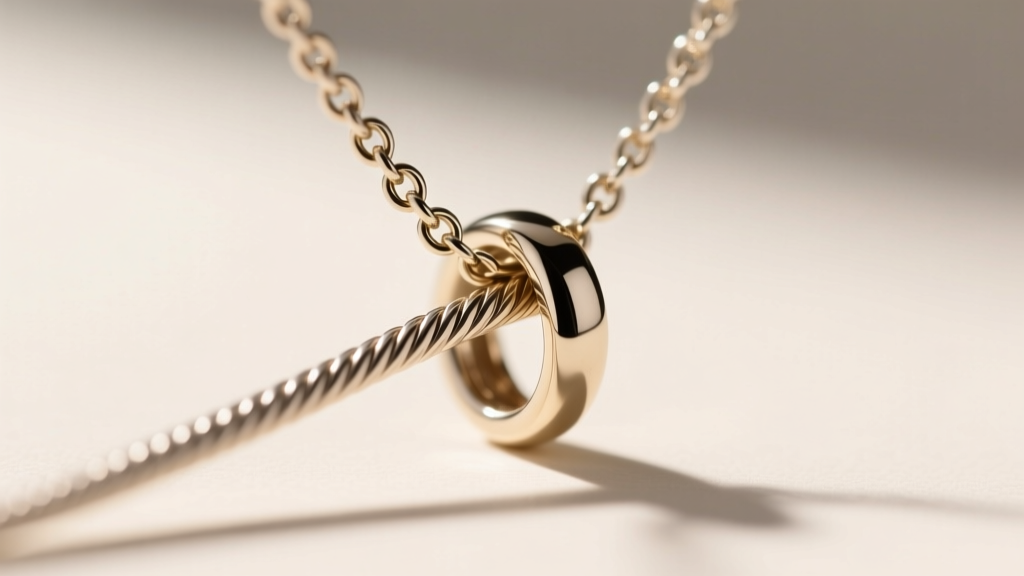
The Bezel Setting: Tolerances and Light Performance
The defining visual characteristic of the Elena necklace is its bezel setting. Unlike prong settings that allow light to enter the pavilion of a diamond from multiple angles, a bezel encircles the girdle in a continuous metal ribbon. This presents a significant gemological challenge: maximizing light return (scintillation and brilliance) despite the metal obstruction.
The Gemological Institute of America (GIA) notes that the wall thickness of a bezel directly impacts a stone's optical performance. In mass-produced, lower-tier Elena-style pendants, manufacturers often use a bezel wall thickness of 0.8mm to 1.0mm to reduce casting failures and speed up production. However, this creates a 'dead zone' around the perimeter of the diamond, severely limiting edge-to-edge brilliance.
A masterfully crafted Elena pendant utilizes a wall thickness of precisely 0.4mm to 0.5mm. Achieving this tolerance requires the jeweler to cast a slightly thicker cup and then carefully bur down the interior wall before burnishing the metal over the stone's girdle. Furthermore, the interior of the bezel cup must be highly polished or rhodium-plated (in white gold variations) to act as a secondary reflector, bouncing light back through the crown of the diamond. If the interior is left matte or rough from the casting process, the stone will appear dull and lifeless, regardless of its inherent cut grade.
Clasp Mechanics and Structural Failure Modes
The most common point of catastrophic failure in any fine chain necklace is the clasp assembly and the bail connection. The Elena necklace utilizes a hidden bail system to maintain the illusion that the bezel-set stone is floating directly on the chain. This is achieved via a micro-jump ring, typically measuring 1.5mm in outer diameter and crafted from 18-gauge wire.
Industry data published by JCK Industry Reports indicates that over 60% of fine chain repairs are related to jump ring separation or clasp spring fatigue, rather than the chain links themselves snapping.
To mitigate this, high-end Elena necklaces employ laser-welded jump rings rather than traditional soldered ones. Laser welding allows for a pinpoint fusion of the metal without annealing (softening) the surrounding work-hardened chain links. Additionally, the clasp itself must be carefully selected. While spring-ring clasps are traditional for delicate chains, they suffer from internal spring fatigue over time, eventually failing to close completely. A miniature lobster clasp (often custom-cast at 5mm x 2mm) provides a vastly superior mechanical lock, utilizing a thicker internal spring and a wider jaw that prevents the chain from slipping out during the opening and closing motion.

Layering Frameworks: Gauge and Length Differentials
The Elena necklace is a cornerstone of the modern layered necklace trend. However, successful layering requires strict adherence to gauge and length differentials to prevent chain entanglement—a phenomenon where chains of identical weight and weave twist around one another, causing micro-abrasions on the gold links.
- The 15-inch Choker Base: Begin with a 15-inch chain featuring a heavier, wider weave, such as a 1.5mm rolo or wheat chain. The structural rigidity of the wheat weave anchors the layered look and prevents the lighter chains from shifting laterally.
- The 16-inch Elena Anchor: The standard 16-inch Elena necklace (featuring the 0.9mm micro-cable and bezel pendant) sits perfectly in the hollow of the clavicle. The smooth, rounded profile of the micro-cable chain allows it to glide over the heavier base chain without catching.
- The 18-inch Textural Drop: Conclude the layer with an 18-inch chain featuring a completely different texture, such as a flat-cable or snake chain, terminating in a simple gold geometric drop or a larger, 7mm bezel-set gemstone. The 2-inch length differential ensures the pendants never collide and scratch one another.
Care, Maintenance, and Troubleshooting
Maintaining the pristine condition of an Elena necklace requires an understanding of its specific vulnerabilities. The flush nature of the bezel setting means that skin oils, lotions, and microscopic debris easily accumulate in the microscopic seam where the metal meets the diamond's girdle. While ultrasonic cleaners are generally safe for solid diamond bezel settings, they can be catastrophic if the diamond has been fracture-filled or if the pendant features secondary accent stones set with adhesive.
For routine maintenance, use a soft-bristled infant toothbrush and a solution of warm water with a single drop of degreasing dish soap. Gently agitate the bristles against the back of the bezel cup (the pavilion side) to dislodge sebum buildup. Never use silver dip or harsh chemical abrasives on the chain, as these chemicals can strip the alloyed metals from the surface of 14k and 18k gold, leaving behind a porous, brittle layer of pure gold that will rapidly work-harden and snap.
If your Elena necklace chain develops a kink—a common occurrence when micro-cable chains are stored loosely in a jewelry box—do not attempt to pull it taut. Lay the chain flat on a glass surface, apply a microscopic drop of sewing machine oil to the kinked link to reduce friction, and use two pairs of fine-tipped titanium tweezers to gently massage the link back into its planar alignment. By respecting the precise engineering and metallurgical limits of the Elena necklace archetype, wearers can ensure this iconic piece remains a staple of their fine jewelry collection for decades.


