Elsa Peretti Scorpion Necklace: Material & Authenticity Guide
An expert material analysis of the Elsa Peretti scorpion necklace, covering authentic alloys, weight metrics, and how to spot sophisticated fakes.

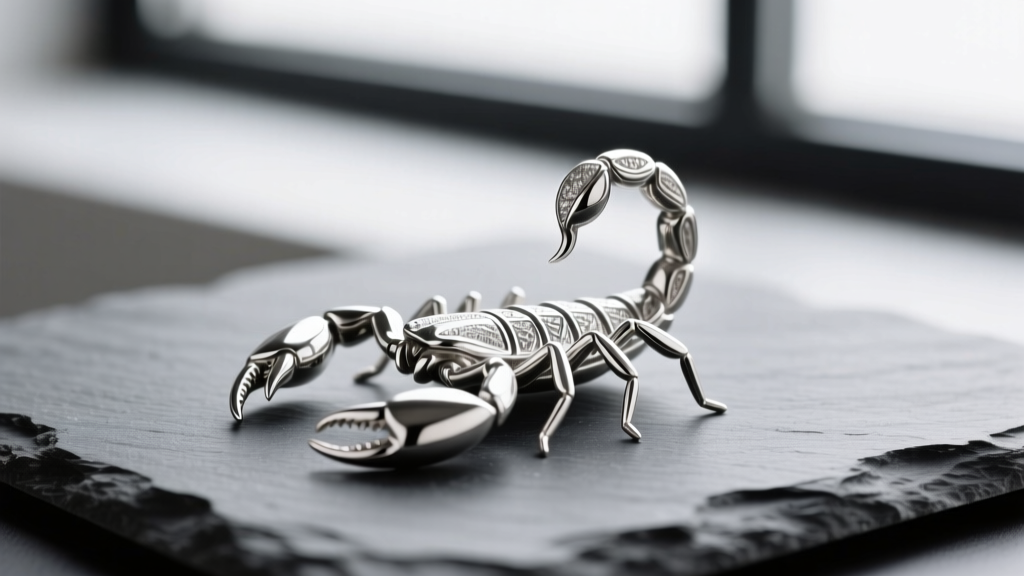
The secondary vintage jewelry market has seen a massive resurgence in interest regarding iconic 1970s designs, and few pieces command as much attention—or attract as many sophisticated counterfeits—as the Elsa Peretti scorpion necklace. Originally designed for Tiffany & Co. in 1976, the scorpion motif captures Peretti’s signature blend of organic fluidity and dangerous elegance. However, as the pendant's valuation continues to climb, the market has been flooded with high-quality reproductions that mimic the visual aesthetic but fail entirely on a metallurgical level.
For serious collectors and vintage jewelry enthusiasts, understanding the material properties, specific gravity, and casting techniques of the authentic Elsa Peretti scorpion necklace is no longer optional; it is a necessity. This guide provides a deep-dive material comparison to help you authenticate, evaluate, and preserve these wearable sculptures.
The Metallurgical Blueprint: Authentic Alloys
Elsa Peretti’s early collaborations with Tiffany & Co. revolutionized the industry by elevating sterling silver to the status of high jewelry. The original scorpion pendants were primarily produced in two distinct materials: 925 sterling silver and 18k yellow gold. Both materials were cast using the traditional lost-wax method, resulting in a specific surface porosity and hand-finished texture that modern CAD/CAM milled fakes simply cannot replicate.
The 925 Sterling Silver Standard and Patina
Authentic silver iterations are struck in standard .925 sterling, an alloy consisting of 92.5% pure silver and 7.5% copper. The copper is essential for structural integrity, as pure silver is too malleable to hold the intricate details of the scorpion’s pincers and segmented tail. Over decades, the copper content reacts with sulfur in the environment, creating a natural, uneven patina. On an authentic vintage piece, you will notice darker oxidation pooling in the recessed crevices of the legs and underbelly, while the high-polish ridges remain bright from skin contact.
Many modern counterfeits attempt to replicate the 'vintage' look by applying a uniform, chemically induced blackening agent, or conversely, they plate the base metal in rhodium to prevent tarnishing altogether. A vintage silver scorpion that shows zero micro-scratches and lacks recessed oxidation is an immediate red flag.
18k Yellow Gold: Weight and Alloy Composition
The gold variants of the Elsa Peretti scorpion necklace are cast in 18k (750) yellow gold. Tiffany’s specific alloy recipe from the 1970s and 1980s utilized a precise ratio of copper and silver alongside the pure gold, yielding a rich, buttery, and deeply saturated yellow hue. Counterfeit gold pieces are frequently made from 14k gold (which appears noticeably paler and more brassy) or, more commonly, base brass that has been heavily gold-plated. The plating on fakes often wears thin at the bail (the loop where the chain attaches) and the high-friction edges of the tail, revealing the dull gray or yellowish base metal beneath.
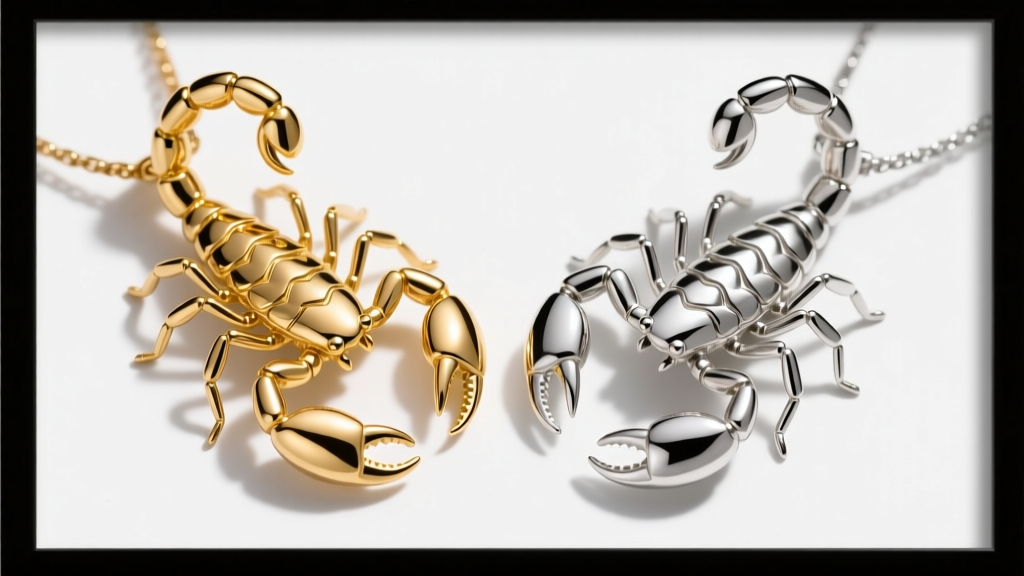
Material Comparison: Authentic vs. Counterfeit
To systematically evaluate a potential acquisition, gemologists and vintage dealers rely on a matrix of physical and visual properties. The following table breaks down the critical material differences between authentic Tiffany & Co. productions and the most common market fakes.
| Property | Authentic Sterling Silver | Authentic 18k Gold | Common Counterfeit (Base Metal) |
|---|---|---|---|
| Average Pendant Weight | 14.5g – 18.2g | 22.0g – 26.5g | 6.0g – 9.5g (Hollow cast) |
| Specific Gravity | ~10.36 g/cm³ | ~15.50 g/cm³ | ~8.40 g/cm³ (Brass/Zinc) |
| Magnetic Response | Diamagnetic (No pull) | Diamagnetic (No pull) | Weak pull (if steel core) |
| Surface Texture | Hand-finished, micro-porous | Hand-finished, micro-porous | Over-polished or pitted |
| Hallmark Depth | Deep, crisp, uniform stamp | Deep, crisp, uniform stamp | Shallow, laser-etched, blurred |
Structural Integrity and Failure Modes
Beyond the pendant itself, the material properties of the accompanying chain and clasp mechanisms are vital authentication markers. The original Elsa Peretti scorpion necklace was typically paired with a medium-weight Tiffany box chain or a fluid snake chain, both engineered to support the substantial weight of the solid cast pendant.
Stress Points and Bail Wear
Because the scorpion pendant is a dense, solid piece of metal, it exerts significant kinetic force on the bail when the wearer moves. On authentic pieces, the bail is cast as an integral part of the body or seamlessly soldered using high-temperature hard solder. In counterfeit versions, the bail is often a thin, hollow loop that is soft-soldered. Over time, the friction from the chain causes the counterfeit bail to thin out and eventually snap, a failure mode rarely seen in authentic vintage specimens unless they have been subjected to extreme trauma.
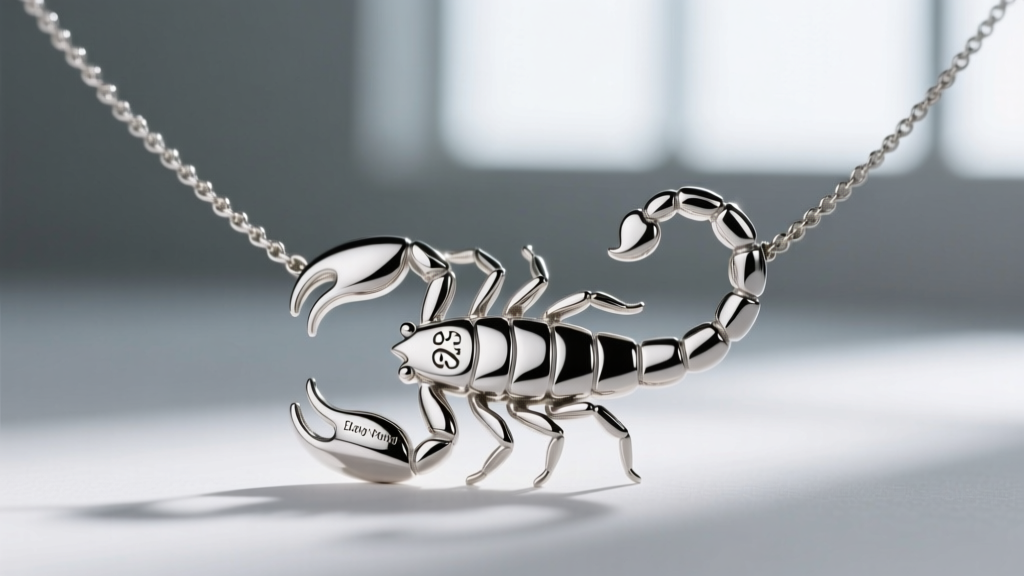
Clasp Mechanics and Stamping
Authentic vintage chains feature robust spring-ring or lobster clasps stamped with Tiffany & Co. and the metal purity mark. The internal spring mechanism in genuine Tiffany clasps is tensioned to provide a firm, snappy closure. Fakes often utilize mass-produced, lightweight clasps that feel mushy when depressed and feature shallow, poorly aligned laser engravings rather than deep metal stamps.
Advanced Authentication: Specific Gravity and XRF Testing
When visual inspection and weight metrics yield ambiguous results, professional jewelers turn to non-destructive material analysis. According to guidelines established by the Gemological Institute of America (GIA), specific gravity testing is one of the most reliable methods for identifying unmarked or suspiciously light precious metals.
- Hydrostatic Weighing: By weighing the pendant in the air and then suspended in distilled water, you can calculate its exact density. If the pendant claims to be solid sterling silver but yields a specific gravity of 8.4, it is definitively brass or a zinc alloy.
- X-Ray Fluorescence (XRF): For high-value 18k gold iterations, XRF spectrometry bombards the surface with X-rays to read the exact elemental emission signatures. This will instantly reveal if a piece is merely gold-plated over a copper-nickel core, a common deception in high-end fakes.
For a comprehensive look into the historical context of these designs, the Tiffany & Co. official archives provide extensive documentation on Peretti’s transition from fashion modeling to becoming one of the most influential jewelry designers of the 20th century, emphasizing her strict adherence to material quality.
Market Valuation Based on Material Condition
The valuation of an Elsa Peretti scorpion necklace in the current market is heavily dictated by its material, condition, and provenance. While auction houses like Sotheby's regularly handle high-jewelry archives, the everyday vintage market operates on specific material-based pricing tiers.
A sterling silver scorpion pendant in excellent condition, featuring original hallmarks, a natural patina, and accompanied by an authentic Tiffany box chain, typically commands between $1,400 and $2,800. If the silver has been aggressively machine-polished, stripping away the recessed oxidation and softening the crisp edges of the casting, the value can drop by up to 40%.
The 18k gold variants are exceptionally rare and highly sought after by serious collectors. Depending on the exact weight (which can vary slightly based on the production year and specific casting batch), gold iterations routinely fetch between $5,500 and $9,000 on the secondary market. However, buyers must exercise extreme caution; the financial incentive to counterfeit the gold versions is immense, making XRF testing or a reputable auction house provenance an absolute requirement before purchase.
Conclusion
The Elsa Peretti scorpion necklace is far more than a vintage fashion statement; it is a masterclass in organic jewelry design and metallurgical execution. By understanding the precise alloy compositions, expected weight metrics, and structural hallmarks of authentic pieces, collectors can confidently navigate a market saturated with imitations. Whether you are drawn to the cool, tarnished elegance of vintage sterling silver or the rare, buttery warmth of 18k gold, prioritizing material integrity ensures that your investment will endure for generations.


