Elvis Presley Necklace Guide: TCB Lightning Bolt Pendant Specs
Explore the technical specs, material grades, and chain pairings for the iconic Elvis Presley necklace, focusing on the TCB lightning bolt.

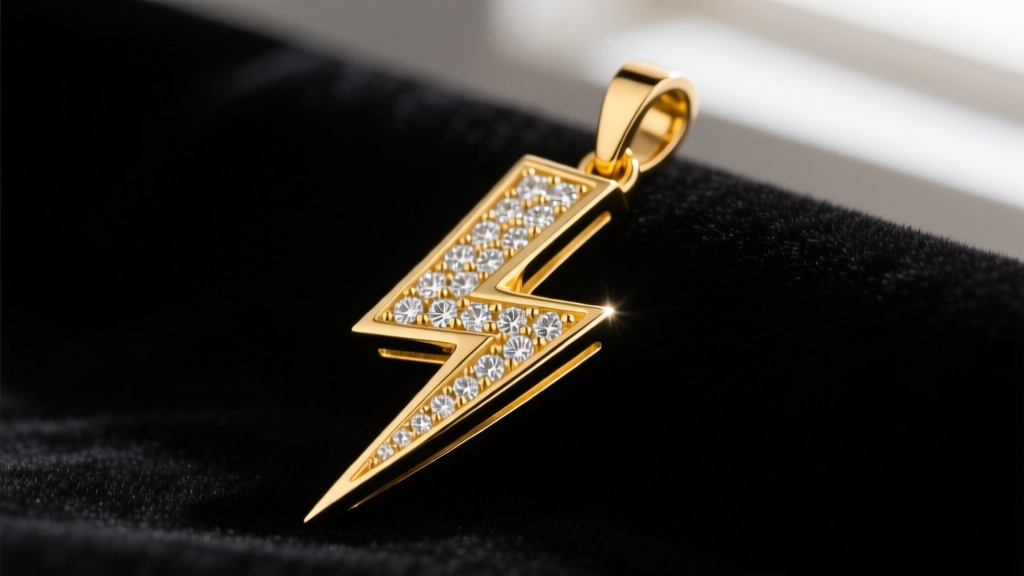
When discussing the cultural impact of mid-century jewelry, the iconic elvis presley necklace remains a masterclass in personal branding and bespoke design. Specifically, the "Taking Care of Business" (TCB) lightning bolt pendant transcends mere fan memorabilia; it is a highly specific piece of 1970s custom jewelry that demands exact metallurgical and gemological standards when replicated today. As collectors, estate liquidators, and master jewelers seek to recreate or authenticate these pieces in the current 2026 market, understanding the precise gauge, alloy composition, and stone-setting techniques is critical. This deep dive explores the technical anatomy of the TCB pendant, the structural requirements for its accompanying chains, and the material tiers that separate high-end bespoke replicas from cheap costume imports.
The Anatomy of the Iconic TCB Lightning Bolt
The original TCB pendants, commissioned by Elvis and distributed to his inner circle known as the "Memphis Mafia," were not mass-produced stamped sheets of metal. They were heavy, custom-cast pieces utilizing the lost-wax casting method. A technically accurate replica must adhere to specific dimensional and structural parameters.
- Dimensions: The standard pendant measures approximately 2 inches (50.8mm) in length and 12mm in width at the central strike point. The depth (thickness) should be no less than 4mm to support the weight of the pavé diamonds without warping.
- Weight: A solid 14k yellow gold casting of this volume typically weighs between 18 and 24 grams, excluding the stone weight.
- The Hidden Bail: Unlike standard pendants that hang from a soldered loop on the back, the authentic Elvis Presley necklace design features an integrated, hidden tube bail. The chain threads directly through the top horizontal arm of the lightning bolt. This engineering choice allows the pendant to sit flush against the sternum and prevents the "flipping" common with top-heavy cast pieces.
- Stone Setting: High-end replicas utilize bead-set or micro-pavé melee diamonds. According to the Gemological Institute of America (GIA), melee diamonds in vintage 1970s custom pieces typically ranged from 0.01 to 0.02 carats each. Modern master jewelers replicate this using VS2-SI1 clarity and G-H color lab-grown or natural melee to maintain the intense scintillation without the exorbitant premium of mid-century natural stones.
Chain Selection: Matching the King's Drape
A heavy, 20-gram gold pendant will instantly snap a standard 1mm cable chain. Elvis favored substantial, high-karat chains that could support the pendant's mass while providing a distinct, fluid drape. Selecting the correct chain involves balancing tensile strength with aesthetic period-accuracy.
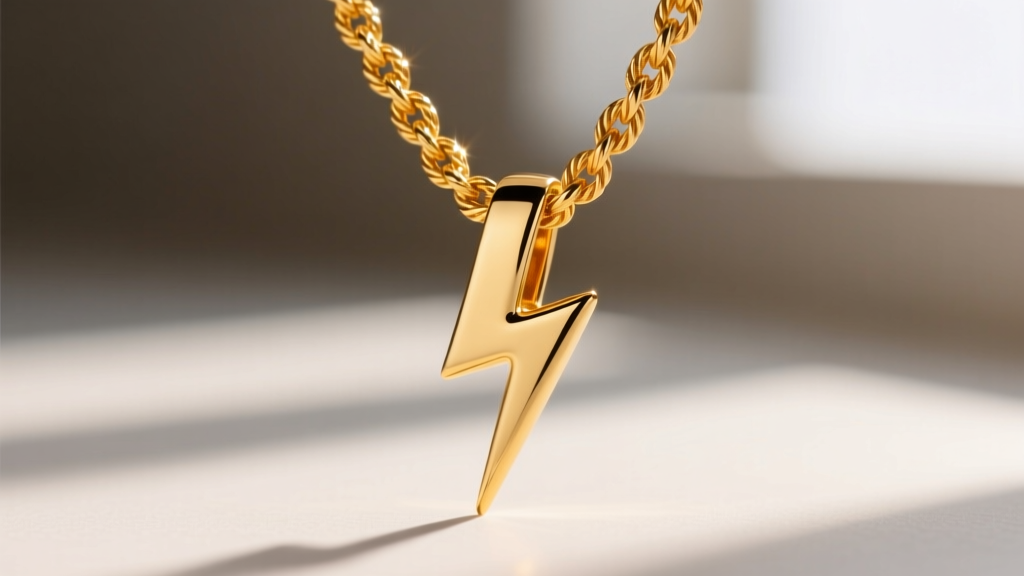
The Rope Chain Standard
The most historically accurate pairing for the TCB bolt is a solid or semi-solid rope chain. For a pendant weighing over 20 grams, a 4mm to 5mm gauge is mandatory. A 5mm solid 14k rope chain possesses a tensile strength capable of holding over 40 pounds of dead weight, ensuring the chain will not stretch or snap under the pendant's dynamic movement. The twisted links of the rope chain also catch the light, complementing the pavé diamonds on the bolt.
Clasp Mechanics
Never pair a heavy custom pendant with a standard spring-ring clasp. The mechanical spring inside a 7mm spring-ring is prone to fatigue and failure under heavy loads. Expert jewelers recommend a 12mm solid cast lobster claw clasp or a custom barrel clasp with an internal figure-eight safety catch. This ensures the necklace remains secure even if the primary locking mechanism is snagged.
Material Grades and Pricing Tiers for Replicas
The market is saturated with unauthorized merchandise, but serious collectors require precise material grading. Below is a technical breakdown of the manufacturing tiers available for TCB lightning bolt replicas in today's market.
| Replica Tier | Base Metal & Finish | Stone Quality & Setting | Chain & Clasp Specs | Estimated Price Range |
|---|---|---|---|---|
| Costume / Import | Zinc alloy with 0.5 micron gold flash plating | Cubic Zirconia, epoxy glued | Hollow 2mm rope, spring-ring clasp | $35 - $80 |
| Mid-Tier Commercial | 925 Sterling Silver with 2.5 micron 14k vermeil | CZ or low-grade white sapphire, prong set | Semi-solid 3mm rope, lobster clasp | $150 - $350 |
| Bespoke Collector | Solid 14k Yellow Gold (58.5% pure) | VS-SI Melee Diamonds, bead-set | Solid 4mm rope, heavy lobster clasp | $3,500 - $6,500 |
| Estate / Original | Solid 18k Yellow Gold (75% pure) | VS1-VS2 Natural Diamonds, hand-engraved beads | Custom 5mm link, barrel safety clasp | $15,000 - $40,000+ |
As noted by Jewelers of America, consumers must be wary of stamps like "14K HGE" (Heavy Gold Electroplate), which is fundamentally a brass or silver core with a thick layer of gold. While durable for a time, HGE will eventually wear through on the high-friction areas of the pendant bail, revealing the base metal beneath.
The Aloha Eagle and Cross Pendants: Alternative Specs
While the TCB bolt is the most recognized, a comprehensive study of the Elvis Presley necklace legacy must include his other iconic pendants. The "Aloha from Hawaii" eagle pendant presents a unique technical challenge. Originally, many of these were not cast in metal but were intricately knotted macrame designs featuring a central metallic or enameled eagle. When modern jewelers cast the Aloha eagle in solid gold, they must utilize high-relief 3D CAD modeling to capture the feather textures and the draped banner, often resulting in a piece that weighs upwards of 35 grams. This requires an even heavier chain, typically a 6mm Figaro or Miami Cuban link, to maintain visual proportion.
Additionally, Elvis frequently wore a prominent diamond cross pendant. Technically, this piece was often cast in 18k white gold to maximize the brilliance of the marquise and round brilliant cut diamonds. Replicating the cross requires precise milgrain detailing along the edges of the bezel settings, a hallmark of 1970s high jewelry that is often skipped by modern mass-manufacturers to save on finishing labor costs.
Authentication and Sourcing High-Quality Pieces
When evaluating a vintage piece claimed to be from the original Memphis Mafia run, or when commissioning a high-end replica, specific hallmarks and construction details must be verified. According to the Graceland Official Estate Archives, original pieces were often custom-made by local Memphis jewelers like Lowell Hayes, though not all were consistently hallmarked due to the informal nature of the gifting.
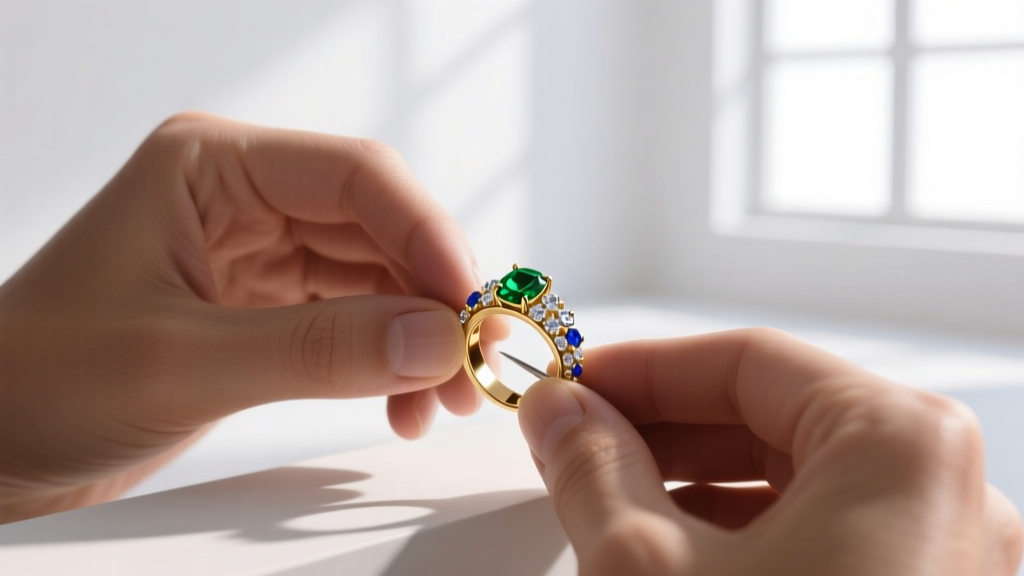
For modern replicas, authentication of quality relies on inspecting the stone settings. Under a 10x jeweler's loupe, bead-set melee diamonds should show tiny, rounded metal prongs pushed over the girdle of the stone. If the stones appear perfectly flush with no visible metal displacement, or if there is any residue visible under magnification, the stones are likely glued—a catastrophic failure point that will result in lost diamonds upon exposure to heat or solvents.
Care and Maintenance for Vintage and Replica Gold
Maintaining a heavy gold and diamond pendant requires specific protocols to preserve both the metal's luster and the integrity of the settings. While ultrasonic cleaners are highly effective at removing sebum and lotion buildup from the intricate pavé settings of a TCB bolt, they pose a severe risk to fracture-filled or heavily included melee diamonds, which can shatter under high-frequency vibrations. Furthermore, ultrasonic waves can loosen the beads in older, vintage settings.
The safest cleaning protocol involves a soft-bristled brush, warm distilled water, and a few drops of ammonia-free dish soap. After cleaning, the piece should be dried with a lint-free microfiber cloth. When storing the necklace, the pendant must be detached from the chain or laid completely flat in a velvet-lined drawer. Hanging a 24-gram pendant by its chain on a jewelry tree for extended periods will cause the chain links to permanently elongate and weaken due to constant gravitational stress.


