Emerald Bead Necklace Value Guide: Pricing & Quality
Discover how to evaluate an emerald bead necklace. Learn pricing tiers, treatment red flags, stringing failure modes, and true market value.

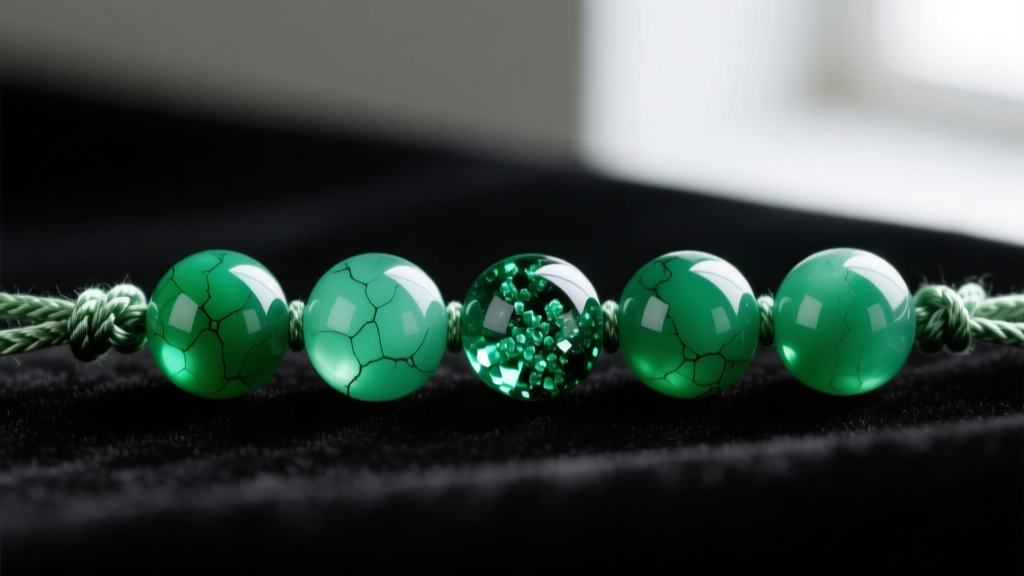
Evaluating an emerald bead necklace requires a completely different gemological framework than assessing a faceted emerald ring or pendant. When a lapidary cuts a faceted stone, they can work around inclusions and color zoning. When cutting round beads, however, the gemstone must be uniformly saturated and structurally sound throughout its entire spherical volume. This fundamental difference in rough yield and manufacturing complexity drastically alters how value is determined in the 2026 market.
Whether you are hunting for a delicate 4mm Zambian strand or a statement-making 10mm Colombian piece, understanding the intersection of treatment levels, stringing mechanics, and origin is critical to avoiding overpriced commercial goods. This guide breaks down the exact metrics you need to assess true market value.
The Anatomy of Emerald Bead Value
The value of emerald beads is governed by three primary pillars: color uniformity, structural integrity, and treatment transparency. According to the Gemological Institute of America (GIA), emerald is a variety of the mineral beryl, colored by trace amounts of chromium and vanadium. However, beryl is heavily included by nature.
Color and Saturation
For beads, color consistency across the entire strand is paramount. A high-value necklace will feature beads matched within a half-tone of each other. Zambian emeralds generally offer cleaner material with a slightly bluish-green secondary hue, making them the industry standard for mid-to-high-tier bead necklaces. Colombian emeralds offer the coveted warm, pure green (often termed 'Muzo green'), but finding clean, uniformly colored Colombian rough large enough for matched 8mm+ beads is exceptionally rare, driving prices into the investment tier.
The 'Jardin' and Structural Integrity
Emeralds are famous for their 'jardin' (French for garden)—the network of internal inclusions and fractures. While acceptable in faceted stones, surface-reaching fractures in beads are a major liability. Because beads constantly rub against one another and against the stringing material, surface-reaching fissures can cause the bead to split or chip over time. Always inspect the drill holes; heavy chipping around the entry and exit points of the drill bit indicates brittle, heavily included material that compromises the necklace's longevity.
Pricing Tiers: What Your Budget Actually Buys
The 2026 gemological market has seen a stabilization in Zambian rough supply, but premium matched strands remain scarce. Below is a structural breakdown of what you should expect to pay based on bead diameter, origin, and treatment levels.
| Market Tier | Bead Size | Origin & Quality | Treatment Level | Estimated Price Range |
|---|---|---|---|---|
| Commercial | 4mm - 6mm | Brazilian / Low-grade Zambian; opaque, heavy color zoning | Heavy fracture filling (epoxy/resin), potential dyeing | $80 - $350 |
| Mid-Market | 6mm - 8mm | Zambian; good transparency, minor visible jardin, well-matched | Minor to moderate traditional cedar oiling | $1,200 - $4,500 |
| Fine / Investment | 8mm - 12mm+ | Colombian / Premium Zambian; vivid saturation, high translucency | Minor oil only (F1/F2 clarity enhancement) | $8,000 - $35,000+ |
"When evaluating an emerald bead necklace, you are not just paying for the carat weight of the beryl; you are paying for the lapidary's ability to cut matched, round beads from heavily included rough—a process that wastes up to 80% of the original crystal."

Stringing Materials and Hidden Failure Modes
A massive, often overlooked component of an emerald bead necklace's value is its construction. Emerald ranks 7.5 to 8 on the Mohs scale of hardness, but it has poor toughness due to its inherent inclusions. The stringing material dictates the lifespan of the piece.
The Wire Sawing Effect
Many commercial and mid-tier necklaces are strung on nylon-coated stainless steel wire (such as Beadalon) for durability. However, if the beads are not individually knotted, the steel wire acts as a microscopic saw. Over years of wear, the friction between the wire and the emerald's drill hole will slowly erode the beryl, eventually causing the bead to snap in half. If purchasing a wire-strung necklace, ensure there are protective silicone or gold-filled spacer beads between the emeralds, or that the wire is heavily knotted.
Silk vs. Synthetic Threads
Traditional French silk is the gold standard for fine emerald beads. Silk is softer than beryl and will not abrade the drill holes. Furthermore, knotting between each bead prevents them from rubbing together and ensures that if the strand breaks, you only lose one bead. However, silk degrades with exposure to skin oils and perfumes, requiring professional restringing every 1 to 2 years (a service that typically costs $3 to $6 per bead). Modern alternatives like PowerPro (a gel-spun polyethylene braided line) offer the softness of silk with vastly superior tensile strength and rot resistance, though traditionalists may argue it lacks the drape of natural silk.
Identifying Overpriced and Fraudulent Beads
The market is saturated with treated stones masquerading as high-value natural emeralds. To protect your budget, you must know how to identify deceptive treatments.
- Epoxy and Resin Impregnation: While cedar oil is a universally accepted traditional treatment to mask fissures, modern commercial beads are often vacuum-impregnated with hardening epoxies (like Opticon) or plastics. This holds heavily fractured, otherwise unsalvageable rough together. Under a 10x loupe, look for a 'flash effect' (a bright, unnatural sheen) inside the fractures, or a chalky blue/white residue near the drill holes.
- Dyeing: Pale beryl is frequently dyed green to mimic fine emerald. Inspect the drill holes and surface-reaching fractures with magnification. If you see concentrated green staining pooling in the crevices or along the stringing channel, the beads are dyed and hold virtually no secondary market value.
- Glass Filling: In the lowest tiers of the market, massive surface-reaching fractures are filled with lead-glass. This drastically lowers the melting point and structural integrity of the bead. A simple test: glass-filled emeralds will show a distinct difference in surface luster between the beryl and the filler under direct light.
For definitive peace of mind on high-ticket purchases, always request a report from a reputable laboratory like the GIA or Gübelin, which will explicitly detail the type and extent of clarity enhancement.
Long-Term Value Retention and Care
Maintaining the financial and aesthetic value of an emerald bead necklace requires strict adherence to specialized care protocols. Because the vast majority of emeralds are oiled, never place an emerald necklace in an ultrasonic or steam cleaner. The high-frequency vibrations will shatter the included stones, and the heat will boil the cedar oil out of the fissures, leaving the beads looking opaque, white, and heavily fractured.
To clean your necklace, use a soft, lint-free cloth lightly dampened with lukewarm water and a pH-neutral soap. Gently wipe each bead individually, avoiding the drill holes to prevent moisture from trapping dirt against the stringing material. Every 3 to 5 years, depending on wear, fine emerald beads may require professional 're-oiling' by a lapidary to restore their original translucency and luster. Factoring in these maintenance costs is essential when calculating the true long-term budget of owning fine emerald jewelry.
Final Assessment Checklist
Before finalizing your purchase, verify the following:
- Are the beads matched in tone and saturation within a 5% variance?
- Are the drill holes clean, or is there evidence of chipping and dye pooling?
- Is the stringing material appropriate for the bead size (knotted silk/synthetic for fine beads, protected wire for commercial)?
- Has the seller disclosed the exact nature of the clarity enhancement (oil vs. resin)?
By applying these rigorous gemological and structural assessments, you can confidently navigate the market and secure an emerald bead necklace that offers genuine, lasting value.


