Why The Emerald Necklace Is The Top 2026 Jewelry Trend
Discover why the emerald necklace dominates 2026 jewelry trends. Explore styling tips, Colombian vs. Zambian origins, and investment-grade pricing.

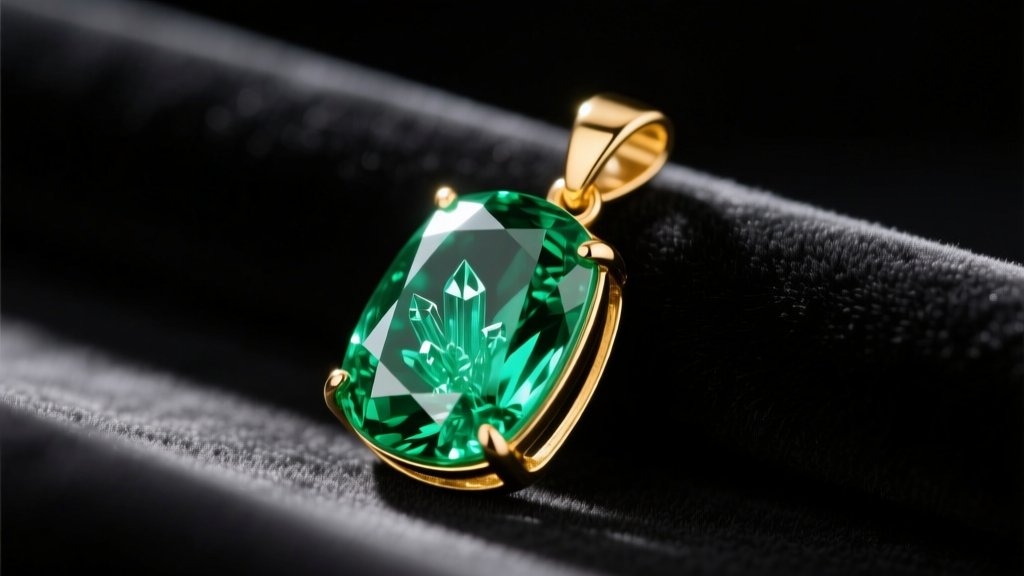
The 2026 Macro Trend: Quiet Luxury Meets Botanical Core
As we navigate the 2026 jewelry landscape, the pendulum has swung decisively away from overt, logo-heavy maximalism toward a refined, high-impact singularism. At the absolute center of this shift is the emerald necklace. No longer relegated to vintage heirloom status or red-carpet exclusivity, the emerald necklace has been reimagined by contemporary designers as the ultimate anchor piece for the 'quiet luxury' and 'botanical core' aesthetics. The psychology behind this trend is rooted in a collective desire for grounding, organic elements in an increasingly digital world. The deep, verdant hues of chromium-rich beryl offer a visual weight and historical gravitas that diamonds and sapphires simply cannot replicate in today's market.
From a mineralogical perspective, emeralds are a variety of the mineral beryl (Be3Al2(SiO3)6), colored by trace amounts of chromium and sometimes vanadium. With a Mohs hardness of 7.5 to 8, they are durable enough for daily wear but possess a distinct brittleness that demands expert cutting and setting. This inherent vulnerability is precisely what makes a well-crafted emerald necklace a triumph of lapidary engineering, elevating it from mere accessory to wearable art.
Decoding the Stone: Colombian vs. Zambian vs. Brazilian
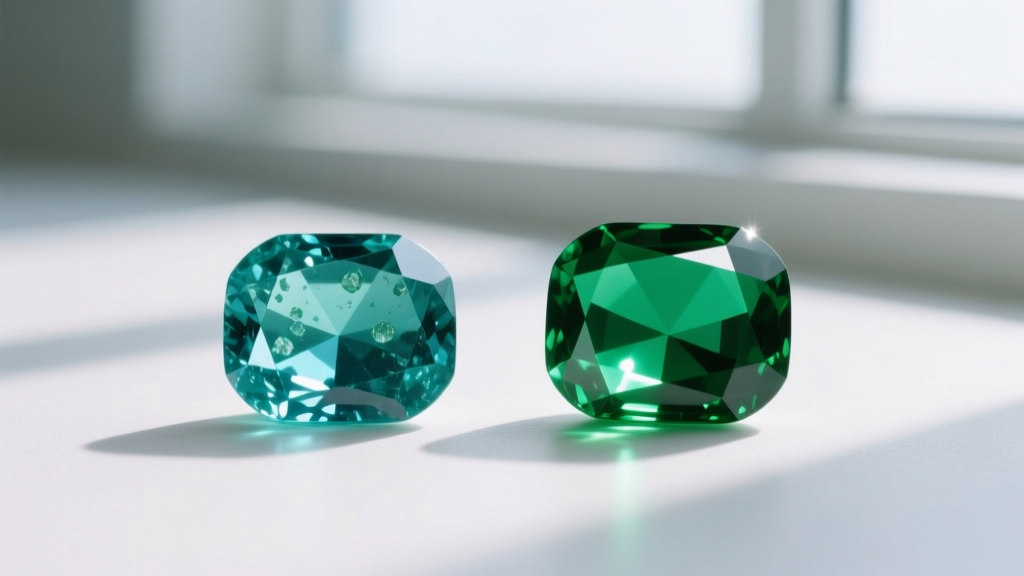
When analyzing the emerald necklace market in 2026, provenance dictates not only price but also the specific visual character of the piece. The 'jardin' (French for garden)—the internal network of liquid and gas inclusions that serves as an emerald's fingerprint—varies dramatically by geographic origin.
| Origin | Color Profile | Inclusion Type (Jardin) | Avg. Price/Carat (Fine) | Market Position |
|---|---|---|---|---|
| Colombian (Muzo/Chivor) | Warm, pure, intense green | Three-phase inclusions (liquid, gas, solid halite) | $8,000 - $25,000+ | Investment & Heritage |
| Zambian (Kagem) | Cool, bluish-green undertones | Darker, denser inclusions; often higher clarity | $3,500 - $9,000 | Modern Fine Jewelry |
| Brazilian (Santa Terezinha) | Lighter, yellowish-green | Heavily included; often opaque or cabochon-cut | $800 - $2,500 | Commercial & Artisan |
According to the Gemological Institute of America (GIA), Colombian emeralds remain the gold standard for collectors due to their unmatched saturation and lack of secondary blue modifiers. However, Zambian emeralds have surged in popularity among 2026 designers because their slightly higher natural clarity allows for more intricate, geometric step-cuts without the structural risks posed by heavy inclusions.

Silhouette & Setting: The Engineering of an Emerald Necklace
The quintessential emerald cut—a rectangular step cut with truncated corners and typically 57 facets—was literally invented for this gemstone to minimize pressure during the cutting process and protect its brittle corners. In 2026, how this cut is suspended around the neck is a defining trend.
The Triumph of the Bezel Setting
While traditional four-prong settings allow maximum light entry, the 2026 trend heavily favors the full bezel setting for emerald necklaces. A bezel setting wraps a continuous rim of 18k gold or platinum around the gemstone's girdle. This is not merely an aesthetic choice; it is a structural necessity. The 90-degree corners of an emerald cut are the stone's weakest points. A bezel completely shields these corners from the accidental impacts of daily wear, reducing the risk of chipping by an estimated 80% compared to prong settings. Furthermore, the sleek, metallic frame of a bezel aligns perfectly with the architectural, minimalist silhouettes dominating current fashion runways.
Length & Neckline Pairing
The versatility of the emerald necklace relies heavily on its drop length. The 16-inch choker has emerged as the dominant silhouette for 2026, sitting flush against the collarbone and demanding attention. When styling a 16-inch emerald choker, pair it with deep V-necklines or structured, open-collar blazers to create a striking negative space that frames the green stone. For a more relaxed, bohemian approach, the 24-inch matinee length allows the emerald pendant to rest over the sternum, layering beautifully with 18-inch gold paperclip chains.
The Treatment Spectrum: What You Are Actually Buying
It is a fundamental reality of the gem trade that over 90% of emeralds on the market undergo some form of clarity enhancement. Because the formation process of emeralds involves intense tectonic stress, surface-reaching fissures are nearly ubiquitous. The treatment used to fill these fissures drastically impacts the stone's value, longevity, and care requirements.
'The distinction between traditional cedar oiling and modern polymer resins is the single most critical factor in emerald valuation. A stone treated with Opticon resin is structurally stabilized but permanently altered, whereas cedar oil is a reversible, traditional enhancement that requires periodic maintenance.' — GIA Emerald Care Guide
In the high-end 2026 market, collectors and savvy buyers actively seek out 'minor oil' or 'none' designations on lab reports. Cedar oil, the traditional filler, matches the refractive index of emerald (1.565-1.602) to make fissures less visible, but it can dry out or leak if exposed to heat or ultrasonic cleaners. Conversely, commercial-grade emerald necklaces often utilize Opticon or epoxy resins, which are permanent but significantly depress the resale value of the stone.
2026 Pricing Framework & Investment Tiers
Navigating the pricing of an emerald necklace requires an understanding of the exponential curve of carat weight and color saturation. Here is a realistic breakdown of what to expect in the current market:
- Commercial Tier ($500 - $2,500 Total): Features emeralds under 1.5 carats, typically Zambian or Brazilian, with moderate to significant resin or oil treatments. Often set in 14k gold or sterling silver with diamond accents to mask lower color saturation.
- Fine Jewelry Tier ($3,500 - $15,000 Total): The sweet spot for luxury buyers. Expect 2 to 4-carat Zambian or lower-grade Colombian stones with 'minor' oil treatments, set in 18k gold with high-quality melee diamond halos or bezels.
- Investment Tier ($25,000+ Total): Reserved for untreated or 'minor oil' Colombian emeralds (Muzo/Coscuez) over 3 carats with exceptional 'gota de aceite' (oil drop) luster. These pieces appreciate in value and are accompanied by premium lab reports.
Authentication: Reading the Lab Reports
When purchasing an investment-grade emerald necklace, a standard GIA grading report is insufficient. The colored gemstone market relies on specialized laboratories that focus intensely on origin determination and treatment analysis. In the United States, the American Gemological Laboratories (AGL) is the premier authority, utilizing a 1-to-10 enhancement scale. In Europe and at major auction houses, the SSEF and Gübelin institutes are the gold standard. Always demand a report that explicitly states the geographic origin and the exact nature of the clarity enhancement before finalizing a high-ticket purchase. In 2026, transparency is not just a trend; it is the baseline for luxury.


