Emerald Necklace Cleveland Ohio: 2026 Local Buying Guide
Discover what to look for when buying an emerald necklace in Cleveland, Ohio. Our 2026 guide covers grading, treatments, local jewelers, and pricing.

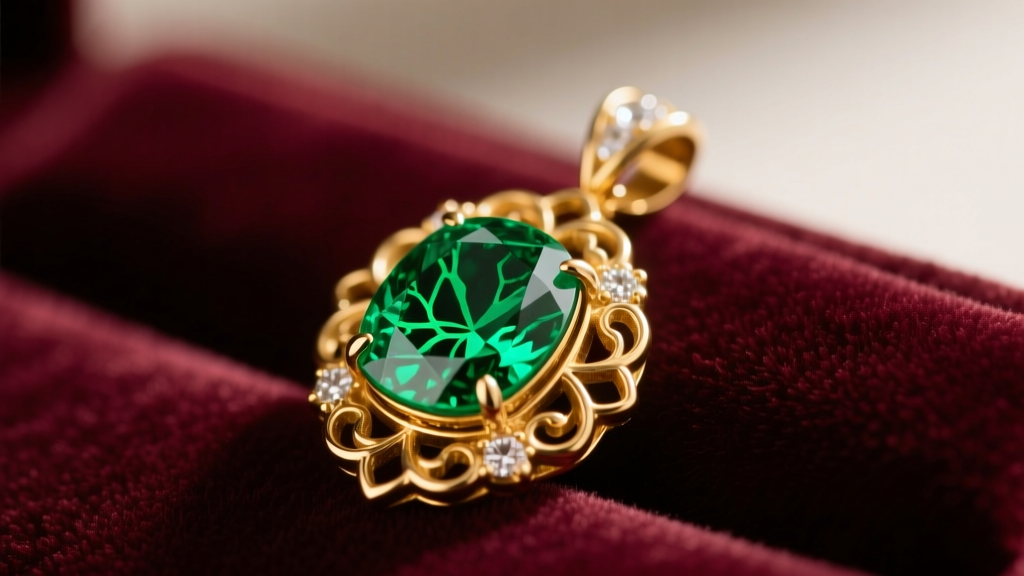
The Cleveland Emerald Market: Estate vs. Custom
When your search history is filled with phrases like 'emerald necklace Cleveland Ohio,' you are likely seeking a piece that balances historical prestige with gemological integrity. Cleveland boasts a surprisingly rich jewelry heritage, from the legacy estate jewelers in Shaker Heights to the contemporary, custom-design ateliers scattered through Tremont and Legacy Village. However, buying an emerald is fundamentally different from buying a diamond. Emeralds are classified by the Gemological Institute of America (GIA) as Type III gemstones, meaning they are almost universally expected to have visible inclusions. Navigating the local market requires a sharp eye for treatment disclosures, setting durability, and origin verification.
In 2026, the Cleveland jewelry market has seen a surge in demand for vintage Art Deco emerald pendants, alongside bespoke bezel-set Colombian stones. Whether you are browsing estate cases near University Circle or commissioning a custom pendant from a downtown goldsmith, understanding the nuanced grading of emeralds is your first line of defense against overpaying for heavily treated or poorly cut stones.
Decoding Emerald Quality: Color, Clarity, and 'Jardin'
Unlike diamonds, where clarity is a primary driver of value, color is the undisputed king of the emerald market. The most prized emeralds exhibit a pure, vivid green to slightly bluish-green hue with a medium-dark tone (ideally between 70% and 75% on the GIA tone scale). Stones that are too light are often classified as green beryl, while stones that are too dark lose their brilliance and appear blackish in standard indoor lighting.
Embracing the Jardin
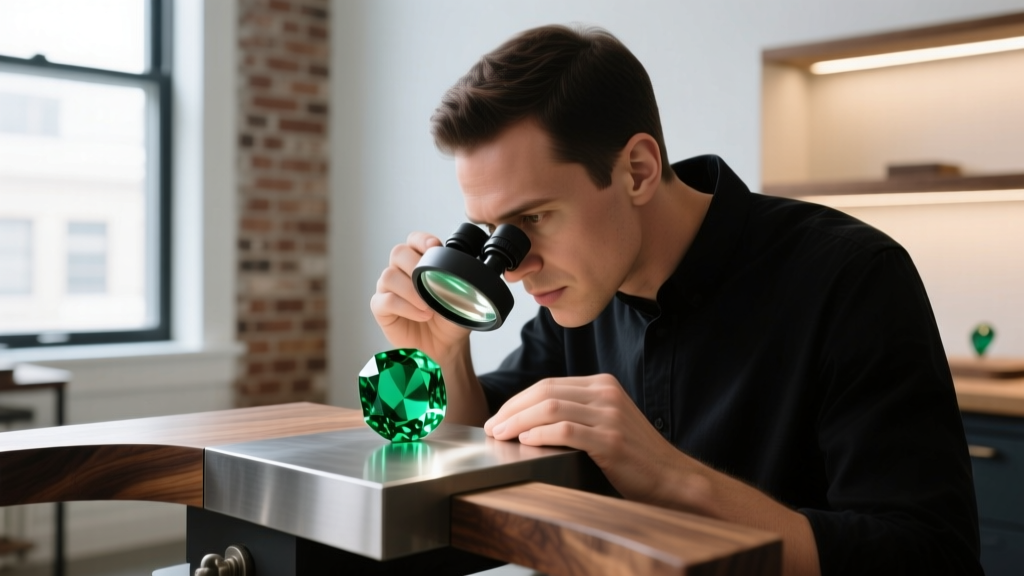
The French word 'jardin' (garden) is used to describe the moss-like inclusions and internal fractures characteristic of natural emeralds. These inclusions are the fingerprint of the stone, proving its natural origin. A completely flawless emerald is exceptionally rare and should immediately prompt a request for a lab report to rule out synthetic flux-grown or hydrothermal imitations. When inspecting a pendant in a Cleveland showroom, use a 10x jeweler's loupe to ensure the jardin does not include deep, surface-reaching fractures that compromise the structural integrity of the gem.
Treatments and Enhancements: Ask the Right Questions
This is the most critical factor in your purchasing decision. Because emeralds are heavily included, they are routinely treated to improve clarity and stability. The traditional and widely accepted method is cedar oil immersion, which fills surface-reaching fractures and reduces their visibility. However, the modern market also utilizes synthetic polymers, epoxies, and resins (such as Opticon) which are permanent but significantly devalue the stone if undisclosed.
According to the American Gem Society (AGS), any reputable jeweler must disclose the presence and extent of clarity enhancements. When shopping locally, always ask if the stone has been treated with traditional oils or modern resins, and request a report from a recognized laboratory like GIA or AGL (American Gemological Laboratories).
| Treatment Level | Market Value Impact | Maintenance Requirements |
|---|---|---|
| None (Untreated) | Premium (+40% to +100%) | None; highly stable |
| Minor Traditional Oil | Standard Market Baseline | Re-oil every 3-5 years |
| Moderate Traditional Oil | -15% to -25% | Re-oil every 1-2 years; avoid heat |
| Prominent Resin/Polymer | -50% to -80% | Strictly avoid ultrasonic cleaners |
Selecting a Protective Setting for Your Pendant
Emeralds rank between 7.5 and 8 on the Mohs hardness scale, which makes them resistant to scratching. However, their toughness (resistance to breaking) is notably poor due to the internal jardin and natural fractures. The classic 'emerald cut' (a rectangular step cut) features sharp, vulnerable corners that are highly prone to chipping if bumped against a hard surface.
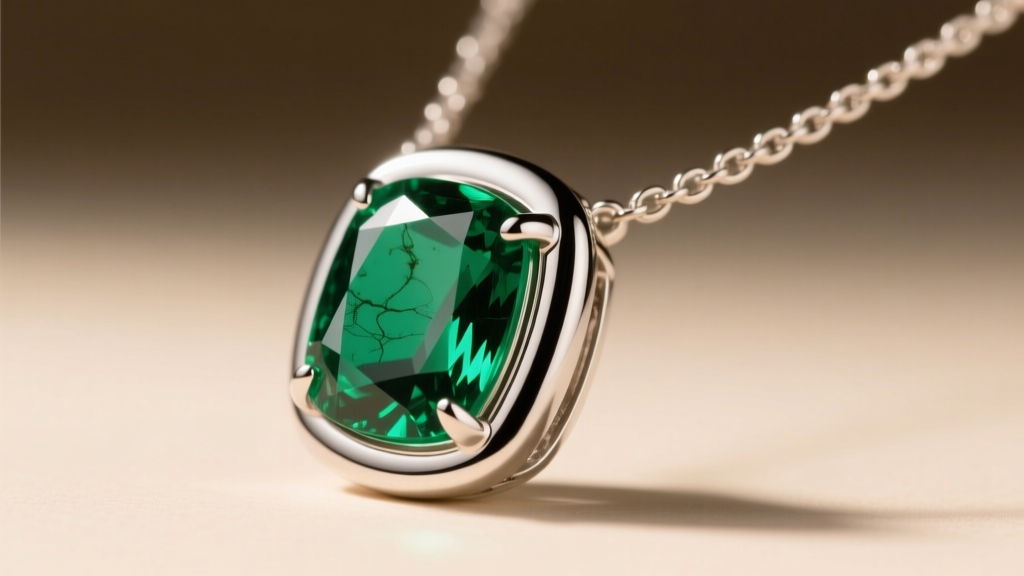
For a necklace intended for regular wear, the setting is just as important as the stone. Avoid standard four-prong settings that leave the corners exposed. Instead, opt for a V-prong setting, which caps the fragile corners in metal, or a full bezel setting, which encircles the entire girdle of the stone. Halo settings, where a border of smaller diamonds surrounds the emerald, also provide an excellent physical buffer against accidental impacts while amplifying the pendant's overall brilliance.
Pricing Expectations in the Current Market
Emerald pricing is highly stratified based on origin, color saturation, and treatment. Colombian emeralds, particularly from the Muzo and Chivor mines, command the highest premiums due to their historically unmatched pure green hue. Zambian emeralds, which often exhibit a slightly bluish secondary hue and higher natural clarity, offer excellent value for buyers seeking larger carat weights without the Colombian premium.
- Commercial Grade (1-2 Carats): $400 to $1,200 per carat. Expect moderate inclusions, lighter tone, and prominent oiling.
- Fine Grade (1-3 Carats): $2,500 to $6,500 per carat. Rich saturation, minor oil, and excellent cut proportions.
- Extra Fine / Investment Grade: $10,000 to $25,000+ per carat. Exceptional Muzo origin, negligible to no oil, and vivid saturation.
Your Pre-Purchase Checklist
Before finalizing your purchase at any Cleveland-area jeweler, run through this essential checklist to ensure you are acquiring a piece that will last generations:
- Verify the Lab Report: Ensure the pendant comes with a GIA or AGL report detailing the exact enhancement level (e.g., 'Minor Clarity Enhancement: Oil').
- Inspect the Corners: Use a loupe to check that the setting's metal fully protects the vulnerable points of the emerald cut.
- Assess the Chain: A 2-carat emerald pendant requires a sturdy chain. Look for a 1.5mm to 2.0mm solid cable or rope chain in 18k gold or platinum, avoiding fragile box chains.
- Ask About Ultrasonic Risks: Confirm with the jeweler how the stone should be cleaned. Never place an oiled emerald in an ultrasonic or steam cleaner, as the vibrations and heat will strip the oil and shatter the stone.
- Request an Appraisal: For insurance purposes, ensure the local jeweler provides a detailed replacement appraisal that matches the lab report's exact specifications.
By prioritizing gemological transparency and structural durability, you can confidently navigate the local market and secure an exquisite emerald necklace that serves as both a stunning personal adornment and a lasting heirloom.


