Emerald Necklace Marina Lakewood: Beginner's Buying Guide
Discover how to buy an authentic emerald necklace. Marina Lakewood jewelers share expert tips on grading, treatments, settings, and 2026 pricing.

Introduction to Emeralds & The Local Standard
Emeralds have captivated humanity for over four thousand years, prized for their lush, verdant hues that symbolize rebirth and luxury. As a variety of the mineral beryl, emeralds derive their signature green color from trace amounts of chromium, vanadium, or sometimes iron. However, navigating the market for these precious gemstones can be daunting for beginners. When searching for a premium emerald necklace, Marina Lakewood gemologists and local jewelers provide an unmatched layer of trust, allowing you to inspect the unique characteristics of each stone in person.
Unlike diamonds, which are graded heavily on brilliance and lack of inclusions, emeralds are evaluated on a completely different spectrum. This beginner-friendly explainer will demystify the grading process, reveal the truth about gemstone treatments, and help you choose the perfect pendant setting to protect your investment for decades to come.
Decoding Emerald Quality: A Beginner's Framework
To shop intelligently, you must understand how gemologists evaluate emeralds. The traditional 'Four Cs' apply, but with heavily weighted differences compared to other gemstones.
Color: The Ultimate Value Driver
Color is the single most important factor in determining an emerald's value. Gemologists evaluate color based on three components: hue, tone, and saturation. The most desirable hue is a pure, vibrant green to bluish-green. Tone refers to the lightness or darkness of the stone, with medium to medium-dark tones commanding the highest premiums. Saturation is the intensity of the color; a vivid, highly saturated emerald will cost exponentially more than a dull, grayish-green stone of the exact same size.
Clarity and the 'Jardin'
The Gemological Institute of America (GIA) classifies emeralds as Type III gemstones, meaning they are almost always included. In fact, an emerald without any visible inclusions is incredibly rare and should immediately prompt a request for a lab certificate to verify it is not a synthetic stone or colored glass. The French refer to these internal fractures and inclusions as the 'jardin' (garden). Rather than viewing these inclusions as flaws, collectors see them as the fingerprint of the earth, proving the stone's natural origin.
Origin: Colombian vs. Zambian
While origin does not inherently dictate quality, it heavily influences market price. Colombian emeralds (from mines like Muzo and Chivor) are famous for their warm, intense, pure green hue and command a historical premium. Zambian emeralds, which have surged in popularity by 2026, often exhibit a cooler, bluish-green tone and generally possess higher natural clarity than their Colombian counterparts.
2026 Market Pricing & Grading Chart
Understanding current market valuations is critical to avoid overpaying. Below is a generalized pricing framework for natural, mined emeralds based on the current 2026 wholesale and retail landscape. Note that prices are per carat (ct).
| Grade | Visual Characteristics | Clarity & Transparency | Est. Price Range (Per Carat) |
|---|---|---|---|
| Commercial | Light green, grayish undertones | Opaque, heavy inclusions | $50 - $250 |
| Good | Medium green, moderate saturation | Translucent, visible jardin | $300 - $1,200 |
| Fine | Vivid green, excellent saturation | Transparent, minor inclusions | $1,500 - $4,500 |
| Extra Fine | Intense, pure green, exceptional brilliance | Eye-clean, highly transparent | $5,000 - $15,000+ |
Treatments: What Must Be Disclosed
One of the most crucial concepts for a beginner to grasp is that the vast majority of emeralds on the market are treated. Because emeralds are naturally heavily fractured, they are brittle. For centuries, cutters have submerged rough emeralds in colorless oils (traditionally cedar oil) to fill surface-reaching fissures, improving the stone's apparent clarity and stability.
According to the Federal Trade Commission (FTC) Jewelry Guides, sellers are legally required to disclose any treatments that are not permanent or that significantly affect the value of the gemstone. When shopping, you will encounter three main categories of treatment:
- Minor Oil (F1): The industry standard. Cedar oil is used to mask minor surface fractures. This is widely accepted and expected in fine jewelry.
- Moderate to Significant Oil (F2/F3): Heavily fractured stones require more oil to hold together and appear transparent. These stones require careful maintenance, as heat or harsh chemicals can dry out the oil, causing the stone to turn cloudy or white.
- Resin/Polymer Filling (Opticon): A modern, more permanent alternative to oil. While it stabilizes the stone better, purists and high-end collectors often discount resin-filled emeralds compared to traditionally oiled ones.
Expert Tip: Always ask your jeweler for a lab report (from GIA, AGL, or Gübelin) for any emerald over 1 carat. The report will explicitly state the type and extent of clarity enhancement.
Selecting the Safest Setting for Your Pendant
Emeralds rank between 7.5 and 8 on the Mohs scale of hardness. While this makes them resistant to scratching, their extensive internal inclusions give them poor toughness. A hard knock against a tabletop can easily chip or shatter an emerald. Therefore, the setting you choose for your necklace pendant is not just an aesthetic decision; it is a structural necessity.
Bezel Settings: The Ultimate Protector
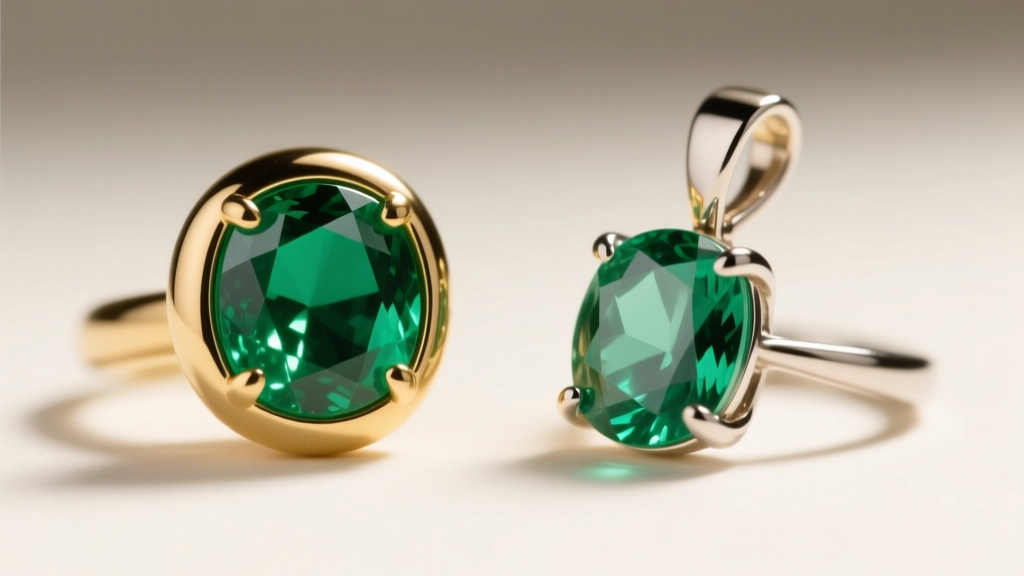
A bezel setting features a continuous rim of metal (like 14k or 18k gold) that completely encircles the girdle of the emerald. This is the safest choice for an everyday necklace, as it protects the vulnerable corners and edges from accidental impacts.
Halo Settings: Added Security and Sparkle
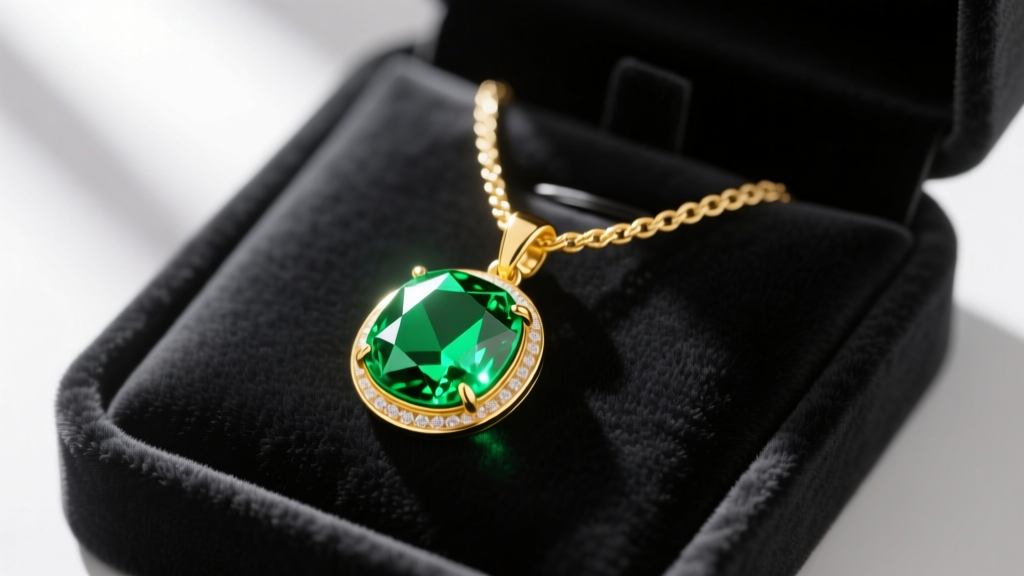
A halo setting surrounds the center emerald with a border of micro-pavé diamonds. Not only does this create a stunning visual contrast that amplifies the green hue, but the metal framework securing the diamonds also acts as a protective buffer zone for the center stone.
Prong Settings: Proceed with Caution
While traditional V-prong settings allow maximum light to enter the stone, they leave the edges exposed. If you prefer a prong setting, ensure the jeweler uses V-shaped prongs specifically designed to cup and protect the sharp, brittle corners of an emerald-cut stone.

Why Shop Local? The Marina Lakewood Advantage
In an era dominated by e-commerce, buying high-value colored gemstones online remains a significant gamble. Lighting tricks, heavy digital color saturation, and hidden resin treatments are rampant in digital marketplaces. This is precisely why sourcing an authentic emerald necklace, Marina Lakewood jewelry districts and established local boutiques offer a distinct, irreplaceable advantage.
When you shop with a reputable local gemologist, you gain the ability to view the stone under multiple lighting conditions—including natural daylight and warm indoor lighting. You can inspect the 'jardin' with a 10x jeweler's loupe, ensuring the inclusions do not compromise the structural integrity of the stone. Furthermore, local jewelers provide immediate access to custom setting adjustments, professional re-oiling services, and secure, insured appraisals that online retailers simply cannot match.
Essential Care Rules for Emerald Jewelry
Because of their treatments and natural brittleness, emeralds require specific, gentle care to maintain their luster over a lifetime.
- Never Use Ultrasonic Cleaners: The high-frequency vibrations will shatter the internal fractures and strip away the cedar oil, leaving your emerald cloudy and damaged.
- Avoid Steam Cleaners: Extreme heat will melt or evaporate the oils and resins used to treat the stone.
- The Safe Cleaning Method: Soak the necklace in lukewarm water with a few drops of mild, non-detergent soap. Gently brush the back of the setting with an extra-soft baby toothbrush to remove skin oils and lotion buildup. Pat dry with a microfiber cloth.
- Last On, First Off: Always put your emerald necklace on after applying perfumes, hairsprays, and cosmetics. Chemical solvents can degrade the clarity enhancements over time.
By understanding the nuances of color, the realities of clarity treatments, and the importance of protective settings, you are now equipped to confidently select a breathtaking emerald pendant that will serve as a cherished heirloom for generations.


