Emerald Necklace OSRS Replica: Troubleshooting Custom Jewelry Builds
Troubleshoot your custom emerald necklace OSRS replica build with expert tips on gemstone setting, metal casting, and chain selection for cosplay.

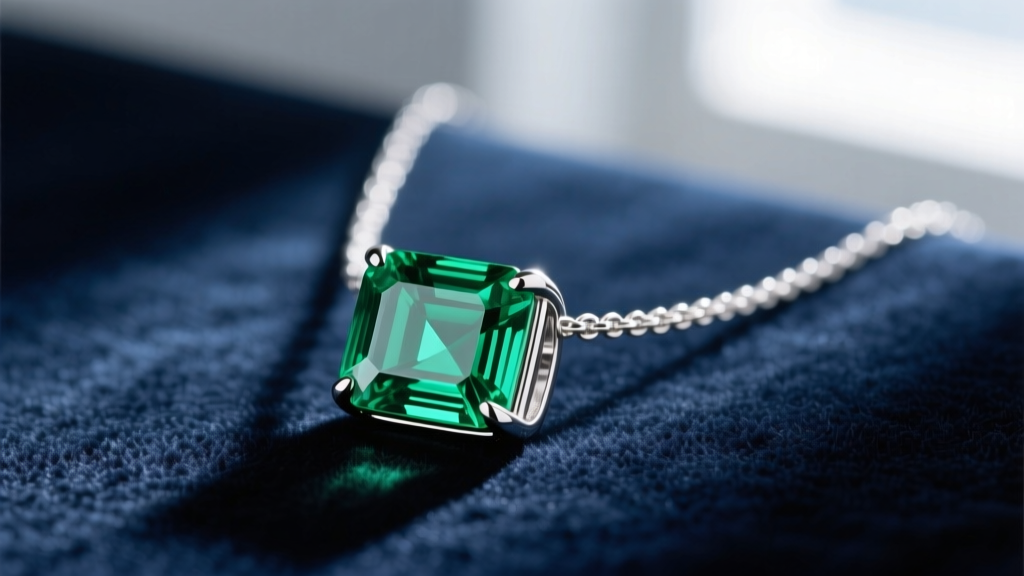
The Challenge of Recreating the OSRS Emerald Necklace
Translating 8-bit pixel art into physical, wearable heirlooms is a unique challenge that has captivated the custom jewelry and cosplay communities. In Old School RuneScape, the emerald necklace is a staple item crafted at level 29 Crafting, serving as the essential precursor to the iconic Amulet of Glory. However, searching for an authentic emerald necklace osrs build guide requires understanding both the game's visual design and real-world metallurgy. As we move through 2026, advancements in desktop 3D wax printing and accessible hydrothermal gemstone synthesis have made it easier than ever for hobbyists to craft accurate replicas. Yet, the physical properties of emeralds and precious metals present distinct troubleshooting hurdles. This guide dives deep into the lapidary and metalsmithing realities of building a durable, screen-accurate emerald pendant, addressing the most common failure modes from the casting tree to the final polish.
Troubleshooting Gemstone Selection: Real Emeralds vs. Alternatives
The most common mistake first-time replica builders make is assuming that a natural emerald is the best choice for a rugged, adventure-ready cosplay piece. Natural emeralds are a variety of the mineral beryl. While they boast a respectable Mohs hardness of 7.5 to 8, their toughness is notoriously poor. According to the Gemological Institute of America (GIA), almost all natural emeralds contain surface-reaching fractures and inclusions known as 'jardin.' When you attempt to set a square or rectangular natural emerald into a replica pendant, the pressure from prongs can easily cause catastrophic corner chipping.
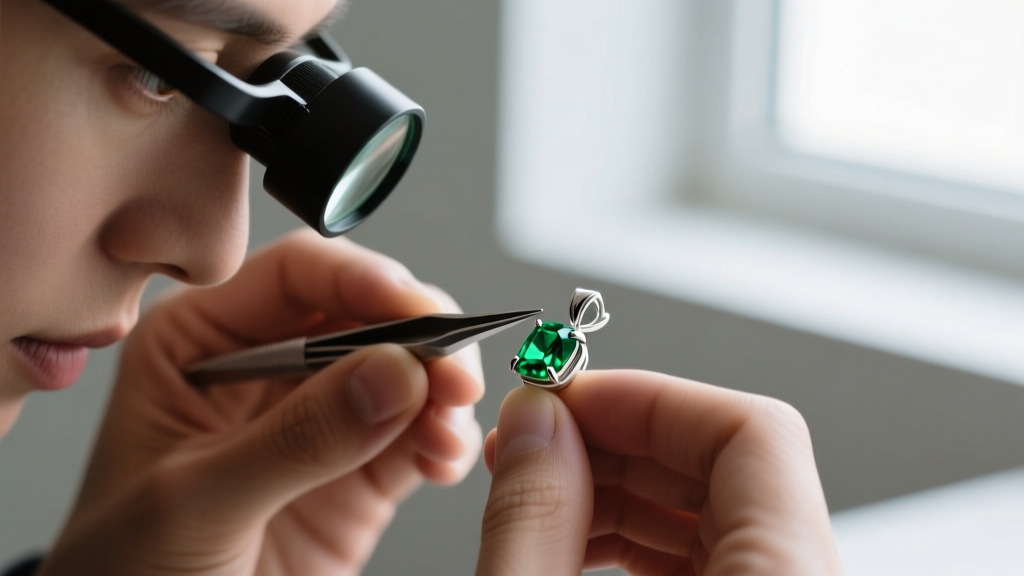
To troubleshoot this, custom jewelers building game-accurate replicas typically pivot to alternative materials that offer the vivid green hue of the OSRS sprite without the structural fragility. Below is a decision matrix for selecting the right stone for your build:
| Material | Mohs Hardness | Toughness | Est. Price/Carat | Best Application |
|---|---|---|---|---|
| Natural Emerald | 7.5 - 8 | Poor | $500 - $3,000+ | High-end display pieces |
| Hydrothermal Emerald | 7.5 - 8 | Excellent | $80 - $150 | Durable daily-wear replicas |
| Tsavorite Garnet | 7 - 7.5 | Good | $300 - $800 | Brilliant color alternative |
| Chrome Diopside | 5.5 - 6.5 | Fair | $40 - $100 | Budget-friendly deep green |
| Green Cubic Zirconia | 8 - 8.5 | Good | $1 - $5 | High-impact convention props |
For the ultimate balance of authenticity and durability, lab-created hydrothermal emeralds are the industry standard for high-tier cosplay jewelry. They possess the exact same chemical composition (Be3Al2(SiO3)6) and crystal structure as mined stones but are grown in inclusion-free environments, allowing for sharp, chip-resistant step cuts.
Metalsmithing & Casting Errors to Avoid
The OSRS item sprite depicts a relatively simple, unadorned metal chain holding a prominent square gemstone. Most builders opt for Sterling Silver (925) due to its affordability and bright luster, though some prefer yellow gold vermeil to match the in-game 'gold' crafting aesthetic. If you are casting your pendant setting using the lost-wax method, porosity is the primary enemy.
Dealing with Porosity in Silver Casts
Porosity manifests as tiny pits or bubbles on the surface of your cast pendant, which can ruin the mirror finish required for a premium replica. This occurs when gases are trapped in the molten metal or when the investment material fails to vent properly. To troubleshoot this, ensure your burnout cycle reaches exactly 1350°F (732°C) to completely vaporize the wax residue. When casting sterling silver, the flask temperature should be dropped to around 900°F (482°C) just before the pour, and the metal should be heated to roughly 1700°F (926°C). Using a boron-based flux like Rio Grande's Prips Flux can also create an oxygen barrier, significantly reducing fire scale and subsurface gas pockets.
Prong Setting Troubleshooting for Step-Cut Stones
The OSRS emerald is drawn as a simple square, but real-world 'emerald cuts' are actually rectangular step-cuts with truncated (cut) corners to protect the stone. If you are forcing a true square-cut stone into a four-prong setting, you are inviting disaster. Standard round prongs will not grip a 90-degree corner securely, and the point of the corner will act as a wedge, splitting the stone under tension.
The Fix: Always use V-prongs for sharp corners, or better yet, design a custom bezel or half-bezel setting. A bezel setting not only secures the entire girdle of the gemstone but also mimics the chunky, solid metal aesthetic seen in fantasy RPG jewelry. If you must use prongs, file the bearing (the seat where the stone rests) to exactly match the pavilion angle of your specific stone—usually around 40 to 45 degrees—to ensure even pressure distribution.
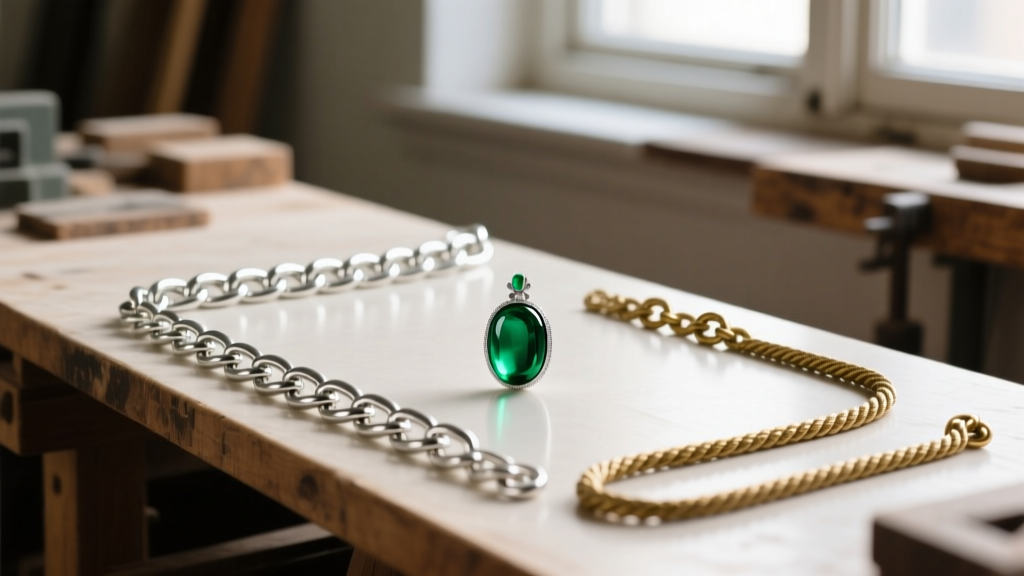
Chain Selection and Clasp Mechanics
A heavy pendant requires a chain with adequate tensile strength. The in-game sprite suggests a medium-to-heavy cable or curb chain. A common troubleshooting issue in custom builds is chain tangling and clasp failure. Thin cable chains (under 2.0mm) will kink permanently when paired with a heavy, solid silver pendant.
- Curb Chains (3.0mm - 5.0mm): The interlocking, flattened links lay flat against the chest and offer superior tensile strength. This is the most historically accurate choice for fantasy amulets.
- Rope Chains: While beautiful, the twisted links can catch on the pendant bail if the bail's inner diameter is too small. Ensure your bail opening is at least 1.5x the width of the chain.
- Clasp Upgrades: Standard spring-ring clasps are a failure point for heavy pendants. Upgrade your build with a sturdy lobster claw clasp (at least 12mm in length) or a custom toggle clasp to ensure the necklace stays secure during convention wear.
Final Polishing and Patina Troubleshooting
Fantasy jewelry rarely looks brand new; it requires depth and shadow to read correctly on camera and in person. A high-mirror polish can sometimes make the pendant look like cheap costume jewelry. To achieve the weathered, ancient artifact look that fits the Gielinor universe, you need to apply a controlled patina.
Liver of Sulfur (potassium sulfide) is the go-to chemical for oxidizing sterling silver. The troubleshooting challenge here is over-oxidation, which turns the piece flaky and black rather than providing a rich, antique gray contrast. To achieve the perfect finish, dilute the liver of sulfur in warm (not hot) distilled water. Dip the pendant for just 10 to 15 seconds, then immediately quench it in cold water. Once dried, use a high-speed rotary tool with a silicone polishing tip or a fine brass brush to selectively remove the oxidation from the high points and prongs, leaving the dark patina only in the recesses and under the bezel. This technique highlights the architectural lines of your custom build, resulting in an emerald necklace osrs replica that looks like it was pulled straight from a dragon's hoard.
For further reading on advanced metal finishing and safe chemical handling in the home studio, consult the safety and technical guides provided by Rio Grande Jewelry Supply, a premier resource for modern metalsmiths.


