WWJD Necklace Guide: Metals, Chains, and Engraving Tech
Explore the metallurgy, chain tensile strength, and laser engraving tech behind durable WWJD necklaces in this expert technical guide.

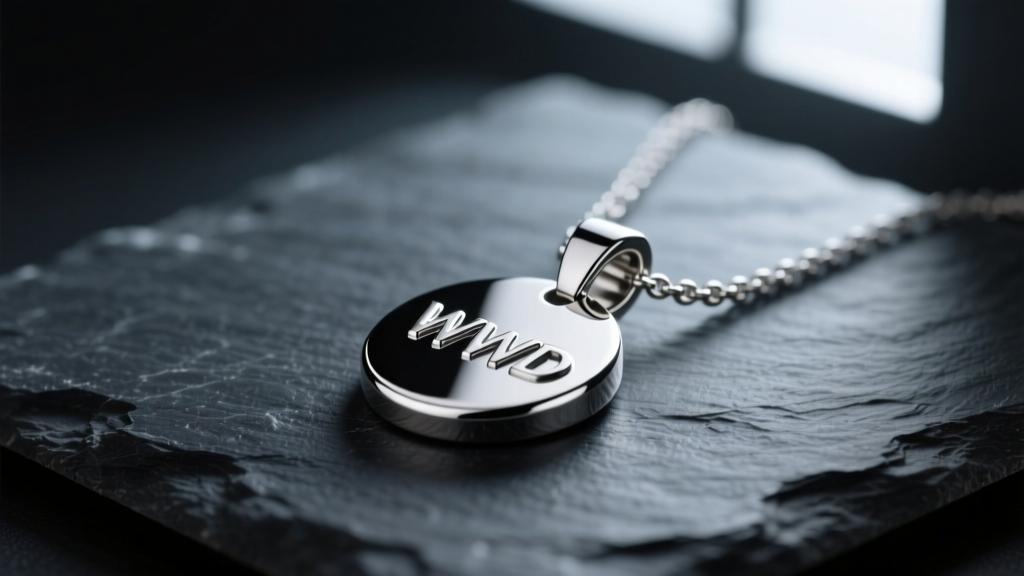
The Anatomy of a High-Quality WWJD Necklace
The "What Would Jesus Do" (WWJD) necklace is a cultural staple that surged to mainstream prominence in the 1990s and remains a powerful symbol of faith today. However, the market is heavily saturated with low-grade, mass-produced zinc alloys that degrade within months. As jewelry professionals, we evaluate faith-based pendants not just by their sentiment, but by their metallurgical integrity, structural engineering, and manufacturing precision. This technical deep dive breaks down the exact material grades, chain mechanics, and engraving technologies you need to look for when investing in a WWJD necklace that will last a lifetime.
Metallurgy: Choosing the Right Base Metal
The longevity of any pendant begins with its base metal. Cheap WWJD necklaces are typically cast from brass or zinc alloys, which suffer from dezincification and rapid copper oxidation, leading to structural failure and skin discoloration. For a piece meant for daily wear, you must look at specific corrosion-resistant alloys and precious metals.
316L Surgical Stainless Steel
For maximum durability at an accessible price point, 316L stainless steel is the industry standard. The addition of molybdenum (2-3%) provides exceptional resistance to chlorides and industrial solvents. According to the British Stainless Steel Association, 316L boasts a tensile strength of roughly 515 MPa, making it virtually impervious to the snapping or bending that plagues softer metals. It will not tarnish or turn your skin green.
925 Sterling Silver vs. Solid Gold
If you prefer precious metals, 925 sterling silver (92.5% silver, 7.5% copper) is a classic choice. However, the copper content makes it susceptible to sulfide tarnishing. To mitigate this, look for silver WWJD pendants that have been flash-plated with rhodium. For heirloom-quality pieces, 14k gold (58.5% pure gold) offers superior scratch resistance compared to 18k gold due to its higher alloy content, as detailed by the Gemological Institute of America (GIA).
| Metal Grade | Tensile Strength | Tarnish Resistance | Avg. Price Range | Best Use Case |
|---|---|---|---|---|
| Zinc Alloy / Brass | ~200 MPa | Poor (Oxidizes) | $5 - $15 | Short-term novelty |
| 316L Stainless Steel | ~515 MPa | Excellent | $25 - $60 | Active daily wear, swimming |
| 925 Sterling Silver | ~250 MPa | Moderate (Needs care) | $40 - $120 | Formal wear, traditional gifts |
| 14k Solid Gold | ~350 MPa | Excellent | $250 - $600+ | Heirloom pieces, lifetime wear |
Chain Mechanics and Gauge Sizing
A heavy pendant on a weak chain is a guaranteed failure point. The wire thickness, or gauge, of the chain must be proportionate to the pendant's weight. A standard 1-inch cast WWJD pendant weighs between 5 and 9 grams. To support this without stretching, the chain wire must be at least 1.5mm in diameter.
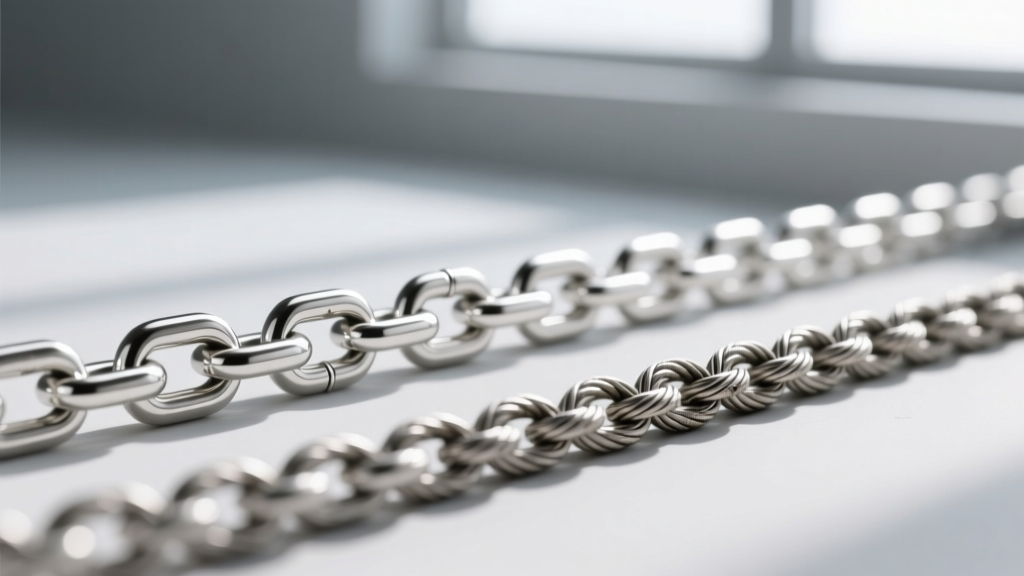
The Soldered Link Advantage
Never purchase a chain with unsoldered links for a daily-wear pendant. Unsoldered cable chains rely purely on the friction of the bent wire; when caught on clothing, the links will pull apart under as little as 3 pounds of tension. Always opt for chains where every individual link is laser-welded or soldered shut. Box chains and curb chains inherently offer higher geometric structural integrity than standard cable chains, distributing tensile stress more evenly across the links.
Engraving Technologies: Laser vs. Diamond Drag
The "WWJD" lettering is the focal point of the necklace. How those letters are applied dictates whether the pendant will look brand new in ten years or completely illegible.
Stamping and Diamond Drag (Avoid)
Cheap pendants use mechanical stamping or diamond-drag engraving. These methods merely displace the top layer of metal, creating shallow grooves (often less than 10 microns deep). When black enamel or paint is rubbed into these shallow grooves, it flakes out within months of friction against clothing and skin oils, leaving you with a blank metal rectangle.
Fiber Laser Engraving (The Expert Standard)
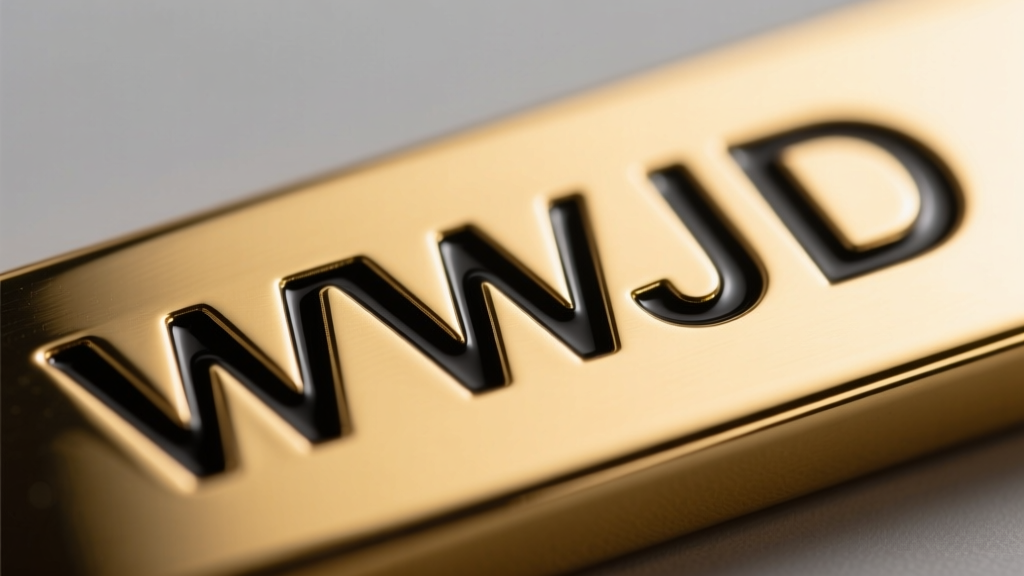
High-end manufacturers use fiber laser marking to vaporize the metal, creating precise pockets 50 to 100 microns deep. This depth allows for the application of vitreous enamel or high-grade aerospace epoxy. Because the fill material sits deep within the laser-ablated pocket, it is shielded from surface friction and will not flake or fade over time.
Clasp Engineering and Failure Points
The clasp is the most mechanically complex part of any necklace. The standard spring-ring clasp found on budget jewelry relies on a tiny internal coil spring that suffers from metal fatigue, typically failing after 400 to 600 actuation cycles. For a piece you take on and off daily, this means a broken clasp in under two years.
The Solution: Upgrade to a forged lobster claw clasp. Lobster claws feature a solid cast body and a much heavier, more resilient spring mechanism. Furthermore, ensure the clasp includes a swivel jump ring at its base. This prevents the chain from twisting and kinking, which weakens the solder joints over time.
Bail Mechanics and Pendant Weight Distribution
The bail is the loop that connects the pendant to the chain. In mass-produced jewelry, the bail is often cast as a single piece with the pendant, leaving a thin, porous connection point. In premium WWJD necklaces, the bail is a separate, heavier-gauge component that is silver-soldered to the top of the pendant. This soldered joint provides a shear strength that far exceeds the casting itself, preventing the pendant from snapping off the chain if tugged.
Maintenance and Troubleshooting
Even the finest 14k gold or 316L steel WWJD necklace requires basic maintenance to preserve its finish and mechanical integrity.
- Ultrasonic Cleaning: Safe for plain steel and gold. However, if your pendant features epoxy-filled laser engraving, avoid ultrasonic cleaners, as the high-frequency cavitation can loosen the epoxy over time. Stick to warm water and mild dish soap.
- Polishing: Use a microfiber cloth for daily wiping. Avoid aggressive silver polishing dips on rhodium-plated sterling silver, as the chemicals will strip the rhodium layer and expose the tarnish-prone silver underneath.
- Clasp Lubrication: If a lobster claw clasp becomes stiff, apply a microscopic drop of synthetic watch oil to the hinge pin to restore smooth actuation without attracting dust.
Expert Insight: When shopping for a WWJD necklace online, always check the macro photos of the lettering. If the black fill looks painted over the edges of the letters rather than recessed cleanly inside deep, sharp-walled grooves, it is a stamped piece that will lose its contrast rapidly. Demand laser-engraved depth.
By prioritizing 316L steel or solid precious metals, insisting on soldered chain links, and verifying deep laser engraving, you can secure a WWJD necklace that serves as a durable, lifelong testament to your faith, rather than a disposable accessory. For further reading on precious metal standards and alloy compositions, refer to the GIA Silver Guide and their comprehensive gold grading resources.


