Crafting a Birthstone Family Necklace: A Gemology and Metalwork Guide
Discover the metallurgy and gemology behind a custom birthstone family necklace. Learn about stone hardness, setting types, and chain gauge limits.

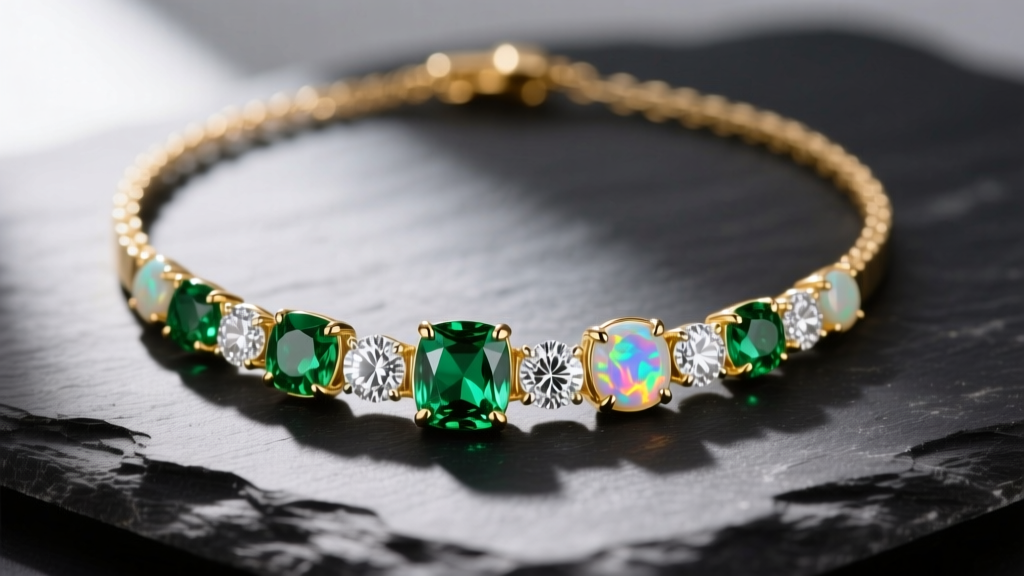
The Gemological Paradox: Mohs Hardness Disparities
Designing a custom birthstone family necklace is rarely as simple as selecting stones and dropping them into a pre-cast setting. From a gemological perspective, combining multiple birthstones into a single pendant introduces severe structural and wear-related challenges. The primary issue lies in the Mohs scale of mineral hardness. A family necklace might pair an April diamond (Mohs 10) with an October opal (Mohs 5.5-6.5) and a July ruby (Mohs 9). When these stones are set in close proximity on a single swinging pendant, they are subjected to continuous micro-collisions.
According to the GIA Gem Encyclopedia, hardness dictates a material's resistance to scratching, but it does not account for toughness or cleavage. Diamonds possess perfect octahedral cleavage, meaning a sharp blow against a harder metal prong or another diamond can cause internal fracturing. Conversely, opals lack cleavage but are highly susceptible to abrasion and chipping due to their amorphous silica structure. Therefore, a master jeweler must isolate softer stones from harder ones using physical metal barriers, rather than relying on shared prong settings where stones might touch.
Birthstone Hardness and Setting Matrix
| Birthstone (Month) | Mohs Hardness | Cleavage / Fracture | Recommended Setting Type |
|---|---|---|---|
| Diamond (April) | 10 | Perfect Octahedral | 4-Prong or Bezel |
| Ruby (July) | 9 | No True Cleavage | Prong, Channel, or Bezel |
| Emerald (May) | 7.5 - 8 | Indistinct, Highly Included | Full Bezel (Corner-Protected) |
| Opal (October) | 5.5 - 6.5 | Conchoidal Fracture | Full Bezel with High Walls |
| Pearl (June) | 2.5 - 4.5 | N/A (Organic) | Half-Drill Peg Setting |
Mitigating Stone-on-Stone Percussion Damage
One of the most common failure modes in multi-stone pendants is "stone-on-stone percussion." This occurs when individual charms or sliding stones on a single bail collide repeatedly due to the kinetic energy of walking and moving. If a diamond charm strikes an emerald charm, the emerald will inevitably suffer surface abrasion or catastrophic edge chipping.
To engineer a durable birthstone family necklace, jewelers utilize fixed-spacing bezel settings. By casting a continuous 1.2mm to 1.5mm precious metal wall between each gemstone, the metal acts as a shock-absorbing bumper. Bezel settings are vastly superior to prong settings for family necklaces because the metal rim protects the vulnerable girdle (the widest edge) of the gemstone. Furthermore, bezel walls eliminate the risk of prongs catching on textiles, which can bend the metal and release the stone over time.
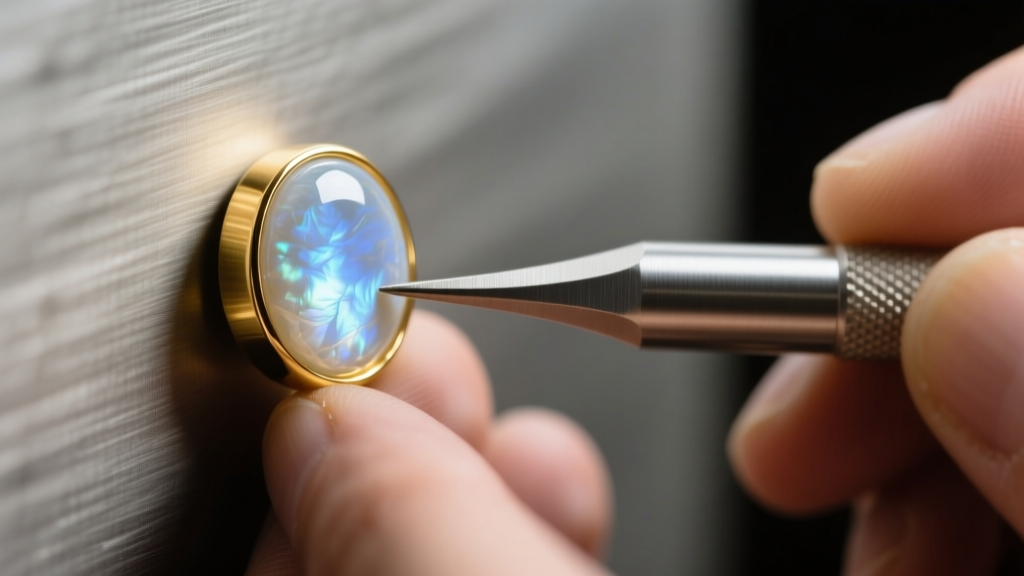
Bail Engineering and Chain Gauge Requirements
The bail—the loop that connects the pendant to the chain—is the critical stress point of any necklace. A standard single-stone pendant weighs between 2 to 4 grams, easily supported by a delicate 22-gauge chain and a stamped sheet-metal bail. However, a 5-stone family pendant can easily exceed 12 to 18 grams, depending on the carat weight of the gems and the volume of the precious metal alloy.
For heavy multi-stone pendants, standard cast bails are prone to work-hardening and eventual fatigue fracturing at the solder joint. Expert metalworkers recommend machining a solid, heavy-walled tubular bail or utilizing a laser-welded European-style bail. The inner diameter of the bail must be precisely calibrated to the chain thickness to prevent excessive friction wear.
Chain Gauge and Tensile Strength Guidelines
- 20-Gauge to 22-Gauge Chains: Suitable only for lightweight, 1-to-2 stone pendants under 5 grams. Prone to kinking and snapping under multi-stone loads.
- 18-Gauge Chains (approx. 1.0mm): The minimum acceptable gauge for a 3-to-4 stone family necklace. Provides adequate tensile strength in 14k gold, supporting up to 12 grams of pendant weight safely.
- 16-Gauge Chains (approx. 1.3mm+): Mandatory for 5+ stone pendants exceeding 15 grams. Wheat, rope, or heavy rolo chains in this gauge distribute the kinetic load evenly across the links, preventing localized stress fractures.
Metallurgical Considerations: 14k vs. 18k Gold Alloys
When selecting the metal for a birthstone family necklace, consumers often default to 18k gold for its richer color and higher purity. However, from a structural engineering standpoint, 14k gold is frequently the superior choice for complex, multi-stone jewelry. Pure gold (24k) is exceptionally soft. By alloying gold with copper, silver, and zinc, jewelers alter its mechanical properties.
According to metallurgical data from Rio Grande Jewelry Supply, 14k yellow gold possesses a higher yield strength and greater tensile strength than 18k yellow gold due to its higher percentage of alloy metals. This increased rigidity means that 14k gold prongs and bezel walls are more resistant to bending upon impact, providing a more secure grip on the gemstones over decades of daily wear. For bezel-set family necklaces where the metal rim must be burnished tightly against the stone, 14k gold offers the perfect balance of malleability during the setting process and rigid durability during the wearing process.
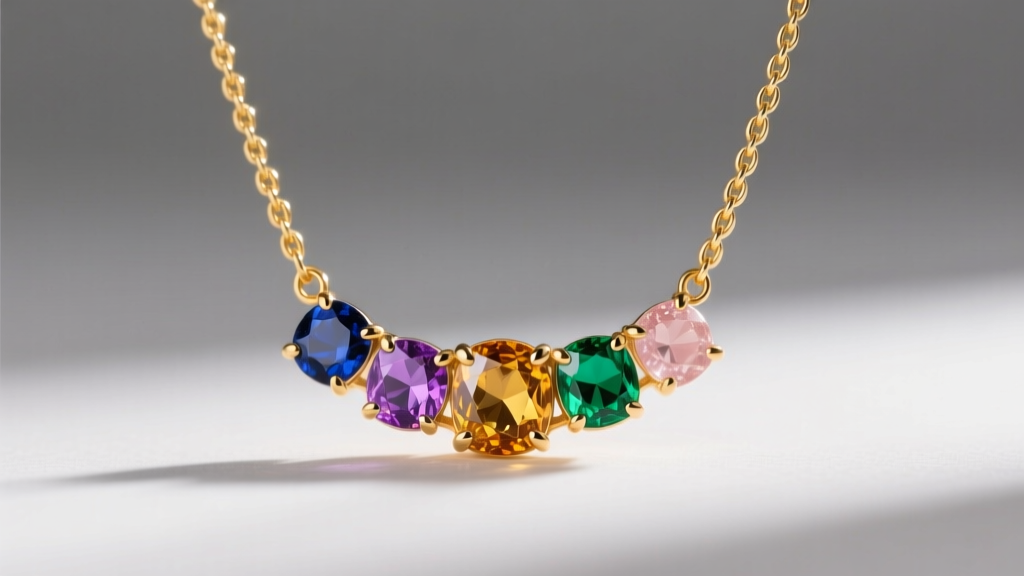
Thermal Hazards: Soldering and Laser Welding
A critical phase in manufacturing a multi-stone pendant is attaching the bail to the main body. If a jeweler attempts to torch-solder a bail onto a pendant *after* the birthstones have been set, the thermal shock can be disastrous. Emeralds are routinely treated with cedar oil or synthetic resins to mask internal fractures; exposing them to a jeweler's torch will boil the oil, leaving the stone cloudy and heavily fractured. Similarly, heat-treated rubies and sapphires can experience color alteration or internal shattering.
To bypass this, high-end custom jewelers either solder the bail to the pendant base *before* the stones are set, or they utilize advanced laser welding technology. Laser welding concentrates a microscopic beam of light to fuse metal without transferring ambient heat to the surrounding gemstones, allowing for safe bail repairs and additions on fully assembled, stone-set family necklaces.
Ultrasonic and Chemical Cleaning Hazards
Maintaining a multi-stone necklace requires strict adherence to gemological safety protocols. The convenience of ultrasonic cleaners is a leading cause of jewelry damage. The high-frequency acoustic cavitation generated by ultrasonic baths can easily shatter included emeralds, strip the protective coatings from mystic topaz, and cause microscopic pitting in organic pearls. Furthermore, chemical dip cleaners containing harsh acids or ammonia will dissolve the nacre of a pearl and degrade the structural integrity of porous stones like turquoise or lapis lazuli. The only safe, universal cleaning method for a mixed-gemstone family necklace is a soft-bristled brush, lukewarm water, and a mild, phosphate-free dish detergent, followed by careful drying with a microfiber cloth.
Conclusion: Engineering Heirloom Durability
A beautifully designed birthstone family necklace is a triumph of both emotional significance and mechanical engineering. By respecting the Mohs hardness disparities, utilizing protective bezel settings, calculating the correct chain gauge, and selecting the appropriate gold alloy, jewelers can transform a fragile collection of gems into a robust, multi-generational heirloom. Understanding these technical details ensures that the necklace remains as structurally sound as the family bonds it represents.


