The Ocean Necklace: A Technical Guide to Material Durability
Explore the material science behind the ocean necklace. Learn about gemstone cleavage, metal corrosion, and resin UV resistance for lasting durability.

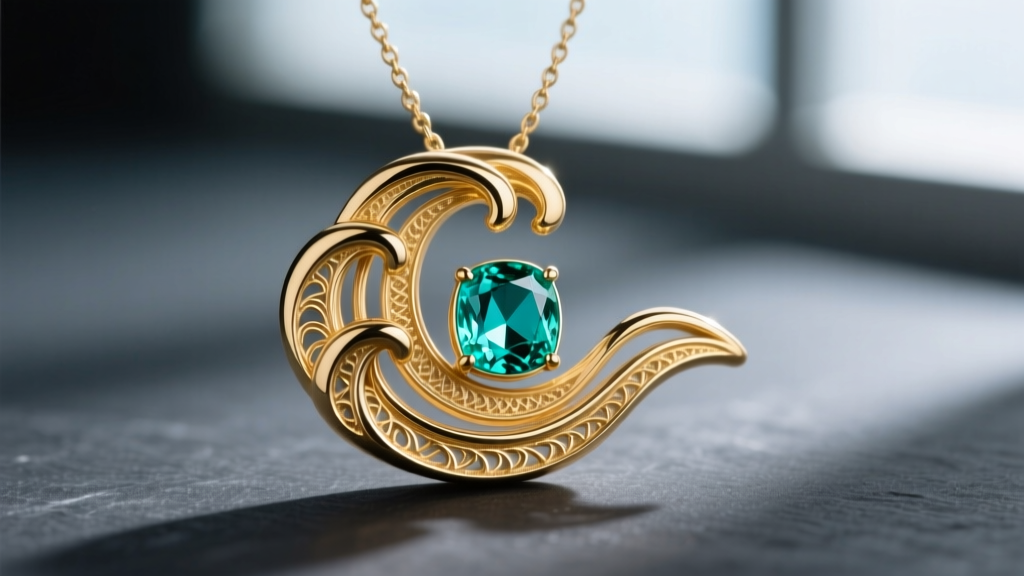
The Anatomy of a Marine-Inspired Pendant
The term "ocean necklace" encompasses a vast array of marine-inspired jewelry, ranging from delicate wave-motif chains to complex resin-cast seascapes and organic shell inlays. However, designing and wearing jewelry that mimics the ocean often means exposing it to the ocean's actual environment: high salinity, intense UV radiation, and fluctuating temperatures. From a metallurgical and gemological perspective, an ocean-themed pendant is a complex assembly of disparate materials, each with unique failure modes when subjected to moisture and friction. In this technical deep dive, we examine the material science, structural integrity, and environmental degradation risks associated with marine-inspired necklaces, providing a definitive framework for jewelers and collectors in 2026.
Gemstone Cleavage, Porosity, and Photodegradation
When selecting center stones for an ocean necklace, designers typically gravitate toward blue and green gemstones. However, the visual appeal of these stones often masks critical structural vulnerabilities. Understanding the distinction between hardness (scratch resistance) and toughness (resistance to breaking) is paramount.
Aquamarine vs. Blue Topaz: The Cleavage Risk
Aquamarine, a variety of beryl, sits at 7.5 to 8 on the Mohs hardness scale. According to the Gemological Institute of America (GIA), aquamarine has indistinct cleavage, meaning it does not easily split along defined crystallographic planes. This makes it highly suitable for prong-set pendants that may experience minor impacts. Conversely, blue topaz (Mohs 8) possesses perfect basal cleavage. While it resists scratching slightly better than aquamarine, a single sharp impact against a ceramic sink or a dropped pendant can cause a blue topaz to cleave cleanly in half. For an ocean necklace intended for daily wear, bezel settings are mandatory for topaz to protect the girdle and culet from catastrophic cleavage.
Larimar: Photosensitivity and Hydration
Larimar (blue pectolite) is a staple in Caribbean-inspired ocean jewelry. With a Mohs hardness of just 4.5 to 5, it is highly susceptible to abrasion. More critically, larimar is photosensitive. Prolonged exposure to direct ultraviolet light causes the stone's signature volcanic blue hue to fade into a washed-out gray-white. Furthermore, pectolite is a hydrous sodium calcium silicate; prolonged submersion in saltwater can lead to microscopic dehydration and surface crazing over time. The GIA's Larimar profile explicitly warns against ultrasonic cleaning and harsh chemical exposure, making it a high-maintenance choice for beachgoers.
Metal Alloys and Galvanic Corrosion Risks
The chain and pendant bail of an ocean necklace act as the structural backbone. In marine or high-sweat environments, the choice of alloy dictates the lifespan of the piece. Sterling silver (92.5% silver, 7.5% copper) is notoriously prone to tarnishing. The copper content reacts with sulfur compounds in the air and chlorides in sweat, forming a black layer of copper sulfide and silver chloride. While this can be polished away, repeated polishing degrades intricate wave-motif engravings.
For superior corrosion resistance, 316L surgical stainless steel is the industry standard for fashion jewelry. The addition of 2-3% molybdenum in 316L dramatically increases its resistance to pitting corrosion from chlorides (saltwater) compared to standard 304 stainless steel. However, jewelers must avoid mixing 316L steel with sterling silver or lower-karat gold in the same assembly. When two dissimilar metals are connected in the presence of an electrolyte (like sweat or seawater), galvanic corrosion occurs. The more anodic metal (silver or copper alloys) will corrode rapidly to protect the cathodic metal (stainless steel).
| Material | Mohs / Yield Strength | Saltwater Reaction | UV / Heat Stability | Best Use Case |
|---|---|---|---|---|
| 316L Stainless Steel | N/A (High Tensile) | Highly Resistant (Pitting) | Excellent | Chains, Clasps, Bails |
| 925 Sterling Silver | N/A (Malleable) | Tarnishes (Chloride Reaction) | Excellent | Low-Exposure Pendants |
| Grade 2 Titanium | N/A (High Strength) | Immune (Passive Oxide Layer) | Excellent | Hypoallergenic Inlay Bezels |
| Abalone Shell | 2.5 - 4.0 | Degrades (Acid Dissolution) | Good (Fades in direct sun) | Protected Inlays Only |
Organic Inlays: Abalone, Paua, and Sea Glass
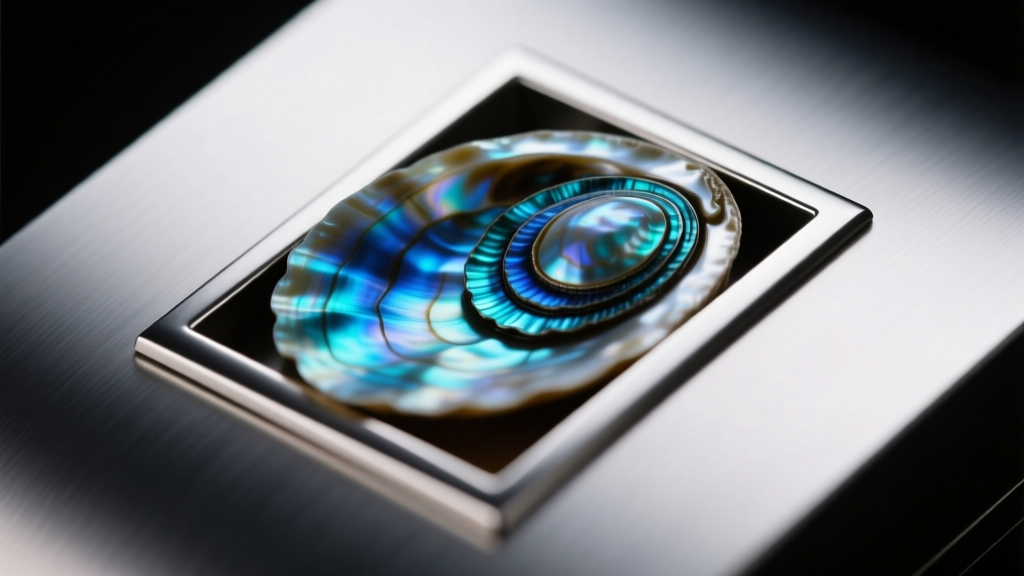
Organic materials bring authentic oceanic textures to jewelry, but they introduce severe chemical vulnerabilities. Abalone and Paua shells are composed primarily of calcium carbonate in a nacreous matrix. Calcium carbonate is highly reactive to acids. Human sweat contains lactic acid, and ocean water contains dissolved carbonic acid. When an abalone inlay is worn directly against the skin without a raised metal bezel, the acid slowly dissolves the calcium carbonate, leaving the shell porous, dull, and structurally compromised. To prevent this, master jewelers utilize a "raised bezel" technique, where the titanium or gold lip extends 0.5mm above the shell surface, preventing direct friction and chemical contact with the skin.
Sea glass, often wire-wrapped or set in bezels, is amorphous silica that has been naturally tumbled. While its Mohs hardness (5.5-7) is respectable, the tumbling process introduces a network of microscopic surface fractures. If subjected to thermal shock—such as moving from a freezing ocean into a hot tub—these micro-fractures can propagate, causing the sea glass to shatter internally.
Resin Encapsulation and UV Degradation
The modern ocean necklace frequently utilizes epoxy or polyurethane resins to encapsulate sand, sea foam motifs, or tiny shells, creating a "frozen wave" effect. The primary enemy of resin jewelry is ultraviolet (UV) radiation. Standard bisphenol-A (BPA) epoxy resins undergo photo-oxidation when exposed to sunlight, resulting in a yellowing effect that destroys the illusion of clear ocean water.
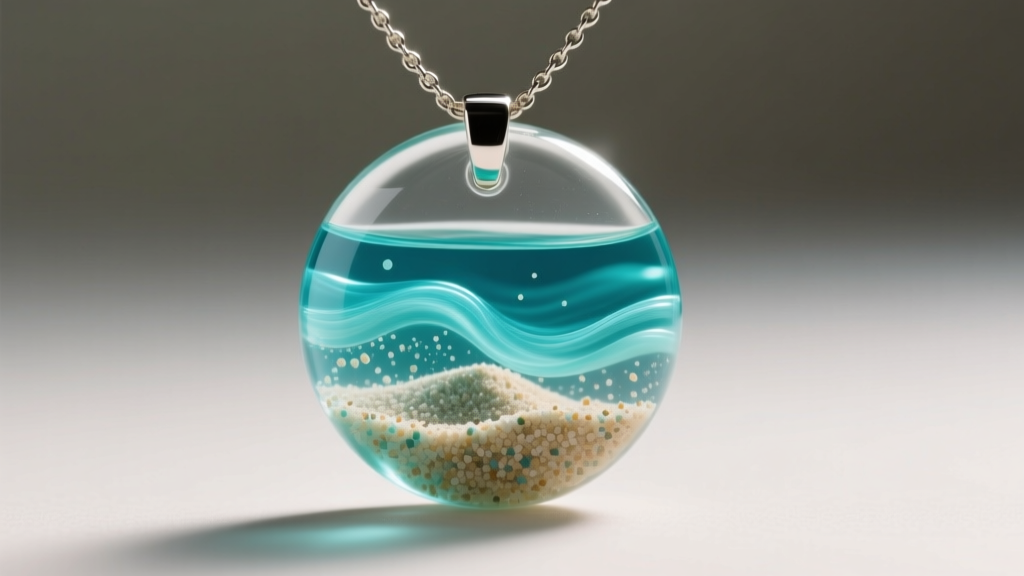
As of 2026, high-end jewelry manufacturers have shifted toward aliphatic polyurethane resins or epoxies heavily doped with Hindered Amine Light Stabilizers (HALS) and UV absorbers (like benzotriazoles). HALS work by scavenging the free radicals generated during UV exposure, effectively halting the polymer chain degradation that causes yellowing. When commissioning or purchasing a resin ocean necklace, verifying the presence of HALS additives is critical; without them, a crystal-clear resin pendant will develop a distinct amber tint within 6 to 12 months of regular outdoor wear.
Clasp Mechanics and Saltwater Ingress
The clasp is the most frequent point of mechanical failure in any necklace, and saltwater accelerates this process exponentially. Spring-ring clasps rely on a tiny internal steel spring. When saltwater enters the hollow cavity of the spring ring and evaporates, it leaves behind salt crystals. These crystals jam the microscopic spring mechanism, rendering the clasp inoperable and risking the loss of the pendant.
For an ocean necklace intended for beach or marine wear, lobster clasps or magnetic neodymium clasps encased in 316L stainless steel are vastly superior. Lobster clasps feature a more open, solid-lever mechanism that can be easily flushed with fresh water, while high-grade neodymium magnetic clasps eliminate moving parts entirely, removing the risk of mechanical jamming. However, magnetic clasps must be paired with a secondary safety chain to prevent loss if the magnetic field is disrupted by ferrous metals in the environment.
Maintenance Protocols for High-Salinity Environments
To maintain the structural and aesthetic integrity of an ocean necklace, a rigorous post-exposure protocol is required:
- Immediate Freshwater Flush: After exposure to saltwater or heavy perspiration, rinse the necklace under lukewarm (never hot) distilled or filtered water to dissolve chloride deposits.
- Ultrasonic Avoidance: Never place an ocean necklace featuring larimar, abalone, sea glass, or resin in an ultrasonic cleaner. The high-frequency cavitation bubbles will aggressively exploit micro-fractures and delaminate resin inlays.
- Drying and Storage: Pat dry with a microfiber cloth and allow the piece to air-dry completely in a low-humidity environment before storing. Trapped moisture in the crevices of a wave-motif pendant will accelerate localized galvanic corrosion.
- Chemical Isolation: Apply sunscreens, perfumes, and insect repellents at least 15 minutes before donning the necklace. The organic solvents in these products can dissolve the protective waxes on organic shells and degrade the surface tension of resin coatings.
By understanding the material science and chemical interactions inherent in marine-inspired jewelry, collectors and designers can ensure their ocean necklace remains a durable, lifelong artifact rather than a fleeting seasonal accessory.


