Expert Buying Guide: Choosing a 14k Gold Heart Necklace
Discover what to look for when buying a 14k gold heart necklace. Expert tips on chain types, gold purity, clasps, and pricing for a lasting investment.

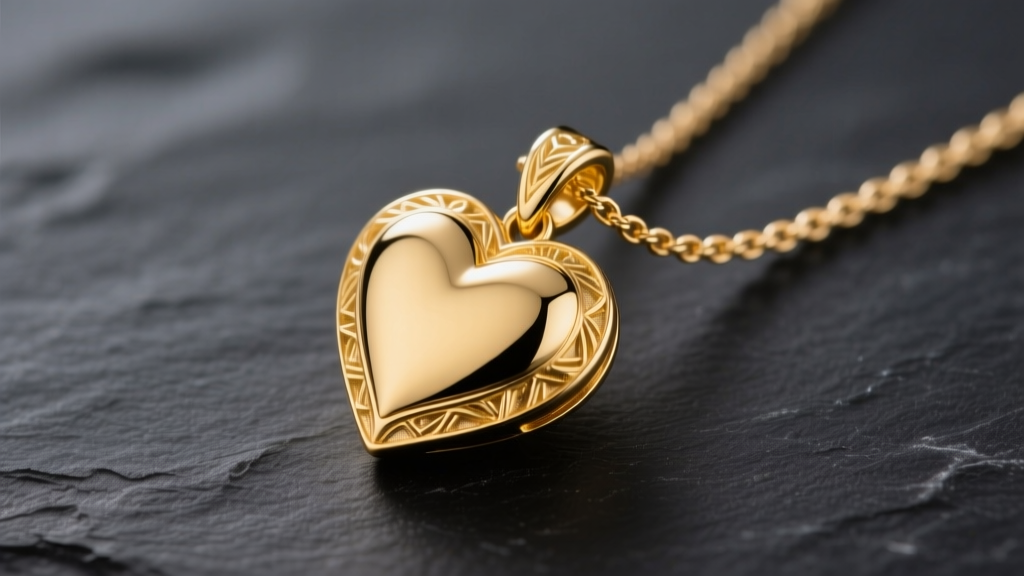
The heart motif remains an undisputed staple in fine jewelry, symbolizing affection, commitment, and personal milestones. However, the market is heavily saturated with thinly plated brass, hollow stamped gold, and poorly constructed chains that snap within months. When investing in a 14k gold heart necklace, understanding the metallurgy, structural integrity, and hardware mechanics is the difference between purchasing a fleeting accessory and acquiring a lifelong heirloom. This comprehensive buying guide strips away the marketing fluff to reveal exactly what you should look for regarding weight, chain pairing, and authentic pricing.
The Metallurgy of 14k Gold: Why It Outperforms
Pure 24k gold is far too malleable for daily-wear jewelry; a solid 24k heart pendant would easily warp or scratch under minor pressure. According to the Federal Trade Commission Jewelry Guides, 14k gold consists of 58.3% to 58.5% pure gold, with the remaining 41.5% composed of strengthening alloys like copper, silver, and zinc. This specific ratio creates the ultimate sweet spot for a heart necklace: it retains the rich, luxurious luster of gold while possessing the tensile strength required to resist denting and deformation.
Color Alloys and Maintenance
- Yellow Gold: Alloyed with a balanced mix of copper and silver. It requires the least maintenance, as scratches can be easily buffed out without losing color.
- Rose Gold: Contains a higher copper content, yielding a warm pink hue. It is exceptionally durable and highly resistant to tarnish, making it ideal for active wearers.
- White Gold: Alloyed with nickel or palladium and plated with rhodium to achieve a silver-white finish. Be aware that the rhodium plating will wear off every 2 to 3 years, requiring professional replating to maintain its bright white appearance.
Pendant Anatomy: Solid Cast vs. Hollow Stamped
The most critical failure point in the fine jewelry market is the hollow stamped pendant. Many mass-market retailers sell 14k gold heart pendants that weigh between 0.5 and 1.2 grams. While they are technically real gold, they are formed from thin sheets of stamped gold.
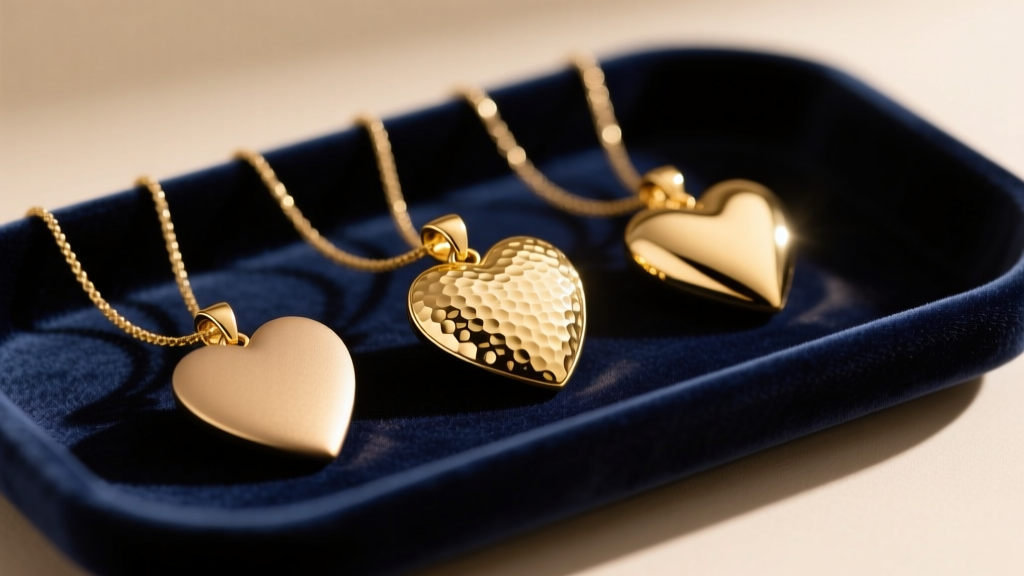
The Hollow Trap: If a hollow heart pendant is dropped, bumped against a counter, or accidentally crushed, it will dent. Because there is no internal structure and the gold sheet is microscopically thin, jewelers cannot solder, buff, or repair these dents. The piece is effectively ruined.
The Solid Standard: A high-quality 14k gold heart necklace should feature a solid cast or die-struck pendant weighing between 2.5 grams and 6.0 grams. Solid gold can be aggressively polished, buffed to remove deep scratches, and easily soldered if the bail (the loop that holds the chain) ever wears thin. Always ask the jeweler for the exact gram weight of the pendant before purchasing.
Evaluating the Bail
The bail is the unsung hero of the necklace. It must have an inner diameter large enough to accommodate your chosen chain without causing friction. A 1.2mm box chain, for example, requires a bail with an inner clearance of at least 1.5mm. Continuous friction between a tight chain and the bail will eventually act like a saw, wearing through the 14k gold and causing you to lose the pendant.
Chain Selection: Matching the Link to the Pendant
A beautiful heart pendant is only as secure as the chain holding it. Different chain links offer varying levels of durability, drape, and snag resistance. Below is a structural comparison of the most common chain types paired with heart pendants.
| Chain Type | Durability | Snag Risk | Best For |
|---|---|---|---|
| Cable | Moderate | Low | Minimalist, lightweight hearts (under 2g) |
| Box | High | High | Geometric aesthetics; prone to catching on fine fabrics |
| Rope | Very High | Low | Heavier solid hearts; twisted links hide scratches well |
| Wheat | Exceptional | None | Heirloom pieces; interlocking links prevent kinking |
For a daily-wear 14k gold heart necklace, a 1.0mm to 1.5mm Wheat or Rope chain provides the best balance of fluid drape and structural integrity. Avoid chains thinner than 0.8mm, as they are highly susceptible to snapping under the dynamic weight of a moving pendant.
Clasp Security and Hardware Failures
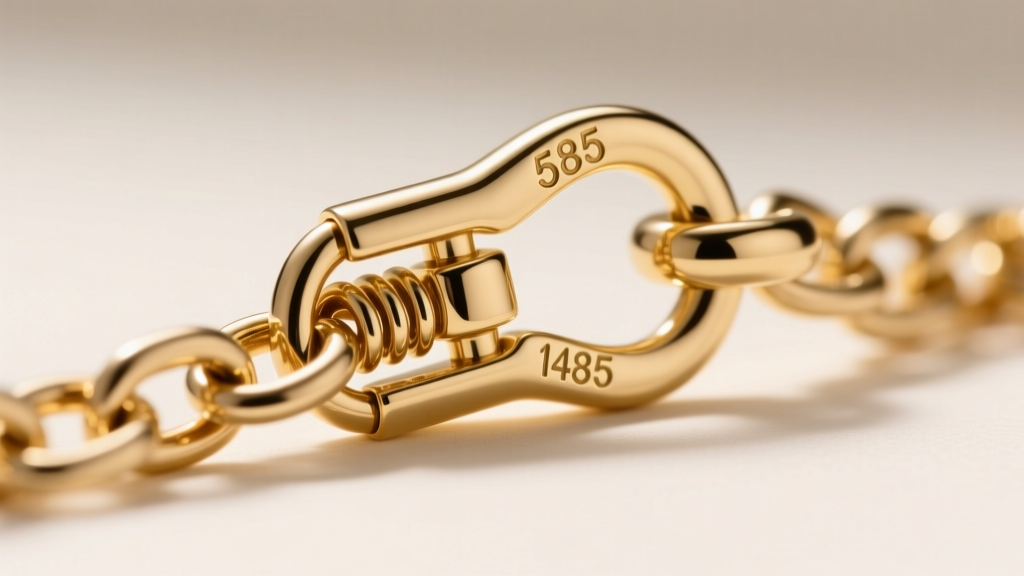
The clasp is the single most common point of mechanical failure on any necklace. Most entry-level jewelry utilizes a spring ring clasp. These are inexpensive to produce but feature a tiny internal spring that frequently loses tension or breaks, causing the necklace to slip off unnoticed.
When buying a premium 14k gold heart necklace, insist on a lobster claw clasp. Lobster clasps feature a robust, spring-loaded lever that locks securely into the jump ring. Furthermore, ensure the jump ring itself is soldered closed. An unsoldered jump ring can easily be pulled apart if the chain catches on a sweater, resulting in the loss of the entire piece.
Pricing Framework: Calculating True Value
Understanding how to price a 14k gold heart necklace protects you from inflated retail markups. Gold is a globally traded commodity, and its baseline value is dictated by the spot price. According to data from the World Gold Council, you can estimate the intrinsic melt value of the piece by calculating its total gram weight.
The Pricing Formula: If the scrap value of 14k gold is roughly $38 per gram, a necklace consisting of a 4-gram solid heart and a 4-gram chain contains 8 grams of gold, yielding a baseline melt value of approximately $304. A reputable independent jeweler will typically apply a manufacturing and retail markup of 2x to 3x the melt value, placing a fair retail price between $600 and $900. If a brand is charging $1,200 for a simple, non-diamond solid gold heart, you are paying a massive premium for the logo rather than the craftsmanship.
Conversely, if you see a 14k gold heart necklace priced at $120, it is almost certainly hollow, weighs less than 1.5 grams total, and utilizes a low-grade spring ring clasp.
Hallmarks and Authenticity Verification
Never purchase a 14k gold heart necklace without verifying the hallmarks. Legitimate pieces will be stamped with 14k, 14K, or the European standard 585. This stamp is usually located on the back of the heart pendant, on the clasp, or on the jump ring.
Beyond the purity stamp, look for a maker's mark—a tiny symbol or set of initials indicating the manufacturing jeweler. A maker's mark is a hallmark of accountability; it proves the manufacturer stands behind the metallurgical accuracy of their alloy. By prioritizing solid weight, secure lobster clasps, and transparent gram pricing, you ensure your 14k gold heart necklace will remain a pristine, enduring symbol for decades to come.


