Engineering the Biggest Necklace: Material Weight and Strength
Discover the material science behind the biggest necklace designs. Compare metal densities, structural gauges, and clasp mechanics for heavy jewelry.

The Physics of Scale in Statement Jewelry
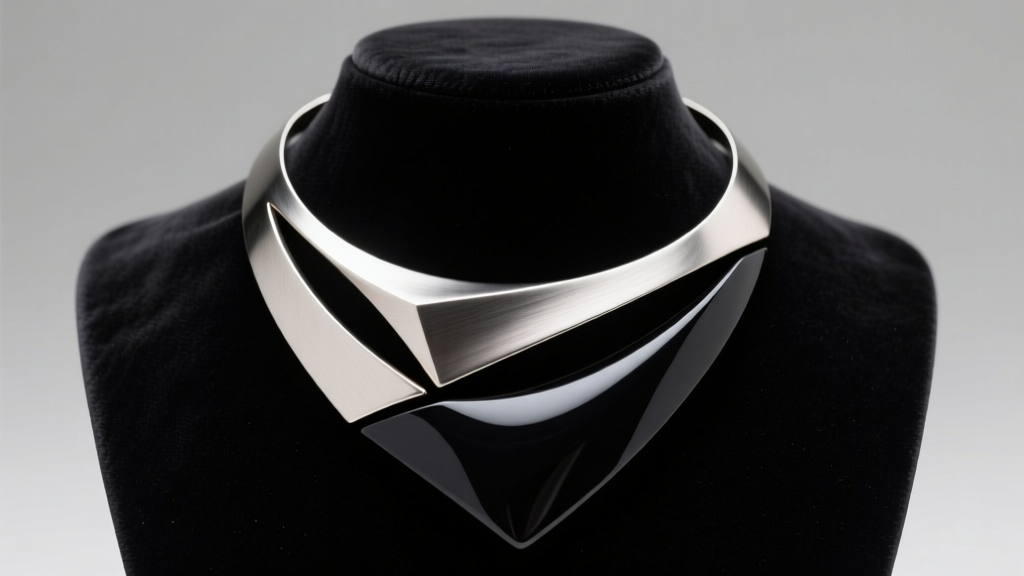
When avant-garde designers and high jewelry houses set out to create the biggest necklace in a collection, they are immediately confronted by an unforgiving adversary: gravity. While the visual impact of a massive, oversized bib collar or a heavy multi-strand ceremonial piece is undeniable, the physical reality of wearing 300 to 800 grams of jewelry requires rigorous material engineering. A necklace that spans six inches across the collarbone and drops three inches down the sternum cannot simply be scaled up using standard jewelry metals and techniques. If a designer merely scales up a solid 18k gold chain to match the volume of a large statement piece, the resulting weight would cause severe cervical spine strain, skin abrasion, and catastrophic structural failure at the clasp.
To successfully engineer the biggest necklace designs seen on modern runways and red carpets, jewelers must pivot from traditional precious metal casting to advanced metallurgy, composite materials, and ergonomic weight distribution. This guide explores the material properties, tensile strengths, and structural frameworks required to make high-volume, heavyweight necklaces both wearable and durable.
Material Density and Structural Comparison
The primary limiting factor in oversized jewelry is material density, measured in grams per cubic centimeter (g/cm³). The volume of a sculptural pendant or a wide mesh collar directly correlates to its mass based on the chosen alloy. Below is a comparison of materials frequently utilized in large-scale necklace fabrication, highlighting their specific gravity and yield strength.
| Material | Density (g/cm³) | Yield Strength | Best Application in Large Necklaces |
|---|---|---|---|
| Solid 18k Gold | 15.60 | 200-300 MPa | Small structural accents, hollow-form electroforming |
| Sterling Silver (925) | 10.36 | 250 MPa | Medium statement pieces, requires thick gauges (12G+) |
| Grade 5 Titanium (Ti-6Al-4V) | 4.43 | 880 MPa | Large structural armatures, heavy wire wrapping frameworks |
| 6061-T6 Aluminum | 2.70 | 276 MPa | Massive volume CNC-milled links, cast sculptural plates |
| Cast Epoxy Resin | 1.10 - 1.20 | 40-80 MPa | High-volume beads, oversized gemstone simulants |
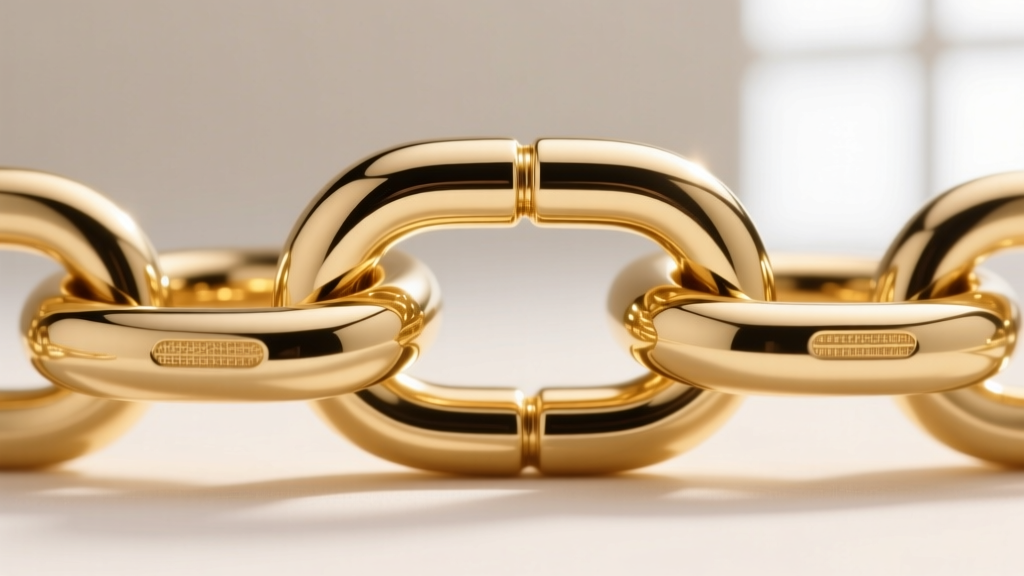
As noted by the Gemological Institute of America (GIA), traditional precious metals are inherently dense. To maintain the illusion of a massive, solid gold collar without the crippling weight, master jewelers utilize electroforming. This process creates a microscopic shell of gold over a wax or resin core, reducing the overall weight of the biggest necklace components by up to 70% while maintaining the external volume and luster of solid metal.
The Rise of Aerospace Aluminum and Titanium
For contemporary, architectural statement pieces where sheer volume is the goal, 6061-T6 Aluminum has become an industry secret. According to data from AZoM Materials Science, this specific alloy offers an exceptional strength-to-weight ratio and can be anodized to produce vibrant, permanent colors without the added weight of heavy vitreous enamels. Similarly, Grade 5 Titanium (Ti-6Al-4V) is utilized for the internal wire armatures of massive bib necklaces. Because its yield strength is nearly triple that of sterling silver, a 14-gauge titanium wire can support the same load as a 10-gauge silver wire, saving crucial grams in the underlying framework.
Clasp Mechanics and Chain Failure Modes
The most common point of catastrophic failure in heavy, oversized jewelry is the clasp and the connecting jump rings. When a necklace weighs over 250 grams, the dynamic load generated by the wearer walking or turning their head creates immense lateral torque. Standard 18-gauge (1.02mm) jump rings will easily pull apart, and traditional lobster claws will fail as their internal steel springs snap under the stress.
- Jump Ring Gauge: For the biggest necklace designs, connecting rings must be upgraded to at least 10-gauge (2.58mm) or 8-gauge (3.26mm) wire. Furthermore, these rings must be laser-welded closed rather than merely flush-cut and soldered, as silver solder joints are brittle and prone to shearing under dynamic tension.
- Box Clasps with Safeties: A heavy-duty 14k or 18k gold box clasp featuring a V-shaped internal tongue and double figure-8 safety latches is mandatory for multi-strand collars. The box mechanism distributes the pulling force across the entire housing rather than relying on a single spring.
- Neodymium Magnetic Closures: For pieces where a seamless look is required, N52-grade neodymium magnets encased in CNC-milled stainless steel or titanium housings provide over 40 pounds of pull force. These are often integrated into the yoke of the necklace to allow for easy dressing without compromising the structural integrity of the front drape.
Ergonomic Frameworks for Heavy Collars
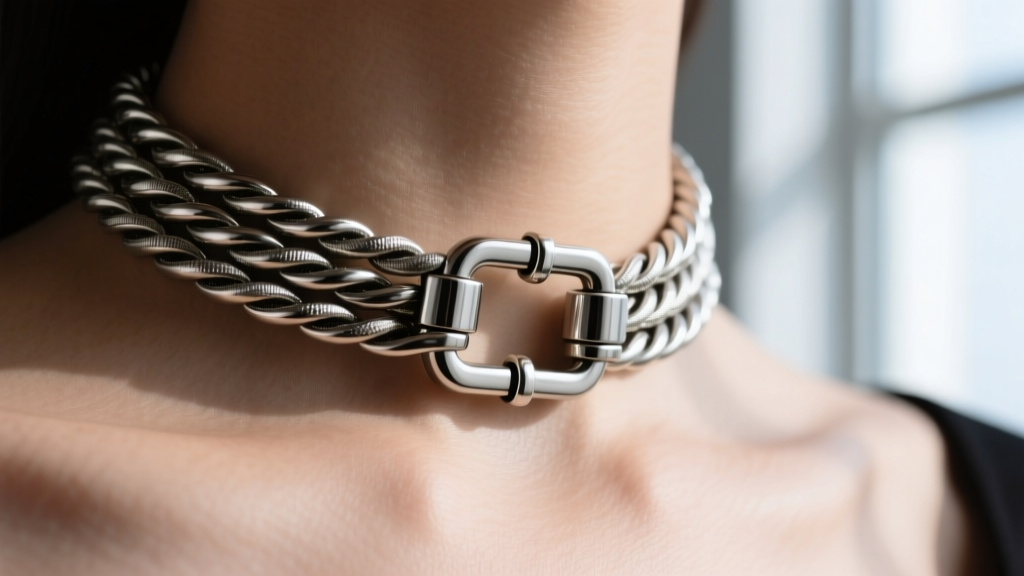
Engineering the biggest necklace is not just about selecting lightweight materials; it is about manipulating the center of mass. If a large sculptural pendant hangs entirely from a thin chain, it will act as a pendulum, choking the wearer and causing the chain to dig into the cervical vertebrae. To counteract this, high-end jewelry houses employ a "yoke construction" framework.
In a yoke-designed collar, the back of the neck (the nape) is fitted with a wide, flat mesh or a contoured leather strap that distributes the downward pull across a broad surface area of the trapezius muscles. The front of the necklace, which houses the decorative elements, is often counterbalanced by slightly heavier, dense metal beads integrated into the posterior yoke. Additionally, the interior of wide metal collars must be subtly domed or padded with medical-grade silicone to prevent the edges from bruising the clavicle during movement. The Birmingham Assay Office notes that when mixing base metals like steel or titanium with precious metals for structural support, proper hallmarking and material disclosure are essential to maintain consumer trust and comply with international jewelry standards.
Advanced Manufacturing for Oversized Volumes
In 2026, the creation of the biggest necklace pieces relies heavily on hybrid manufacturing techniques. Selective Laser Sintering (SLS) using nylon-12 or high-temp resins allows designers to print massive, intricate geometric pendants that weigh less than 20 grams. These 3D-printed cores are then vapor-smoothed and coated in conductive paint, allowing them to be electroplated with a thick layer of copper and finished with 24k gold vermeil. This workflow completely bypasses the limitations of traditional lost-wax casting, enabling volumes and undercuts that would be impossible to achieve in solid metal. By mastering the intersection of material science, gauge thickness, and ergonomic weight distribution, jewelers can transform the biggest necklace concepts from unwearable art pieces into comfortable, enduring masterpieces of adornment.


