Best English Bulldog Necklace Materials: Silver, Gold & Steel
Compare sterling silver, solid gold, and surgical steel for your english bulldog necklace. Expert metallurgy, pricing, and care tips.

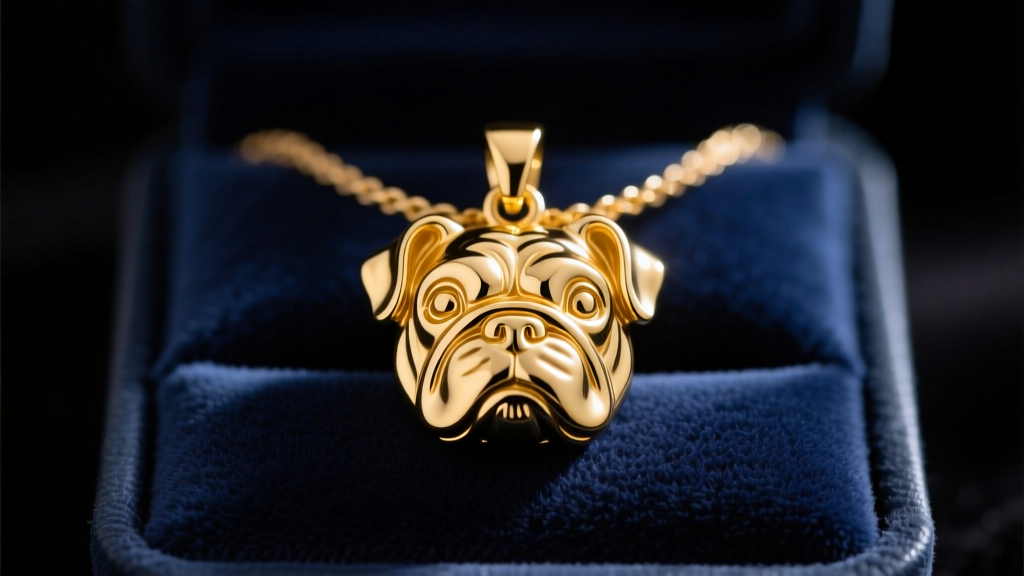
When selecting an english bulldog necklace, the aesthetic appeal of the breed's signature wrinkled brow and pushed-in nose is only half the equation. The metallurgy of the pendant dictates its longevity, how well it captures fine anatomical details during the casting process, and how it reacts to your skin's chemistry. Because bulldog pendants feature deep crevices and pronounced underbites, certain metals are far superior at holding these intricate molds without warping or wearing flat over time.
In this comprehensive material guide, we break down the exact alloy grades, Vickers hardness ratings, and failure modes of the most common metals used in bulldog jewelry, helping you make an informed investment in 2026 and beyond.
The Metallurgy of Bulldog Pendants: Why Hardness Matters
Most high-quality english bulldog necklaces are created using the lost-wax casting method. The master model is carved with deep recesses to mimic the dog's jowls and skin folds. When molten metal is injected into the flask, its hardness and flow rate determine how crisply those details are preserved.
According to industry standards tracked by Rio Grande's metallurgical charts, the Vickers Hardness (HV) of a metal directly impacts its scratch resistance and detail retention. A softer metal will quickly lose the definition of the bulldog's wrinkles through daily friction against clothing, while a harder alloy will maintain its sculptural integrity for decades.
Material Comparison Chart: Silver vs. Gold vs. Steel
Below is a structured comparison of the primary metals used for canine-themed pendants, evaluating their physical properties and market positioning.
| Material | Alloy Grade | Vickers Hardness (HV) | Tarnish Risk | Avg. Price Range |
|---|---|---|---|---|
| Sterling Silver | 925 (92.5% Ag) | 65 - 75 HV | High (Sulfur) | $60 - $150 |
| Solid Gold | 14k (58.5% Au) | 135 - 150 HV | None | $400 - $900+ |
| Surgical Steel | 316L | 180 - 200 HV | Very Low | $25 - $60 |
| Bronze | Silicon Bronze | 90 - 110 HV | High (Patina) | $40 - $90 |
Deep Dive: Precious Metals and Surgical Steel
14k vs. 18k Solid Gold
While 18k gold (75% pure gold) is highly prized for its rich, buttery yellow hue, it is relatively soft (approx. 115 HV). For an english bulldog necklace, 14k gold is the superior choice. The higher concentration of alloy metals like copper and zinc increases the hardness to roughly 140 HV. This ensures that the delicate ridges of the bulldog's nose rope and the droop of the lower lip do not wear flat after a few years of daily wear. Furthermore, 14k gold offers better structural integrity for the pendant's bail (the loop connecting it to the chain), preventing it from snapping under stress.
Sterling Silver and the Rhodium Solution
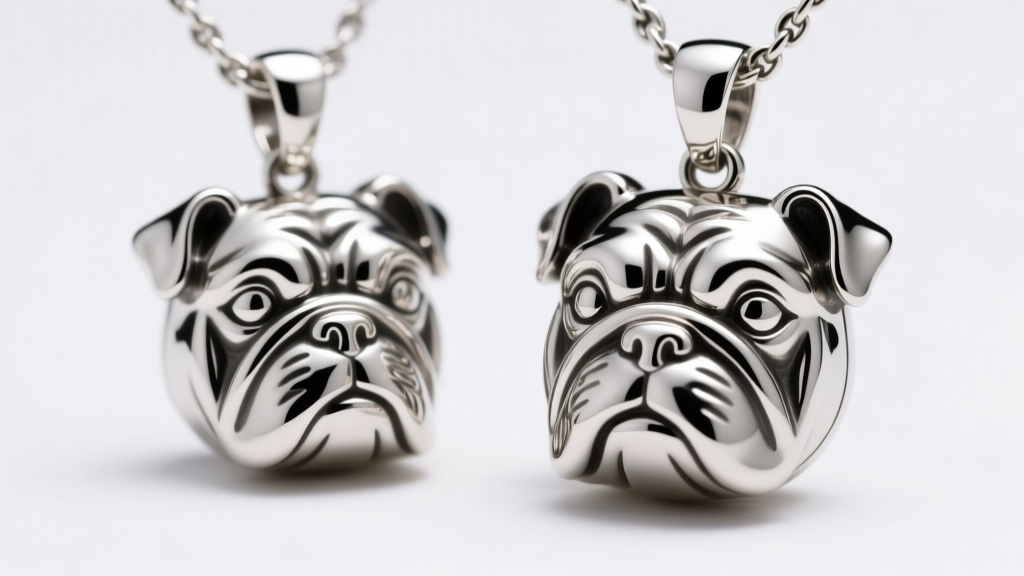
Sterling silver is a classic, accessible choice, but its copper content makes it highly susceptible to oxidation. The deep wrinkles cast into a bulldog pendant create microscopic pockets where moisture and sulfur-rich air become trapped, accelerating tarnish in the crevices. To combat this, premium jewelers apply a rhodium plating. However, buyers must verify the plating thickness; a standard flash plating of 0.1 microns will wear off in months, whereas a heavy plating of 1.5 to 2.0 microns will protect the silver's intricate details for years. For more on silver's chemical properties, refer to the Silver Institute's official guidelines.
316L Surgical Stainless Steel
For active owners or those on a budget, 316L stainless steel is virtually indestructible. The 'L' stands for low carbon, and the addition of molybdenum provides exceptional resistance to pitting and corrosion. However, steel has a high melting point and higher viscosity when cast, meaning lower-quality steel pendants often have 'mushy' or blurred details in the bulldog's facial wrinkles. When buying steel, look for CNC-machined or high-pressure die-cast pieces to ensure crisp anatomical features.
Alternative Finishes: Enamel and Bronze Casting
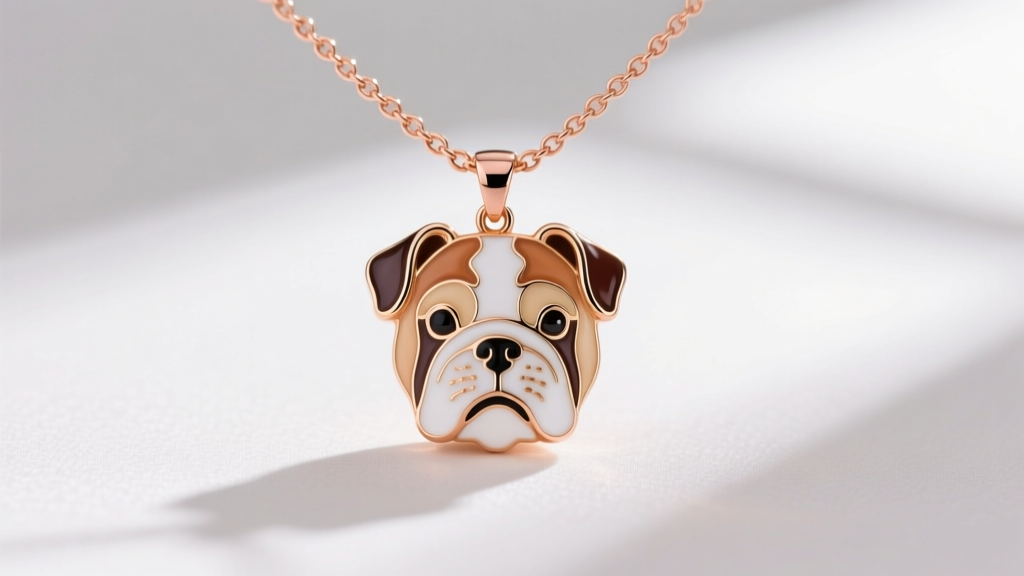
Beyond solid metals, many english bulldog necklaces incorporate color to reflect the breed's diverse coat patterns, such as brindle, fawn, or piebald.
- Champlevé Enamel: This technique involves carving troughs into the metal (usually silver or copper) and fusing powdered glass into them at high temperatures. It is highly durable and perfectly captures the distinct white blaze on a bulldog's face without fading.
- Cold Enamel (Epoxy Resin): A cheaper alternative often found in mass-market pendants. While initially vibrant, cold enamel is prone to yellowing from UV exposure and can chip if the pendant strikes a hard surface.
- Silicon Bronze: Bronze offers a warm, earthy tone that beautifully complements the rustic, stocky nature of the bulldog. Over time, bronze develops a natural patina. Some owners love this aged look, while others prefer to polish it back to a bright gold-like finish using a mild acid wash.
Chain Pairing and Galvanic Corrosion
A critical, often overlooked aspect of buying an english bulldog necklace is matching the pendant's metallurgy to the chain. Mixing dissimilar metals in the presence of sweat (an electrolyte) triggers galvanic corrosion.
For example, if you hang a sterling silver bulldog pendant on a stainless steel chain, the silver acts as the anode and will corrode at an accelerated rate, particularly at the bail where the two metals experience friction. Always pair your pendant with a chain of the exact same metal, or at least a metal with a similar nobility rating. A 14k gold pendant requires a 14k gold chain; a steel pendant requires a steel chain.
Skin Sensitivity and Nickel Leaching
The neck and décolletage feature some of the most sensitive skin on the human body. Nickel allergies affect roughly 10-15% of the population, presenting as contact dermatitis (redness, itching, and blistering).
While 316L surgical steel is marketed as 'hypoallergenic,' it does contain trace amounts of nickel (8-10.5%). The nickel is tightly bound within the chromium-oxide matrix, making it safe for most. However, individuals with severe hypersensitivity should avoid steel entirely and opt for nickel-free 14k or 18k gold, or high-purity titanium pendants. Sterling silver is generally safe, provided it is not alloyed with nickel (some cheap overseas manufacturers use nickel instead of copper to whiten silver, a practice to strictly avoid).
Buying Framework: How to Choose Based on Lifestyle
To finalize your decision, use this practical framework based on your daily routine and maintenance preferences:
- The 'Wear and Forget' Owner: Choose 316L Stainless Steel. It survives swimming, showering, and heavy sweating without tarnishing or requiring polishing. Ideal for active lifestyles.
- The Heirloom Investor: Choose 14k Solid Gold. It captures the finest details of the bulldog's anatomy, never tarnishes, and holds intrinsic melt value. It requires zero chemical maintenance.
- The Budget-Conscious Traditionalist: Choose Rhodium-Plated 925 Sterling Silver. It offers the bright, luxurious look of white gold at a fraction of the cost, provided you commit to removing it before swimming and storing it in an anti-tarnish pouch.
Conclusion
An english bulldog necklace is more than a simple piece of pet-themed jewelry; it is a miniature sculpture that requires precise metallurgical execution. By understanding the Vickers hardness of your chosen alloy, the risks of galvanic corrosion, and the realities of skin chemistry, you can select a pendant that honors the beloved breed while standing the test of time. Always verify the exact alloy grade with the jeweler and prioritize structural integrity over superficial plating to ensure your bulldog's wrinkled charm endures for a lifetime.
For further reading on precious metal standards and gemological grading, consult the GIA Gem Encyclopedia to ensure your jewelry investments meet global quality benchmarks.


