Eternal Love Necklace Buying Guide: Metals, Chains & Stones
Discover how to choose the perfect eternal love necklace. Our expert buying guide covers metal grades, chain types, and gemstone settings for lasting wear.

The Anatomy of the Eternal Love Motif
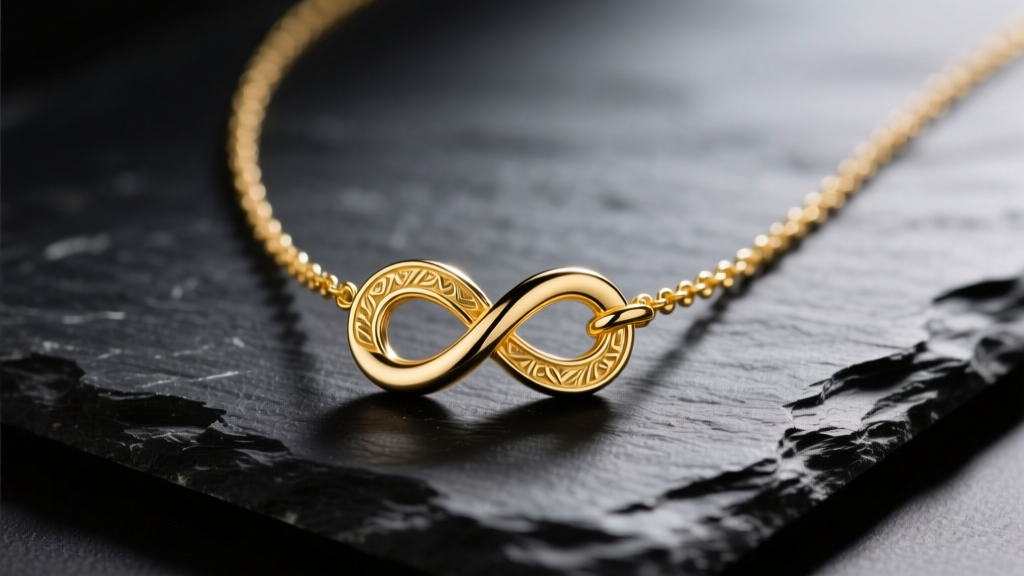
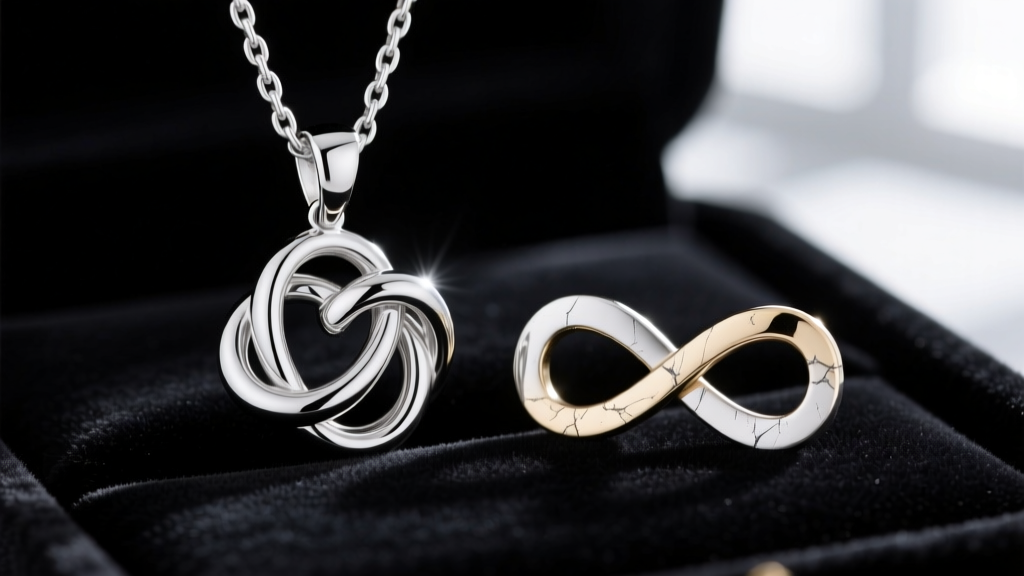
When shoppers search for an eternal love necklace, they are rarely looking for a single, standardized design. Instead, this term encompasses a category of symbolic jewelry dedicated to the concept of unbroken commitment. The three most common architectural variations include the classic figure-eight infinity symbol, the interlocking double-circle (representing two lives joining), and the continuous Celtic love knot. Each design carries distinct structural vulnerabilities that buyers must evaluate before purchasing. A poorly engineered interlocking ring pendant, for example, will experience severe friction wear where the two circles meet, eventually grinding through the metal if not properly cast with adequate clearance.
In this comprehensive 2026 buying guide, we bypass the marketing fluff and examine the metallurgical, mechanical, and gemological realities of selecting an eternal love necklace that will actually survive daily wear. Whether you are investing in a solid platinum piece or a delicate 14k gold chain, understanding the underlying engineering is critical.
Metal Metallurgy: Durability vs. Aesthetics
The longevity of your pendant depends entirely on the alloy composition. Pure 24k gold is far too soft (Vickers hardness of ~25 HV) for daily wear, which is why it is alloyed with metals like copper, silver, zinc, and nickel. According to the Gemological Institute of America (GIA), the specific ratio of these alloying metals dictates not only the color but the tensile strength and scratch resistance of the final piece.
| Metal Alloy | Purity | Vickers Hardness (Approx) | Wear Characteristics | Avg. Price Premium |
|---|---|---|---|---|
| 14k Yellow Gold | 58.5% | 130 - 150 HV | Highly durable, resists deep scratching, retains color indefinitely. | Baseline |
| 18k Yellow Gold | 75.0% | 115 - 125 HV | Soother, richer color, more prone to surface marring and denting. | +35% to 50% |
| 14k White Gold | 58.5% | 135 - 155 HV | Requires rhodium plating (0.1-0.2 microns) which wears off in 1-3 years. | +5% to 10% |
| Platinum 950 | 95.0% | 110 - 125 HV | Softer but denser; displaces metal rather than losing it. Develops a patina. | +80% to 120% |
Expert Insight: If you are buying an eternal love necklace featuring intricate micro-pavé diamonds, Platinum 950 is vastly superior to white gold. When platinum is scratched or bent, the metal merely displaces, keeping the tiny diamond-setting beads intact. White gold, being more brittle, can actually micro-fracture under stress, causing pavé stones to pop out.
Chain Architecture and Tensile Strength
The pendant is only half the equation; the chain is the hidden point of failure. A 5-gram solid gold infinity pendant requires a chain capable of withstanding sudden tensile shocks (like getting snagged on a sweater).
- Cable Chains: Composed of uniform oval links alternating at 90-degree angles. They are the most reliable choice. If a link breaks, a jeweler can easily laser-weld it back together without visible scarring.
- Box Chains: Made of square, interlocking links. While they lay flat and look modern, they are notorious for kinking. Once a box chain kinks, the structural integrity is compromised, and repairing it is nearly impossible without replacing the entire section.
- Rope Chains: Twisted links that mimic a rope. They offer high tensile strength but are magnets for hair and fine fabrics. Furthermore, if they snap, the twisted geometry makes soldering highly visible.
For an eternal love necklace intended for daily wear, select a cable or curb chain with a thickness between 1.0mm and 1.5mm. Anything under 0.8mm will eventually stretch and snap under the pendulum motion of a heavier pendant.
The Clasp Mechanism
Do not settle for standard spring-ring clasps on chains thicker than 1.2mm. The internal spring mechanism is weak and prone to failure. Insist on a lobster claw clasp for chains up to 2.0mm, or a fold-over safety clasp for heavier, premium chains. The fold-over clasp uses a friction hinge that completely eliminates the risk of accidental unhooking.
Gemstone Settings: The Micro-Pavé Vulnerability
Many modern eternal love necklaces feature the infinity loop completely encrusted with micro-pavé diamonds. While visually stunning, this setting is a structural liability for active wearers. According to Jewelers of America, micro-pavé relies on microscopic beads of metal raised from the base to hold stones that are often under 1.5mm in diameter.
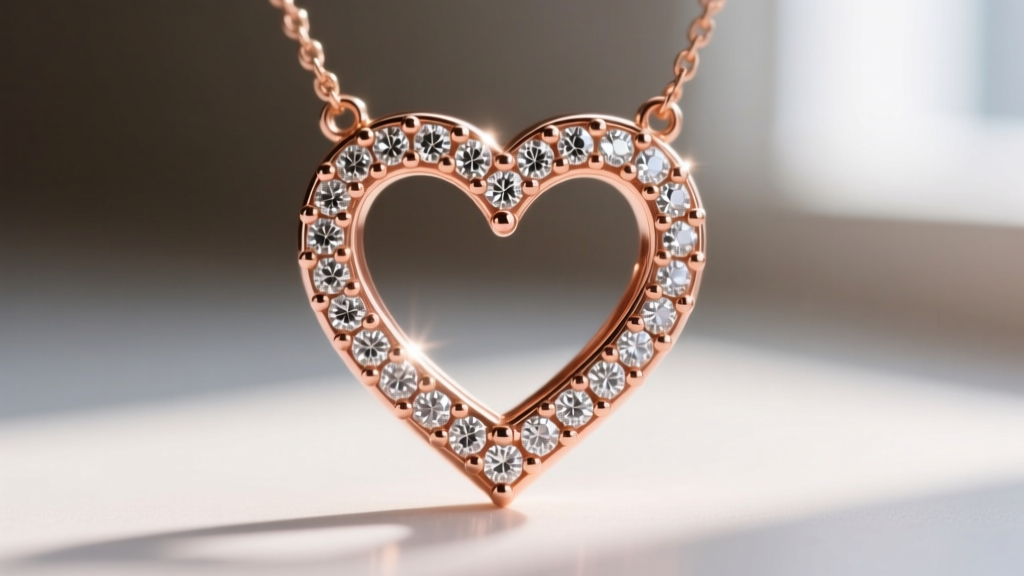
If the infinity loop of your pendant is subjected to lateral pressure—such as sleeping on it or pressing it against a steering wheel—the metal will flex. Because the diamonds are rigid and the gold is malleable, the metal stretches away from the stones, resulting in lost diamonds. If you lead an active lifestyle, avoid micro-pavé entirely. Instead, opt for a bezel-set solitaire diamond placed at the center intersection of the knot, or choose a plain metal design with high-polish finishing.
Proportion and Sizing Matrix
Visual balance is critical when styling symbolic pendants. Use this matrix to ensure your eternal love necklace sits correctly against the décolletage:
- Pendant Width under 15mm: Pair with a 16-inch or 18-inch chain (0.8mm - 1.0mm thickness). Best for layering with other delicate necklaces.
- Pendant Width 15mm - 25mm: Pair with an 18-inch chain (1.0mm - 1.2mm thickness). This is the standard 'sweet spot' for a standalone statement piece that rests just below the collarbone.
- Pendant Width over 25mm: Pair with a 20-inch to 24-inch chain (1.5mm+ thickness). Heavier, wider knots require longer chains to prevent the pendant from flipping upside down due to a high center of gravity.
Modern Repair and Maintenance (2026 Standards)
Maintenance protocols have evolved significantly. If your chain snaps or a prong needs retipping, ensure your jeweler uses laser welding rather than traditional torch soldering. Laser welding uses concentrated light to fuse metal in a microscopic area without heating the surrounding jewelry. This is absolutely vital for eternal love necklaces with gemstones, as torch soldering can cause thermal shock, fracturing diamonds or turning heat-sensitive stones (like Morganite or treated Sapphires) cloudy.
Pro-Tip: Never use ultrasonic cleaners on eternal love necklaces featuring fracture-filled diamonds or porous gemstones like opals or emeralds. The high-frequency vibrations can shake micro-pavé stones loose and exacerbate internal fractures in treated gems. Stick to a soft-bristled brush, warm water, and a drop of mild dish soap.
Final Purchasing Checklist
Before finalizing your purchase, verify the following specifications with the retailer:
- Hallmark Verification: Ensure the pendant and the chain clasp are both stamped with their metal purity (e.g., 14K, 18K, PT950).
- Clearance Check: If buying an interlocking rings design, run a piece of sewing floss between the rings to ensure there is adequate clearance to prevent friction wear.
- Chain Link Welding: Inspect the chain links under a loupe. Every single link should be soldered shut. Unsoldered links will pull apart within months.
- Return and Sizing Policy: Confirm that the retailer offers complimentary chain resizing within the first 30 days, as getting the exact drop length is crucial for the pendant to lay flat against the sternum.
By prioritizing structural engineering over fleeting aesthetic trends, your eternal love necklace will remain a durable, brilliant symbol of commitment for decades to come.


