Ivory Cross Necklace Guide: Antique, Mammoth & Ethical Resins
Discover the material properties of an ivory cross necklace. We compare antique elephant ivory, legal mammoth, and ethical alternatives like tagua and bone.

The Legal and Ethical Landscape of Ivory Jewelry
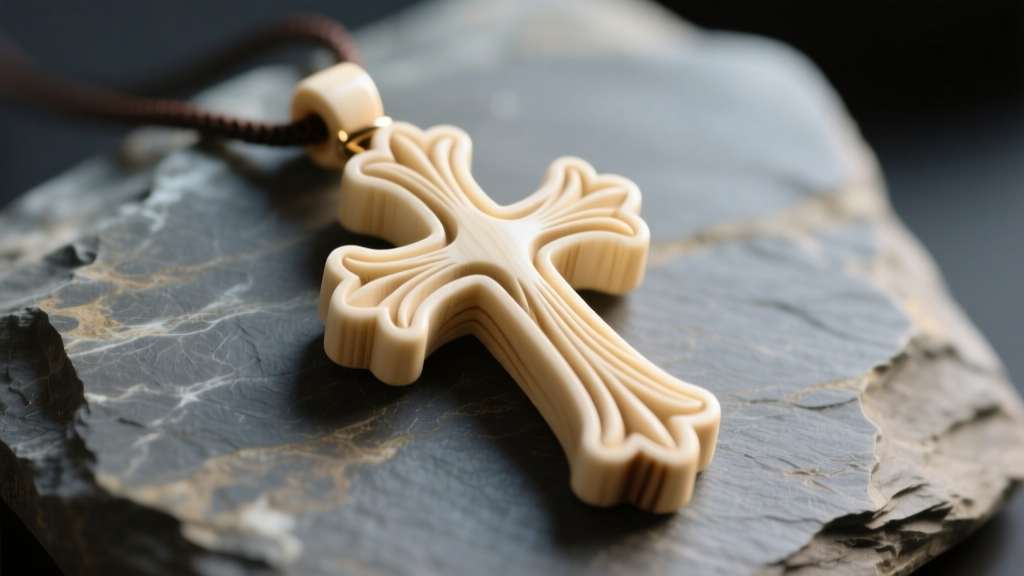
When sourcing an ivory cross necklace, collectors, historians, and faith-based jewelry wearers face a complex legal and ethical landscape. True elephant ivory is heavily restricted globally. Under the CITES treaty and domestic laws like the US Endangered Species Act and the UK Ivory Act 2018, the commercial trade of newly harvested elephant ivory is strictly prohibited. While certain pre-1947 antique exemptions exist for documented artifacts, purchasing a modern elephant ivory cross pendant is both illegal and ethically untenable.
Consequently, the contemporary jewelry market has pivoted toward two distinct pathways: legally sourced prehistoric mammoth ivory and high-fidelity ethical alternatives. Understanding the gemological properties, structural integrity, and visual markers of these materials is critical for making an informed purchase and ensuring your pendant withstands daily wear.
Material Properties: Elephant vs. Mammoth Ivory
Both elephant and mammoth ivories are composed primarily of dentin, a calcified tissue featuring a unique microstructure. However, their geological history drastically alters their physical properties and workability.
Identifying Authenticity: Schreger Lines and UV Testing
The definitive visual marker for proboscidean ivory is the presence of Schreger lines—cross-hatched patterns visible in cross-section. According to the US Fish and Wildlife Service, elephant ivory displays Schreger angles greater than 115 degrees, while mammoth ivory features angles less than 90 degrees. Under long-wave ultraviolet (UV) light, authentic, well-preserved ivory exhibits a bright, chalky white or pale blue fluorescence due to its organic protein content.
Mammoth ivory, excavated from Siberian and Alaskan permafrost, is entirely legal to trade. However, its material integrity varies wildly. While 'Grade A' mammoth ivory is pristine and carves identically to modern elephant ivory, lower grades suffer from micro-fractures and mineral staining. Jewelers often stabilize these lower-grade mammoth cross pendants using cyanoacrylate resins or epoxy to prevent checking (cracking) when exposed to the low humidity of modern indoor environments.
Ethical and Sustainable Alternatives for Cross Pendants
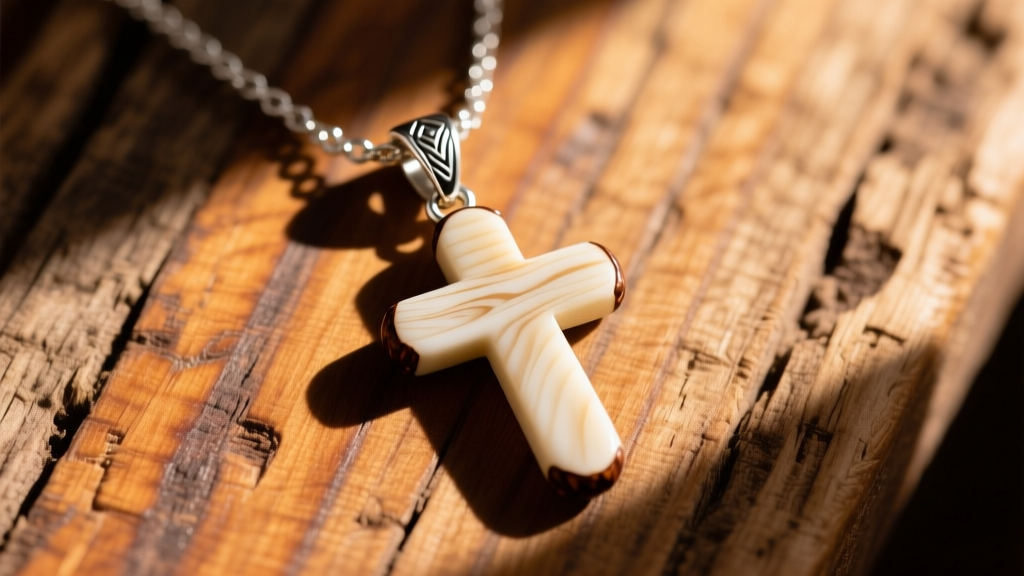
For those seeking the aesthetic of ivory without the legal complexities or permafrost sourcing issues, several botanical and mineral alternatives offer exceptional carving properties and durability.
Tagua Nut (Vegetable Ivory)
Harvested from the Phytelephas macrocarpa palm in South America, tagua nut is the premier botanical substitute. Composed of dense hemicellulose, tagua boasts a Mohs hardness of approximately 2.5, making it soft enough for intricate religious carving yet hard enough to take a high polish. Unlike animal dentin, tagua lacks Schreger lines and instead shows a faint, concentric growth ring structure. It is highly susceptible to water damage; prolonged exposure to sweat or moisture will cause a tagua cross to swell and eventually split, requiring a protective micro-crystalline wax coating.
Carved Bovine Bone and Horn
Bone is a widely available, affordable alternative, but its structural properties differ significantly from ivory. Bone is more porous and possesses a higher Mohs hardness (around 3.0) due to its calcium phosphate matrix. Under magnification, bone reveals Haversian canals—tiny dark pits that are a dead giveaway to trained gemologists. To mimic the creamy hue of an antique ivory cross necklace, bone is typically bleached and sometimes lightly stained with tea or walnut husk extracts. While durable, bleached bone can become brittle over time and may yellow when exposed to UV radiation and skin oils.
High-Density Resins and Celluloid
Vintage 'French Ivory' is actually celluloid, an early plastic invented in the 19th century to replace scarce elephant ivory. Modern equivalents utilize high-density polyurethane or epoxy resins cast in molds taken from original antique carvings. While resin lacks the thermal warmth and specific gravity of real dentin, it is entirely impervious to moisture, will not crack in dry climates, and can be formulated to perfectly replicate the subtle translucency and patina of aged ivory.
Comparative Data: Hardness, Porosity, and Pricing
To select the right material for your lifestyle, review the comparative gemological data below. Pricing reflects the pendant alone, excluding the chain.
| Material | Mohs Hardness | Specific Gravity | UV Fluorescence | Avg. Pendant Price |
|---|---|---|---|---|
| Antique Elephant Ivory | 2.5 - 2.75 | 1.70 - 1.85 | Bright White/Blue | $800 - $3,500+ |
| Mammoth Ivory (Grade A) | 2.5 - 2.75 | 1.75 - 1.90 | Dull White/Pale Blue | $250 - $900 |
| Tagua Nut | 2.5 | 1.40 - 1.45 | None / Dull | $30 - $85 |
| Bleached Bovine Bone | 3.0 | 1.85 - 2.00 | None / Dull | $15 - $60 |
| Cast Polyurethane Resin | 2.0 - 3.0 | 1.10 - 1.25 | Varies (often dark) | $20 - $50 |
Chain Pairing, Weight Distribution, and Care Protocols
The structural fragility of organic materials dictates how you should mount and wear your ivory cross necklace. Mammoth and elephant ivory are sensitive to thermal shock and rapid humidity changes.
Selecting the Appropriate Chain Gauge
Because genuine ivory and mammoth pendants possess a specific gravity near 1.8, they are surprisingly heavy for their size. A solid 2-inch carved mammoth cross can easily weigh 15 to 20 grams.
- Heavy Pendants (10g+): Pair with a 1.5mm to 2.0mm wheat or rope chain in 14k gold or sterling silver. These chain styles offer high tensile strength and distribute the pendant's weight evenly across the neck.
- Lightweight Alternatives (Sub-5g): Tagua and resin crosses can be suspended on delicate 0.8mm to 1.0mm box or cable chains without risking bail deformation.
Restoration and Daily Maintenance
Never use ultrasonic cleaners on any form of ivory, bone, or tagua. The cavitation bubbles and localized heat generated by ultrasonic waves will instantly shatter micro-fractures in mammoth ivory and strip the natural oils from bone. Similarly, avoid steam cleaners and harsh chemical dips.
For antique or Grade A mammoth ivory crosses that have developed superficial checking (hairline cracks), professional jewelers use Paraloid B-72, an acrylic consolidant dissolved in acetone, to stabilize the fractures without altering the material's refractive index. For routine maintenance, wipe the pendant with a dry, lint-free microfiber cloth after wearing. Once a year, apply a microscopic drop of pharmaceutical-grade mineral oil to the surface of the ivory or bone to replenish lipids and prevent desiccation cracking.
Final Verdict: Sourcing Responsibly
The pursuit of an ivory cross necklace requires navigating a minefield of legal restrictions and material imitations. For the purist collector with the budget and documentation, verified pre-1947 antique elephant ivory remains the historical zenith. However, for the modern wearer seeking ethical compliance without sacrificing the luxurious weight and carving detail of dentin, Grade A stabilized mammoth ivory is the undisputed champion. Budget-conscious buyers will find that responsibly harvested tagua nut offers a beautiful, botanical alternative, provided it is kept dry and properly wax-sealed.