How to Identify Good Necklace Brands: A 2026 Buying Guide
Discover how to identify good necklace brands in 2026. Learn what to look for in chain links, gold vermeil thickness, clasps, and warranties.

The jewelry market in 2026 is more saturated than ever, making it increasingly difficult to separate heritage craftsmanship from cleverly marketed dropshipped accessories. When you are investing in everyday fine or demi-fine jewelry, knowing how to identify good necklace brands is essential. A high-quality necklace is not just about the aesthetic appeal of the pendant; it is an engineering feat involving metallurgy, tensile strength, and micro-mechanics. This comprehensive buying guide will teach you how to evaluate necklace brands based on material integrity, chain architecture, and hardware reliability, ensuring your investment lasts a lifetime.
The Anatomy of a High-Quality Everyday Necklace
Before evaluating a brand's reputation, you must understand the physical construction of their chains. Good necklace brands prioritize structural integrity, knowing that a pendant is only as secure as the chain holding it. The weakest point of any necklace is the link structure and the jump rings connecting the clasp.
Chain Link Architecture and Tensile Strength
Different chain styles offer vastly different levels of durability. While delicate cable chains are popular for minimalist aesthetics, they are prone to snapping under minor snagging forces. Premium brands often engineer their chains to balance delicacy with tensile strength.
- Wheat Chains: Composed of interlocking oval links woven in the same direction, wheat chains offer some of the highest tensile strength in the jewelry industry. They are highly resistant to kinking and pulling, making them a hallmark of premium everyday brands.
- Rope Chains: Excellent for durability and light reflection, but lower-tier brands often fail to polish the inner crevices, leading to trapped lotions and premature tarnishing. Top-tier brands use ultrasonic cleaning and specialized tumbling to ensure the interior of the links is as pristine as the exterior.
- Box Chains: While visually striking and strong, box chains are notorious for kinking. If a brand sells box chains, look for their warranty policy on kink repair, as this is a known failure mode for this specific link style.
The Soldered Jump Ring Test
The jump ring is the tiny circular wire that connects the chain to the clasp. Inexpensive brands use unsoldered (split) jump rings, which can easily be pulled apart by a heavy pendant or a snag on a sweater. Good necklace brands exclusively use soldered jump rings, where the seam is fused shut with heat and additional metal. If you cannot see a microscopic seam on the jump ring, or if it can be pried open with a fingernail, the brand is cutting corners on manufacturing costs.
Decoding Metal Standards: Solid Gold vs. Vermeil vs. PVD
A brand's transparency regarding its metal composition is the ultimate litmus test for quality. In 2026, consumers are highly educated on plating versus solid alloys, yet misleading terminology still plagues the demi-fine market.
Understanding Gold Vermeil and FTC Guidelines
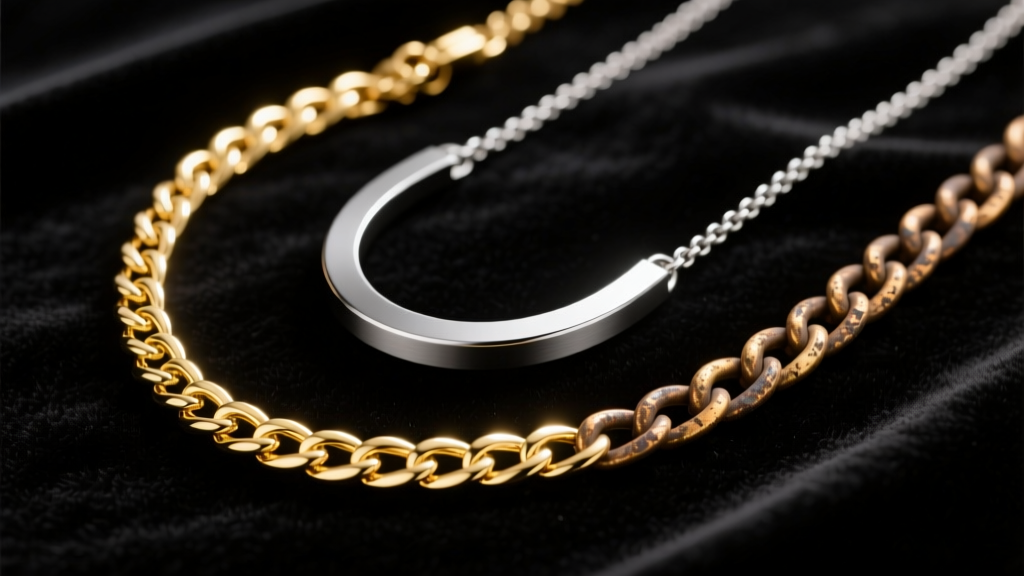
According to the Federal Trade Commission (FTC), for a piece to be legally marketed as gold vermeil, it must have a sterling silver base and a gold plating of at least 2.5 microns thick. Many mid-tier brands use 0.5-micron gold plating over brass or copper and deceptively market it as 'gold dipped' or 'vermeil style.' Good necklace brands will explicitly state '2.5 microns' or '3.0 microns' in their product specifications. A 3.0-micron thickness over 925 sterling silver will typically withstand daily wear for 3 to 5 years before requiring a re-plate, whereas standard 0.5-micron plating will wear through to the base metal in less than six months of continuous use.
The Rise of PVD Coating on Stainless Steel
For waterproof, sweat-proof everyday jewelry, Physical Vapor Deposition (PVD) has become the industry gold standard. PVD involves bonding a microscopic layer of titanium nitride or real 14k gold to a 316L surgical stainless steel base inside a vacuum chamber. Unlike electroplating, which sits on the surface, PVD bonds at a molecular level. Reputable brands utilizing PVD will specify '316L stainless steel' (which is nickel-free and highly corrosion-resistant) rather than generic 'surgical steel' or 'stainless alloy,' which may contain 304-grade steel prone to rusting in high-humidity environments.
| Metal Type | Base Material | Coating Thickness | Expected Daily Lifespan | Price Range (16" Chain) |
|---|---|---|---|---|
| Solid 14k Gold | Gold Alloy (58.5% Gold) | N/A (Solid) | Lifetime (Generations) | $350 - $800+ |
| Heavy Vermeil | 925 Sterling Silver | 2.5 - 3.0 Microns | 3 - 7 Years | $80 - $180 |
| PVD Gold | 316L Stainless Steel | 0.3 - 0.5 Microns (Vacuum Bonded) | 5 - 10+ Years | $45 - $120 |
| Standard Plated | Brass / Copper | 0.1 - 0.5 Microns | 3 - 12 Months | $20 - $60 |
What Good Necklace Brands Get Right: Clasps and Findings
The clasp is the mechanical failure point of any necklace. When evaluating good necklace brands, pay close attention to the hardware they select. The Gemological Institute of America (GIA) frequently notes that poorly manufactured clasps are the leading cause of lost pendants and gemstones.
Lobster Clasps vs. Spring Rings
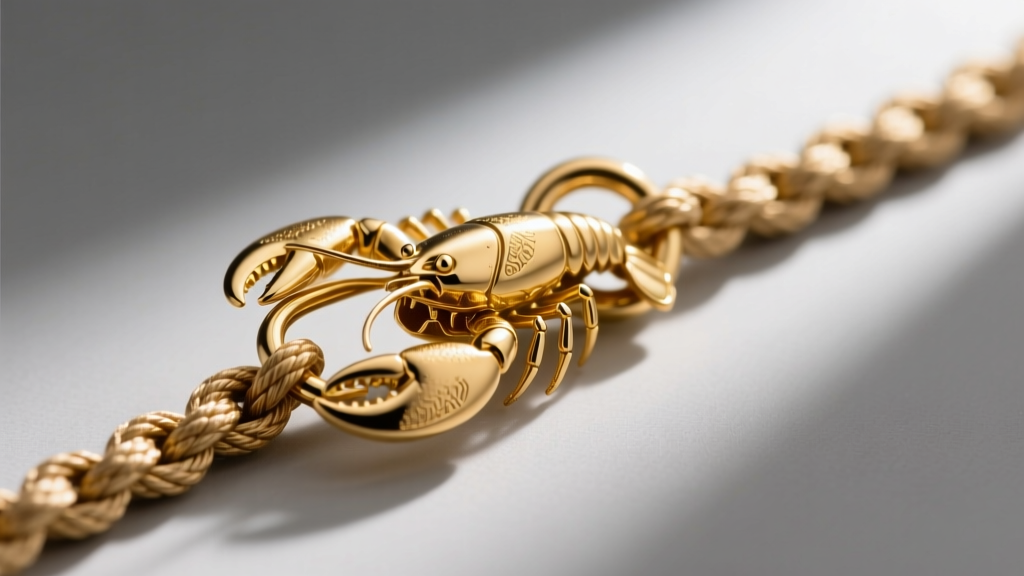
Spring ring clasps (the small, perfectly circular ones) are inexpensive and notoriously fragile. The internal spring mechanism degrades quickly, often failing after 500 to 1,000 articulations. Premium brands default to lobster clasps, which feature a stronger, wider spring mechanism and a larger surface area for gripping. For heavier pendants (over 15 grams), high-end brands will upgrade to a toggle clasp or a specialized locking carabiner clasp to ensure the weight of the pendant does not pull the clasp open.
Extender Chains and End Caps
A quality brand includes a 2-inch extender chain to allow the wearer to adjust the necklace over different necklines. More importantly, look at the very end of the extender chain. Top brands finish the extender with a solid metal end cap or a soldered loop, rather than leaving a raw, open link that can easily slip out of the lobster clasp during wear.
Evaluating Brand Transparency and Warranties
A brand's post-purchase support is just as critical as its manufacturing process. In the current market, a robust warranty is a strong indicator of a brand's confidence in its metallurgical choices.
Lifetime Warranties vs. Limited Guarantees
Brands that offer a 'Lifetime Warranty' against tarnishing and plating loss are typically those utilizing solid gold or advanced PVD coatings. If a brand only offers a 30-day or 6-month warranty against tarnish, it is a massive red flag indicating the use of thin electroplating over reactive base metals. Furthermore, look for brands that offer in-house repair services. Good necklace brands have bench jewelers on staff who can re-solder broken links or re-plate worn vermeil, whereas fast-fashion brands will simply replace the item, contributing to massive jewelry waste.
Hallmarks and Stamping
According to Jewelers of America, proper hallmarking is a legal and ethical requirement for precious metals. A good necklace brand will stamp their clasps or end tags with clear hallmarks such as '925' for sterling silver, '14K' or '585' for 14-karat gold, or '9K' and '375' for international markets. If a brand's marketing materials claim 'solid gold' but the physical item lacks a stamped hallmark, you are likely dealing with a misrepresented product.
Red Flags: How to Spot Dropshipped or Low-Tier Brands
As you shop, keep an eye out for these immediate disqualifiers that separate good necklace brands from low-tier mass producers:
- Vague Material Descriptions: Terms like 'gold-toned,' 'gold-filled style,' or 'alloy' are deliberate obfuscations. If the exact base metal and plating micron count are not listed, walk away.
- Hollow Links: Some brands manufacture large, chunky chains using hollow links to save on gold weight. These dent easily and are virtually impossible to repair if crushed. Always check the gram weight of the chain relative to its volume.
- Uniform Stock Photography: If multiple brands are using the exact same high-resolution, perfectly lit model shots, they are likely dropshipping from the same overseas manufacturer, meaning you are paying a markup for zero quality control.
Conclusion: Building a Curated Collection
Identifying good necklace brands requires looking past the marketing copy and examining the physical realities of the jewelry. By demanding soldered jump rings, verifying vermeil micron thicknesses, insisting on robust lobster clasps, and scrutinizing warranty terms, you can build a necklace collection that withstands the rigors of daily life. In 2026, true luxury is defined by longevity, transparency, and structural engineering—qualities that only the most dedicated jewelry brands consistently deliver.


