How to Choose and Style an Open Heart Diamond Necklace
Learn how to evaluate diamond quality, select the perfect chain gauge, and style an open heart diamond necklace for any neckline in our expert guide.

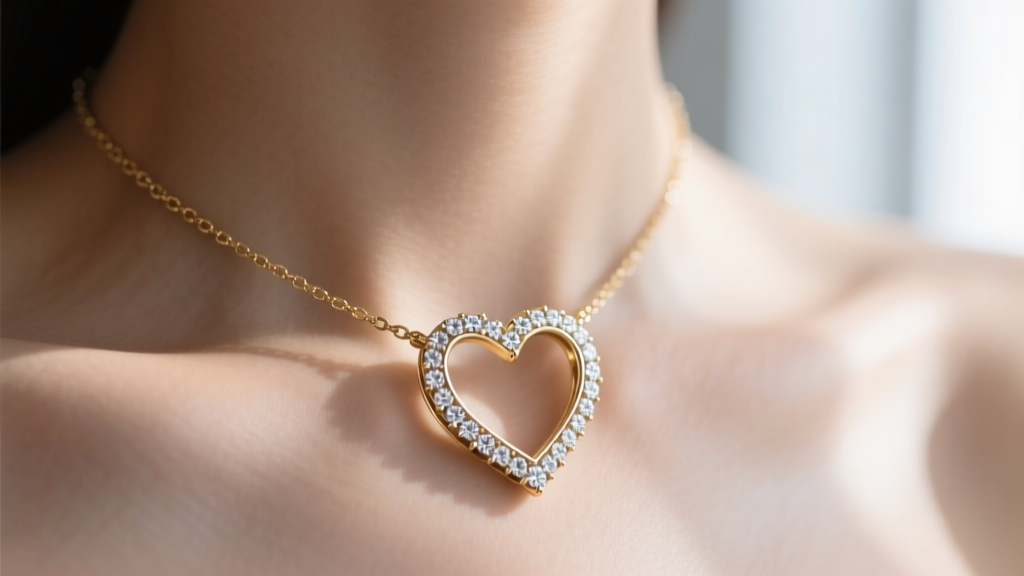
The open heart diamond necklace is a masterclass in negative space and enduring elegance. Originally popularized by Elsa Peretti’s iconic designs for Tiffany & Co. in the late 1970s, this silhouette has evolved into a staple of modern fine jewelry. However, navigating the market today requires a discerning eye. With countless variations flooding the market—from high-end luxury houses to mass-market mall jewelers—understanding the structural and gemological nuances is critical. In this step-by-step guide, we will break down exactly how to evaluate, purchase, and style an open heart diamond necklace to ensure your investment is both structurally sound and visually striking.
Step 1: Decoding Diamond Quality and Carat Weight
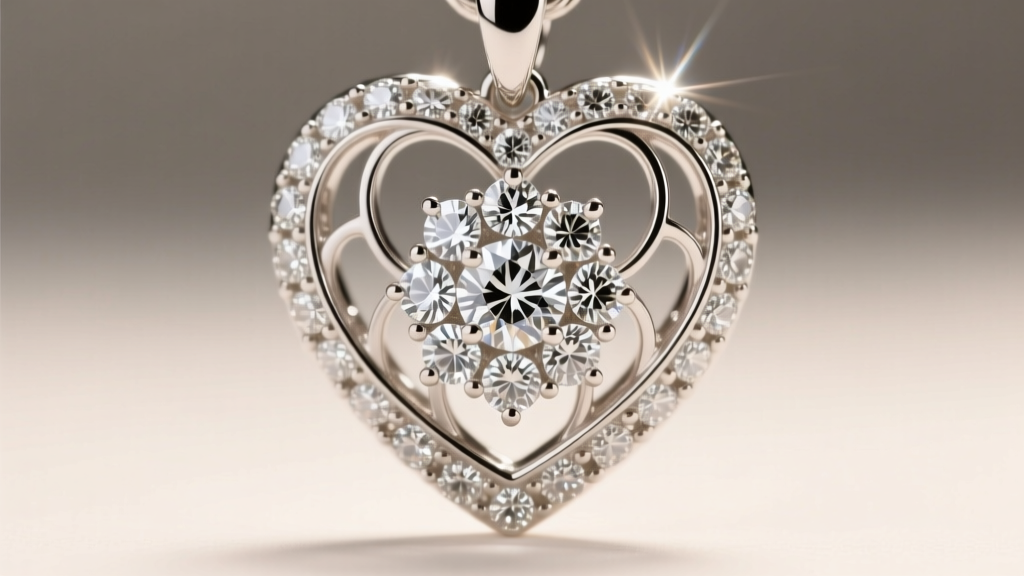
When evaluating the diamonds on an open heart pendant, you are typically looking at melee diamonds (stones weighing less than 0.22 carats each) arranged in a pavé or shared-prong setting along the curve of the heart. Because these stones are small, their grading priorities differ vastly from a traditional solitaire engagement ring.
Clarity and Color Priorities
For melee diamonds, clarity is less critical than color and cut. Since the stones are tiny, inclusions graded at SI1 (Slightly Included) or even SI2 are completely invisible to the naked eye. Paying a premium for VVS (Very Very Slightly Included) melee is a waste of your budget. Instead, prioritize color. If you are choosing white gold or platinum, ensure the melee diamonds are in the G-H color range (near colorless). If the stones drop to I-J (faint yellow), they will contrast poorly against the white metal, making the pendant look dull. For yellow or rose gold settings, you can safely drop to the I-J range without visual penalty.
Understanding Total Carat Weight (TCW)
Retailers often list the Total Carat Weight rather than individual stone weights. A standard 16-inch open heart pendant typically features between 0.15 ctw and 0.50 ctw. Expect to pay between $800 and $1,500 for a high-quality 0.25 ctw natural diamond pendant in 14k gold, while lab-grown alternatives in the 2026 market have pushed this price point down to the $450–$700 range.
Step 2: Selecting the Right Metal and Chain Gauge
The longevity of your necklace relies heavily on the chain gauge and metal alloy. The open heart pendant itself is relatively lightweight, but the chain must withstand daily wear, including the tension of accidental snags.
- 14k Gold (58.5% pure gold): The industry standard for everyday durability. It offers excellent tensile strength and is highly resistant to bending. Ideal for active lifestyles.
- 18k Gold (75% pure gold): Offers a richer, warmer yellow hue and a deeper white tone (when alloyed with palladium instead of nickel). However, it is softer and more prone to micro-scratches.
- Platinum (95% pure): The ultimate choice for longevity. It is hypoallergenic, naturally white (no rhodium plating required), and develops a desirable patina over time rather than wearing away.
The Chain Gauge Rule: Avoid chains thinner than 0.8mm. For optimal drape and break-resistance, select a cable or box chain with a gauge between 0.9mm and 1.1mm. Box chains in the 1.0mm range provide a brilliant, mirror-like reflection that complements the diamonds, while classic cable chains offer a more understated, traditional look. Always ensure the clasp is a lobster claw rather than a spring ring, as lobster clasps offer superior security and are easier to fasten with one hand.
Step 3: Evaluating the Prong and Bezel Settings
How the diamonds are secured to the metal framework of the heart dictates both the light performance and the maintenance requirements of the piece. According to the GIA's diamond anatomy guidelines, the setting must protect the girdle of the stone while allowing light to enter the pavilion.
| Setting Type | Light Return | Durability & Snag Risk | Maintenance Level |
|---|---|---|---|
| Shared Prong | Excellent (Maximum light exposure) | Moderate (Prongs can catch on knits) | High (Requires annual prong checks) |
| Full Bezel | Good (Metal borders restrict side light) | Exceptional (Smooth edges, zero snag risk) | Low (Stones are fully encapsulated) |
| Channel Set | Very Good (Clean lines, uniform sparkle) | High (Metal walls protect the girdle) | Moderate (Dirt can accumulate in channels) |
If you plan to wear your open heart diamond necklace daily with cashmere or silk blouses, a bezel or channel setting is highly recommended to prevent micro-snags that can loosen the melee diamonds over time.
Step 4: Sizing and Neckline Pairing
The impact of an open heart pendant is entirely dependent on its placement on the décolletage. The negative space inside the heart needs to frame the skin perfectly.
The Length Matrix
- 16 Inches (Choker/Base of Neck): Best for off-the-shoulder tops, boat necks, and wide scoop necklines. The pendant will sit right at the hollow of the throat, drawing the eye upward.
- 18 Inches (Collarbone): The most versatile length. It rests perfectly on the collarbone and is the ideal pairing for V-necklines, button-down shirts, and wrap dresses. The downward point of the V-neck mimics the shape of the heart, creating visual harmony.
- 20+ Inches (Décolletage): Generally not recommended for delicate open heart pendants, as the design can get lost against the chest and lacks the structural weight to lay flat without flipping over.
Step 5: Advanced Layering Techniques for 2026
Layering remains a dominant trend, but executing it with a diamond-encrusted pendant requires strict adherence to spatial rules to prevent tangling and metal-on-metal abrasion.
Never layer two chains of the exact same length. The friction between the links will cause premature wear, and the pendants will constantly tangle.
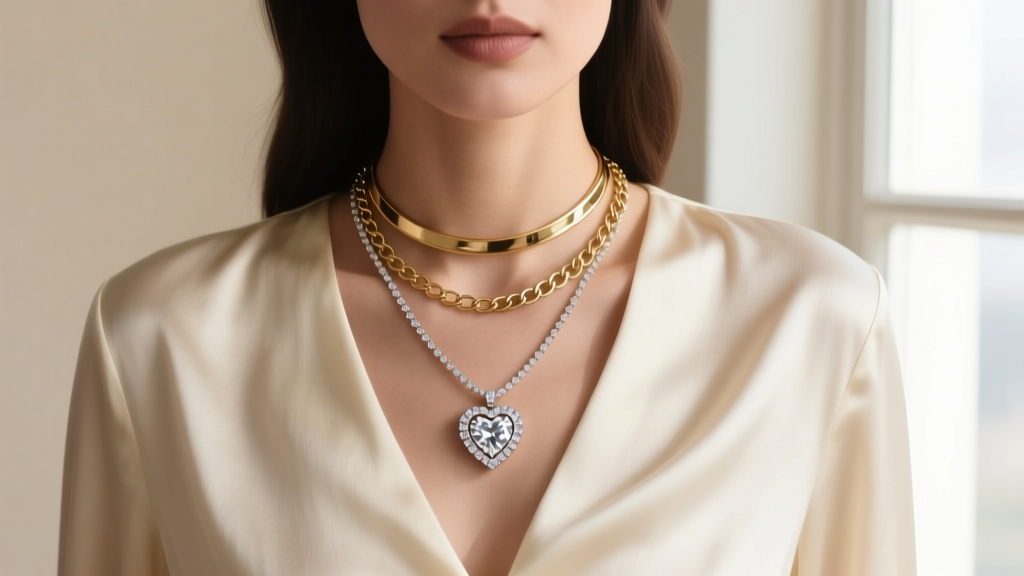
To properly layer your open heart diamond necklace, employ the 2-Inch Drop Rule. If your heart pendant is on a 16-inch chain, pair it with a 14-inch solid gold choker (like a 1.5mm herringbone or snake chain) and an 18-inch heavier chain featuring a larger, non-diamond geometric pendant or a simple gold hoop. This staggered approach ensures that the diamonds remain the focal point without competing with adjacent pieces. Furthermore, keep the metal colors uniform; mixing a rhodium-plated 14k white gold heart pendant with a warm 18k yellow gold rolo chain often creates visual dissonance unless intentionally styled with a bridging piece.
Final Thoughts on Authentication and Care
When purchasing, always request the GIA 4Cs grading documentation or a reputable gemological certificate detailing the total carat weight and metal purity. To maintain the brilliance of the melee diamonds, clean the pendant bi-weekly using a soft-bristled baby toothbrush and a solution of warm water with a single drop of mild, phosphate-free dish soap. Avoid ultrasonic cleaners if your pendant features fracture-filled diamonds or fragile tension settings. By understanding these structural and stylistic nuances, your open heart diamond necklace will remain a flawless, sparkling testament to modern jewelry design for decades to come.


