Evening Star Necklace Value Guide 2026: Is It Worth It?
Discover if an evening star necklace is worth the investment in 2026. We break down pricing tiers, material grades, and value retention for celestial jewelry.

The Anatomy of an Evening Star Necklace
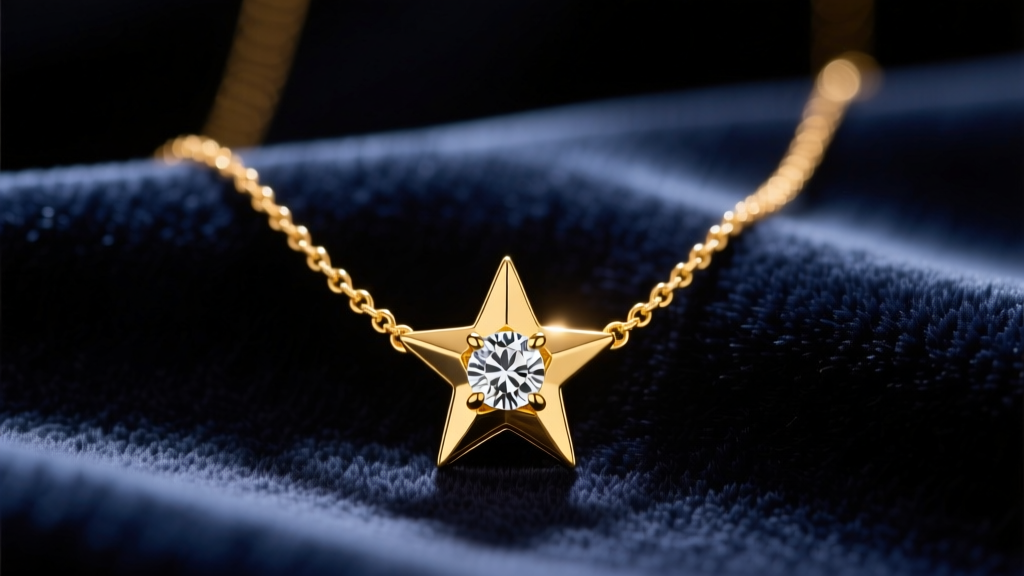
The celestial jewelry trend has firmly transitioned from a fleeting fashion moment to a permanent staple in fine jewelry collections. At the forefront of this movement is the evening star necklace, a piece characterized by its striking star-shaped motifs, often featuring intricate diamond pavé, star-brilliant cut center stones, or delicate gemstone halos. But as the market floods with options ranging from $100 fashion pieces to $15,000 luxury designer pendants, assessing the true value of an evening star necklace requires a deep understanding of jewelry anatomy, material grades, and structural integrity.
Unlike standard round or pear-shaped pendants, star motifs present unique gemological and structural challenges. A true "star-cut" diamond features an 8-fold or 10-fold symmetry that maximizes light return from the center while emphasizing the pointed extremities. Because cutting a star shape from a rough diamond crystal results in significant material wastage, natural star-cut diamonds carry a 20% to 35% premium over standard round brilliant cuts of the same carat weight. Alternatively, many jewelers achieve the evening star aesthetic by setting a standard round brilliant diamond inside a star-shaped gold bezel or surrounding it with a star-configured pavé halo. Understanding which construction method your necklace utilizes is the first step in determining its fair market value.
Critical Failure Modes: Prongs and Chains
When evaluating the craftsmanship of an evening star necklace, you must inspect the prong work and the chain gauge. Star-shaped pendants inherently feature sharp points. If a jeweler uses standard round prongs to secure a star-cut diamond or a sharp gold bezel, the points are left exposed and highly vulnerable to chipping upon impact. High-quality evening star necklaces will always utilize V-prongs at the vertices of the star to protect the structural integrity of the metal and the gemstone.
Furthermore, chain failure is the most common issue with celestial pendants. A solid 14k gold star pendant typically weighs between 2.5 and 5 grams. If this weight is suspended on a delicate 0.5mm cable chain, the friction at the jump ring will act like a microscopic saw, eventually cutting through the chain links within 12 to 18 months of daily wear. For optimal longevity, an evening star necklace should be paired with a minimum 1.0mm box chain or a wheat chain, which distribute the pendant's weight more evenly and resist kinking.
2026 Market Pricing: What Should You Actually Pay?
The pricing landscape for celestial jewelry has shifted dramatically over the last few years, largely driven by the stabilization of lab-grown diamond markets and fluctuating precious metal indexes. To help you navigate the market, we have categorized the evening star necklace into four distinct value tiers based on current 2026 retail benchmarks.
| Value Tier | Materials & Specifications | Expected Price Range (2026) | Value Retention Outlook |
|---|---|---|---|
| Tier 1: Fashion | Sterling Silver or Vermeil, Cubic Zirconia/Moissanite, mass-produced casting. | $60 - $180 | Poor (Zero resale value) |
| Tier 2: Entry Fine | 10k or 14k Solid Gold, Lab-Grown Diamond Melee, 0.8mm - 1.0mm chains. | $450 - $950 | Fair (Scrap gold value + minimal premium) |
| Tier 3: Core Fine | 18k Solid Gold or Platinum, Natural Earth-Mined Diamonds (SI1/G/H), custom V-prongs. | $1,800 - $4,500 | Good (Retains 40-60% of retail on secondary market) |
| Tier 4: Luxury Designer | Platinum/18k Gold, VVS Natural Diamonds, Brand Heritage Premium, proprietary cuts. | $6,500 - $15,000+ | Variable (Highly dependent on brand desirability) |
Material Grades & Value Retention
Gold Purity and Platinum Benchmarks
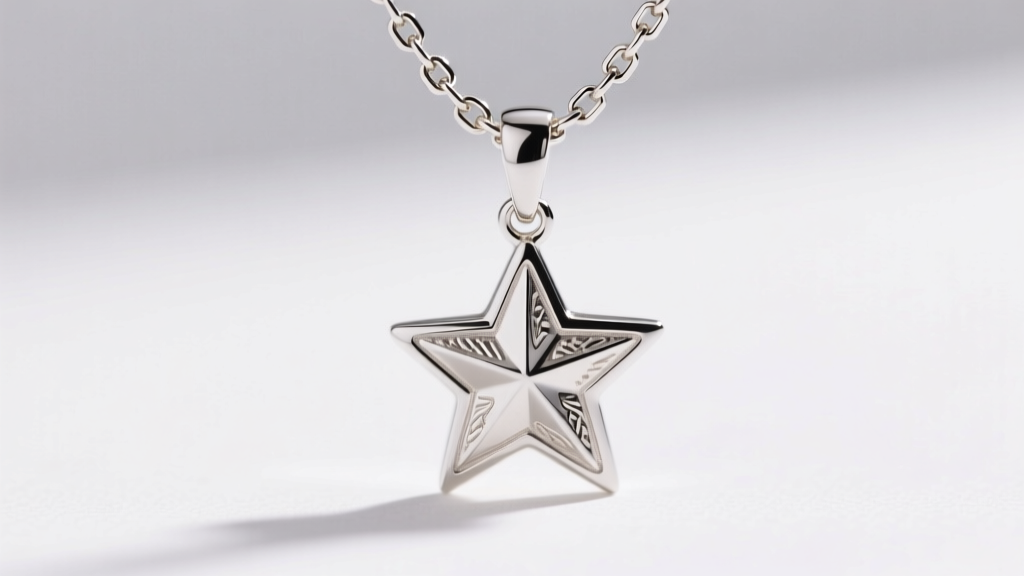
The metal foundation of your evening star necklace dictates both its durability and its long-term value retention. 14k gold (58.5% pure gold) remains the industry workhorse for everyday pendants. Its higher alloy content makes it significantly harder and more resistant to scratching than 18k gold, making it ideal for intricate star motifs that might otherwise bend or warp if snagged on clothing. However, 18k gold (75% pure gold) offers a richer, warmer hue that is highly prized in luxury markets, particularly in yellow gold celestial pieces. If you are investing in a Tier 3 or Tier 4 evening star necklace, 18k gold or Platinum is expected. Platinum, while commanding a 30% to 50% premium over 18k gold in manufacturing costs, offers unparalleled durability and will not wear down over decades, ensuring the pavé diamonds remain securely set.
Natural vs. Lab-Grown Diamonds in Star Motifs
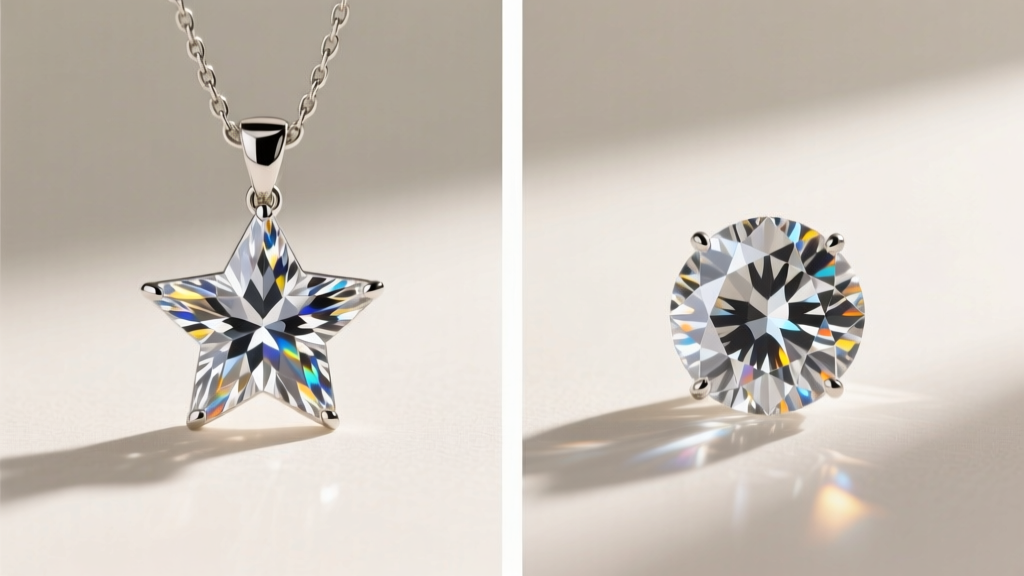
The debate between natural and lab-grown diamonds is particularly relevant for star-shaped pendants, where the geometric precision of the cut is paramount. According to the Gemological Institute of America (GIA), lab-grown diamonds possess the exact same optical, physical, and chemical properties as their natural counterparts. This means a lab-grown evening star necklace will offer identical brilliance and fire.
However, the financial value proposition diverges sharply. As reported by industry analysts at JCK Online, the wholesale pricing for lab-grown diamonds has experienced a significant correction over the past few years. In 2026, a consumer can acquire a 1.5-carat total weight (CTW) lab-grown diamond evening star pendant in 18k gold for under $1,200—a piece that would cost upwards of $5,500 if crafted with natural, earth-mined diamonds. If your goal is purely aesthetic brilliance and maximizing carat size on a budget, lab-grown is the undisputed winner. If your goal is heirloom wealth preservation and secondary market resale, natural diamonds remain the necessary choice.
Brand Premium vs. Custom Benchmade
When shopping for an evening star necklace, buyers often face the dilemma of purchasing from a recognized luxury house versus commissioning a custom benchmade piece from a local master jeweler. Luxury brands (such as Tiffany & Co., Messika, or Anita Ko) charge a "brand premium" that can account for 60% to 80% of the total retail price. You are paying for the iconic blue box, the marketing campaigns, and the guarantee of standardized quality control.
Conversely, a custom benchmade evening star necklace allows you to allocate your budget directly into the materials. By working with a private jeweler, you can select a specific star-brilliant cut diamond, mandate the use of V-prongs for structural safety, and choose a heavy 1.2mm wheat chain that luxury brands often overlook in favor of daintier, more fragile chains. A custom piece will typically cost 40% less than its luxury-branded equivalent while offering superior structural engineering. The trade-off is the lack of brand recognition upon resale, but for a piece intended to be worn and cherished rather than flipped, custom benchmade offers vastly superior intrinsic value.
"The true value of a celestial pendant isn't just in the carat weight; it's in the micro-engineering. A star motif with poorly protected points and a weak jump ring is a broken necklace waiting to happen. Always prioritize structural geometry over pure stone size." — Master Bench Jeweler Consensus
The 4-Point Value Assessment Checklist
Before finalizing your purchase of an evening star necklace, run the piece through this rigorous four-point assessment checklist to ensure you are receiving fair market value and quality craftsmanship:
- Inspect the Prong Architecture: Use a 10x jeweler's loupe to examine the points of the star. Are they secured with V-prongs or custom-fitted bezel edges? If standard round prongs are hovering over sharp corners, walk away.
- Verify the Chain Gauge and Clasp: Check the chain thickness. It should be at least 0.9mm for pendants over 3 grams. Ensure the clasp is a solid lobster claw or a secure box clasp, not a fragile spring-ring clasp which is prone to snapping under the pendulum motion of a star pendant.
- Demand the Grading Report: For any natural diamond center stone over 0.30ct, require a GIA or AGS grading report. Verify that the laser inscription on the diamond's girdle matches the report number. For lab-grown stones, an IGI or GIA report is essential to confirm the color and clarity grades claimed by the seller.
- Calculate the Melt Value vs. Retail: Look up the current spot price of gold. Calculate the approximate melt value of the metal in the necklace. If the retail price is more than 8x the melt value for a piece with minimal diamond melee, the markup is excessive.
Final Verdict: Investment or Trend?
So, is an evening star necklace worth the investment in 2026? The answer depends entirely on your definition of investment. If you are seeking a financial asset that will appreciate or strictly hold its monetary value, jewelry is rarely the correct vehicle, with the exception of ultra-rare, high-carat natural colored diamonds or historically significant signed pieces. The evening star necklace, like most motif-driven jewelry, will experience standard retail depreciation the moment it leaves the store.
However, if you define value through the lens of cost-per-wear, emotional resonance, and material permanence, a well-constructed evening star necklace is an exceptional purchase. By bypassing heavy brand premiums, insisting on proper V-prong settings, selecting a durable 1.0mm+ chain, and making an informed choice between natural and lab-grown diamonds, you can acquire a stunning celestial piece that will endure for generations. The stars have always been a symbol of permanence; with the right technical knowledge, your jewelry can be exactly that.


