Guy de Maupassant The Necklace PDF: Diamond vs Paste Care
Explore Guy de Maupassant The Necklace PDF themes via a gemologist's lens. Learn expert care, cleaning, and maintenance for diamonds vs. antique paste.

The Tragedy of 'Paste': Literary Themes and Gemological Realities
Every semester, thousands of literature students and educators search for the guy de maupassant the necklace pdf to study the classic 1884 short story's biting commentary on Parisian society, vanity, and the destructive nature of deception. The plot is legendary: Mathilde Loisel borrows what she believes to be a diamond necklace, loses it, and spends ten grueling years in poverty to replace it with a genuine diamond piece—only to discover the original was 'paste' (fake costume jewelry).
While literary critics focus on the irony of class and materialism, jewelry historians and gemologists look at the story and see a catastrophic failure of material identification and jewelry maintenance. Mathilde did not just lose a necklace; she failed to recognize the physical properties of lead glass versus carbon crystal, and she relied on a faulty 19th-century clasp. In this guide, we bridge the gap between classic literature and modern gemology, providing an expert care and maintenance framework for both genuine diamond necklaces and antique paste replicas.
The Gemology of Deception: Diamond vs. 19th-Century Paste
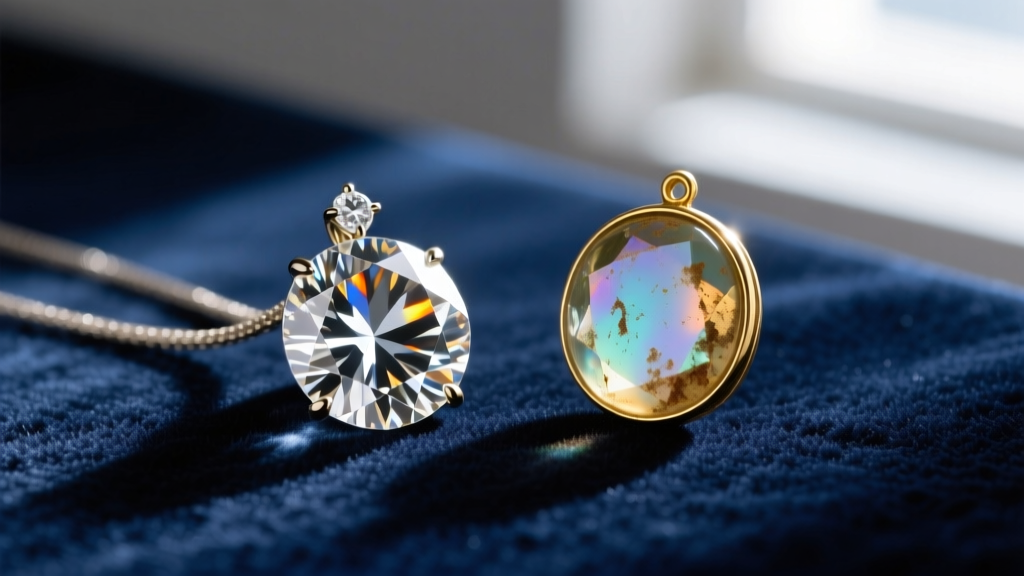
To understand how to care for these two vastly different materials, we must first understand their chemical composition. In the late 19th century, 'paste' was not the cheap plastic or low-grade cubic zirconia we think of today. It was a high-lead glass, often formulated using techniques pioneered by Georges Frédéric Strass. By adding lead oxide to glass, jewelers achieved a high refractive index (approximately 1.7) that closely mimicked the adamantine brilliance of a diamond.
However, to maximize the sparkle, these glass stones were almost always backed with a delicate metallic foil (usually silver or copper alloy) to reflect light back through the crown. This structural difference dictates entirely different cleaning protocols. According to the Gemological Institute of America (GIA), understanding the physical limits of diamond simulants is critical to preventing irreversible damage during routine maintenance.
Material Breakdown: Carbon vs. Lead Glass
| Property | Natural Diamond | 19th-Century Paste (Lead Glass) |
|---|---|---|
| Mohs Hardness | 10 (Hardest natural material) | 5.0 - 6.0 (Easily scratched) |
| Refractive Index | 2.417 | 1.65 - 1.75 |
| Cleavage | Perfect (can chip on hard impact) | Conchoidal fracture (chips like glass) |
| Water Safety | Completely safe | Highly dangerous (ruins foil backing) |
| Ultrasonic Safe? | Generally yes (with caveats) | Absolutely not |
How to Clean and Maintain Genuine Diamond Necklaces
If Mathilde Loisel had purchased a genuine diamond necklace, her maintenance routine would have needed to account for the stone's unique chemical affinities. Diamonds are highly lipophilic, meaning they naturally attract and hold onto oils, grease, and lotions. A diamond necklace worn daily will accumulate a film of sebum and cosmetics within days, significantly reducing its brilliance and light return.
The Expert Diamond Cleaning Protocol
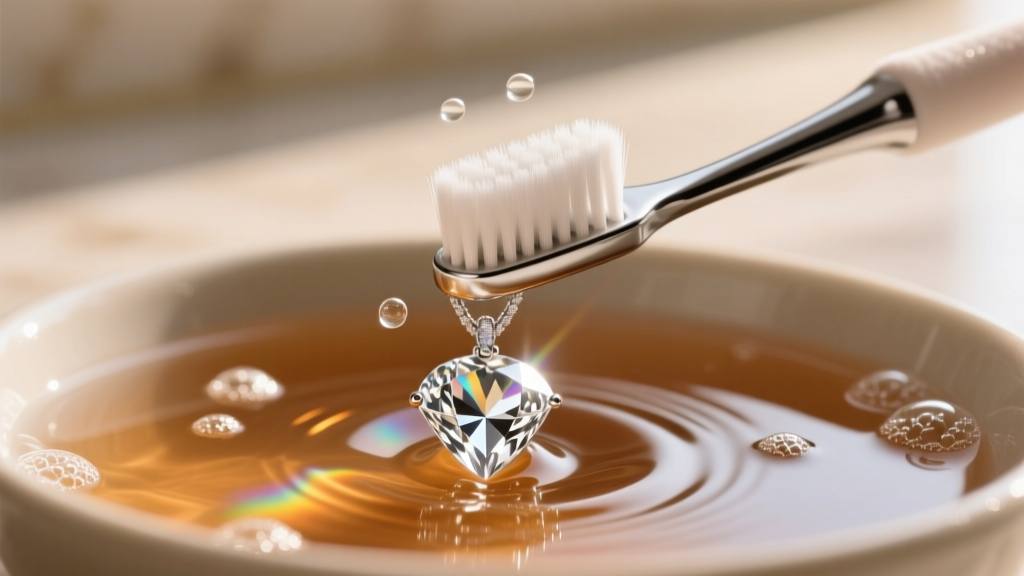
- The Degreasing Soak: Mix a few drops of mild, ammonia-free dish soap (like original Dawn) into a bowl of warm—not hot—water. Hot water can cause thermal shock to certain diamond inclusions or damage the alloy metals in the setting. Let the necklace soak for 15 to 20 minutes to break down the lipid bonds.
- Mechanical Agitation: Use a brand-new, ultra-soft baby toothbrush to gently scrub the pavilion (the underside) of the diamond. This is where the majority of grease accumulates. Never use hard-bristled brushes, as while diamonds cannot be scratched by standard bristles, the precious metal prongs holding them can be worn down over time.
- The Rinse and Dry: Rinse the necklace under a gentle stream of lukewarm water. Crucial Tip: Always place a mesh strainer over the drain before rinsing jewelry. Dry the piece using a lint-free microfiber cloth, avoiding paper towels which can leave microscopic scratches on polished gold or platinum settings.
For a deeper clean, the GIA recommends professional steam cleaning, but warns against using ultrasonic cleaners on fracture-filled diamonds or necklaces with tension settings, as the high-frequency cavitation can shake the stones loose or exacerbate internal flaws.
The Mathilde Loisel Method: Caring for Antique Paste
Caring for the type of necklace Mathilde actually borrowed requires a completely different, highly conservative approach. Because 19th-century paste jewelry relies on a metallic foil backing to create its sparkle, introducing moisture is the single greatest threat to its survival. If water seeps beneath the glass stone through the setting's culet or worn prongs, the foil will rapidly oxidize, turning black and permanently killing the stone's brilliance.
Dry-Cleaning Techniques for Paste and Costume Jewelry
- Compressed Air: Use a can of compressed air (held at least six inches away) to blow dust and loose particulates out of the intricate metalwork and beneath the settings.
- Makeup Brush Dusting: A clean, dry, natural-hair makeup brush is the perfect tool for gently sweeping away surface oils and dust from the glass facets without risking micro-scratches.
- Silver Polishing Cloths: If the metal setting is tarnished sterling silver, use a dry, treated silver-polishing cloth. Carefully polish the metal around the glass, ensuring no chemical residue from the cloth transfers onto the glass or seeps into the setting.
- Avoid Chemical Dips: Never use liquid silver dips or commercial jewelry cleaning solutions on antique paste. The harsh chemicals (like thiourea) will strip the foil backing and cloud the lead glass.
Clasp Security: The True Villain of the Story
The entire tragedy of Maupassant's story hinges not on the material of the necklace, but on its loss. Mathilde discovers the necklace missing after leaving a ball, likely due to the failure of a 19th-century clasp mechanism. During the 1880s, necklaces frequently utilized simple 'C-clasps' (which relied entirely on the tension of the pin) or early, weak spring-ring clasps that lacked a locking mechanism. A heavy glass paste necklace swinging on a carriage ride would easily snap open a poorly tensioned C-clasp.
Modernizing Your Security
Whether you are wearing a $50,000 diamond riviere or a sentimental piece of vintage paste, modernizing your clasp is a non-negotiable aspect of jewelry maintenance.
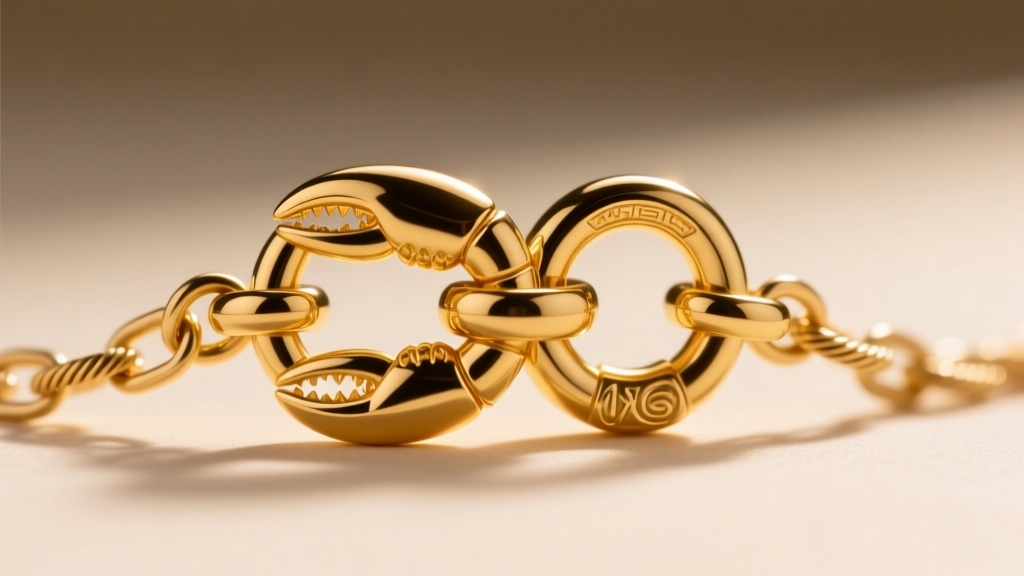
- Upgrade to a Lobster Clasp: Lobster clasps feature a robust internal spring and a locking lever that prevents accidental snags from pulling the clasp open.
- Install a Figure-8 Safety Catch: For high-value pieces, a jeweler can solder a figure-8 safety wire alongside the primary clasp. Even if the main clasp fails, the secondary wire loop catches on the opposing jump ring, preventing the necklace from falling to the floor (or the streets of Paris).
- Routine Prong and Jump Ring Checks: Use a 10x jeweler's loupe to inspect the jump ring (the small circle of metal the clasp hooks into). If the gap in the jump ring is wide enough to slip a piece of paper through, it must be soldered shut by a professional.
Conclusion: Value Beyond the Material
The enduring legacy of the guy de maupassant the necklace pdf is a reminder that the perceived value of jewelry often outweighs its literal, material worth. However, as stewards of our own collections, we cannot afford to be ignorant of the physical realities of the pieces we wear. By understanding the distinct gemological properties of natural diamonds versus antique lead glass, and by securing our investments with modern clasp technology, we ensure that our jewelry remains a source of joy—not a decade-long debt.


