Evil Eye Charm Necklace Trends & Styling for 2026
Discover 2026 evil eye charm necklace trends, from vitreous enamel grades to layering formulas. Expert styling and material guides for modern wardrobes.

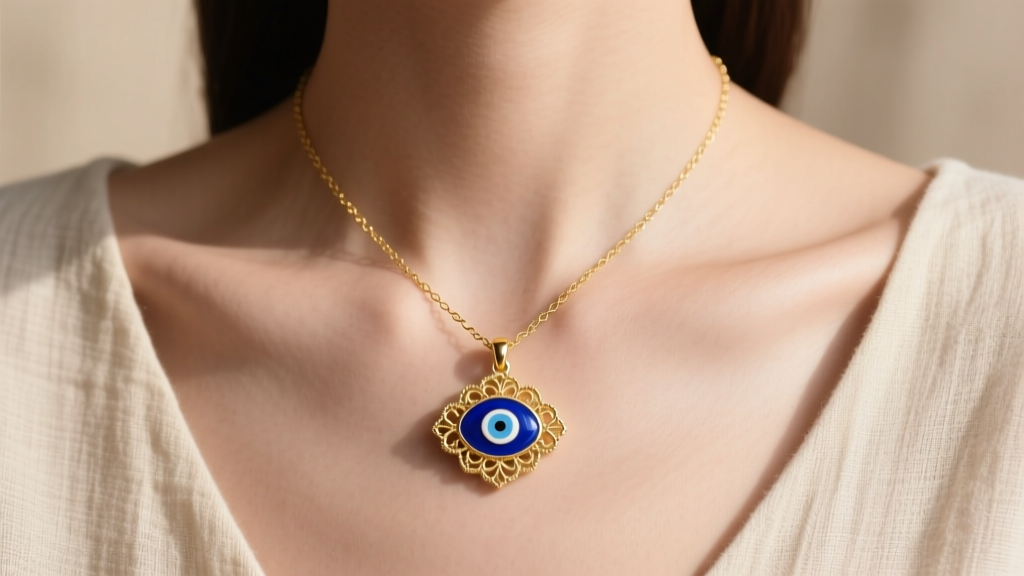
The Evolution of the Evil Eye Charm Necklace
The evil eye, or Nazar, has transcended its ancient Mediterranean and West Asian roots as a protective talisman to become a permanent fixture in the fine jewelry lexicon. According to historical archives documented by Encyclopædia Britannica, the motif has been utilized for over three millennia to ward off malevolent glares. However, the 2026 jewelry landscape has radically reinterpreted this ancient symbol. We are moving past the ubiquitous, mass-produced cobalt glass beads of the early 2010s and entering an era of sophisticated, high-craftsmanship evil eye charm necklaces that blend quiet luxury with personal meaning.
In 2026, the trend is defined by 'stealth symbolism.' Consumers are gravitating toward abstracted evil eye designs, negative space motifs, and unconventional gemstone pairings that read as high-end art pieces first and amulets second. Whether you are investing in a micro-pavé diamond pendant or a bold, vitreous enamel statement piece, understanding the metallurgical and stylistic nuances of the modern evil eye charm necklace is essential for building a curated, future-proof jewelry wardrobe.
Material Breakdown: Enamel Grades and Metal Alloys
Not all evil eye pendants are created equal. The defining feature of the charm—the vibrant, eye-like center—relies heavily on the enameling technique used. When evaluating a piece, the distinction between vitreous and cold enamel will dictate both the necklace's longevity and its investment value.
Vitreous vs. Cold Enamel
Vitreous enamel is a glass powder fused to metal at extreme temperatures (typically around 1400°F). This process creates a hard, luminous finish that is highly resistant to scratching and will never yellow. Cold enamel, conversely, is an epoxy resin. While it allows for vibrant, gradient colorways at a lower price point, it is prone to micro-scratches, UV yellowing, and eventual chipping. For a piece meant to be worn daily, vitreous enamel is the non-negotiable standard.
| Material Component | Durability Profile | Price Range | Best Application |
|---|---|---|---|
| Vitreous Enamel / 18k Gold | Exceptional (Heirloom grade) | $800 - $2,500+ | Everyday luxury, investment pieces |
| Cold Enamel / 14k Gold | Moderate (Requires care) | $250 - $600 | Trend-driven layering pieces |
| Lapis Lazuli / Sterling Silver | High (Natural stone) | $100 - $350 | Organic, bohemian styling |
| Painted Glass / Brass | Low (Costume jewelry) | $30 - $80 | Occasional, seasonal wear |
The Rise of Alternative 'Pupils'
While cobalt blue remains the traditional standard, 2026 has seen a surge in alternative materials for the 'pupil' and 'iris' of the charm. Jewelers are increasingly utilizing cabochon-cut malachite, deep blue lapis lazuli, and even black onyx to create a more subdued, monochromatic evil eye charm necklace that aligns with minimalist aesthetics.
Chain Gauges and Proportional Scaling
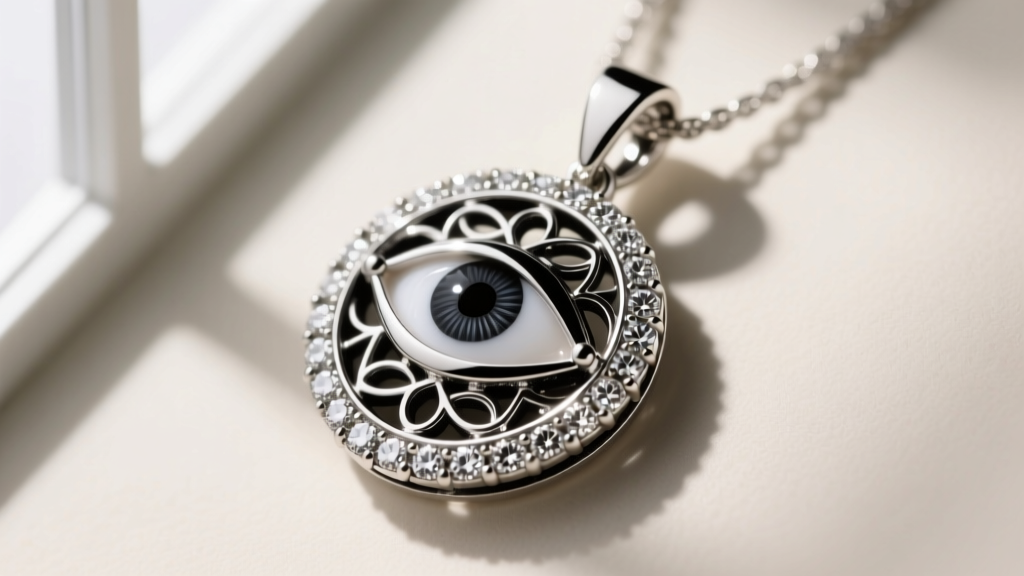
A common failure point in pendant styling is a mismatch between the charm's weight and the chain's gauge. The evil eye charm necklace requires precise proportional scaling to ensure the pendant lays flat against the sternum without flipping or dragging the chain.
- Micro Charms (5mm - 8mm): Best paired with delicate 0.8mm to 1.0mm cable or wheat chains. These lightweight chains (often 14k or 18k gold) allow the tiny charm to float seamlessly on the collarbone.
- Standard Charms (10mm - 15mm): Require a 1.2mm to 1.5mm chain. Paperclip chains and lightweight box chains provide the necessary tensile strength to support the pendant's bail without kinking.
- Statement Pendants (20mm+): Demand robust 2.0mm+ rope or thick Cuban link chains. A heavy vitreous enamel pendant will quickly warp a delicate chain and stress the soldering point at the clasp.
Stylist Note: Always inspect the bail (the loop connecting the charm to the chain). In 2026, integrated 'hidden' bails that slide directly onto the chain are trending over traditional jump-ring bails, offering a cleaner silhouette and reducing the risk of the pendant flipping upside down.
The 2026 Layering Matrix
Layering remains a dominant styling technique, but the haphazard 'neck mess' of previous years has been replaced by deliberate, mathematically spaced curation. The evil eye charm necklace serves as an excellent focal point in a layered stack due to its recognizable geometry and pop of color.
The Asymmetrical Trio Formula
To achieve a balanced, editorial look, follow this specific length and texture matrix:
- The Base (14 inches): A textured or bead-chain choker (e.g., a 1.5mm oxidized silver snake chain) that sits tightly at the base of the neck.
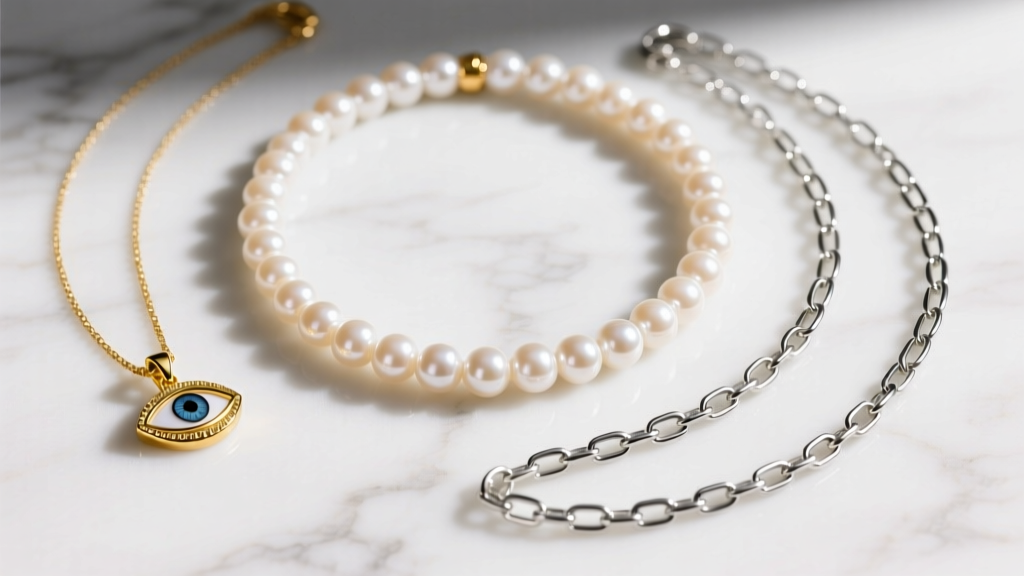
- The Focal Point (16 inches): Your evil eye charm necklace. Opt for a 12mm vitreous enamel pendant on a 1.0mm gold cable chain. The mixed-metal contrast (silver base, gold focal) is a hallmark of 2026 styling.
- The Anchor (18 to 20 inches): A heavier, unadorned chain, such as a 2.5mm gold paperclip chain, featuring a simple geometric drop or a solitary diamond bezel at the terminus.
When incorporating diamond-accented evil eye charms into your layering stack, ensure the diamond quality meets rigorous standards. The Gemological Institute of America (GIA) notes that melee diamonds (those under 0.15 carats used in pavé settings) should still exhibit excellent cut grades to maximize light return, preventing the charm from looking dull against the vibrant enamel.
Market Pricing and Investment Value
The market for the evil eye charm necklace is highly stratified. Understanding where your budget aligns with material quality will prevent overpaying for branded costume jewelry or underestimating the cost of true fine jewelry.
Tier 1: Accessible Luxury ($80 - $250)
At this tier, expect sterling silver bases with heavy rhodium plating or 10k/14k gold vermeil. The 'eye' is typically cold enamel or synthetic spinel. While visually appealing, these pieces require careful maintenance. As noted by Jewelers of America, vermeil and plated pieces must be kept away from moisture and friction to prevent the base metal from showing through.
Tier 2: Contemporary Fine Jewelry ($300 - $900)
This is the sweet spot for the modern consumer. You will find solid 14k gold chains, vitreous enamel work, and ethically sourced diamond halos (typically 0.10 to 0.25 total carat weight). Brands in this space focus on modern, asymmetric silhouettes—such as an evil eye charm where the 'iris' is slightly off-center or framed by a raw, unpolished gold bezel.
Tier 3: High Jewelry & Heritage ($1,500+)
Reserved for 18k gold and platinum, these pieces feature master-level guilloché enameling (where the metal beneath the translucent enamel is hand-engraved to catch the light) and VVS-clarity diamond accents. These are heirloom-grade talismans designed to outlast the wearer.
Final Thoughts on Talismanic Styling
The evil eye charm necklace in 2026 is no longer just a souvenir or a fleeting trend; it is a sophisticated expression of personal heritage and modern design sensibility. By prioritizing vitreous enamel, matching your chain gauge to the pendant's weight, and employing deliberate layering formulas, you elevate this ancient symbol into a cornerstone of your contemporary fine jewelry collection. Whether worn as a solitary shield over a silk blouse or layered amidst a curated stack of mixed metals, the modern evil eye remains as powerful as it is beautiful.


