The Pearl Clasp Necklace: Engineering, Mechanics & Style Guide
Discover the technical mechanics, metal grades, and styling secrets of the pearl clasp necklace. An expert guide to decorative fasteners and security.

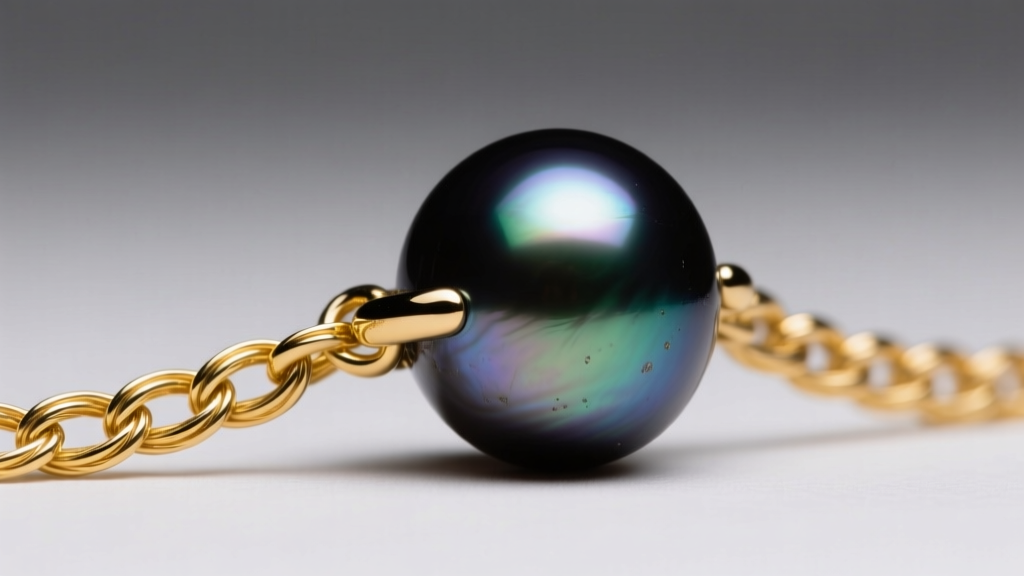
The Anatomy of a Pearl Clasp Necklace
In the realm of fine jewelry, the pearl clasp necklace represents a fascinating intersection of horological-level engineering and organic gemstone aesthetics. Unlike traditional strands where the fastener is hidden at the nape of the neck, a true pearl clasp necklace utilizes the pearl itself—or a heavily pearl-encrusted mechanism—as the primary fastening device. In 2026, the trend has decisively shifted toward front-facing, decorative clasps worn at the décolletage, transforming a purely functional component into a secondary pendant. However, this aesthetic choice introduces severe mechanical challenges. Organic pearls are relatively soft (2.5 to 4.5 on the Mohs scale), meaning the hardware must bear the structural load without fracturing the nacre. Understanding the technical specifications, drilling tolerances, and metallurgical requirements is essential for both jewelers and informed collectors.
Technical Mechanics: How Decorative Pearl Clasps Work
The conversion of a loose, high-grade pearl into a functional clasp component requires extreme precision. Jewelers typically utilize a 0.8mm to 1.2mm diamond-tipped core drill, lubricated with a continuous water drip to prevent thermal shock, which can cause the concentric nacre layers to delaminate. According to the Gemological Institute of America (GIA), improper drilling is the leading cause of structural failure in pearl jewelry. Once drilled, the pearl is fitted with a metal bayonet or friction pin.
The Bayonet and Friction-Fit Systems
The most common mechanism for a front-facing pearl clasp is the friction-fit bayonet. A male metal pin, typically measuring 1.0mm in diameter and forged from 14k or 18k gold, features a microscopic groove near its tip. A silicone O-ring (Shore A hardness 30-40) is seated in this groove. When the pin is inserted into the female receiver housed inside the pearl, the O-ring compresses, creating a secure friction lock. The tolerance for this fit must be within ±0.05mm. If the drill hole is too wide, the clasp will slip; if too narrow, the insertion force will crack the pearl.
Magnetic Pearl Clasps: Neodymium Grades and Pull Force
For heavier pearl strands or accessibility-focused designs, magnetic clasps encased in pearl shells are highly prevalent. These rely on N42 to N52 grade neodymium magnets. An N52 magnet offers a maximum energy product of 52 MGOe, providing roughly 10 to 14 pounds of axial pull force. However, neodymium magnets possess notoriously weak shear strength. A lateral strike or twisting motion can cause the clasp to slide open despite its high axial grip. To counteract this, premium pearl clasp necklaces incorporate a tongue-and-groove alignment track machined into the gold casing, ensuring the magnets only experience axial pull.
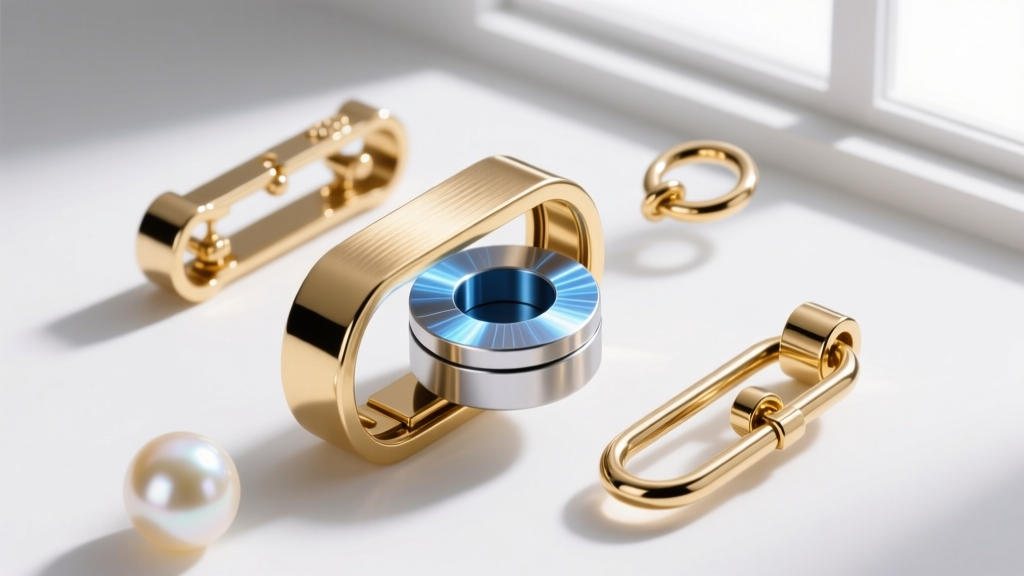
Metal Alloys and Tarnish Resistance in Clasp Hardware
The internal hardware of a pearl clasp necklace is subjected to constant friction, skin acids, and cosmetic chemicals. Selecting the correct alloy is not merely a color preference; it is a structural necessity. Below is a technical comparison of common metals used in pearl clasp engineering.
| Metal Alloy | Vickers Hardness (HV) | Tarnish & Corrosion Resistance | Best Application |
|---|---|---|---|
| 14k Yellow Gold | 120 - 140 | High | Everyday friction-fit bayonet pins |
| 18k White Gold | 130 - 150 | Medium (requires rhodium plating) | High-end decorative magnetic casings |
| 925 Sterling Silver | 60 - 80 | Low (prone to sulfide oxidation) | Budget strands, requires frequent polishing |
| Grade 5 Titanium (6Al-4V) | 340 - 360 | Extreme (biocompatible) | Hypoallergenic heavy bead strand locks |
As noted by CIBJO (The World Jewellery Confederation), sterling silver is generally discouraged for internal friction pins in pearl clasps due to its low Vickers hardness. Over time, the silver pin will wear down, losing its friction grip and resulting in the loss of the necklace.
Securing Heavy Pearl Strands: Safety Catch Engineering
When dealing with substantial South Sea or Tahitian pearls (12mm+ in diameter), a strand can easily exceed 80 to 120 grams. The sheer kinetic energy generated when a heavy strand swings can snap standard spring rings or lobster clasps. Therefore, a high-quality pearl clasp necklace utilizes a box clasp equipped with a secondary safety mechanism.
Figure-8 Safety Wires vs. Hinged Latches
The industry standard for heavy strands is the figure-8 safety wire. This secondary catch consists of a loop of wire that snaps over a button on the opposing side of the clasp. For a strand weighing over 100 grams, this safety wire must be fabricated from a minimum of 18-gauge (1.02mm) wire. Thinner alternatives, such as 22-gauge (0.64mm) wire, will suffer from metal fatigue and permanent deformation after 50 to 100 articulation cycles. The hinge joint connecting the figure-8 wire to the main clasp body must be laser-welded rather than soldered, as laser welding provides a deeper, more localized fusion that withstands repetitive lateral stress without melting the surrounding delicate pearl inlays.
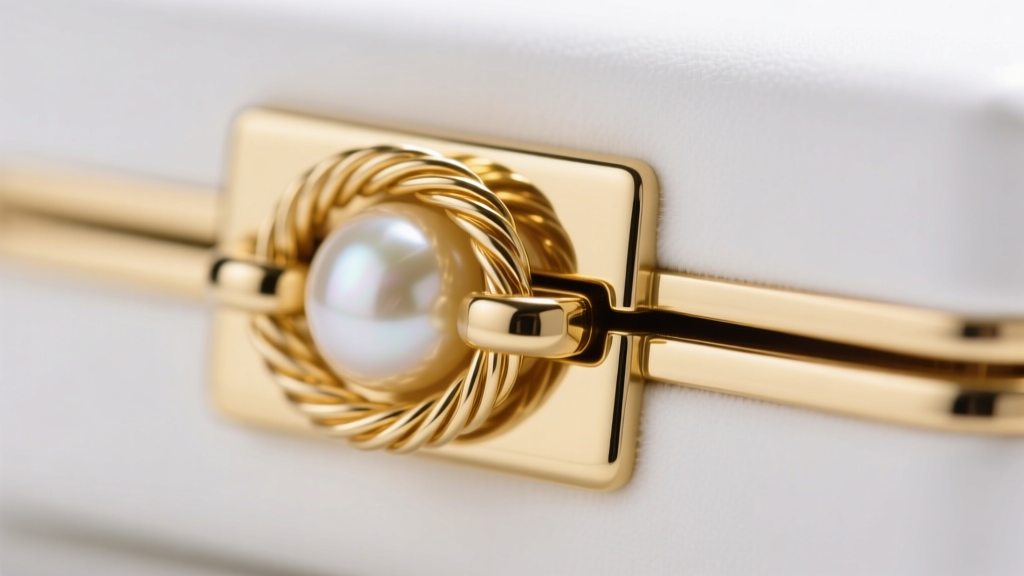
Troubleshooting Common Pearl Clasp Failures
Even the most meticulously engineered pearl clasp necklace requires maintenance. Below are the most common failure modes and their technical solutions:
- Friction-Fit Slippage: Cause: Degradation of the internal silicone O-ring due to exposure to sebum, perfumes, and UV light. Fix: A jeweler must extract the pin and replace the O-ring with a fresh 1.5mm inner-diameter silicone seal. Do not use rubber, which degrades rapidly.
- Magnetic Clasp Shearing Open: Cause: Lateral shear force overcoming the magnet's weak shear tolerance. Fix: Retrofit the clasp with a secondary mechanical locking sleeve or upgrade to a clasp featuring a machined steel alignment track.
- Box Clasp Tongue Bending: Cause: The 'V' shaped tongue inside the box clasp has lost its temper and springiness. Fix: The jeweler must carefully bend the tongue outward to increase friction, or anneal and re-temper the metal if it is severely work-hardened.
- Nacre Chipping Around the Drill Hole: Cause: The metal pin is slightly misaligned during insertion, acting as a lever against the fragile edge of the drill hole. Fix: Install a microscopic 14k gold bezel or 'grommet' flush with the pearl's surface to protect the nacre edge from the metal pin.
Styling the Front-Facing Pearl Clasp in 2026
The modern approach to the pearl clasp necklace treats the fastener as the star of the show. Stylists recommend pairing a front-clasping Akoya pearl strand with asymmetrical necklines, allowing the mechanical beauty of the gold bayonet and the luster of the pearl to rest directly on the collarbone. For layering, combine a 16-inch front-clasping pearl choker with a 20-inch matte gold snake chain. The juxtaposition of the organic, high-luster pearl clasp against the industrial, sleek gold chain creates a striking visual tension that defines contemporary fine jewelry layering.
'The clasp is no longer an afterthought hidden in the hair. It is the anchor of the design, requiring the same gemological scrutiny and metallurgical precision as the central pendant.' — Master Jeweler & Findings Engineer
Investing in a technically sound pearl clasp necklace ensures that the piece remains secure, functional, and aesthetically captivating for generations. Always verify the wire gauges, magnet grades, and drilling tolerances before acquiring high-value pearl strands.


