Ninja Turtle Necklace Guide: Materials, Enameling & Chain Pairings
Expert guide to ninja turtle necklace craftsmanship. Explore metallurgy, vitreous enameling, chain pairings, and collector grading.

The Evolution of Pop Culture Jewelry: From Trinkets to Heirlooms
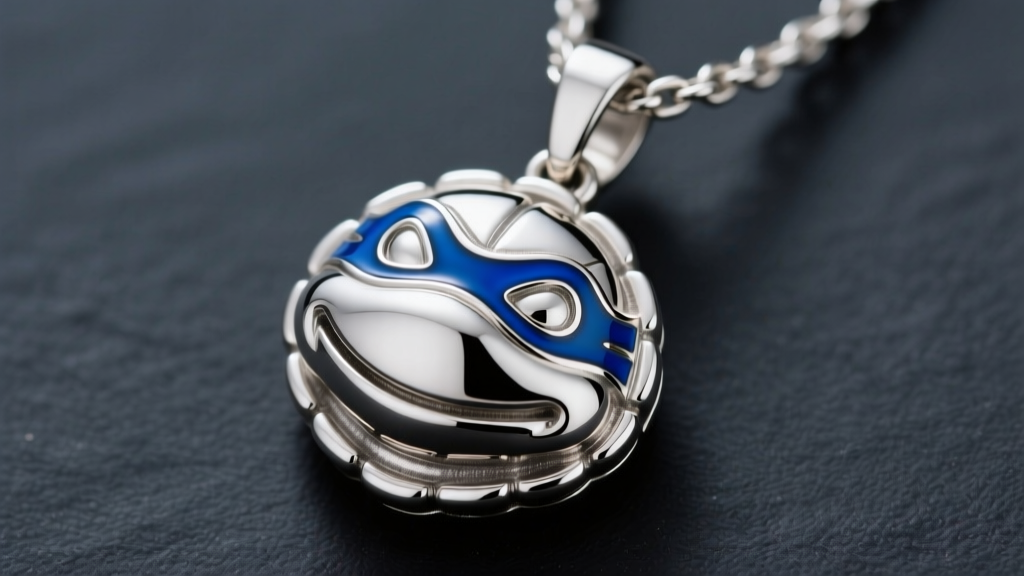
When most people hear the term 'ninja turtle necklace,' they immediately picture the injection-molded plastic pendants or cheap base-metal trinkets sold in mall kiosks during the late 1980s and 1990s. However, as the original Teenage Mutant Ninja Turtles (TMNT) fanbase has matured, so too has the jewelry market catering to them. Today, high-end collectors and bespoke silversmiths are treating the iconic turtle shell and character motifs as legitimate canvases for fine jewelry craftsmanship. In this technical deep dive, we dissect the metallurgy, enameling techniques, and structural engineering required to produce a premium ninja turtle necklace that functions as both a durable everyday accessory and a graded collectible.
Metallurgy & Material Grades in TMNT Pendants
The longevity, weight, and skin-safety of a turtle pendant are dictated entirely by its base metal. While vintage pieces were predominantly cast from Zamak-5 (a zinc alloy), modern artisan pieces utilize precious metals to achieve heirloom status. Understanding these material grades is critical for any serious collector.
| Material | Composition | Pros | Cons | Avg Price Range |
|---|---|---|---|---|
| Zamak-5 | Zinc, Aluminum, Magnesium, Copper | Vintage accuracy, low cost | Brittle, prone to pitting, skin irritation | $15 - $45 |
| Solid Brass | Copper, Zinc | Excellent for enameling, heavy feel | Tarnishes, requires rhodium plating | $60 - $180 |
| 925 Sterling | 92.5% Silver, 7.5% Copper | Premium luster, heirloom quality | Scratches easily, requires antiquing | $250 - $900 |
| 14k/18k Gold | Gold, Copper, Silver alloys | Ultimate luxury, zero tarnish | Extremely high cost, soft (18k) | $1,500 - $5,000+ |
The Liver of Sulfur Antiquing Process
For 925 sterling silver turtle shell pendants, the raw casting often looks flat and uninspired. Master jewelers use a chemical compound called Liver of Sulfur (potassium sulfide) to induce rapid, controlled oxidation. By submerging the silver shell in a heated liver of sulfur solution, the metal turns a deep, matte black. The jeweler then uses a polishing cloth or a flex-shaft with a silicone wheel to buff the raised 'scutes' (the individual plates on a turtle's shell) back to a high shine, leaving the deep recesses and groove lines dark. This high-contrast antiquing gives the shell a hyper-realistic, three-dimensional texture that flat polishing cannot achieve.
The Enameling Process: Cold Epoxy vs. Vitreous Glass
The defining feature of any character-specific ninja turtle necklace—whether it represents Leonardo, Raphael, Donatello, or Michelangelo—is the colored mask. The method used to apply this color separates mass-produced merchandise from fine art jewelry.
Cold Enamel (Epoxy Resin)
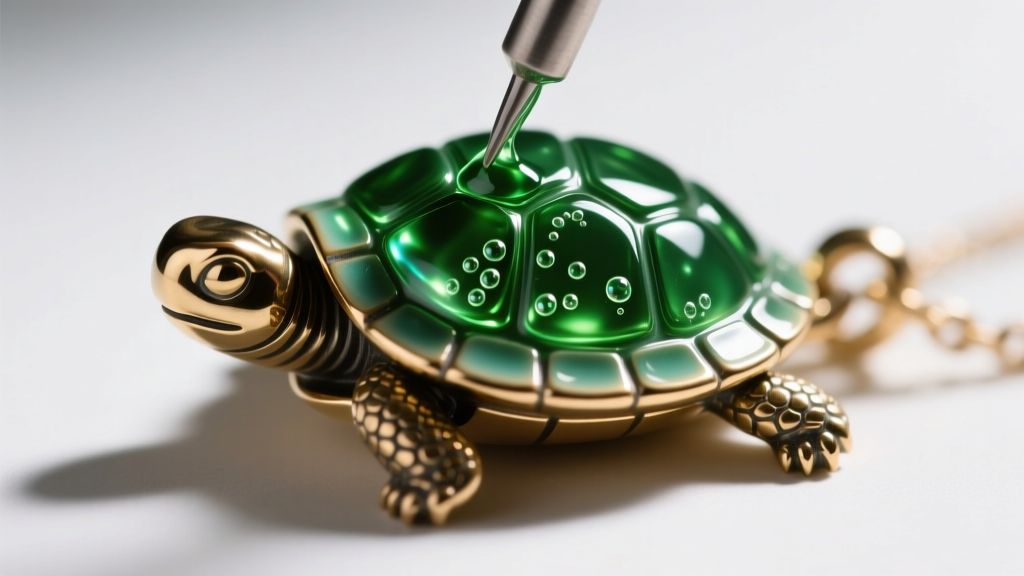
Mass-market and mid-tier pendants utilize cold enamel, which is essentially a two-part epoxy resin tinted with synthetic pigments. It is applied via syringe and cured at room temperature or in a low-heat dehydrator. While modern epoxies are highly durable and UV-resistant, they remain fundamentally plastic. Over a decade or more, cold enamel will inevitably micro-scratch, dull, and potentially yellow when exposed to prolonged UV radiation and skin oils.
Vitreous Enamel (Fused Glass)
True collector-grade pendants employ vitreous enameling. This involves packing finely milled silica glass frit into the recessed channels of the metal pendant. The piece is then fired in a kiln at temperatures between 1400°F and 1500°F (760°C - 815°C). The glass melts, fuses to the metal substrate, and cools into a permanent, scratch-resistant, and UV-impervious glass surface. According to the Gemological Institute of America (GIA), vitreous enamel has been used for centuries precisely because its color stability is virtually infinite. For a TMNT pendant, this means the iconic green skin and primary-colored masks will remain as vibrant in fifty years as they were on the day of firing.
Cloisonné Wire Work
To prevent the molten green glass of the turtle's skin from bleeding into the blue, red, orange, or purple glass of the mask, high-end artisans use the cloisonné technique. Fine silver or gold wires (often 24-gauge or 0.5mm thick) are bent to shape and soldered onto the pendant base, creating isolated 'cells.' Each cell is filled with a different color of enamel frit, ensuring razor-sharp boundaries between the mask and the face.
Chain Selection & Bail Engineering
A solid 925 sterling silver or 14k gold TMNT pendant is remarkably dense. A fully cast, 1.5-inch turtle shell pendant can easily weigh between 25 and 45 grams. Pairing this weight with an inadequate chain is a recipe for catastrophic failure.
Tensile Strength and Chain Gauges
Never pair a heavy cast pendant with a 1mm or 1.5mm box chain or snake chain; the sheer pendulum effect of the pendant swinging will snap the links or crush the chain structure over time. For a 30-gram turtle pendant, you must utilize chains in the 3mm to 5mm range. The most structurally sound options include:
- Wheat Chains (3mm-4mm): Woven in a continuous braid, offering multidirectional tensile strength and a fluid drape that complements organic shapes like a turtle shell.
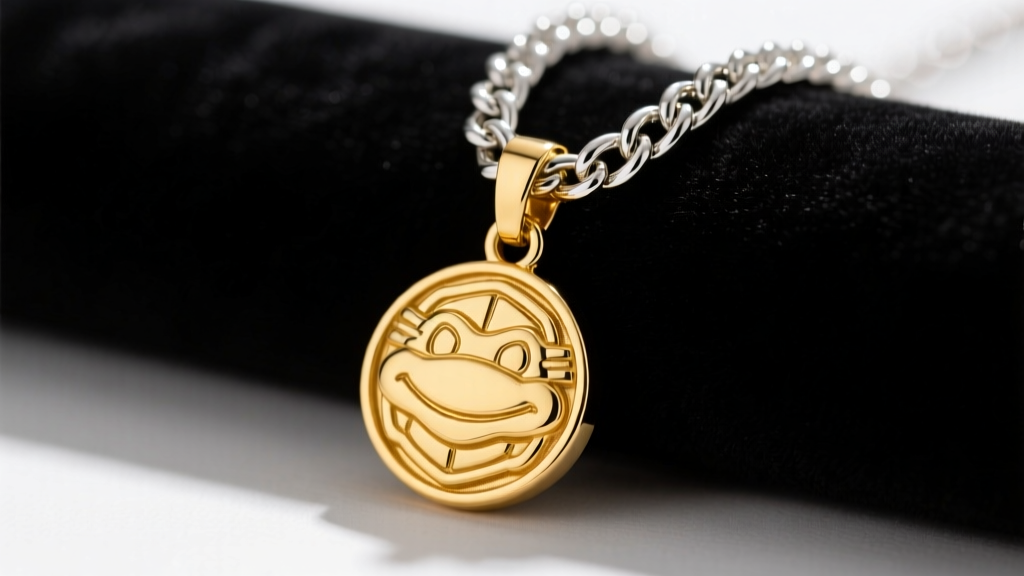
- Cuban Link Chains (4mm-5mm): Interlocking, flat-faced links that provide immense structural integrity and a bold, streetwear-adjacent aesthetic.
- Figaro Chains (4mm): A classic pattern that offers high tensile strength while remaining lighter on the neck than a solid Cuban.
Bail Integration
The bail—the loop connecting the pendant to the chain—is a critical point of failure. Cheap pendants feature a thin, glued-on loop that will detach under stress. Expert silversmiths utilize an 'integrated shell bail.' In this design, the top ridge of the turtle shell is cast with a hollow, reinforced tunnel through which the chain threads directly. This distributes the kinetic energy across the entire upper carapace of the pendant rather than concentrating it on a single soldered joint.
Authenticity, Hallmarks, and Regulatory Compliance
When investing in premium pop-culture jewelry, verifying authenticity and material safety is paramount. The Federal Trade Commission (FTC) strictly regulates precious metal stamping in the United States. Any piece marketed as sterling silver must bear a '925' stamp and the maker's mark, as outlined in the FTC Jewelry Guides. If a high-priced ninja turtle necklace lacks these hallmarks in a discreet area (often the back of the shell or the inside of the bail), it is likely silver-plated brass or a counterfeit.
Furthermore, because TMNT merchandise inherently appeals to younger demographics, artisans must be hyper-aware of lead content. The Consumer Product Safety Commission (CPSC) enforces strict limits on lead in jewelry under the Consumer Product Safety Improvement Act (CPSIA). Even if a bespoke pendant is marketed strictly to adult collectors, responsible jewelers source lead-free solder and certified nickel-free alloys to ensure the piece is entirely biocompatible and safe for prolonged skin contact.
Caring for Vintage vs. Modern Pieces
Maintenance protocols differ vastly depending on the era and material of your necklace. Vintage 1980s Zamak pieces should never be submerged in liquid silver dips or ultrasonic cleaners; the porous nature of degraded zinc alloys will trap the chemicals, causing rapid internal corrosion and 'zinc pest.' Instead, wipe them gently with a dry microfiber cloth. Conversely, modern vitreous enamel and sterling silver pieces can be safely cleaned in an ultrasonic bath using a mild, ammonia-free detergent, provided the enamel has no micro-fractures. Store your necklaces in an anti-tarnish cloth pouch with silica gel packets to absorb ambient humidity and preserve the silver's rhodium plating.


