Evil Eye Layered Necklace: Material Guide & Properties
Discover the metallurgy, gemology, and structural mechanics behind the evil eye layered necklace. Compare metals, enamels, and chain gauges.

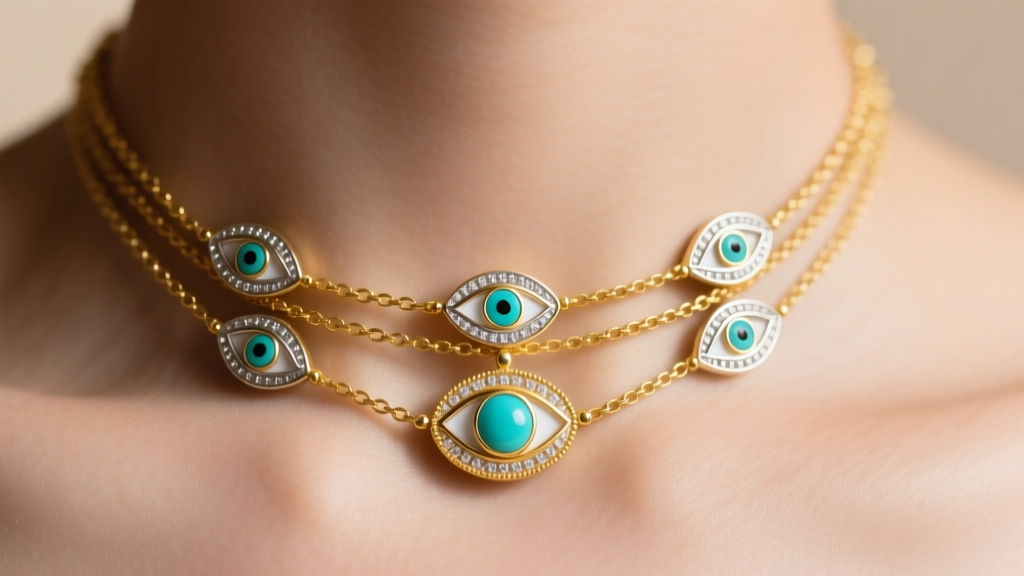
The Anatomy of an Evil Eye Layered Necklace
The evil eye (or nazar) is an ancient talisman designed to ward off malevolent glares. While traditionally worn as a single, heavy pendant, modern jewelry design in 2026 heavily favors the evil eye layered necklace configuration. Layering introduces complex structural dynamics: multiple chains create friction, varying weights exert uneven tensile stress on clasps, and mixed materials can trigger galvanic corrosion. Understanding the material properties of your layered setup is the difference between an heirloom piece and a tangled, tarnished mess.
A standard layered evil eye setup utilizes three distinct lengths: a 14-to-16-inch choker, an 18-inch princess chain (which typically bears the primary evil eye pendant), and a 20-to-22-inch matinee chain. Because these chains rest directly against one another, the metallurgical hardness and surface finish of the chosen metals will dictate the longevity of the entire arrangement.
Base Metals: Comparing Durability and Skin Sensitivity
The foundation of any layered necklace is the chain. When chains rub together continuously, micro-abrasion occurs. Selecting the correct metal alloy is critical for resisting this fretting wear.
14k vs. 18k Solid Gold
While 18k gold (75% pure gold) offers a richer yellow hue, it is relatively soft, yielding a tensile strength of roughly 120-140 MPa. In a layered setup, 18k chains are prone to micro-scratching and stretching under the weight of a heavy enamel pendant. 14k gold (58.5% pure gold) is the metallurgical sweet spot. The remaining 41.5% alloy (typically copper, silver, and zinc) increases the tensile strength to over 200 MPa, providing the structural rigidity needed to support layered pendants without warping the links.
Sterling Silver (925) and Tarnish Dynamics
Sterling silver is an excellent, affordable base, but it is highly susceptible to silver sulfide tarnish. Layering accelerates tarnishing because the constant friction strips away the protective polished surface layer, exposing fresh silver to sulfur compounds in the air and human sweat. If you choose a silver evil eye layered necklace, look for chains treated with an anti-tarnish rhodium flash.
The Truth About Gold Vermeil
According to the Federal Trade Commission (FTC) Jewelry Guides, true gold vermeil must consist of a sterling silver base plated with at least 2.5 microns of 10k or higher gold. However, the friction inherent in an evil eye layered necklace will cause "fretting wear," stripping even 2.5-micron plating within 6 to 12 months of daily wear. Vermeil is best reserved for occasional wear rather than daily layered setups.
| Material | Tensile Strength | Tarnish / Wear Risk | Avg. Price (3-Layer Set) | Best Use Case |
|---|---|---|---|---|
| 14k Solid Gold | High (~200+ MPa) | Extremely Low | $450 - $900 | Daily wear, heavy pendants |
| 18k Solid Gold | Moderate (~130 MPa) | Low (Prone to scratching) | $650 - $1,400 | Occasional luxury wear |
| Sterling Silver (925) | Moderate | High (Oxidation) | $120 - $250 | Budget-friendly, requires polishing |
| Gold Vermeil | Moderate (Silver core) | High (Plating wear) | $150 - $350 | Short-term trend layering |
The "Eye" Itself: Enamel vs. Gemstone Inlays
The focal point of the necklace—the eye itself—relies on concentric circles of color. Jewelers achieve this through either enamel work or gemstone inlays, each with vastly different physical properties.
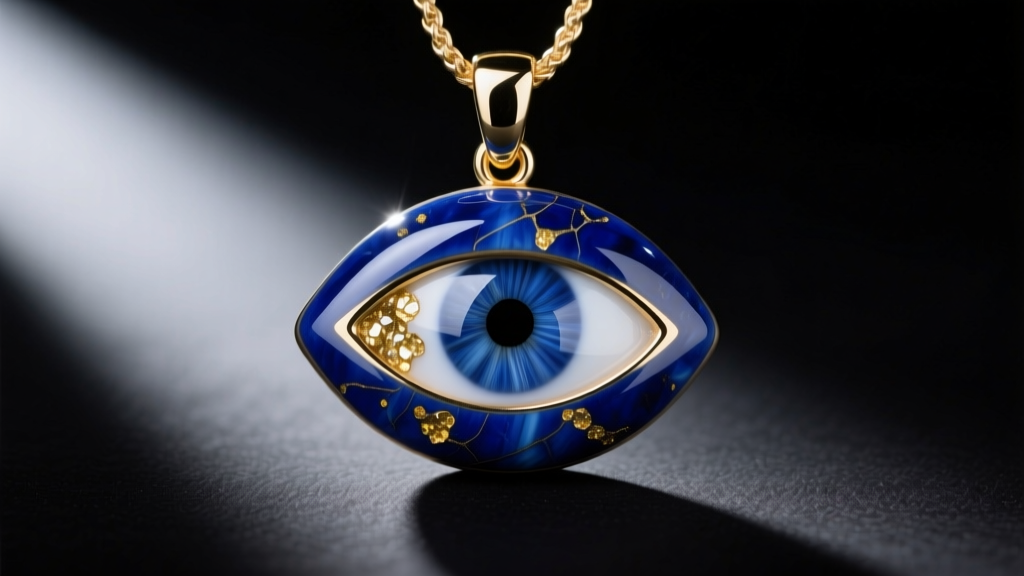
Vitreous Enamel vs. Cold Enamel
Cold enamel is essentially an epoxy resin. It sits at a mere 2 to 3 on the Mohs hardness scale, meaning it will easily scratch when it collides with a layered gold chain. Furthermore, UV exposure and contact with cosmetics (like foundation or perfume) will cause cold enamel to yellow and degrade within a few years.
Vitreous enamel, on the other hand, is powdered glass fused to metal at temperatures exceeding 1,400°F. It ranks between 5 and 6 on the Mohs scale, making it highly resistant to scratching from metal chains. However, its glass-like nature means it possesses low impact resistance; dropping a vitreous enamel evil eye pendant on a tile floor will likely shatter the inlay.
Gemstone Inlays: Porosity and Hardness
Many high-end evil eye pendants replace the blue enamel ring with natural gemstones. According to the Gemological Institute of America (GIA), Turquoise is a popular choice but ranks only 5 to 6 on the Mohs scale and is highly porous. Untreated turquoise will absorb skin oils, lotions, and perfumes, causing the vibrant blue stone to turn a mottled greenish-brown. Always ensure your turquoise is "stabilized" with a clear epoxy to seal the pores.
Lapis Lazuli is another common alternative, prized for its deep ultramarine color and golden pyrite flecks. However, lapis contains calcite, which is highly reactive to acids. Cleaning a lapis lazuli evil eye pendant with commercial jewelry dips or even mild acidic soaps will dissolve the calcite matrix, leaving the stone pitted and dull. For maximum durability, Blue Sapphire (Mohs 9) is the ultimate, albeit expensive, choice for an indestructible evil eye inlay.
Chain Gauges, Profiles, and Clasp Hardware
Layering is not just about length; it is about managing physical geometry to prevent tangling and hardware failure.
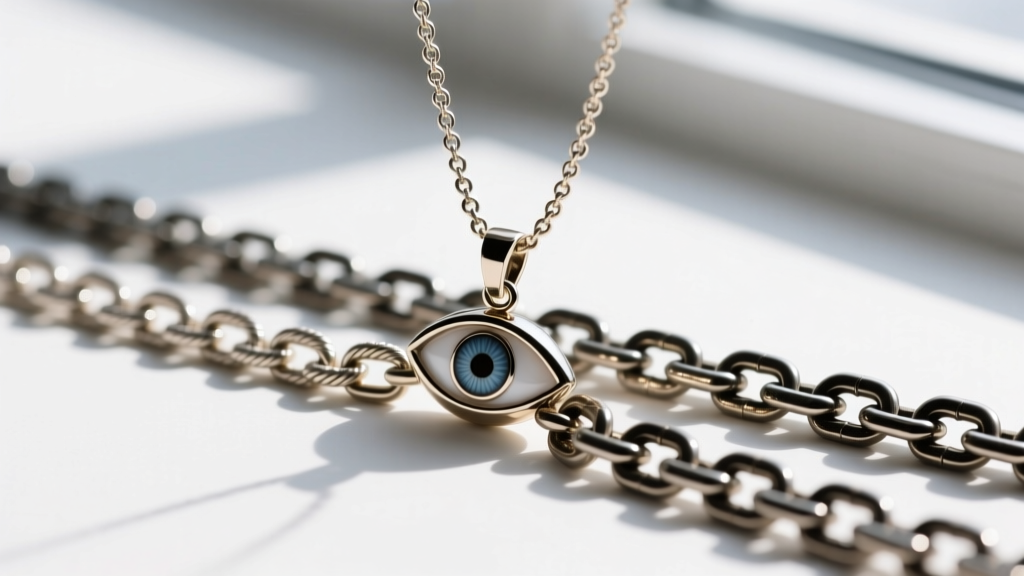
Managing Chain Profiles to Prevent Tangling
A common failure mode in layered necklaces is chains knotting together. This happens when the links of one chain are sized perfectly to slip through the links of another. To prevent this, you must vary the chain profiles and gauges:
- Layer 1 (14"-16"): Use a delicate 1.0mm to 1.2mm Box or Cable chain. Box chains have a smooth, continuous surface that slides easily against the skin and other chains.
- Layer 2 (18"): Use a 1.5mm to 2.0mm Rope or Wheat chain to bear the weight of the primary evil eye pendant. The twisted geometry of a rope chain prevents it from interlocking with the box chain above it.
- Layer 3 (20"-22"): Use a 2.5mm+ Curb or Figaro chain. The flat, interlocking links provide a heavy, grounding visual anchor and are physically too large to tangle with the finer chains above.
Clasp Mechanics and Shear Strength
A standard 4mm spring-ring clasp has a shear strength of roughly 2 to 3 kilograms. While a multi-layered evil eye setup may only weigh 15 to 25 grams statically, dynamic forces—such as the necklace snagging on a sweater—can easily exert 4+ kilograms of sudden force, snapping a spring ring. Always upgrade your primary load-bearing chain (the one holding the pendant) to a 5mm or 7mm lobster clasp, which features a solid internal spring mechanism and a much higher tensile failure point. For comprehensive hardware maintenance, refer to the care guidelines provided by Jewelers of America.
Care, Maintenance, and Material Failure Modes
To preserve the structural and aesthetic integrity of your evil eye layered necklace, you must mitigate environmental and chemical threats.
Expert Warning: Never wear mixed-metal layered necklaces (e.g., a silver chain layered with a gold-plated chain) in salt water or chlorinated pools. The electrolytes in the water will trigger galvanic corrosion, rapidly degrading the less noble metal (silver or copper alloys) wherever the two chains touch.
For daily maintenance, wipe your chains down with a microfiber cloth to remove sebum and dead skin cells, which trap moisture and accelerate tarnishing in silver and lower-karat gold alloys. If your evil eye pendant features a turquoise or lapis lazuli inlay, strictly avoid ultrasonic cleaners. The high-frequency acoustic cavitation can fracture porous stones and detach the adhesive securing the gemstone inlay to the metal bezel. Instead, use a soft, damp cloth and a pH-neutral soap to gently clean the gemstone surfaces, ensuring your protective talisman remains vibrant and structurally sound for years to come.


