2026 Gift Guide: The Best Evil Eye Protection Necklace
Discover the perfect evil eye protection necklace for every occasion in our 2026 gift guide. Explore materials, sizing, and authentic sourcing tips.

Gifting jewelry is an exercise in translating emotion into metal and stone. When you select an evil eye protection necklace, you are not merely giving an accessory; you are offering a centuries-old talisman designed to deflect negative energy and invite good fortune. As we navigate the jewelry landscape in 2026, the demand for heritage-rich, ethically crafted amulets has surged, moving the evil eye from a niche cultural artifact to a staple of modern fine jewelry.
However, the market is flooded with everything from $15 mass-produced alloy trinkets to $5,000 bespoke diamond-encrusted pendants. How do you choose the right one for a newborn, a traveling friend, or a partner facing a major life transition? This comprehensive guide breaks down the metallurgy, cultural etiquette, and technical specifications required to select the perfect protective amulet.
The Cultural & Historical Weight of the Nazar
Before selecting a piece, it is vital to understand what you are gifting. The concept of the "evil eye"—a malevolent glare believed to cause misfortune—dates back to classical antiquity. According to Britannica's historical archives, the belief spans across the Mediterranean, West Asia, and the Balkans. The physical amulet used to repel this curse is most commonly the Turkish Nazar boncuğu (evil eye bead).
Gifting Etiquette Note: A pervasive superstition dictates that one should never buy an evil eye amulet for oneself; its protective powers are only activated when received as a gift. This makes it the ultimate present for loved ones, completely removing the stigma of "self-gifting" and adding profound sentimental value to your purchase.
Decoding Materials: What to Buy for Whom
The material of the pendant dictates its durability, price point, and aesthetic. In 2026, jewelers are blending traditional glass-blowing with advanced gemstone setting techniques.
1. Traditional Hand-Blown Glass (The Purist's Choice)
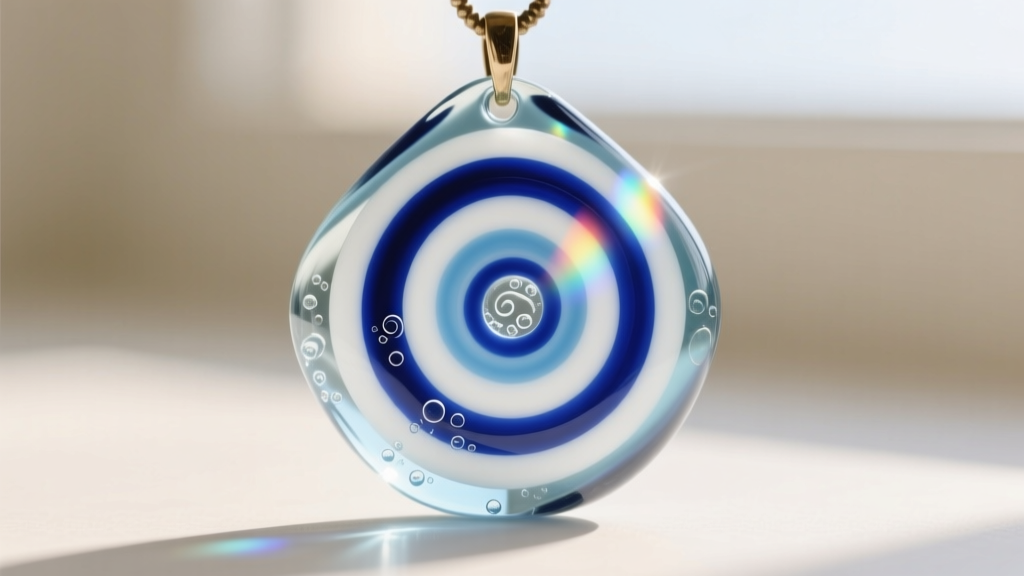
Authentic Turkish glass is crafted using four distinct layers: deep cobalt blue (derived from cobalt oxide), white, light blue, and a black or dark blue pupil.
- Pros: Culturally authentic, highly affordable ($20–$60), vibrant.
- Cons: Fragile. Glass will shatter if dropped on tile or caught on heavy clothing.
- Best For: Teens, students, and casual everyday wear.
2. Vitreous Enamel on Precious Metals (The Modern Standard)
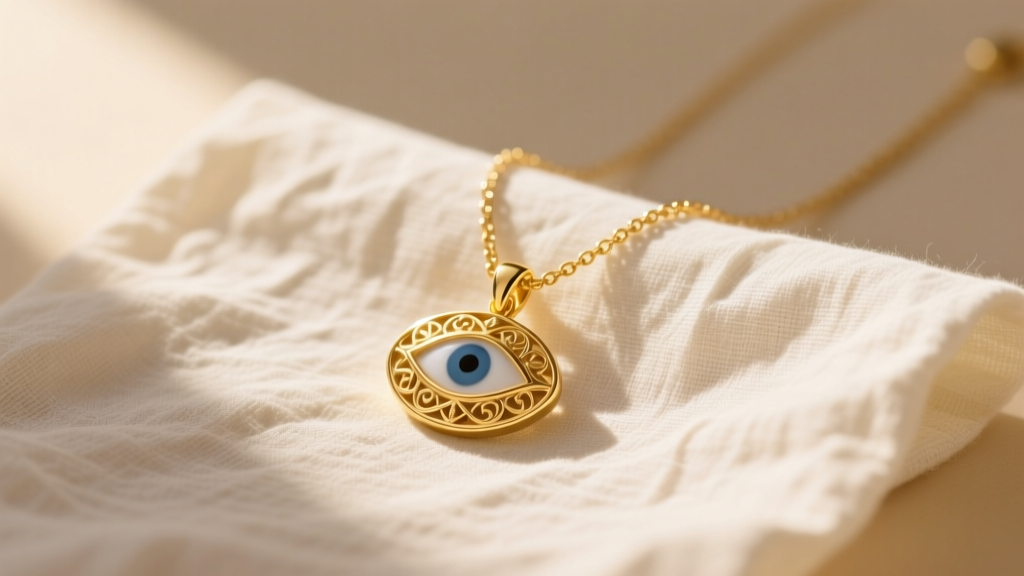
For a more durable alternative, high-end jewelers use vitreous enamel fired at 1,400°F onto 14k or 18k gold. This mimics the glass look but is fused directly to the metal.
- Pros: Water-resistant, scratch-resistant, retains the classic colorway.
- Cons: Hard impacts can still chip the enamel.
- Price Range: $150–$450.
3. Fine Gemstones: Sapphire and Diamond (The Heirloom Tier)
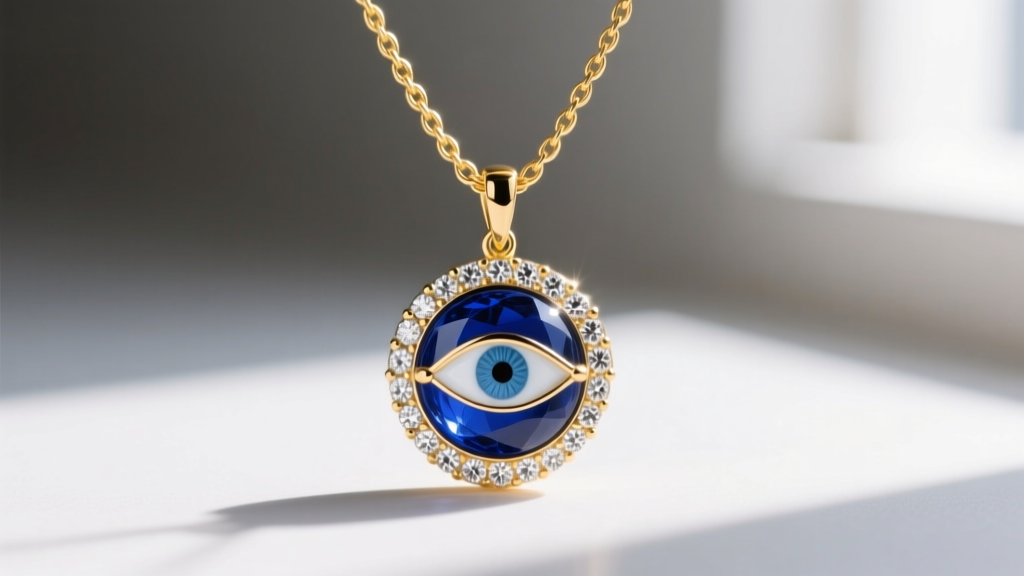
For milestone gifts, the "eye" is reimagined using a blue sapphire cabochon surrounded by a pavé diamond halo. The Gemological Institute of America (GIA) notes that blue sapphires possess a Mohs hardness of 9, making them exceptionally durable for daily-wear pendants.
- Pros: Heirloom quality, brilliant light refraction, hypoallergenic.
- Cons: High price point ($800–$3,000+), requires professional prong/bezel maintenance.
- Best For: Engagements, major anniversaries, and luxury baby gifts.
Occasion Matching Matrix
Matching the necklace to the specific life event ensures your gift resonates on a personal level. Use this 2026 gifting matrix to guide your selection:
| Occasion | Recommended Material | Ideal Pendant Size | Chain Style & Length | Budget Range |
|---|---|---|---|---|
| New Baby / Christening | 14k Solid Gold, Bezel-Set Sapphire | 6mm - 8mm | 0.8mm Cable, 12"-14" | $350 - $800 |
| Graduation / New Career | Sterling Silver with Blue Enamel | 12mm - 15mm | 1.2mm Box Chain, 18" | $90 - $200 |
| Frequent Traveler | 18k Gold Vermeil, Minimalist Eye | 10mm | 1.0mm Rope Chain, 16" + 2" ext | $120 - $250 |
| Overcoming Hard Times | Authentic Hand-Blown Turkish Glass | 20mm - 25mm | Black Cord or Leather, 20" | $30 - $75 |
Technical Sizing: Pendants, Bails, and Chain Gauges
A common mistake when gifting an evil eye protection necklace is ignoring the proportional relationship between the pendant, the bail (the loop connecting pendant to chain), and the chain gauge.
Pendant Dimensions
For a delicate, layered look popular in 2026, opt for pendants measuring 8mm to 10mm in diameter. These sit flush against the collarbone and can be layered with 14" gold initial pendants or 16" pearl chokers. For a standalone statement piece, especially over winter turtlenecks or linen shirts, select a pendant between 18mm and 25mm.
Chain Gauge and Bail Compatibility
The bail dictates the maximum chain thickness. A standard small evil eye pendant features a bail with an inner diameter of roughly 3mm x 2mm.
- 0.8mm - 1.0mm Chains: Perfect for small bails. Cable, box, and serpentine chains in this gauge offer a refined, barely-there aesthetic that lets the eye pendant take center stage.
- 1.2mm - 1.5mm Chains: Required for larger, heavier glass or enamel pendants to prevent the chain from snapping under the pendant's kinetic movement. Wheat and rolo chains provide the necessary tensile strength.
The "Cracked Glass" Myth: What to Tell Your Recipient
When gifting traditional glass or fragile enamel, you must brief the recipient on the folklore surrounding breakage. In Mediterranean and Middle Eastern traditions, if an evil eye necklace cracks or shatters, it is not a sign of bad luck. Rather, it is believed that the amulet has successfully absorbed a massive amount of negative energy or deflected a severe curse directed at the wearer, sacrificing itself in the process.
Actionable Advice: Include a small, beautifully printed card with your gift explaining this folklore. It transforms a potential moment of panic (a broken necklace) into a moment of profound reassurance. When the glass breaks, the traditional remedy is to bury the pieces in the earth and purchase a new one.
Care and Maintenance by Material
To ensure the protective amulet lasts, provide the recipient with material-specific care instructions:
- Hand-Blown Glass: Clean only with a damp microfiber cloth. Never use chemical jewelry dips, which can degrade the stringing cord or dull the glass finish over time.
- Vitreous Enamel: Avoid ultrasonic cleaners. The high-frequency vibrations can cause micro-fractures in the enamel, leading to chipping. Use warm water and a drop of mild dish soap with a soft baby toothbrush.
- Sapphire & Diamond: Safe for ultrasonic cleaning, but ensure the prongs holding the center cabochon are checked by a jeweler every 12 months. Sapphires are hard, but the gold bezel holding them can wear thin with daily friction.
Final Thoughts on Sourcing
When shopping for an evil eye protection necklace in 2026, prioritize transparency. If a brand claims a pendant is "authentic Turkish glass," look for slight asymmetries or microscopic air bubbles trapped in the cobalt layer—these are the hallmarks of human craftsmanship. Conversely, if you are investing in fine jewelry, demand a hallmark stamp (e.g., 585 for 14k, 750 for 18k) on the bail. By matching the material to the milestone and respecting the deep cultural roots of the Nazar, you deliver a gift that protects, adorns, and deeply moves the wearer.