Evry Jewels Envelope Necklace Cleaning & Care Guide
Keep your Evry Jewels envelope necklace shining. Learn expert cleaning, storage, and maintenance tips for gold-plated and enamel pendants.

The Material Science Behind Your Evry Jewels Necklace
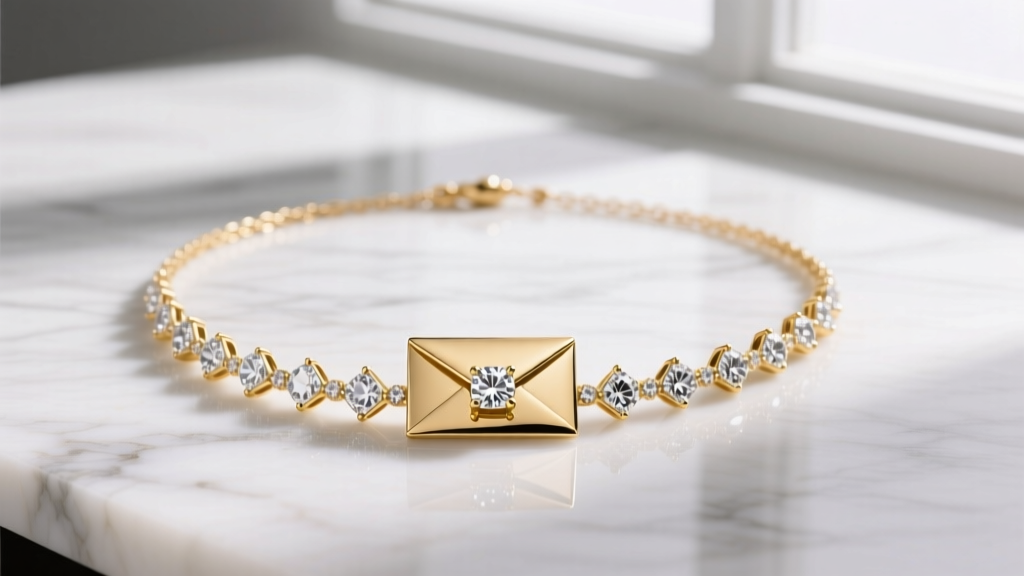
To properly care for your Evry Jewels envelope necklace, you must first understand the metallurgy and gemology of the piece. Evry Jewels typically crafts their trending pendants using a base metal—often brass or sterling silver—layered with 14k or 18k gold plating. In 2026, many of these fashion-forward pieces also feature a microscopic e-coating (electrophoretic deposition) designed to slow tarnishing and protect the gold layer from friction. However, this plating is usually between 0.5 and 1.5 microns thick, making it highly susceptible to abrasive damage if cleaned incorrectly.
Furthermore, the envelope design frequently incorporates Cubic Zirconia (CZ) for the 'stamp' or 'seal' details, and occasionally cold enamel for colored accents. According to the Gemological Institute of America (GIA), while CZ is relatively hard (8.5 on the Mohs scale), it has a high affinity for oils and lotions, which can quickly make the stones look cloudy and dull. Enamel, on the other hand, is essentially fused glass powder; it is highly fragile and can micro-fracture under sudden temperature changes or ultrasonic vibrations.
The 'Envelope' Dirt Trap: Why This Pendant Needs Special Care
The geometric design of an envelope pendant inherently creates structural dirt traps. The overlapping 'flap' of the envelope, the intricate crevices around the CZ wax seal, and the bail (the loop where the chain threads through) form perfect hiding spots for dead skin cells, sebum, perfume residue, and cosmetic powders.
Human skin has a naturally acidic pH ranging from 4.7 to 5.75. When sebum and sweat accumulate in the deep crevices of the envelope flap and remain trapped against the gold plating, this mild acidity slowly degrades the metallic bonds of the plating over time. This is why the underside of the envelope flap and the back of the pendant are usually the first areas to show signs of brass or silver bleed-through. Targeted, gentle agitation is required to dislodge this buildup without stripping the gold.
What to Avoid: The Enemies of Plated Jewelry
Before diving into the cleaning process, it is crucial to know what will permanently ruin your necklace. The Jewelers of America strictly warns against using harsh chemical dips on plated jewelry. Avoid the following at all costs:
- Ultrasonic Cleaners: The high-frequency sound waves will shatter cold enamel accents and can cause the microscopic e-coating to peel away from the brass base.
- Toothpaste or Baking Soda: These are highly abrasive. Baking soda has a Mohs hardness of around 2.5, which is more than enough to scratch 18k gold plating and leave permanent micro-scratches that trap even more dirt.
- Boiling Water: Extreme heat can melt the adhesives used to set the CZ stones in the envelope's wax seal, causing the gems to fall out.
- Chlorine and Saltwater: Never wear your necklace in a pool or the ocean. Chlorine reacts violently with the copper and zinc alloys found in brass base metals, leading to rapid, irreversible blackening.
The 2026 Expert Cleaning Protocol
Follow this step-by-step protocol every 3 to 4 weeks, or whenever the CZ stones begin to lose their brilliance.
- Prepare a Neutral Bath: Mix two cups of lukewarm distilled water (tap water contains minerals that can leave spots) with three drops of a pH-neutral, phosphate-free dish soap. Avoid soaps with added moisturizers or citrus extracts.
- The Brief Soak: Submerge the envelope pendant in the solution for exactly 3 minutes. Do not exceed 5 minutes, as prolonged water exposure can seep under the plating if there are any micro-fissures.
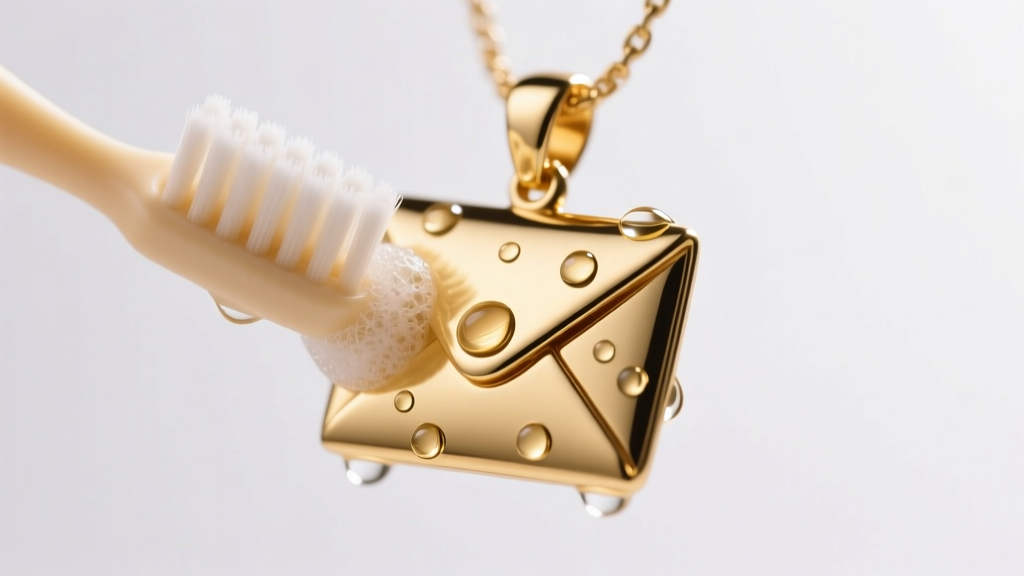
- Targeted Agitation: Using an extra-soft baby toothbrush (bristle diameter of 0.1mm or less), gently brush the crevices of the envelope flap and the edges of the CZ seal. Use light, circular motions. Never scrub back and forth aggressively.
- The Rinse: Rinse the pendant under a gentle stream of lukewarm distilled water to remove all soap residue.
- Immediate Drying: Do not air dry. Immediately pat the necklace completely dry with a lint-free microfiber cloth. Use a wooden toothpick wrapped in a microfiber cloth to gently absorb moisture from the deepest crevices of the envelope design.
Troubleshooting Common Wear Issues
Even with meticulous care, daily wear introduces variables that can affect the necklace's appearance. Use this diagnostic table to address specific issues.
| Issue | Root Cause | Expert Solution |
|---|---|---|
| CZ 'Seal' Looks Cloudy | Lotions and skin oils trapped under the stone's girdle. | Apply a single drop of isopropyl alcohol (90%+) to a cotton swab and carefully trace the edge of the stone to dissolve the oil. Do not rub the gold plating. |
| Gold Plating Fading on the Back | Friction from clothing and acidic sweat pooling against the skin. | Wipe the back of the pendant with a damp cloth immediately after taking it off. If bare metal is exposed, apply a thin layer of clear jewelry shield coating to prevent skin discoloration. |
| Chain Tangling Constantly | Electrostatic attraction and thin box/cable chain links catching on each other. | Store the chain threaded through a plastic drinking straw, or lay it flat on a paper towel and lightly mist with an anti-static spray before wiping down. |
| Enamel Accent Chipping | Impact against hard surfaces (desks, doorframes) or thermal shock. | Unfortunately, cold enamel cannot be easily repaired at home. Prevent future chipping by removing the necklace before exercising or doing manual tasks. |
Advanced Storage Techniques for Chain and Pendant
How you store your Evry Jewels envelope necklace is just as critical as how you clean it. Tarnish is a chemical reaction between the base metals and sulfur compounds present in the ambient air. High humidity accelerates this process exponentially.
Never toss the necklace into a communal jewelry box where it can become entangled with harder gemstones like diamonds or sapphires, which will easily scratch the gold plating and the CZ stones. Instead, utilize a dedicated, airtight storage method:
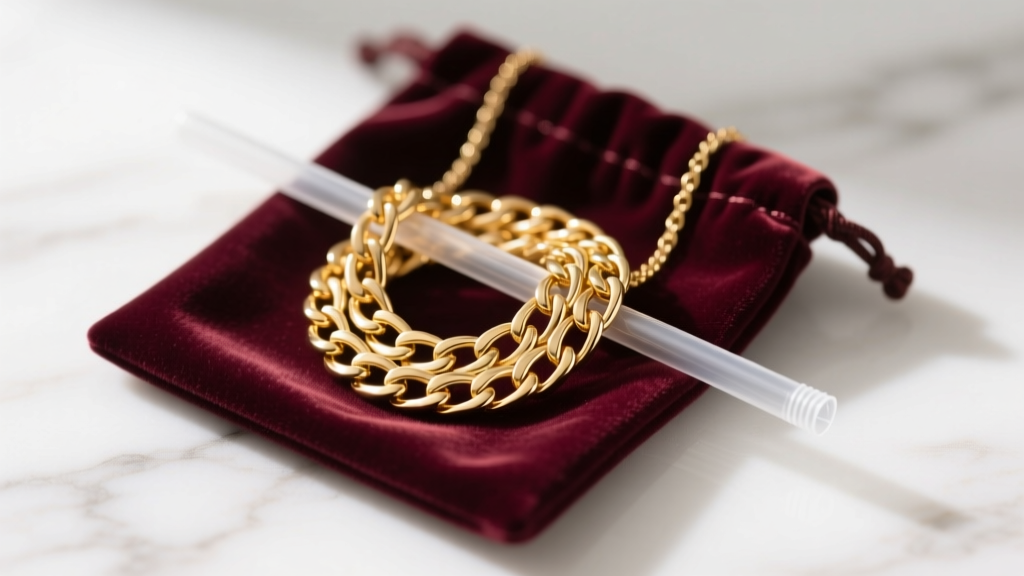
- The Straw Trick: Unclasp the necklace, thread one end through a standard plastic drinking straw, and re-clasp it. This physically prevents the chain from knotting, which is a common issue with the delicate chains used by fashion jewelry brands.
- Anti-Tarnish Strips: Place a 3M anti-tarnish strip inside the storage bag. These strips absorb ambient sulfur and hydrogen sulfide gases, neutralizing the primary catalysts for tarnish.
- Silica Gel Packets: Drop a small, fresh silica gel desiccant packet into the bag to maintain a low-humidity micro-environment, protecting both the metal plating and any adhesive bonds holding the CZ stones.
Final Thoughts on Longevity
Your Evry Jewels envelope necklace is a trendy, sentimental piece that can easily maintain its luxurious appearance for years if treated with the respect its materials demand. By understanding the vulnerabilities of micron-thick gold plating, avoiding abrasive cleaning shortcuts, and implementing a strict, low-humidity storage routine, you can ensure that the intricate envelope details and sparkling CZ accents remain as vibrant as the day you unboxed them. Consistency in your care routine is the ultimate secret to preserving fashion jewelry in a modern wardrobe.


