What Do Safety Pin Necklaces Mean? Symbolism & Care
Discover what safety pin necklaces mean culturally and learn expert cleaning, maintenance, and storage tips for mixed-metal utility pendants.

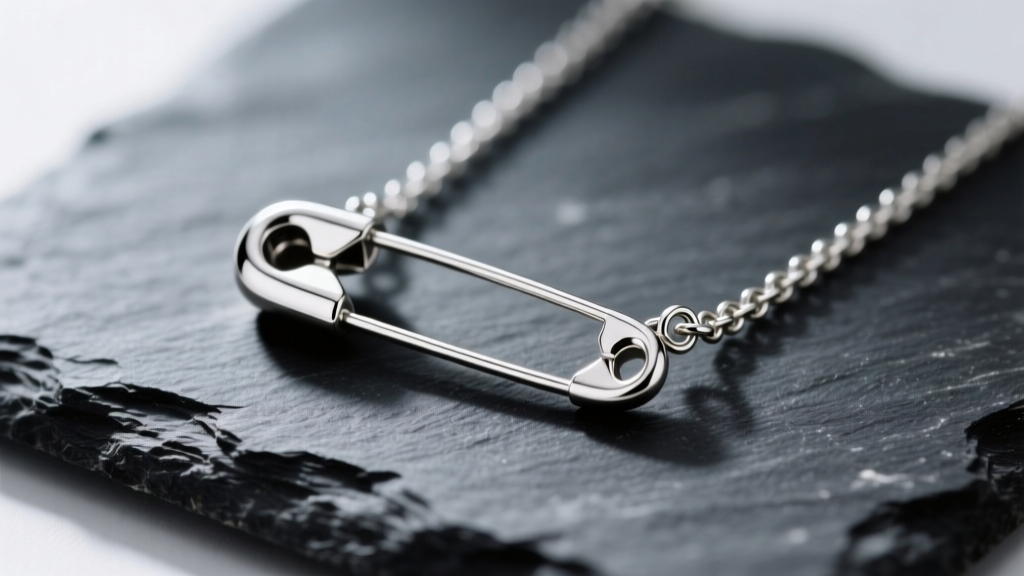
Utility-inspired jewelry has transcended its subcultural roots to become a staple in contemporary accessorizing. Blending industrial hardware with precious metals, these pieces offer a unique aesthetic that bridges rebellion and luxury. However, because of their intricate mechanisms and mixed-material constructions, they require specialized maintenance. Before diving into the metallurgy and cleaning protocols, it is essential to understand the cultural weight these accessories carry.
The Cultural Weight: What Do Safety Pin Necklaces Mean?
When exploring alternative and utility-inspired jewelry, a common question arises: what do safety pin necklaces mean? The answer is deeply rooted in both historical rebellion and modern solidarity. In the 1970s, the safety pin was co-opted by the London punk movement. Icons like Richard Hell and the Sex Pistols wore them as a rejection of consumerism, turning a mundane, utilitarian object into a provocative statement of anti-fashion. According to the FIT Fashion History Timeline, this DIY ethos was a direct challenge to the polished aesthetics of the mainstream fashion industry.
Decades later, the symbolism shifted. In 2016, the safety pin emerged as a visual symbol of solidarity and allyship, worn to signal that the wearer was a "safe space" for marginalized individuals facing harassment. Today, in the 2026 fashion landscape, the motif has been elevated by luxury houses and independent jewelers alike. Cast in 18-karat gold, encrusted with pavé diamonds, or forged from raw titanium, the safety pin pendant now represents a synthesis of historical edge and high-end craftsmanship. Understanding this dual identity—part punk artifact, part luxury object—is the first step in properly curating and caring for your collection.
Material Breakdown: Why Utility Pendants Require Special Care
Safety pin pendants are rarely made from a single, uniform material. The juxtaposition of the "pin" mechanism and the decorative bail often involves mixed metals, which complicates cleaning. Here is a breakdown of the most common materials used in 2026 utility jewelry and their specific vulnerabilities:
- 316L Surgical Stainless Steel: Often used for the pin wire itself due to its high tensile strength. It contains molybdenum, which prevents pitting and corrosion, but it can still accumulate skin oils and environmental grime in the hinge crevices.
- 925 Sterling Silver: The most popular choice for the pendant body. Because it contains 7.5% copper, it is highly susceptible to sulfur-induced tarnish (silver sulfide). As noted by the Gemological Institute of America (GIA), this copper alloy is necessary for durability but requires vigilant anti-tarnish care.
- Enamel and Cold Resin Accents: Many modern safety pin necklaces feature black or red enamel fills to highlight the industrial look. These are highly sensitive to abrasive polishes and ultrasonic cleaners, which can cause micro-fractures or clouding.
Step-by-Step Cleaning Protocols by Metal Type
Because a single safety pin necklace might feature a sterling silver body, a steel pin, and enamel accents, you cannot simply drop it into a universal chemical bath. Below is a structured guide to cleaning these complex pieces without damaging their finishes.
| Metal / Material | Recommended Cleaner | Technique | Strict Avoidances |
|---|---|---|---|
| 925 Sterling Silver (No Enamel) | Aluminum Foil & Baking Soda Bath | Electrochemical reduction: Line a bowl with foil, add hot water, 1 tbsp baking soda, and soak for 3 minutes. Rinse and pat dry. | Chlorine bleach, stiff wire brushes, toothpaste. |
| 316L Stainless Steel Hardware | Mild Surfactant (Dawn Dish Soap) | Use a soft-bristled baby toothbrush to gently agitate soapy water into the hinge and clasp catch. | Hydrochloric acid, abrasive metal polishes. |
| Enamel / Resin Inlays | Damp Microfiber Cloth | Gently wipe the surface. Use a wooden toothpick to dislodge dirt from the crevices where enamel meets metal. | Ultrasonic cleaners, alcohol, acetone, silver dip. |
| Oxidized / Blackened Silver | Dry Polishing Cloth Only | Lightly buff only the raised areas to maintain the dark patina in the recessed utility grooves. | Liquid silver dips (which will strip the intentional oxidation). |
For heavily tarnished silver safety pin pendants that lack enamel, the aluminum foil bath is the gold standard. It reverses the chemical reaction of tarnish without removing microscopic layers of silver, unlike abrasive pastes. However, if your pendant features a functional steel spring inside the pin coil, prolonged exposure to any water bath can cause the internal spring to rust. Always dry the mechanism immediately with compressed air or a low-heat hair dryer.
Maintaining the Hinge and Clasp Mechanism
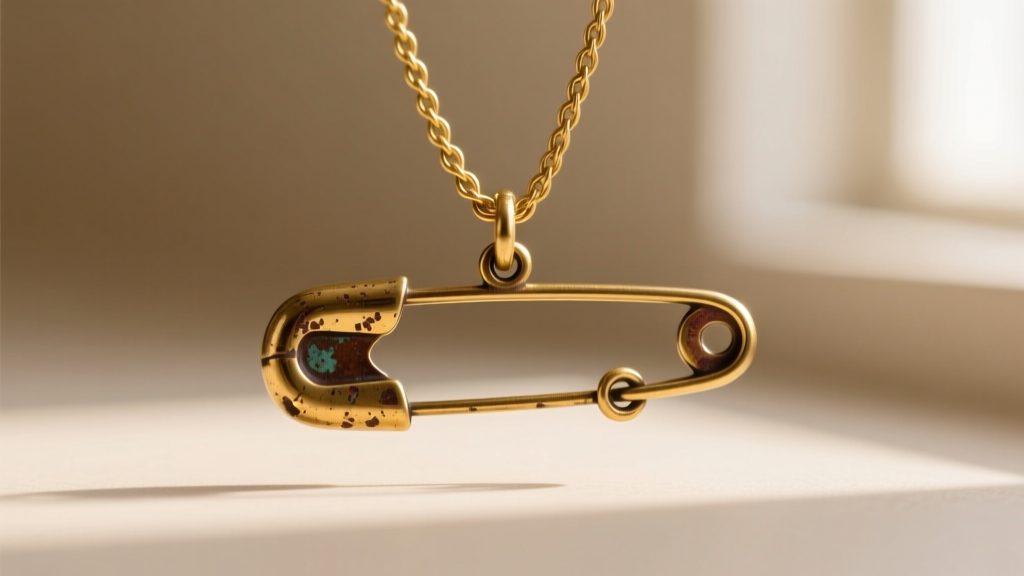
The defining feature of a safety pin necklace is its hardware. Unlike a static cast pendant, a safety pin features a hinge, a coiled spring (or a tensioned wire bend), and a catch. In high-end jewelry, the pin wire is typically forged at a 12-gauge (2.05mm) or 14-gauge (1.63mm) thickness to prevent bending, but the hinge remains a vulnerable snag hazard.
One of the most common issues with utility pendants is the hinge seizing up due to the accumulation of dead skin cells, lotion, and microscopic dust. When the hinge becomes stiff, wearers tend to force the pin open, which can warp the tension loop and ruin the clasp's ability to snap shut securely. To maintain the mechanism:
- Clean the hinge crevice monthly using a wooden toothpick and a drop of isopropyl alcohol to dissolve oils.
- Apply a micro-drop of synthetic watch oil or mineral oil directly to the hinge pin using a needle oiler.
- Work the pin open and closed a dozen times to distribute the lubricant.
- Wipe away all excess oil with a microfiber cloth to prevent it from transferring to your clothing.
"A functional hardware pendant should snap shut with an audible, crisp click. If the pin slides into the catch with a dull scrape or feels loose, the tension loop requires professional adjustment before the piece is worn over delicate fabrics like silk or fine-gauge merino wool."
Storage and Preventative Maintenance
Improper storage is the leading cause of damage to safety pin necklaces. Because of their elongated, asymmetrical shape and sharp points, they are notorious for unclasping in a jewelry box and scratching softer pieces, or becoming hopelessly tangled in fine cable chains.
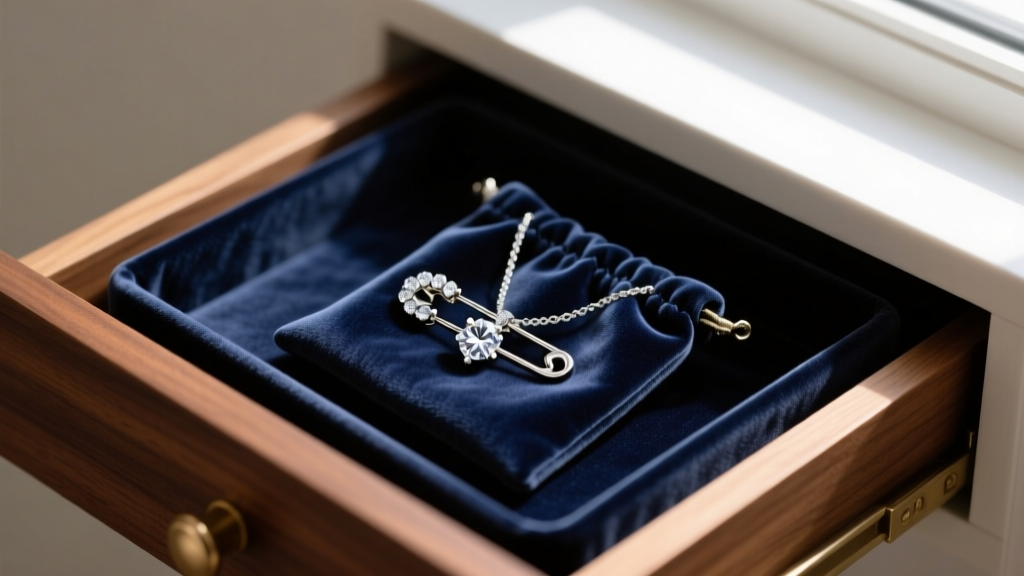
To prevent the "unclasp and scratch" scenario, never store a safety pin pendant loose in a communal drawer. If the necklace features a sterling silver chain and pendant, store it in an airtight polyethylene zip bag along with a 3M anti-tarnish strip. These strips absorb airborne sulfur compounds and hydrogen sulfide, effectively halting the tarnishing process for up to 12 months. For luxury variants featuring pavé diamonds or delicate gemstone accents on the pinhead, use a separate soft microfiber pouch or a dedicated velvet-lined compartment to protect the stones from being knocked loose by heavier steel hardware.
When to Seek Professional Restoration
While daily cleaning and hinge lubrication can be performed at home, certain structural and cosmetic issues require a professional bench jeweler. If your safety pin pendant is crafted from brass or copper and has developed an uneven, corrosive green verdigris that polishing cannot remove, it may need a professional ultrasonic degreasing and chemical re-patina. Similarly, if the 12-gauge pin wire has been bent out of alignment, do not attempt to bend it back with standard steel pliers, as this will mar the metal and weaken the wire's structural integrity. A jeweler will use nylon-jaw pliers and a mandrel to perfectly re-align the tension loop. Finally, if a silver safety pin pendant has lost its bright white luster due to micro-scratches, a professional rhodium re-plating will restore it to a mirror-like, tarnish-resistant finish, ensuring your utility-inspired piece remains as striking as its cultural history.


