Extra Long Beaded Necklace: A Budget & Value Guide
Discover how to assess the true value of an extra long beaded necklace. Compare materials, stringing costs, and pricing tiers for smart budget buys.

The True Cost of Length: Understanding Bead Volume
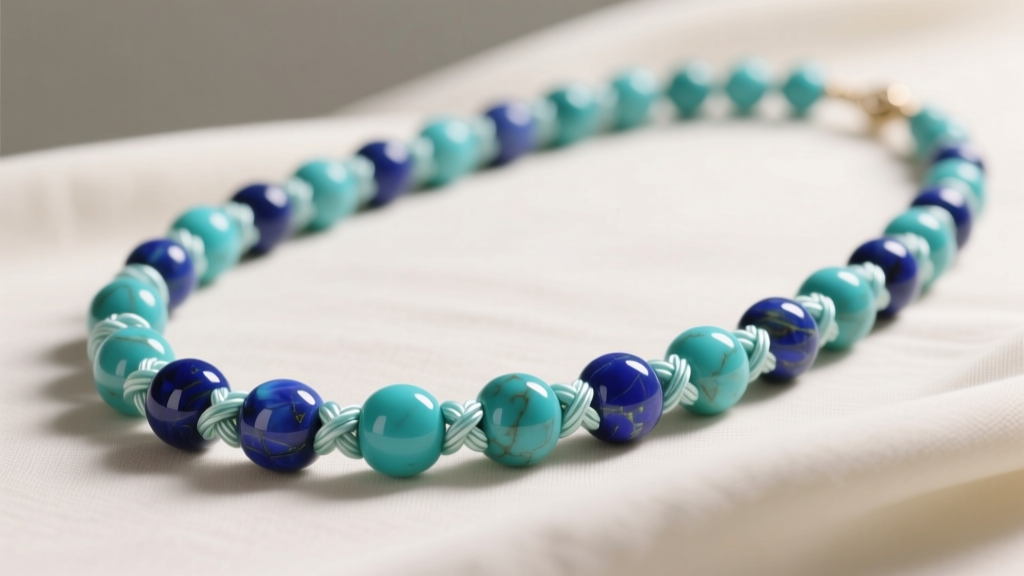
When shopping for an extra long beaded necklace—typically defined as a rope length (36+ inches) or a lariat (45+ inches)—the price variance can be staggering. You might find a 45-inch strand for $18 on a fast-fashion marketplace, or $450 from an artisan jeweler. To assess true value, you must first understand the mathematics of bead volume.
A standard 18-inch princess necklace using 8mm round beads requires roughly 57 beads. However, a 45-inch extra long rope necklace requires 143 beads of the same size. If the beads are genuine semi-precious stones, the material cost does not just double; it scales exponentially due to the sheer carat weight required. Therefore, when evaluating budget options in the $20 to $50 range, it is physically impossible for the beads to be high-grade, untreated gemstones. They are almost certainly glass, dyed howlite, or acrylic.
Material Tiers: What You Are Actually Paying For
To conduct a proper budget and value assessment, we must categorize the market into three distinct pricing tiers based on bead composition.
Tier 1: Acrylic, Resin, and Wood ($15 – $45)
At the entry-level, extra long beaded necklaces utilize lightweight synthetic or organic materials. Acrylic beads are molded, meaning they are incredibly cheap to produce in high volumes. While they lack the cold-to-the-touch thermal conductivity of real stone, they offer a massive advantage for extra long styles: weight reduction. A 45-inch necklace made of 12mm acrylic beads will weigh less than an ounce, preventing neck strain. The value here is purely aesthetic and functional, not intrinsic.
Tier 2: Glass, Crystal, and Dyed Stones ($50 – $150)
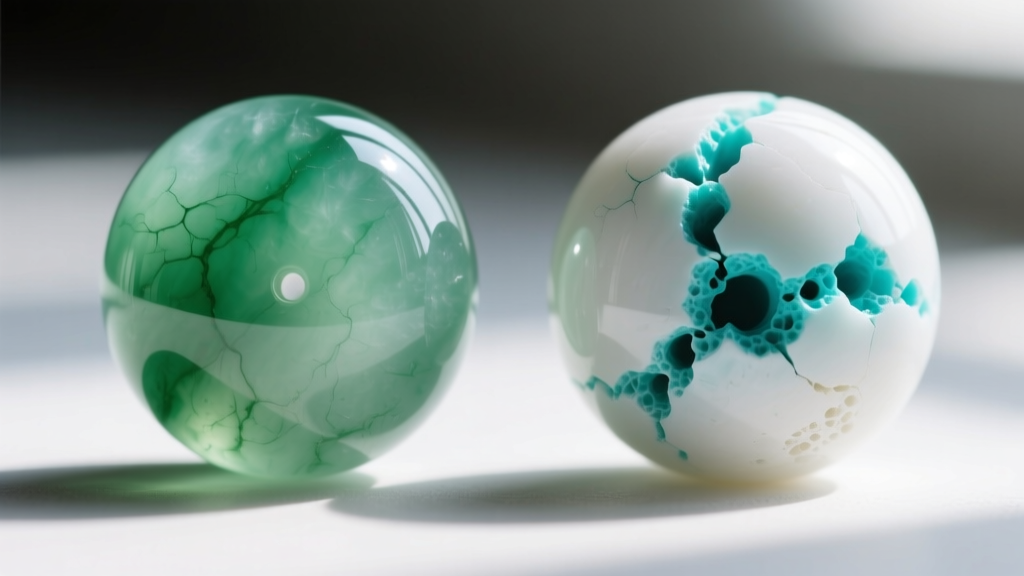
The mid-tier is where most fashion-forward buyers operate. Brands like Swarovski (now operating under different crystal branding licenses) and Preciosa offer machine-cut lead-free crystal glass that mimics the refractive index of diamonds. Alternatively, you will find 'dyed jade' or 'dyed agate.' According to the Gemological Institute of America (GIA), dyeing is a common and accepted treatment for porous stones like howlite and white jade, provided it is disclosed. A 40-inch dyed howlite necklace mimicking turquoise should cost no more than $80; anything higher is a markup on the brand name, not the material.
Tier 3: Genuine Semi-Precious and Gemstones ($180 – $600+)
If you want an extra long beaded necklace made of genuine lapis lazuli, natural turquoise, or high-grade amethyst, expect to pay a premium. The value assessment here shifts to the grade of the stone. For example, natural lapis lazuli should feature golden pyrite flecks and minimal white calcite matrix. If the beads are a uniform, hyper-saturated blue with no matrix, you are likely looking at dyed jasper or synthetic reconstituted lapis, which drops the value back to Tier 2.
The Hidden Cost: Stringing Materials and Labor
The stringing material is the unsung hero of necklace longevity, and it heavily dictates the final retail price. An extra long necklace undergoes significant tension when pulled over the head or wrapped in multiple layers. Here is how stringing methods impact your budget and the necklace's lifespan.
| Stringing Material | Cost Impact | Drape & Feel | Durability & Lifespan |
|---|---|---|---|
| Nylon or Silk Thread (Knotted) | High (Adds $40-$80 in manual labor) | Fluid, luxurious, conforms to the neck | High, but requires re-knotting every 3-5 years |
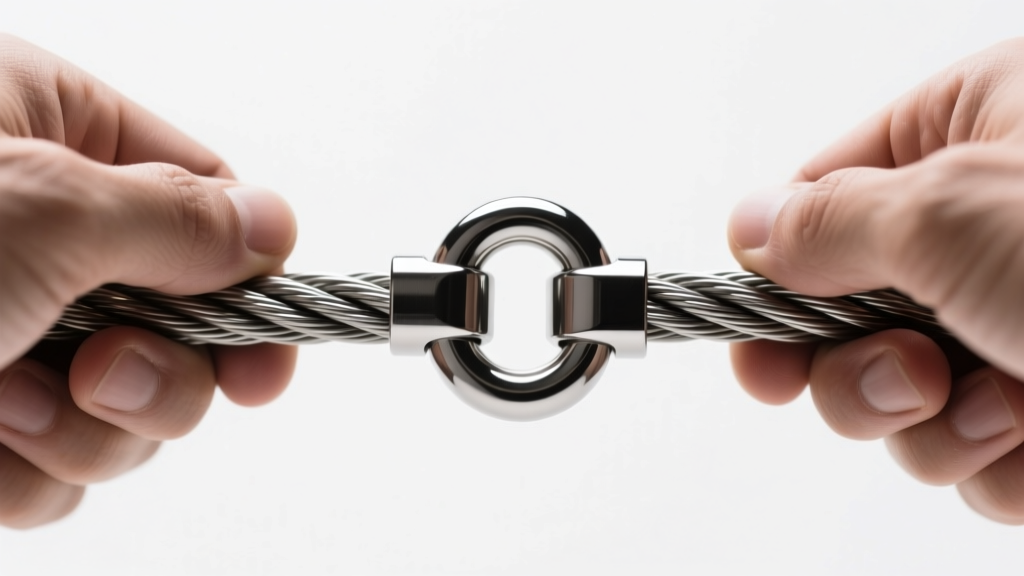
| 49-Strand Stainless Steel Wire | Low to Medium (Fast assembly) | Stiff, holds a rigid circular shape | Extremely high, resists snapping under heavy bead weight |
| Elastic Cord (Stretch) | Lowest (No clasp required) | Snug, can feel restrictive on 45-inch lengths | Very low, degrades and snaps within 12-18 months |
As noted by jewelry supply experts at Fire Mountain Gems, a 49-strand micro-wire provides the best combination of flexibility and tensile strength for heavy gemstone beads. If a retailer is charging $250+ for a gemstone necklace strung on elastic cord, the value proposition is incredibly poor. You are paying investment prices for disposable assembly.
Hardware: The Failure Point of Heavy Necklaces
A 45-inch necklace made of 10mm glass or stone beads can easily weigh between 150 and 250 grams. Standard 5mm lobster clasps and thin jump rings will inevitably fail under this dynamic load. When assessing value, inspect the clasp hardware.
- The Red Flag: Tiny spring-ring clasps or thin, unsoldered jump rings. These will pull apart when the necklace snags on clothing.
- The Value Standard: Heavy-duty toggle clasps, 12mm neodymium magnetic clasps, or oversized locking lobster clasps paired with soldered jump rings and wire guardians.
A high-quality magnetic clasp alone costs a jeweler $8 to $15 at wholesale. If you are buying a budget extra long beaded necklace for $30, it will undoubtedly feature a cheap base-metal clasp that will tarnish and fail. Factor in a $15 replacement cost when calculating your true budget.
Cost-Per-Wear Analysis: Is the Upgrade Worth It?
To finalize your budget assessment, apply the Cost-Per-Wear (CPW) formula. An extra long beaded necklace is a versatile layering piece, often worn over winter sweaters, tunics, and evening wear.
Formula: Total Cost / Estimated Annual Wears = Cost Per Wear
If you buy a $35 acrylic or dyed-stone necklace, the stringing may snap or the dye may rub off on your collar after 15 wears. Your CPW is $2.33. If you invest $180 in a genuine amethyst necklace strung on 49-strand wire with a secure magnetic clasp, and you wear it 60 times a year for five years (300 wears), your CPW drops to $0.60. The higher initial budget allocation actually yields superior long-term financial value.
Final Verdict: Where to Allocate Your Budget
When hunting for the perfect extra long beaded necklace, do not blow your entire budget on the beads alone. Allocate your funds using the 50/30/20 Rule of Jewelry Value:
- 50% on Bead Material: Decide if you want the visual impact of high-quality cut glass (mid-budget) or the intrinsic value of genuine semi-precious stones (high-budget).
- 30% on Stringing and Labor: Never compromise here. Insist on knotted silk for pearls and soft stones, or 49-strand coated steel wire for heavy gems.
- 20% on Hardware: Ensure the clasp is proportional to the weight of the 40+ inch strand.
By looking past the initial price tag and evaluating the mathematics of bead volume, stringing integrity, and hardware strength, you can confidently identify which extra long beaded necklaces are genuine wardrobe investments, and which are merely overpriced disposable accessories.


