Eyeball Necklace Meaning & Evil Eye Jewelry Buying Guide
Discover the true eyeball necklace meaning and learn how to buy authentic evil eye jewelry. Explore materials, pricing, and styling tips in our guide.

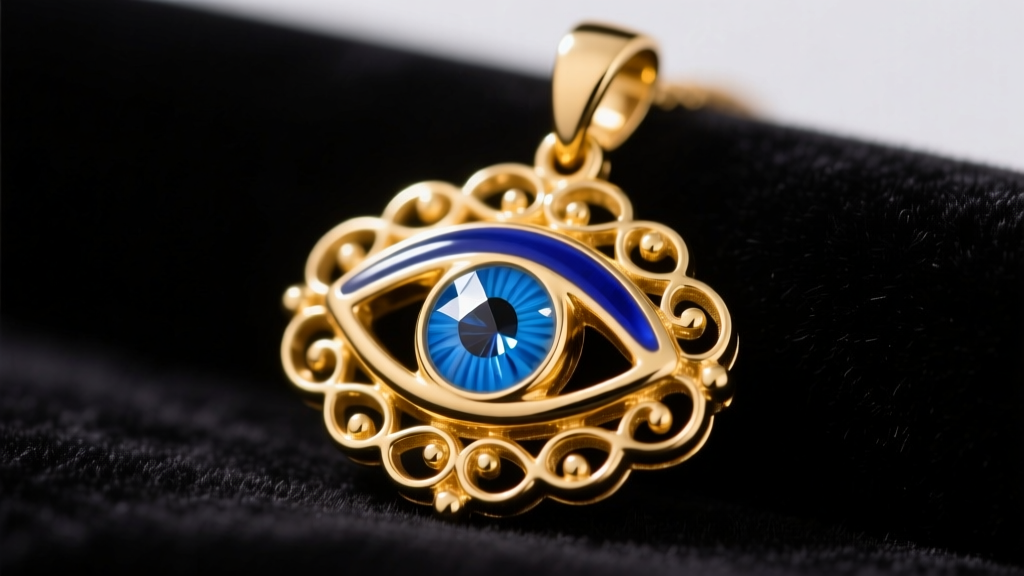
When shoppers search for the eyeball necklace meaning, they are almost always referring to one of the oldest and most universally recognized talismans in human history: the Evil Eye amulet. Often stylized as a striking, concentric blue-and-white eye, this pendant transcends mere fashion. It is a cultural artifact, a protective shield, and a masterclass in ancient jewelry design. However, as the motif has exploded in mainstream popularity, the market has been flooded with mass-produced, low-quality replicas that lack both the structural integrity and the historical reverence of authentic pieces.
In this comprehensive buying guide, we will decode the historical origins of the eyeball necklace, break down the metallurgy and enamel techniques you should demand in 2026, and provide a practical framework for investing in a piece that will last a lifetime.
The Origins: Decoding the Eyeball Necklace Meaning
To understand what to look for when buying this jewelry, you must first understand its purpose. The 'evil eye' is a curse or legend, believed to be cast by a malevolent glare, usually given to a person when they are unaware. According to Encyclopedia Britannica, the belief spans across ancient Mesopotamia, classical antiquity, and modern Mediterranean and West Asian cultures.
The amulet itself—known as the Nazar boncuğu in Turkey, the Mati in Greece, and tied to the Mal de Ojo in Hispanic cultures—is designed to stare back at the world. It reflects the malicious glare away from the wearer. The traditional cobalt blue color is not arbitrary; historically, blue was associated with water and the sky, representing life, truth, and divine protection. When buying a traditional piece, the color saturation and the precision of the concentric rings (typically dark blue, white, light blue, and a black or gold pupil) are the first markers of craftsmanship.
Material Breakdown: What to Look For in Fine Jewelry
The base metal of your pendant and chain dictates its longevity, skin compatibility, and value. Avoid mystery alloys labeled simply as 'gold-toned' or 'silver-plated,' which often contain nickel and brass that will oxidize and cause contact dermatitis.
Precious Metals vs. Base Alloys
- 14k Solid Gold (58.5% Pure): The gold standard for everyday amulets. The 41.5% alloy mix (usually copper, silver, and zinc) provides the tensile strength needed to protect delicate enamel or gemstone inlays. Expect to pay between $350 and $800 for a quality 14k gold evil eye pendant.
- 18k Solid Gold (75% Pure): Offers a richer, warmer yellow hue but is softer. If your eyeball necklace features a prong-set diamond pupil, 18k gold prongs are more prone to bending and losing the stone upon impact.
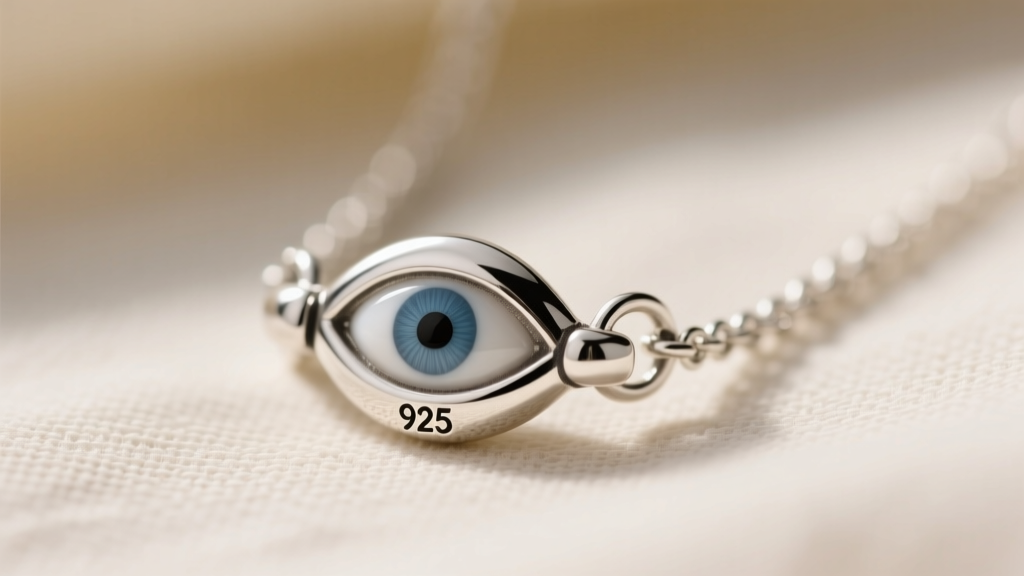
- 925 Sterling Silver: An excellent, affordable entry point ($60–$150). However, silver reacts with sulfur in the air and skin oils to form silver sulfide (tarnish). Look for pieces coated in a microscopic layer of rhodium to delay tarnishing.
- Gold Vermeil: By US trade standards, vermeil must be a thick layer of gold (minimum 2.5 microns) plated over a sterling silver base. It is vastly superior to standard 'gold plate' (which is often less than 0.5 microns over brass) and offers a lifespan of 2 to 5 years before requiring re-plating.
The Anatomy of the 'Eye': Enamel vs. Gemstones
The most critical differentiator between a $20 fast-fashion trinket and a $500 heirloom is how the 'iris' and 'pupil' of the eye are created. The eyeball necklace meaning is deeply tied to the glass-like reflection of the eye, which is traditionally achieved through enameling or lapidary work.
Enamel Techniques
Enamel is essentially powdered glass fused to metal. However, not all enamel is created equal:
- Vitreous (Hot) Enamel: Fired in a kiln at temperatures between 1,400°F and 1,650°F. It fuses chemically with the metal, resulting in a scratch-resistant, glass-like finish (Mohs hardness of ~5.5). It will not yellow or degrade over time.
- Guilloché Enamel: A high-end technique where the metal base is engine-turned with intricate geometric patterns before applying translucent vitreous enamel. The light catches the textured metal beneath the blue glass, giving the 'eye' a mesmerizing, 3D depth.
- Cold Enamel (Epoxy/Resin): Used in cheap, mass-produced jewelry. It is essentially painted plastic resin. It has a low Mohs hardness (~3), scratches easily, and will inevitably yellow or peel when exposed to UV light and skin acidity.
Gemstone Alternatives
For a more elevated, fine-jewelry approach, many artisans replace the blue enamel iris with natural gemstones. According to the Gemological Institute of America (GIA), Lapis Lazuli is a premier choice for evil eye jewelry. Its deep azure color, often flecked with golden pyrite inclusions, mimics a starry night sky or the depths of the ocean. Blue Sapphire and Chalcedony are also highly sought after for their durability and optical clarity.
Comparative Buying Matrix
Use this table to benchmark the quality and pricing of the piece you are considering:
| Material & Technique | Price Range | Durability | Best Use Case |
|---|---|---|---|
| Brass + Cold Enamel (Resin) | $15 - $45 | Poor (Scratches, yellows) | Seasonal trend wear |
| 925 Silver + Vitreous Enamel | $80 - $180 | Good (Requires polishing) | Everyday casual wear |
| 14k Gold Vermeil + Lapis Lazuli | $120 - $250 | Very Good (Avoid water) | Layering, office wear |
| 14k Solid Gold + Sapphire/Diamond | $450 - $1,500+ | Excellent (Heirloom) | Showering, swimming, lifetime wear |
Chain Selection: Matching the Amulet
A heavy solid gold evil eye pendant will snap a flimsy 0.8mm chain. Conversely, a massive 3mm Cuban link will overwhelm a delicate 10mm Nazar charm. Here is how to match your chain to your pendant's bail (the loop the chain passes through):
- Cable Chains (1.0mm - 1.2mm): The classic choice. The uniform oval links keep the focus on the pendant. Ensure the links are laser-welded at the seams to prevent them from pulling apart under the weight of the amulet.
- Box Chains (1.0mm - 1.5mm): Made of square, interlocking links. They are incredibly strong and resist kinking, making them ideal for heavier gemstone eyeball pendants.
- Rope Chains (1.5mm+): Offer a twisted, reflective aesthetic that pairs beautifully with vintage or oxidized silver evil eye designs.
Authenticity vs. Fast Fashion: Red Flags to Avoid
When shopping online or in boutiques, watch out for these immediate red flags that indicate a piece lacks structural and historical integrity:
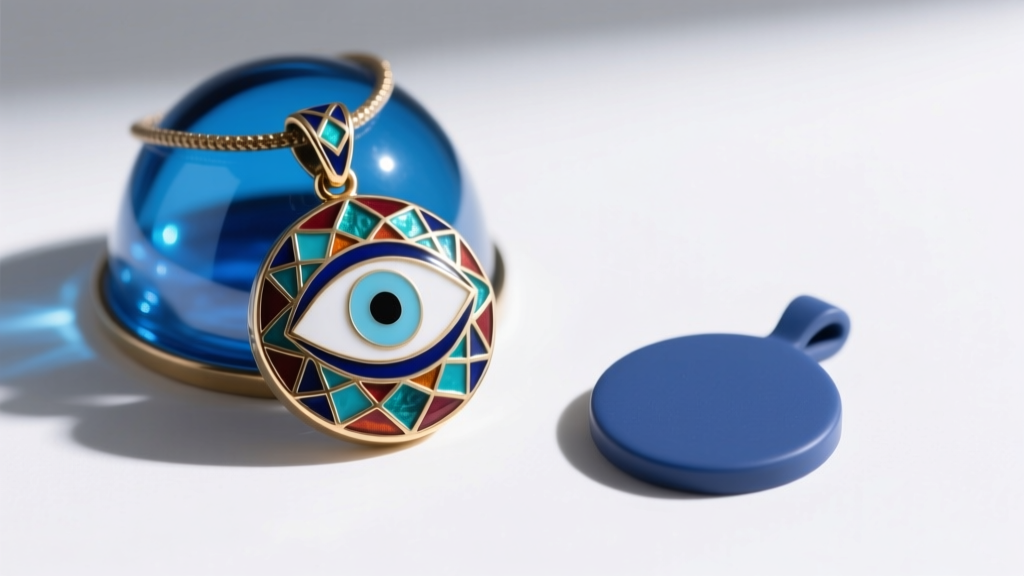
- Open Jump Rings: Look closely at the small ring connecting the pendant to the chain. If there is a visible gap (an open jump ring), the pendant will eventually slip off and be lost. High-end jewelers use soldered or laser-welded closed jump rings.
- Painted Details: If the black pupil or white sclera looks like it has brush strokes, or if the paint bleeds over the metal borders, it is hand-painted resin, not fired enamel.
- Hollow Backs: Flip the pendant over. A quality evil eye amulet will have a solid metal backing or a beautifully finished open-back bezel. Hollow, stamped sheet metal with rough, sharp edges is a hallmark of cheap manufacturing.
Care and Maintenance for Enamel and Gemstones
To preserve the protective energy and physical beauty of your necklace, proper care is non-negotiable. Vitreous enamel is essentially glass; while it resists chemicals, it can shatter if dropped on a hard tile floor. Clean your necklace using only warm water, a drop of mild dish soap, and a soft-bristled baby toothbrush. Never use ultrasonic cleaners on enamel or porous gemstones like Lapis Lazuli, as the high-frequency vibrations can cause the enamel to crack or the stone to fracture along its natural cleavage planes.
A Note on Cultural Respect: While the evil eye has become a global fashion motif, remembering the true eyeball necklace meaning—a profound cultural symbol of protection against envy and malice—elevates the piece from a mere accessory to a meaningful talisman. Purchase from artisans who respect the motif's heritage, and wear it with intention.


