Fake Chrome Hearts Necklace: Materials & Spotting Fakes
Learn how to identify a fake Chrome Hearts necklace by comparing material properties, weight, oxidation techniques, and hallmark stamps.

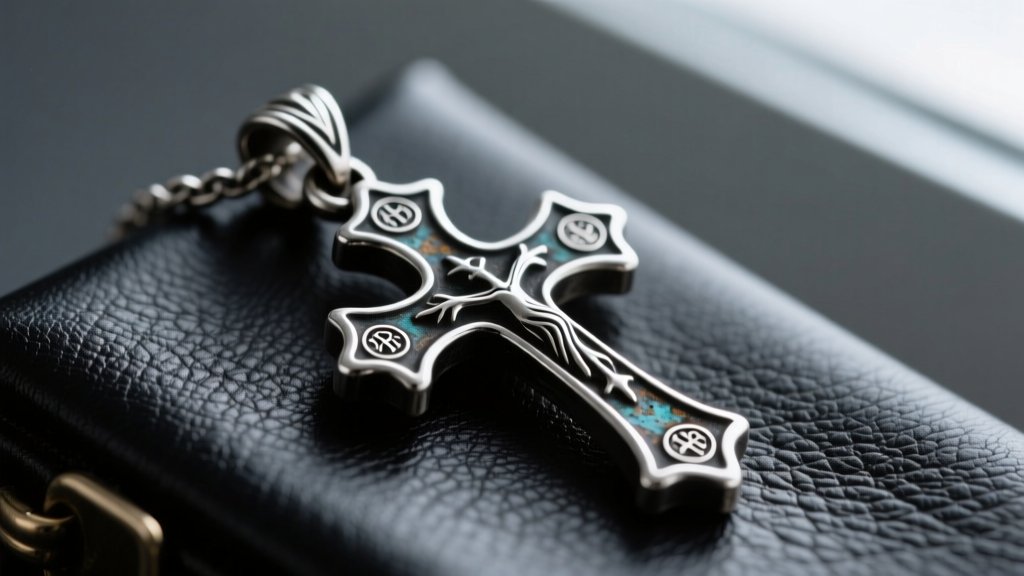
The Allure of Chrome Hearts and the Replica Market
Chrome Hearts has maintained its status as a premier luxury gothic jewelry brand for decades, renowned for its heavy, handcrafted .925 sterling silver pieces and intricate leatherwork. However, the brand's immense cultural cachet and high retail prices have spawned a massive secondary market flooded with counterfeits. In 2026, replica manufacturing has become increasingly sophisticated, with some high-tier fakes mimicking the visual aesthetics of authentic pieces almost perfectly. To truly authenticate a piece, you must look beyond the visual design and conduct a rigorous material comparison. Understanding the specific metallurgical properties, weight distribution, and oxidation techniques used by authentic Chrome Hearts is the only reliable way to separate genuine articles from a fake Chrome Hearts necklace.
Authentic vs. Fake Chrome Hearts Necklace: A Material Breakdown
The core difference between an authentic Chrome Hearts piece and a counterfeit lies in the base metals and the casting methods employed. Authentic pieces are cast in solid precious metals, while fakes rely on cheaper base metals and surface plating.
Sterling Silver (.925) vs. Zinc Alloy & Brass
Authentic Chrome Hearts jewelry is primarily crafted from .925 sterling silver, an alloy consisting of 92.5% pure silver and 7.5% copper. This specific ratio provides the necessary structural integrity for heavy, detailed castings while maintaining the precious metal's inherent value. According to the Federal Trade Commission (FTC) Jewelry Guides, any piece stamped "925" must meet this exact purity threshold.
Conversely, the vast majority of fake Chrome Hearts necklaces are cast from Zamak (a zinc alloy containing aluminum, magnesium, and copper) or cheap yellow brass. Zamak is favored by counterfeiters because it has a low melting point, allowing for cheap, rapid die-casting that captures moderate detail. However, Zamak lacks the specific gravity of silver. Authentic sterling silver has a specific gravity of 10.49 g/cm³, whereas Zamak sits at roughly 6.7 g/cm³. This means a genuine Chrome Hearts Large Dagger pendant will weigh approximately 35 to 40 grams, while a Zamak replica of the exact same dimensions will feel suspiciously light, often weighing under 20 grams.
The Hardware, Jump Rings, and Chain Links
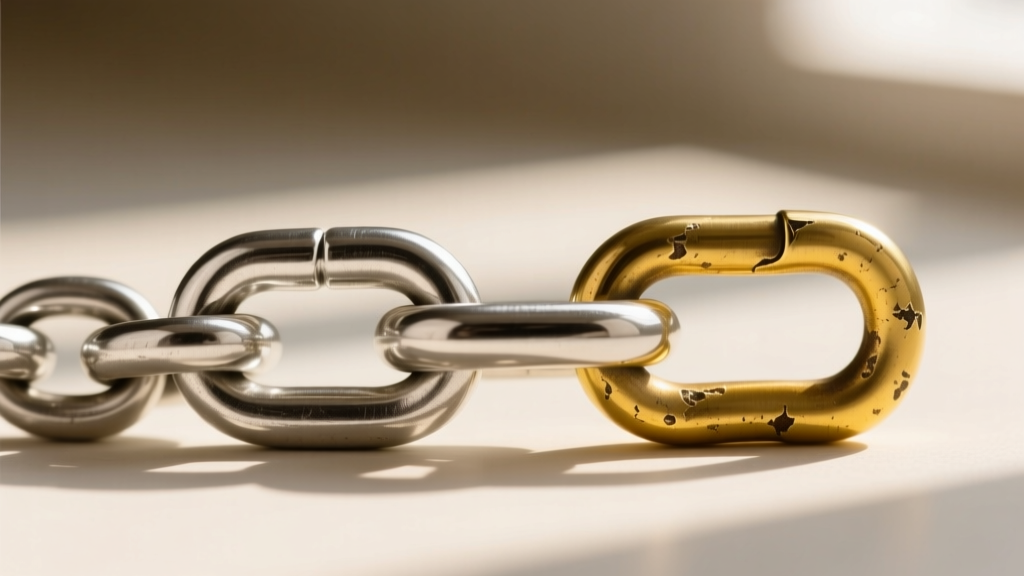
Material discrepancies extend to the chain hardware. Authentic Chrome Hearts chains utilize thick, solid silver wire—typically ranging from 10-gauge to 14-gauge depending on the chain style (e.g., the classic Paperclip or Cuban links). The jump rings connecting the pendant to the chain are heavy-duty and precisely soldered or tightly butted to withstand the immense weight of the pendants.
Replicas frequently use hollow-core tubing or thin, 18-gauge silver-plated brass wire to save on material costs. Under the stress of a heavy pendant, these thin, unsoldered jump rings on fake necklaces are prone to pulling apart, leading to lost pendants. Furthermore, the clasps on authentic pieces feature robust internal springs and precise machining, whereas fake clasps often feel stiff, lack a satisfying acoustic "click," and fail within months of daily wear.
Physical Properties: Weight, Oxidation, and Wear
Beyond simple weight, the way these materials interact with the environment and the wearer's skin provides critical authentication data. The table below outlines the distinct physical properties you can expect when comparing authentic materials to common counterfeit alternatives.
| Property | Authentic .925 Sterling Silver | High-Tier Fake (316L Stainless Steel) | Low-Tier Fake (Zamak / Plated Brass) |
|---|---|---|---|
| Specific Gravity | 10.49 g/cm³ (Heavy, dense feel) | 8.00 g/cm³ (Noticeably lighter) | 6.7 - 8.5 g/cm³ (Suspiciously light) |
| Thermal Conductivity | High (Feels instantly cold to the touch) | Low (Takes time to adjust to skin temp) | Low (Feels room temperature initially) |
| Oxidation Method | Liver of Sulfur (Silver Sulfide) | Black enamel or chemical blackening | Black acrylic paint or cheap chemical dip |
| Acoustic Ring | High-pitched, sustained ping when tapped | Dull, short clink | Hollow, flat thud |
| Skin Reaction | Hypoallergenic (unless copper allergy) | Generally safe (surgical grade) | High risk of nickel rash / green skin |
The Science of Chrome Hearts Oxidation
One of the most defining characteristics of Chrome Hearts jewelry is its deep, high-contrast oxidation. Authentic pieces are treated with Liver of Sulfur (potassium sulfide), which reacts with the copper in the sterling silver alloy to create silver sulfide (Ag2S). This is a permanent chemical change that turns the recessed areas black while the raised areas are hand-polished to a high shine. As noted by the Gemological Institute of America (GIA), this type of patina is stable and will only wear away slowly over years of friction.
Counterfeiters rarely use proper chemical oxidation. Instead, a fake Chrome Hearts necklace is often painted with black acrylic or dipped in a cheap, unstable chemical wash. If you look closely at the recesses of a fake piece with a jeweler's loupe, you will often see brush strokes, pooled pigment, or a flat, matte black finish that lacks the translucent depth of true silver sulfide. Furthermore, fake oxidation will quickly rub off onto clothing or skin within the first few weeks of wear.
How to Identify a Fake by Material Flaws and Hallmarks
When evaluating a potential purchase, rely on empirical testing rather than visual inspection alone. Here is a practical troubleshooting framework for identifying material flaws in the secondary market.
- The Hallmark Strike Test: Authentic Chrome Hearts stamps ("925", "CHROME HEARTS", and the fleur-de-lis or dagger copyright marks) are struck into the metal using a hardened steel punch after the piece is cast and polished. This creates a deep, crisp depression with sharp edges. Fakes are often cast with the stamps already in the mold, resulting in shallow, rounded, or slightly raised letters. Some high-end fakes use laser engraving, which leaves a perfectly flat, micro-etched mark that lacks the physical depth of a hand-strike.
- The Ice Test (Thermal Conductivity): Silver is one of the most thermally conductive metals on earth. If you place a small ice cube on an authentic Chrome Hearts pendant, it will begin to melt almost instantly, and the silver will become painfully cold to the touch within seconds. Zamak and stainless steel replicas will melt the ice at a significantly slower, more gradual rate.
- The Magnet Test: While not definitive on its own (since brass and Zamak are also non-magnetic), a strong neodymium magnet can quickly identify fakes that use steel cores or iron-heavy base metals beneath a silver plating. If the pendant exhibits any magnetic pull, it is an immediate red flag.
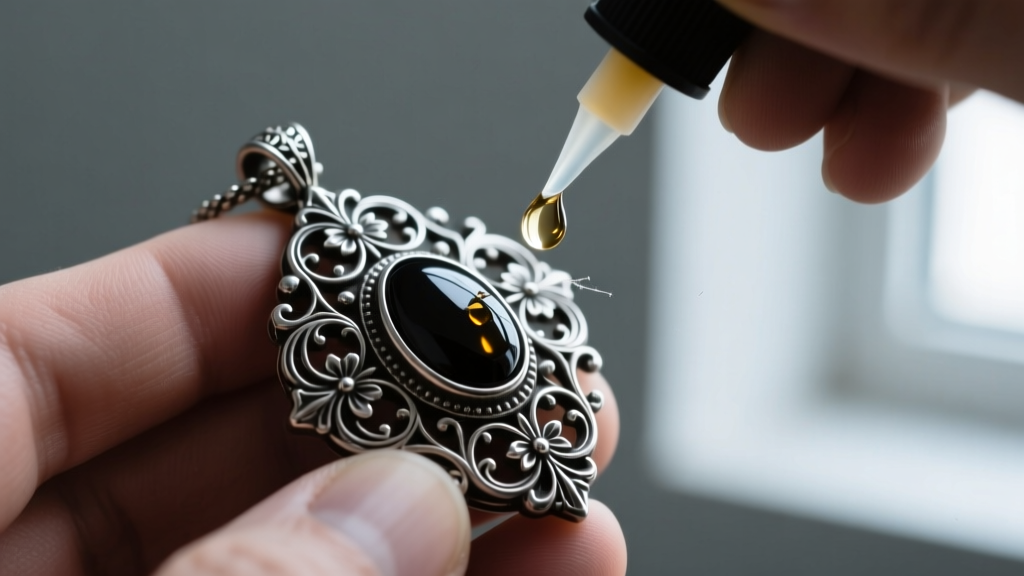
- Acid Testing: For absolute certainty, a jeweler can perform an acid test. By filing a discreet, shallow scratch into an inconspicuous area (like the back of a bail) and applying a drop of nitric acid testing solution, the metal's purity is revealed. Authentic .925 silver will turn a dark red or brownish hue, whereas brass will turn green, and zinc will show no reaction or a cloudy white residue.
The Hidden Costs of Counterfeit Base Metals
Beyond the ethical and financial implications of buying counterfeit goods, wearing a fake Chrome Hearts necklace poses genuine dermatological risks. Low-tier replicas made from Zamak or cheap brass alloys frequently contain high levels of nickel and lead to improve the fluidity of the molten metal during casting. When the thin silver or rhodium plating inevitably wears away—usually within three to six months of daily wear—these base metals are exposed to sweat and skin oils.
This exposure triggers allergic contact dermatitis in a significant portion of the population, resulting in itchy, red, and blistered skin. Furthermore, the copper and zinc in these alloys oxidize rapidly when exposed to the acidic pH of human sweat, leaving a stubborn, toxic-looking green or black stain on the wearer's chest. Authentic .925 sterling silver, while it may tarnish over time, does not cause these severe dermatological reactions or stain the skin green.
Final Verdict: Navigating the Secondary Market
The market for Chrome Hearts jewelry is highly lucrative, which guarantees that counterfeiters will continue to refine their visual replicas. However, they cannot easily fake the fundamental laws of physics and metallurgy. When evaluating a piece, always prioritize the specific gravity (weight), the thermal conductivity, the depth of the hallmark strikes, and the chemical stability of the oxidation. By shifting your focus from the aesthetic design to the underlying material properties, you can confidently navigate the secondary market and ensure your investment is backed by genuine precious metals.


