Farandole Necklace 120 Buying Guide: What to Look For
Discover what to look for when buying a Farandole necklace 120. Our expert guide covers diamond grades, 18k gold hallmarks, articulation, and pricing.

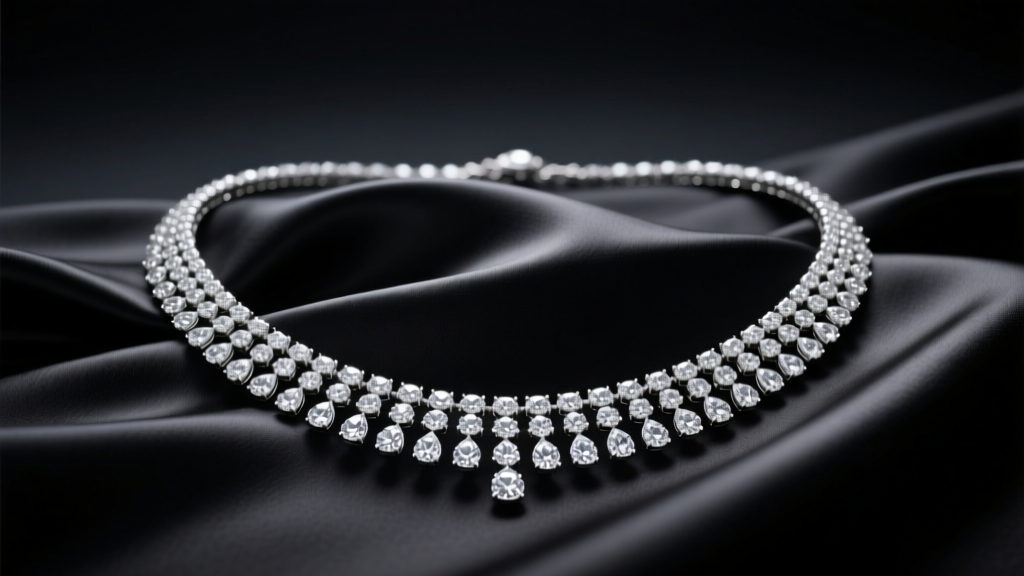
The Allure of the 120cm Sautoir Length
When discussing high-end Parisian jewelry, the term "Farandole" evokes the imagery of a traditional Provençal dance—translated into metal and stone, it represents a continuous, fluid line of diamonds that move harmoniously with the wearer. The Farandole necklace 120 specifically refers to the 120-centimeter sautoir (long necklace) configuration, a masterpiece of proportion and engineering favored by luxury houses like Messika. Buying a piece of this caliber is not merely a transaction; it is an investment in kinetic art. However, the secondary and primary luxury markets are flooded with pieces that claim high pedigree but fall short in structural integrity and diamond quality. This comprehensive buying guide will equip you with the horological and gemological precision needed to evaluate a Farandole 120cm sautoir in 2026.
Diamond Specifications: Beyond the Basic 4Cs
Unlike a solitaire pendant where a single center stone dominates the grading report, a diamond line necklace relies entirely on the uniformity of its melee and accent stones. When evaluating a genuine luxury Farandole necklace, you must look beyond basic carat weight and scrutinize the matching criteria.
Color and Clarity Uniformity
Top-tier Parisian jewelers strictly utilize diamonds in the F to G color range (Colorless to Near-Colorless) and VS1 to VS2 clarity for their articulated line necklaces. According to the Gemological Institute of America (GIA), melee diamonds are rarely graded with individual certificates. Therefore, you must visually inspect the necklace under 10x magnification and daylight-equivalent LEDs. If you notice any "stepping"—where one segment of the diamond line appears slightly warmer (yellowish) or darker (due to carbon inclusions) than the adjacent segment—the piece fails the luxury standard. In a 120cm continuous line, even a half-grade color mismatch creates a visible shadow line that disrupts the optical flow.
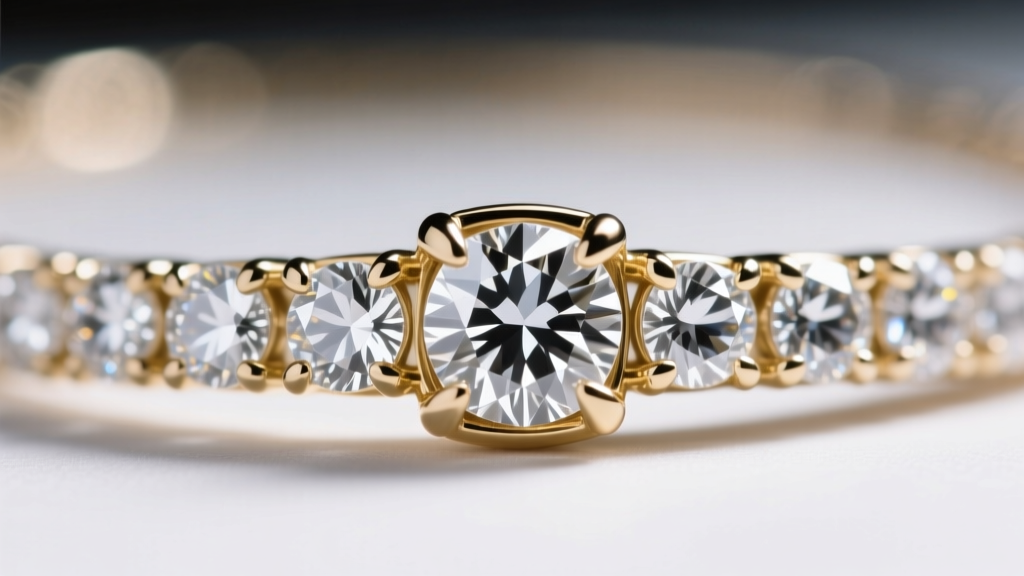
The Setting Technique: Serti Clos vs. Serti Griffes
Examine how the diamonds are secured. The Farandole design typically employs a mix of serti clos (bezel setting) and serti griffes (prong setting). The bezel settings are crucial for the moving joints of the sautoir, as they protect the diamond girdles from chipping during the necklace's constant articulation. Ensure the bezel wires are perfectly flush with the diamond table; any raised metal will catch on silk garments and cause micro-abrasions to the gold over time.
Articulation and the "Farandole" Movement
The defining characteristic of the Farandole collection is its kinetic drape. A 120cm necklace contains hundreds of micro-joints. When laid flat on a velvet tray, a poorly engineered line necklace will kink, twist, or lay in rigid, unnatural polygons. A genuine luxury Farandole 120 should behave like liquid. To test this, lift the necklace by its clasp and let it fall. It should immediately cascade into a perfectly straight, untwisted line. Run your fingers along the diamond sequence; the movement should be silent. Any metallic clicking or grinding indicates poorly polished internal hinges or debris trapped in the articulation points, which will eventually lead to metal fatigue and chain snapping.
Authentication: Hallmarks and Serial Numbers
The luxury jewelry market requires rigorous authentication, especially for high-value sautoirs. French-made 18k gold jewelry is subject to strict state assay regulations. When inspecting a Farandole necklace 120, you must locate two critical stamps, usually found on the clasp tongue or a dedicated plaque near the closure:
- The Tête d'Aigle (Eagle's Head): This is the official French state hallmark guaranteeing the metal is a minimum of 750/1000 pure gold (18k). It must be crisp and deeply struck, not laser-etched or blurred.
- The Poinçon de Maître (Maker's Mark): A lozenge-shaped stamp containing the jeweler's initials and a symbol (often a star or anchor). For houses like Messika, this stamp is registered and verifiable.
Furthermore, modern luxury sautoirs feature a micro-engraved serial number that corresponds to the house's internal registry and the accompanying certificate of authenticity. As noted in Sotheby's Jewelry Authentication Guide, the absence of a matching serial number or a poorly aligned hallmark is an immediate red flag for a counterfeit or a "franken-piece" (a necklace assembled from non-original parts).
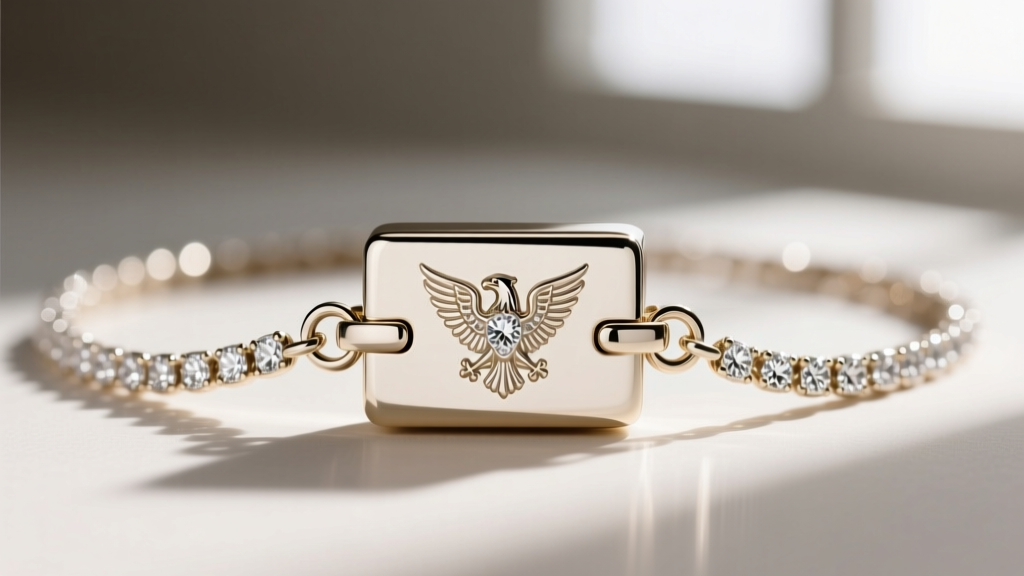
Clasp Security and Metal Integrity
A 120cm diamond sautoir carries significant weight, often exceeding 40 grams of 18k gold and multiple carats of diamonds. A standard lobster clasp is entirely insufficient and dangerous for a piece of this value. You must look for a concealed box clasp with a double figure-8 safety wire.
| Clasp Component | What to Look For | Failure Mode to Avoid |
|---|---|---|
| Box Mechanism | Audible "click" upon closure; flush integration into the diamond line. | Worn tension spring that allows the tongue to slip out under lateral pressure. |
| Figure-8 Safety | Thick, 18k gold wire that snaps securely over a rounded stud. | Thin, bent wire that has lost its tensile memory and fails to snap shut. |
| Hinge Pin | Smooth, uncorroded pin allowing the safety wire to pivot freely. | Seized or rusted hinge indicating poor storage or exposure to harsh chemicals. |
2026 Market Pricing and Investment Value
As of 2026, the pricing for a luxury Farandole 120cm diamond sautoir varies significantly based on total carat weight, metal color, and provenance. White gold remains the most popular choice for maximizing diamond brilliance, though yellow and rose gold variants command a premium among niche collectors. Below is a generalized market framework for authentic, excellent-condition pieces:
- Retail (Boutique): $45,000 – $75,000+ USD (Dependent on exact diamond carat weight, typically 5ct to 12ct TW).
- Secondary Market (Auction/Verified Reseller): $28,000 – $50,000 USD.
- Value Multipliers: Original presentation box, stamped certificate, and pristine polishing history can increase secondary value by 15-20%.
"When purchasing a 120cm sautoir on the secondary market, always factor in the cost of a professional house polishing and hinge-tightening service, which can cost upwards of $800 for complex articulated pieces."
Styling the 120cm Length
The primary advantage of the Farandole 120 is its versatility. The 120cm length is meticulously calculated to allow for multiple styling configurations without compromising the diamond line's integrity. You can wear it as a single, dramatic opera-length drop over a silk blouse, double-wrap it to create a layered 60cm princess-length look, or even triple-wrap it for a dense, choker-style collar. When double-wrapping, ensure the clasp is positioned at the nape of the neck to prevent the heavy metal closure from pulling the delicate diamond joints downward.
Final Verdict: Is the Farandole 120 Right for You?
Purchasing a Farandole necklace 120 requires a discerning eye for kinetic engineering and gemological uniformity. It is not merely a necklace; it is a flexible sculpture of light. By strictly verifying the F-G color uniformity, testing the liquid drape of the articulation, and demanding flawless French assay hallmarks, you ensure that your investment will retain both its structural brilliance and its market value for decades to come. Always insist on a comprehensive condition report and a return policy when buying outside of an official boutique.


