Anatomy of a Fearlessness Necklace: Metals, Chains & Engraving
Master the technical details of the fearlessness necklace. Explore metal grades, chain weight ratios, and laser engraving depths for lasting wear.

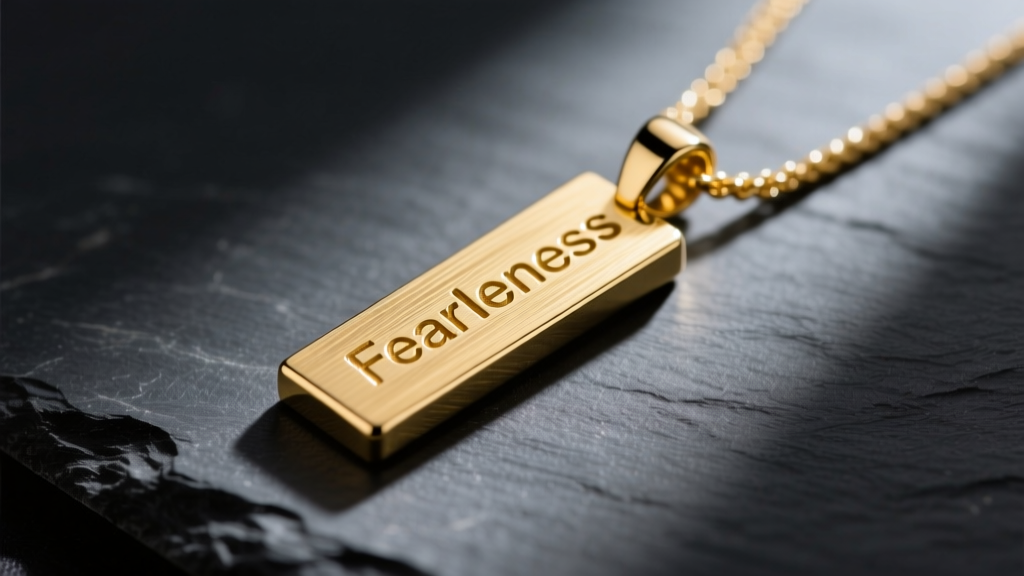
The Engineering of Empowerment
The concept of a fearlessness necklace extends far beyond mere aesthetic appeal; it functions as a daily talisman, a psychological anchor, and a statement of resilience. Because these pieces are designed to be worn continuously—through workouts, travel, and the rigors of daily life—the structural integrity of the jewelry must match the durability of its message. In the jewelry manufacturing sector, crafting a pendant meant to symbolize 'fearlessness' requires an uncompromising approach to metallurgy, kinetic weight distribution, and permanent marking techniques. This guide deconstructs the technical specifications that separate a fragile fashion accessory from a lifelong, heirloom-grade fearlessness necklace.
Metallurgical Breakdown: Choosing the Right Alloy
The foundation of any enduring pendant lies in its alloy composition. A fearlessness necklace is typically subjected to sweat, friction, and environmental pollutants, meaning the metal must possess high corrosion resistance and adequate Vickers Hardness (HV) to resist scratching.
316L Surgical Steel vs. 904L Superalloy
For stainless steel variants, 316L is the industry baseline. The 'L' denotes low carbon, which prevents carbide precipitation during welding or laser engraving. More importantly, 316L contains 2-3% molybdenum, drastically increasing its resistance to chloride corrosion (such as human sweat or ocean water). However, high-end manufacturers are increasingly turning to 904L superalloy. Originally popularized by luxury horology, 904L contains higher levels of nickel and copper, yielding a superior polish and a Vickers Hardness of roughly 220 HV compared to the 150-190 HV of 316L. According to ThomasNet's metallurgical databases, 904L's enhanced chromium oxide layer makes it virtually impervious to the acidic pH of human skin.
Solid Gold Karat Dynamics
When selecting precious metals, the karat weight dictates both color and tensile strength. As detailed by the Gemological Institute of America (GIA), 24k gold is far too soft (approx. 25 HV) for a daily-wear pendant. A 14k gold fearlessness necklace (58.5% pure gold) offers the optimal balance. Yellow 14k is alloyed with copper and silver, providing a warm hue and excellent structural rigidity. White 14k, often alloyed with nickel or palladium, requires rhodium plating to achieve a bright white finish, which will eventually wear off and require re-plating. For a maintenance-free white metal, platinum (950 Pt) is the superior, albeit heavier, choice.
Proprioception and Talismanic Weight
A frequently overlooked aspect of necklace design is proprioception—the body's ability to sense the weight and position of an object on the skin. A fearlessness necklace should have enough mass to rest firmly against the sternum, providing a subtle, grounding physical reminder of its meaning. Pendants weighing less than 3 grams often feel insubstantial and can easily flip upside down. The ideal weight for a horizontal bar or medallion fearlessness pendant ranges between 6 grams and 14 grams. This weight class ensures the pendant lays flat against the clavicle area without causing neck fatigue or dragging the collar of a shirt downward.
Chain Mechanics and Weight Distribution Ratios
The most common point of catastrophic failure in heavy pendant necklaces is the chain. A 12-gram solid gold pendant suspended on a delicate 0.9mm cable chain is a structural liability. Kinetic shock—such as the pendant swinging and suddenly jerking to a halt—can generate transient forces up to four times the static weight of the pendant. To prevent jump ring deformation or chain snapping, jewelers must adhere to strict weight-to-gauge ratios.
| Pendant Weight | Minimum Chain Gauge | Recommended Chain Style | Tensile Break Strength |
|---|---|---|---|
| 2g - 5g | 1.0mm - 1.2mm | Cable, Box | 8 - 12 lbs |
| 6g - 10g | 1.5mm - 1.8mm | Rope, Figaro, Curb | 15 - 25 lbs |
| 11g - 20g | 2.0mm - 2.5mm | Wheat, Cuban Link | 30 - 50 lbs |
| 20g+ | 3.0mm+ | Heavy Curb, Rope | 60+ lbs |
Furthermore, the bail (the loop connecting the pendant to the chain) must be internally lined or hardened. If a steel chain rubs against a soft 18k gold bail, the chain will act like a saw, eventually cutting through the gold. Utilizing a hardened steel or platinum bail insert is a hallmark of expert craftsmanship.
Engraving Techniques: Rotary vs. Fiber Laser
The word 'Fearless' or 'Fearlessness' is often engraved directly onto the pendant. The method of engraving dictates the longevity of the text and the ongoing corrosion resistance of the metal.
Fiber Laser Annealing (1064 nm)
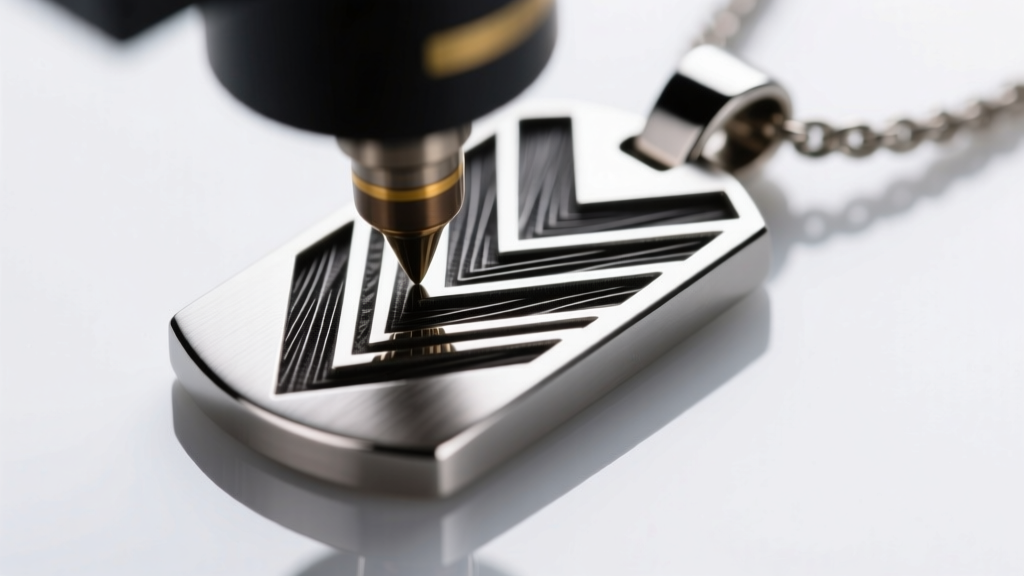
For stainless steel and titanium fearlessness necklaces, fiber laser marking is the gold standard. Operating at a 1064 nm wavelength, the laser heats the metal just enough to oxidize the chromium beneath the surface, creating a permanent, high-contrast black mark. Crucially, this process is 'annealing'—it does not carve out material. Because the surface remains smooth, the protective passivation layer of the steel is largely undisturbed, preventing moisture from pooling in microscopic grooves and causing rust.
CNC Rotary Engraving
For solid gold or silver pendants, CNC rotary engraving uses a diamond drag bit to physically carve the letters into the metal. While this creates a beautiful, traditional depth, the exposed raw metal inside the grooves is vulnerable to tarnish and soap buildup. Post-engraving, the piece must be thoroughly polished and, in the case of silver, treated with an anti-tarnish nano-coating to preserve the legibility of the inscription over decades of wear.
Clasp Integrity and Failure Points
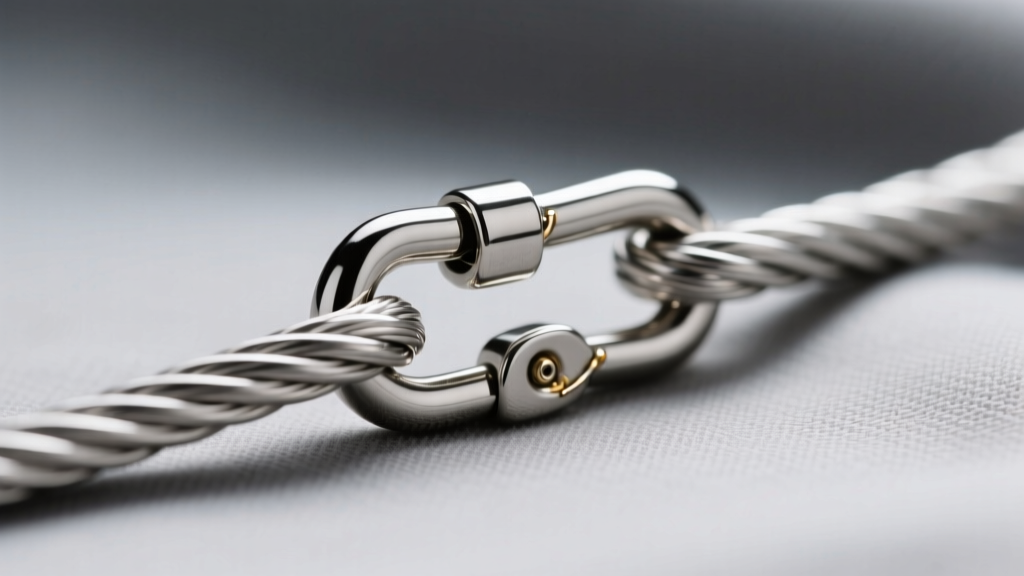
The clasp is the second most common failure point. Standard spring-ring clasps, which rely on a tiny, easily deformed internal brass spring, are entirely unsuitable for a heavy fearlessness necklace. The industry standard for secure daily wear is the solid lobster clasp, which features a robust, straight internal spring and a thicker casting profile. For pendants exceeding 15 grams, a hidden box clasp with a secondary figure-eight safety catch is mandatory. This dual-locking mechanism ensures that even if the primary tension latch fails, the secondary wire catch will prevent the necklace from dropping and being lost.
Maintenance and Patina Management
Proper maintenance ensures the necklace retains its structural and visual integrity. While 316L steel and platinum are virtually maintenance-free, 14k gold and silver require specific care protocols. Avoid exposing gold alloys to household bleach or heavily chlorinated pool water; the chlorine reacts with the copper and zinc alloys in 14k gold, causing stress corrosion cracking that can literally cause the pendant's bail to snap under its own weight. For cleaning, a simple solution of warm water and mild dish soap, applied with a soft-bristled toothbrush, is sufficient. Ultrasonic cleaners should be avoided for laser-annealed steel pendants, as the high-frequency cavitation can sometimes degrade the oxidized contrast of the engraving if the metal was not properly passivated post-lasing. By respecting these material boundaries, your fearlessness necklace will remain an unyielding companion for a lifetime.


