Tarnish-Resistant Metals for Pendants and Necklaces Explained
Discover the best tarnish-resistant metals for pendants and necklaces. Compare titanium, platinum, and gold alloys for everyday durability and sensitive skin.
The Metallurgy of Everyday Wear: Why Jewelry Fails
Most consumers select pendants and necklaces based purely on aesthetic appeal, entirely ignoring the metallurgical realities of daily wear. The human body is a harsh environment for metals. Average human sweat has a pH between 4.0 and 6.0, containing chlorides, urea, and lactic acid. When combined with environmental sulfur and the mechanical friction of clothing, inferior alloys rapidly degrade, tarnish, or trigger contact dermatitis. In 2026, with the rise of advanced CNC milling and accessible metallurgical testing, buyers are more equipped than ever to look past marketing terms and examine the actual material properties of their jewelry.
Tier 1: The Indestructibles (Titanium and Platinum)
Grade 5 Titanium (Ti-6Al-4V)
Unlike the commercially pure titanium used in cheap aerospace souvenirs, Grade 5 titanium is an alloy containing 6% aluminum and 4% vanadium. This specific formulation yields a Vickers hardness (HV) of roughly 350, making it exceptionally resistant to the micro-scratches that plague softer metals. According to ASTM International standard F136, this alloy is highly biocompatible and entirely nickel-free, making it the ultimate choice for sensitive skin. The primary drawback? Its extreme hardness makes it difficult for traditional jewelers to resize or solder, meaning titanium chains and pendants are usually manufactured via precision laser welding or CNC machining.
Platinum (Pt950)
Platinum is a dense, heavy transition metal (21.45 g/cm³) that offers a unique property: malleability without material loss. When a platinum chain is scratched, the metal is merely displaced, not removed. Over decades, this develops a sought-after patina rather than structural weakness. Pt950 (95% platinum, 5% ruthenium or iridium) is the industry standard for high-end pendants and necklaces. While it commands a premium price—often starting above $1,200 for a modest 18-inch cable chain—its absolute resistance to tarnish and hypoallergenic profile make it a generational investment.
Tier 2: The Reliable Standards (Solid Gold and Surgical Steel)
14k vs. 18k Gold: The Alloy Trade-off
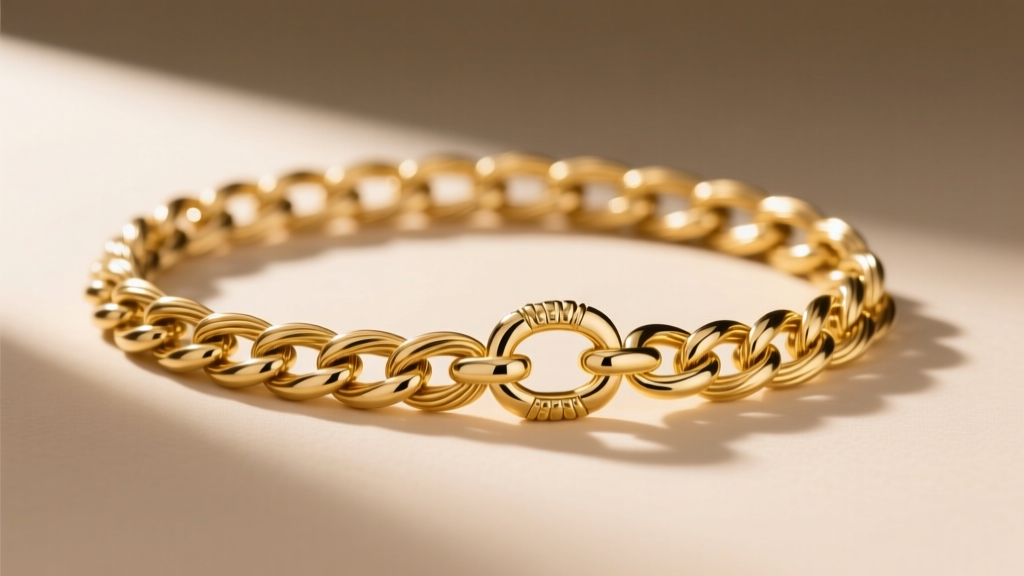
Pure 24k gold is far too soft (approx. 25 HV) for functional chains; a simple tug would stretch the links beyond repair. Therefore, gold must be alloyed. The Gemological Institute of America (GIA) notes that 14k gold (58.5% pure gold) is alloyed with copper, silver, and zinc to achieve a hardness of around 120-150 HV. This makes 14k gold highly resistant to deformation, ideal for heavy pendants that exert constant tension on the chain. Conversely, 18k gold (75% pure gold) offers a richer, warmer hue and better tarnish resistance due to the higher gold content, but its lower hardness (approx. 90 HV) makes it more susceptible to clasp fatigue and link stretching over time.
316L Surgical Stainless Steel
Often marketed simply as "surgical steel," 316L is an austenitic stainless steel containing 16-18% chromium, 10-14% nickel, and 2-3% molybdenum. The "L" stands for low carbon, which prevents carbide precipitation during welding. The molybdenum is the secret weapon here; it drastically increases resistance to chloride corrosion (i.e., salt water and sweat). While 316L does contain nickel, the chromium oxide passivation layer that forms on its surface generally traps the nickel, keeping leaching well below the EU Nickel Directive limit of 0.5 µg/cm²/week. It is an outstanding, budget-friendly option for heavy, streetwear-style pendants and necklaces, typically ranging from $30 to $80.
The Danger Zone: Plated, Filled, and Vermeil
The market is flooded with gold-plated and gold vermeil options, but understanding the micron thickness is critical for longevity. Standard "flash plating" is often a mere 0.05 to 0.1 microns thick—essentially a molecular layer that will wear off in weeks. Gold vermeil requires a sterling silver base and a minimum of 2.5 microns of gold. However, when the plating inevitably breaches due to friction at the clasp or pendant bail, a galvanic cell is created. The sterling silver core acts as an anode and corrodes rapidly when exposed to the electrolytes in your sweat. If you want the look of gold without the solid gold price tag, heavy gold-filled wire (where the gold layer constitutes at least 5% of the total weight and is mechanically bonded, not electroplated) is vastly superior to any plated alternative.
Comprehensive Metal Comparison Matrix
| Material | Vickers Hardness (HV) | Avg. Price Range | Nickel Risk | Tarnish Resistance |
|---|---|---|---|---|
| Grade 5 Titanium | ~350 | $40 - $120 | None | Exceptional |
| Platinum (Pt950) | ~110 | $1,200+ | None | Exceptional |
| 14k Solid Gold | 120 - 150 | $250 - $800 | Low (Alloy dependent) | High |
| 18k Solid Gold | ~90 | $400 - $1,200 | Very Low | Very High |
| 316L Surgical Steel | ~220 | $30 - $80 | Low (Passivated) | High |
| Gold Vermeil | N/A (Core dependent) | $60 - $150 | Moderate (If worn) | Low (Prone to wear) |
Chain Link Architecture: Tensile Strength and Friction
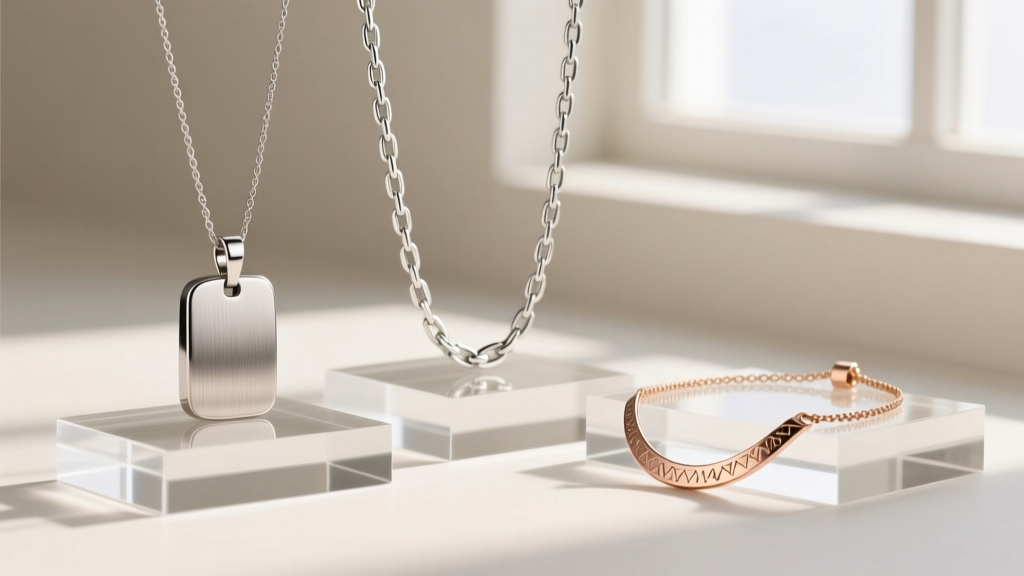
The material is only half the battle; the physical geometry of the chain dictates its lifespan. Cable chains are classic but feature high friction at the link joints, leading to gradual metal thinning over years of wear. Box chains, constructed from square, interlocking links, distribute weight evenly and offer immense tensile strength, making them the premier choice for heavy gemstone pendants. Rope chains, while visually striking due to their light-catching twists, are notoriously difficult to repair if snapped because of the complex, multi-axis soldering required. For everyday pendants and necklaces subjected to active lifestyles, a solid 2.0mm to 3.0mm box or curb chain provides the optimal balance of flexibility and sheer structural resilience.
Pro-Tips for Clasp and Chain Longevity
- Ditch the Spring Ring: Spring ring clasps rely on a tiny internal steel spring that is highly susceptible to rust and fatigue, often failing within a year of daily wear. Always upgrade to a solid lobster clasp.
- Inspect the Jump Ring: The jump ring connecting the clasp to the chain is a critical failure point. If it is merely bent closed, it will eventually pull apart under the pendulum weight of a pendant. Demand laser-welded or hard-soldered jump rings for any chain supporting a pendant weighing more than 10 grams.
- Magnetic Alternatives: For those with dexterity issues or heavy platinum chains, neodymium magnetic clasps with a safety latch offer superior security without the mechanical fatigue of traditional spring-loaded levers.
Final Verdict
Choosing the right metal for pendants and necklaces requires balancing budget, skin sensitivity, and lifestyle. For absolute durability and hypoallergenic performance on a budget, Grade 5 Titanium and 316L Surgical Steel are unmatched. For heirloom-quality luxury that withstands generations of wear, Pt950 Platinum and 14k Solid Gold remain the metallurgical gold standards. Avoid flash-plated jewelry entirely, and always prioritize the structural integrity of the clasp and chain links over the mere carat weight of the gold.