Fendi Gold Necklace: Materials, Authentication & Value Guide
An expert technical deep dive into Fendi gold necklaces, covering 18k metallurgy, authentication hallmarks, clasp mechanics, and market value.

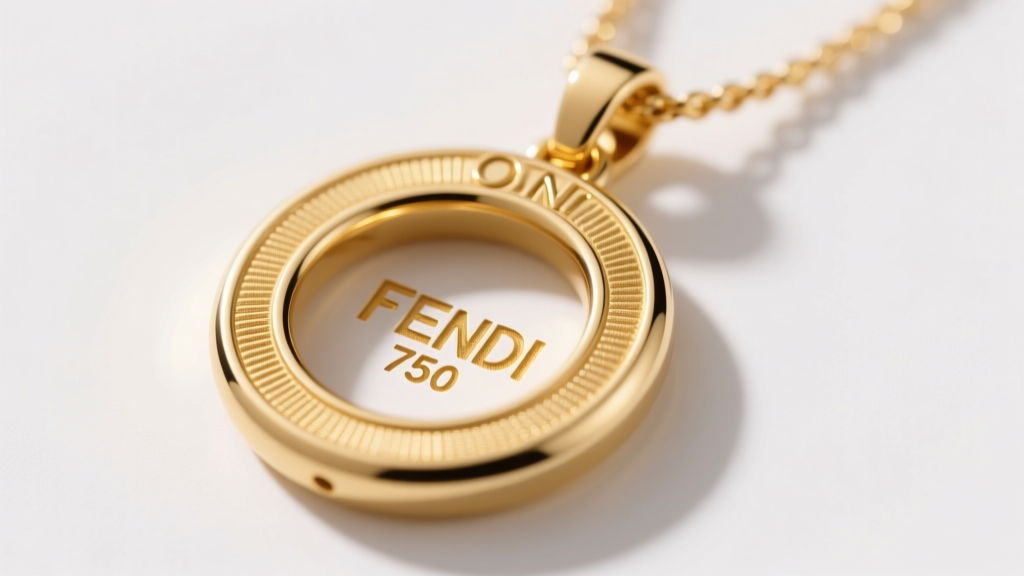
The Architecture of Luxury: Understanding Fendi's Gold Offerings
When evaluating a Fendi gold necklace, the first critical step for any serious collector or appraiser is distinguishing between the maison's fine jewelry lines and its seasonal fashion jewelry collections. Fendi operates on a dual-tier metallurgical strategy. Their fine jewelry collections, such as the iconic O'Lock and Fendi First lines, are masterclasses in high-karat goldsmithing, utilizing solid 18k gold alloys engineered for both structural integrity and a distinct, warm color profile. Conversely, their runway and seasonal fashion pieces rely on advanced galvanic plating techniques over brass or steel substrates. Understanding the technical divide between these two categories is essential for authentication, valuation, and long-term care.
The Metallurgy of Fendi: Fine vs. Fashion Gold
According to the Gemological Institute of America (GIA), 18k gold consists of 75% pure gold and 25% alloy metals. Fendi's specific yellow gold alloy is renowned in the industry for its rich, buttery hue, which is achieved by carefully calibrating the copper-to-silver ratio in the remaining 25%. Unlike some European houses that favor a paler, higher-silver 18k mix, Fendi's fine jewelry leans slightly higher in copper, yielding a warmer tone that beautifully complements their signature brown and yellow diamond pavé work.
For their fashion jewelry, Fendi employs a thick galvanic gold plating process. In recent 2025 and 2026 collections, the house has begun utilizing a proprietary ceramic nano-coating over the gold plating to drastically reduce tarnishing and micro-scratching, a common failure mode in luxury fashion jewelry.
| Attribute | Fendi Fine Jewelry (18k) | Fendi Fashion Jewelry |
|---|---|---|
| Base Material | Solid 18k Gold (750) | Brass, Bronze, or Stainless Steel |
| Gold Content | 75% Pure Gold throughout | 0.5 to 2.0 microns gold plating |
| Hallmarks | 750, FENDI, Made in Italy | FENDI, Made in Italy (No 750) |
| Weight & Density | High density, heavy drape | Lighter, hollow-link construction |
| Retail Price Range | $2,500 - $25,000+ | $450 - $1,200 |
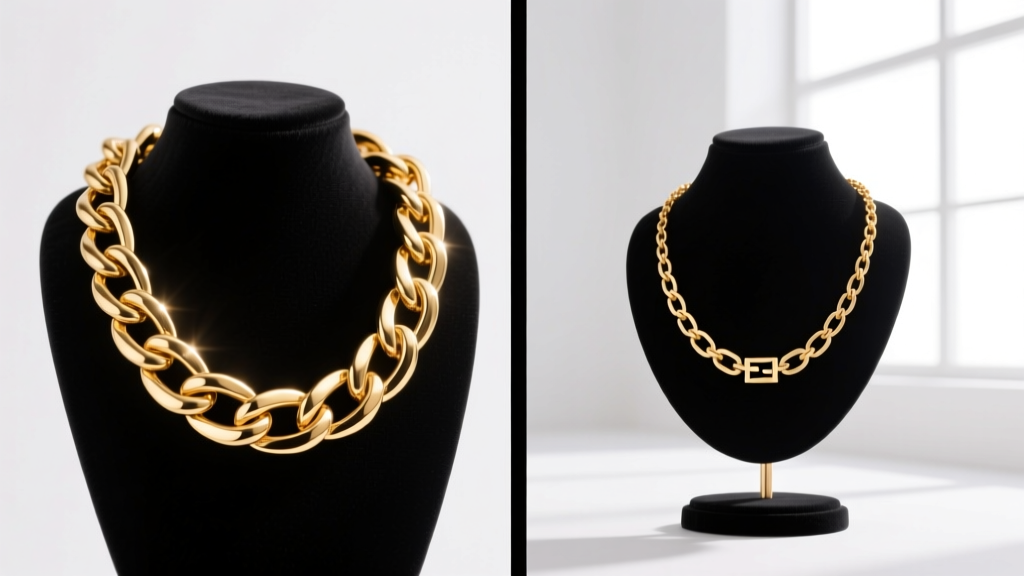
Authentication Deep Dive: Hallmarks, Stamps, and Serials
Authenticating a Fendi gold necklace requires a jeweler's loupe (minimum 10x magnification) and a strict adherence to the brand's hallmarking protocols. Counterfeiters frequently fail at the micro-typography level. Here is the technical framework for verifying authenticity:
1. The Typography of the 'FENDI' Stamp
On authentic solid gold pieces, the 'FENDI' logo is deeply laser-engraved or struck with a steel punch into a flat surface of the clasp or a dedicated hallmark plate. The font is a highly specific, custom sans-serif. The letter 'E' features a slightly elongated middle prong, and the 'N' has a distinctly sharp, deep diagonal. Fakes often use standard Arial or Helvetica, which immediately flags the piece as inauthentic. Furthermore, the floor of the engraving should be clean and matte, not polished or rough.
2. The '750' and 'Made in Italy' Stamps
For fine jewelry, the '750' stamp must be present. According to Fendi Official Fine Jewelry documentation, this stamp is often placed adjacent to the 'FENDI' logo. On older vintage pieces (pre-2010), you may also find the Italian state assay marks or an OSA holographic sticker, though the house has largely phased out the OSA sticker in favor of micro-laser serial numbers on modern chains.
3. Serial Number Formats
Modern Fendi fine jewelry necklaces feature an 8-digit alphanumeric serial number. This is typically laser-etched onto the interior of the clasp ring or the flat back of a pendant bale. The laser etching should appear as a series of microscopic dots under high magnification, not a continuous carved line. If the serial number is deeply stamped with a traditional punch on a modern piece, exercise extreme caution.
Expert Tip: Always cross-reference the serial number with Fendi Authenticity Guidelines or a certified luxury appraiser. Fendi does not use sequential, easily guessable serial numbers; their internal coding is tied to specific production batches and boutique distribution logs.
Chain Mechanics and Clasp Engineering
The structural engineering of a Fendi gold necklace is where the maison's commitment to Italian goldsmithing truly shines. Take the O'Lock chain, for example. It is not a standard cable chain; it is a highly modified, diamond-cut curb chain where the links are shaped to subtly evoke the 'F' motif.
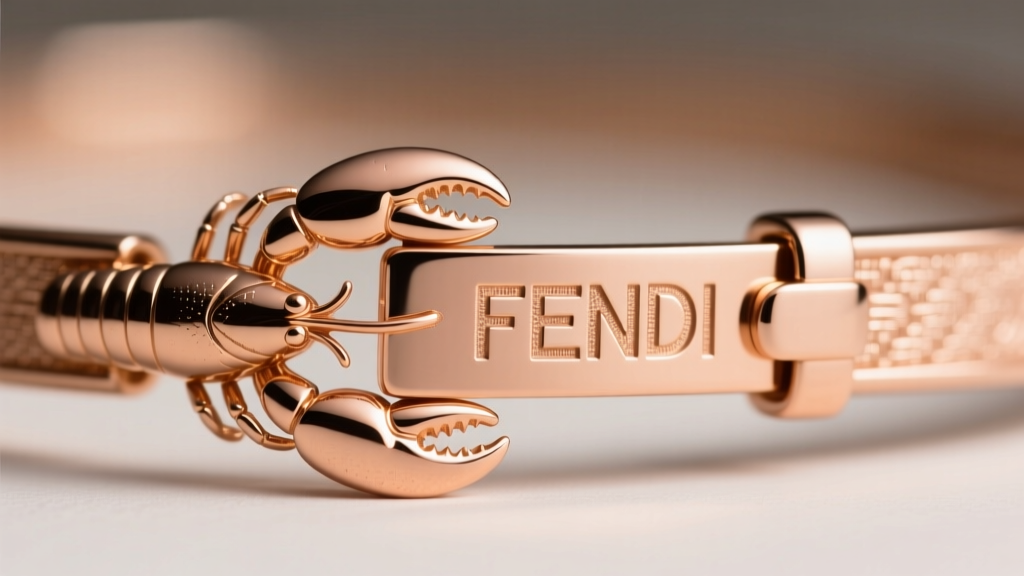
Lobster Clasp Micro-Details
The lobster clasps on Fendi's 18k gold necklaces are custom-cast, not sourced from generic findings suppliers. When examining the clasp:
- The Lever: The flat side of the lever (the part you press with your thumbnail) should feature a micro-engraved 'FENDI' logo. This engraving is incredibly shallow and requires 20x magnification to read clearly.
- The Spring Mechanism: Authentic Fendi clasps utilize a high-tension internal spring. The release action should be buttery smooth but offer significant resistance, snapping shut with a sharp, audible 'click'. Counterfeit clasps often feel mushy or rattle when shaken.
- Soldering Points: Examine the jump ring that connects the clasp to the chain. Fendi uses laser welding for their fine chains, which leaves a microscopic, nearly invisible seam. Traditional torch soldering, which leaves a visible blob of solder or a discolored heat mark, is a red flag on modern Fendi fine jewelry.
2026 Market Valuation and Investment Retention
As we navigate the luxury secondary market in 2026, the valuation of a Fendi gold necklace depends entirely on its tier. Solid 18k gold Fendi pieces, particularly those from the O'Lock and Fendi First collections featuring pavé diamonds, retain approximately 45% to 65% of their retail value on the pre-owned market, depending on the presence of original boxes, certificates of authenticity, and the current spot price of gold.
Fashion jewelry, however, operates on a different economic model. Once a gold-plated Fendi fashion necklace leaves the boutique, its secondary market value drops to 15% to 25% of retail, unless it is a highly sought-after, limited-edition runway piece from a specific creative director's era (such as rare Silvia Venturini Fendi archives). Collectors buying for investment should strictly limit their acquisitions to the solid 18k fine jewelry lines.
Technical Care and Maintenance Protocols
Maintaining the metallurgical integrity of your necklace requires tailored care based on its construction. For solid 18k Fendi gold necklaces without porous gemstones (like emeralds, opals, or pearls), an ultrasonic cleaner set to a low frequency (35-40 kHz) for no more than three minutes is safe for removing sebum and cosmetic buildup from the intricate O'Lock links. Follow this with a gentle polish using a microfiber cloth.
For Fendi fashion jewelry, ultrasonic cleaners are strictly prohibited. The high-frequency cavitation will strip the galvanic gold plating and degrade the protective nano-ceramic topcoat. Instead, use a mild, phosphate-free dish soap diluted in lukewarm water, agitate gently with a baby-hair brush, and pat dry immediately. Never use silver dip or chemical tarnish removers on fashion pieces, as the sulfur compounds will instantly blacken the exposed brass substrate if the plating is compromised.


