Handcuffs Necklace Materials: Steel vs Silver vs Titanium Guide
Compare surgical steel, sterling silver, and titanium for your handcuffs necklace. Discover the best metals for durability, skin safety, and style.

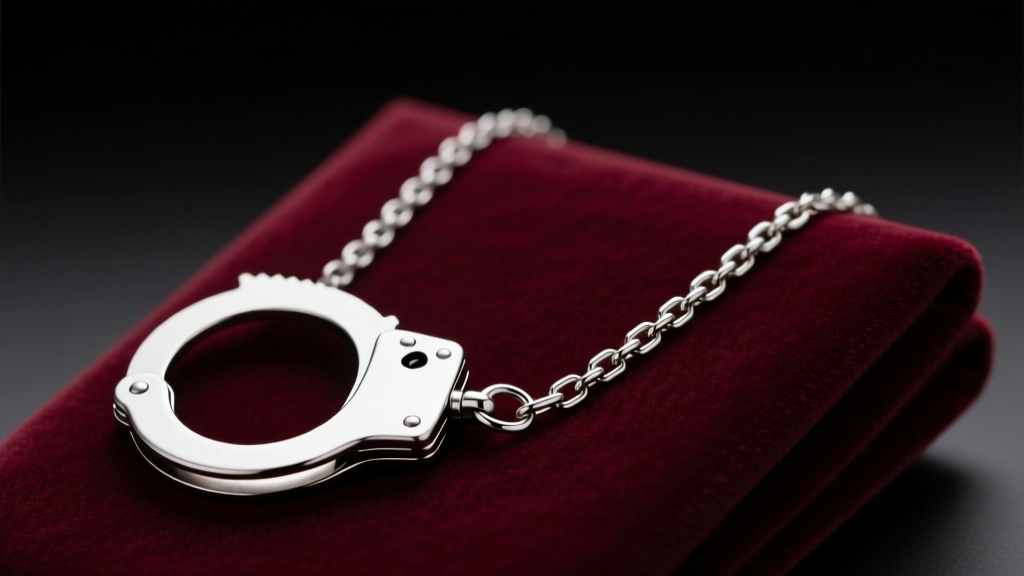
The Engineering Behind the Edge: Why Material Matters
The handcuffs necklace has firmly transcended its underground subculture roots, evolving into a staple of avant-garde, punk, and Y2K-inspired fashion in 2026. However, unlike static pendants such as simple geometric shapes or gemstone drops, a handcuff charm is a miniature mechanical device. It features microscopic moving parts: hinge barrels, latch pins, swivels, and keyholes. This mechanical complexity makes material selection absolutely critical. A poor metal choice doesn't just result in tarnished skin; it leads to seized hinges, snapped latch pins, and broken chains.
When shopping for a handcuffs necklace, consumers often focus solely on the aesthetic finish, ignoring the metallurgical properties that dictate the piece's lifespan. In this comprehensive guide, we break down the exact alloy compositions, tensile strengths, and long-term wearability of the most common metals used in handcuff jewelry, helping you make an informed, investment-grade decision.
The Anatomy of a Handcuffs Necklace
Before comparing metals, it is essential to understand the stress points unique to this pendant style. A standard handcuff charm weighs between 8 and 18 grams. The stress is distributed across three critical junctions:
- The Hinge Pin: Usually measuring just 0.8mm to 1.2mm in diameter, this pin bears the shear force every time the cuff is opened or closed.
- The Latch Mechanism: The interlocking teeth that keep the cuff closed must resist deformation under pressure.
- The Jump Ring and Chain: The connection point to the chain experiences constant friction and tensile load.
Because of these stress points, the metal must possess a high yield strength and excellent corrosion resistance. Let us examine how the most popular jewelry metals perform under these specific mechanical demands.
Material Breakdown: Pros, Cons, and Properties
Surgical Stainless Steel (316L)
Surgical stainless steel, specifically the 316L grade, is the undisputed workhorse of alternative jewelry. The "L" stands for low carbon, but the real magic lies in the addition of 2% to 3% molybdenum. This element drastically increases resistance to pitting corrosion and chloride attacks, making it highly resilient against sweat and environmental moisture.
For a handcuffs necklace, 316L steel offers exceptional shear strength for the tiny hinge pins. It will not bend or snap under normal manual manipulation. Furthermore, the passive oxide layer that forms on the surface makes it highly resistant to tarnish. According to the American Academy of Dermatology, while 316L does contain nickel, the alloy's tight crystalline structure typically prevents nickel ions from leaching, making it safe for the vast majority of wearers with mild sensitivities.
Sterling Silver (925)
Sterling silver is an alloy consisting of 92.5% pure silver and 7.5% copper. The copper is necessary to provide structural hardness, as pure silver is far too soft to hold the intricate threads of a miniature keyhole or the tension of a latch. Sterling silver offers a brilliant, luminous luster that steel cannot replicate, making it a favorite for high-end, oxidized, or intricately engraved handcuff designs.
However, sterling silver has a major vulnerability in mechanical jewelry: tarnish. The copper in the alloy reacts with sulfur in the air and on the skin to form silver sulfide. In a static ring, this is merely a cosmetic issue. In a handcuffs necklace, silver sulfide buildup acts as an abrasive paste inside the hinge barrel, eventually seizing the moving parts entirely. The Gemological Institute of America (GIA) notes that regular polishing is required to maintain the structural integrity of silver pieces with moving components.
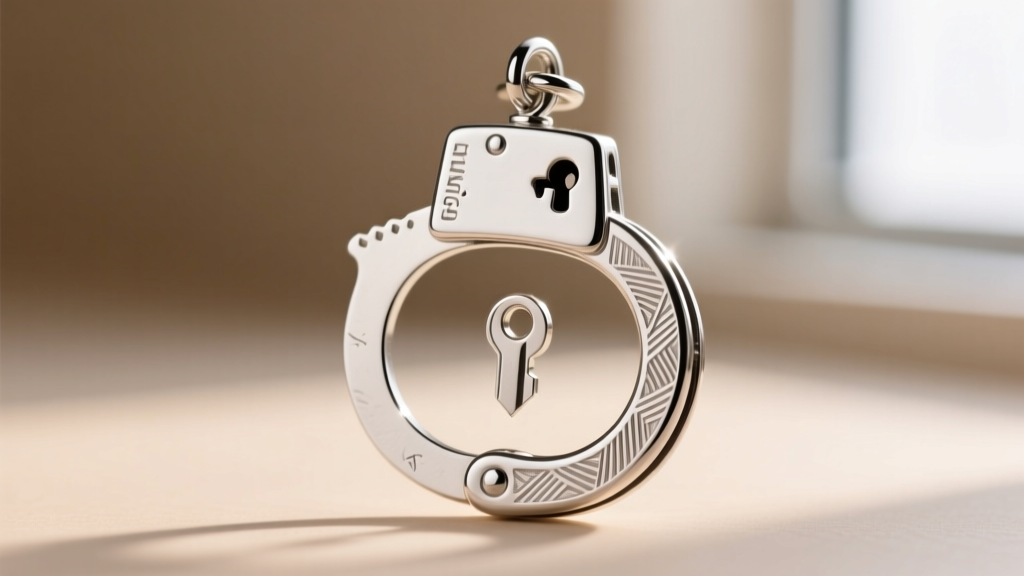
Titanium (Grade 23 / 6Al-4V)
For the ultimate in biocompatibility and strength-to-weight ratio, Grade 23 Titanium (Ti-6Al-4V) is the premium choice. Originally developed for aerospace applications, this alloy is 45% lighter than steel but boasts a significantly higher tensile strength. It is 100% hypoallergenic and entirely immune to tarnish, rust, and UV degradation.
In 2026, the manufacturing landscape has shifted heavily toward 5-axis CNC machining for titanium charms. Unlike cast metals, which can have microscopic porosity that weakens hinge pins, CNC-milled titanium handcuffs boast tolerances of 0.05mm. This results in a hinge action that is incredibly smooth, with zero lateral wobble. The primary drawback is cost; titanium is difficult to machine and requires specialized tooling, pushing the price of authentic titanium handcuff necklaces well above the $100 mark.
Zinc Alloy and Brass (The Fast Fashion Trap)
Mass-market, ultra-cheap handcuff necklaces (often priced under $15) are typically cast from zinc alloys (like Zamak) or brass, and then plated with a microscopic layer of silver or chrome. While they look acceptable on day one, these materials are catastrophic for mechanical jewelry. Zinc alloys are inherently brittle. The 1mm hinge pin on a zinc alloy cuff will inevitably suffer from metal fatigue and snap within a few months of regular use. Once the plating wears off, the underlying brass or zinc will rapidly oxidize, turning the skin green and permanently fusing the latch mechanism.
Comparative Data: Weight, Tarnish, and Pricing
To visualize how these metals stack up against one another, refer to the metallurgical and market comparison matrix below.
| Metal Grade | Primary Composition | Tarnish Risk | Hinge Shear Strength | Avg. Price Range |
|---|---|---|---|---|
| 316L Steel | Fe, 16-18% Cr, 10-14% Ni, 2-3% Mo | Very Low | High (Excellent) | $30 - $75 |
| 925 Silver | 92.5% Ag, 7.5% Cu | High | Medium (Prone to wear) | $60 - $150 |
| Grade 23 Ti | Ti, 6% Al, 4% V | None | Very High (Superior) | $110 - $250+ |
| Zinc Alloy | Zn, Al, Cu, Mg | Extreme (if plated) | Very Low (Brittle) | $5 - $15 |
The 2026 Manufacturing Shift: CNC vs. Casting
Understanding how the metal is shaped is just as important as the metal itself. Historically, handcuff charms were created via lost-wax casting. Molten metal is poured into a mold, which often traps microscopic air bubbles. If an air bubble forms inside the tiny hinge barrel or the latch pin, it creates a structural void that will eventually crack under stress.
Today, premium brands are utilizing CNC (Computer Numerical Control) milling, particularly for titanium and steel. CNC milling carves the charm from a solid billet of metal, ensuring a uniform grain structure and zero internal porosity. When evaluating a high-end handcuffs necklace, look for product descriptions that specify "CNC machined" or "milled from solid billet," as this guarantees the mechanical parts will survive years of use.
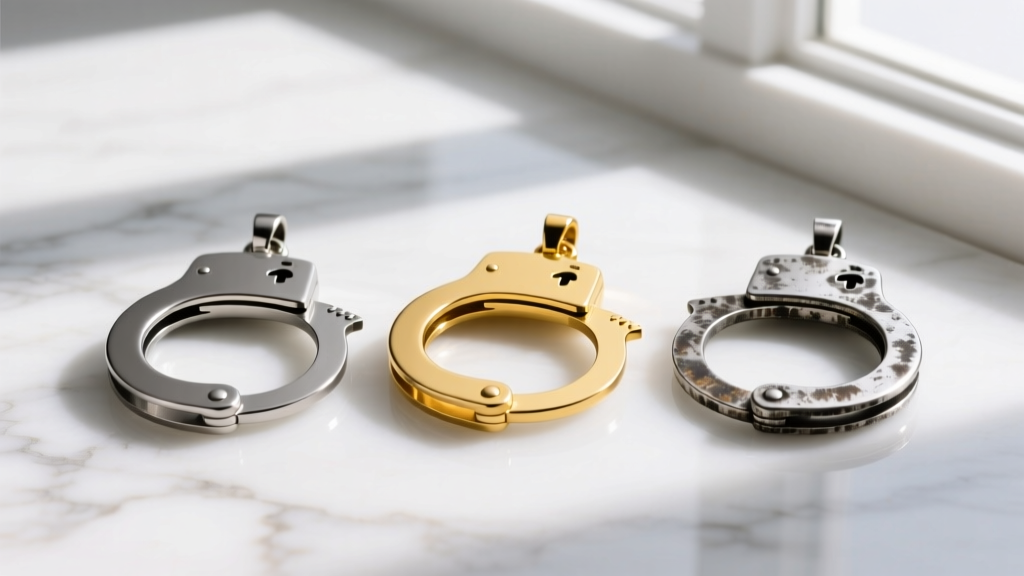
Chain Pairing: Matching the Pendant Metal and Gauge
A common mistake is pairing a heavy, solid steel or titanium handcuff pendant with a delicate, thin chain. The handcuff charm acts as a pendulum, generating kinetic energy that transfers to the chain's jump ring. A standard 0.9mm cable chain will easily snap under this dynamic load.
For a handcuffs necklace weighing over 10 grams, you must select a chain with high tensile strength and a secure clasp. We recommend the following pairings:
- 2.5mm to 3.5mm Cuban Link or Curb Chain: The flat, interlocking links distribute weight evenly and resist pulling apart. Ensure the chain is made of the same metal as the pendant to prevent galvanic corrosion where the jump ring meets the chain.
- 2.0mm Figaro Chain: Offers a slightly more intricate visual pattern while maintaining excellent structural integrity.
- The Clasp: Avoid standard spring-ring clasps, which are notorious for failing under heavy loads. Opt for a sturdy lobster claw clasp or a custom machined toggle clasp.
Troubleshooting and Maintenance for Moving Parts
Even the highest quality 316L steel or titanium handcuffs necklace requires specific maintenance to keep the mechanical parts functioning smoothly. Never use harsh chemical silver dips or ultrasonic cleaners on a handcuff charm. Chemical dips can strip the passivation layer off stainless steel, making it vulnerable to rust, while ultrasonic vibrations can loosen the tiny friction-fitted hinge pins.
How to fix a seized hinge: If your sterling silver or steel cuff becomes stiff, do not force it open, as this will bend the pin. Instead, apply a single drop of lightweight synthetic watch oil or a tiny amount of powdered graphite to the hinge seam. Work the hinge back and forth gently to distribute the lubricant, then wipe away any excess with a microfiber cloth. For tarnish removal in the crevices of a silver cuff, use a soft-bristled fiberglass scratch brush rather than a liquid polish, which can leave a gritty residue inside the latch mechanism.
Final Verdict: Choosing Your Metal
If you want a durable, everyday piece that requires minimal maintenance and offers excellent mechanical reliability, 316L Surgical Stainless Steel is the most pragmatic choice. It balances cost, weight, and sheer strength perfectly. If you prioritize ultimate skin safety, lightweight comfort, and precision engineering, invest in a CNC-milled Grade 23 Titanium piece. Reserve Sterling Silver for intricate, high-fashion pieces that you are willing to clean and maintain regularly to prevent the mechanical parts from seizing. By understanding the metallurgy behind the edge, you ensure your handcuffs necklace remains a functional, striking statement piece for years to come.


