Prada Necklace Materials: Silver, Enamel & Resin Compared
Compare Prada necklace materials including 925 silver, brass enamel, and resin. Discover durability, pricing, and care tips for luxury fashion jewelry.

The Duality of Prada Jewelry: Fashion vs. Fine Materials
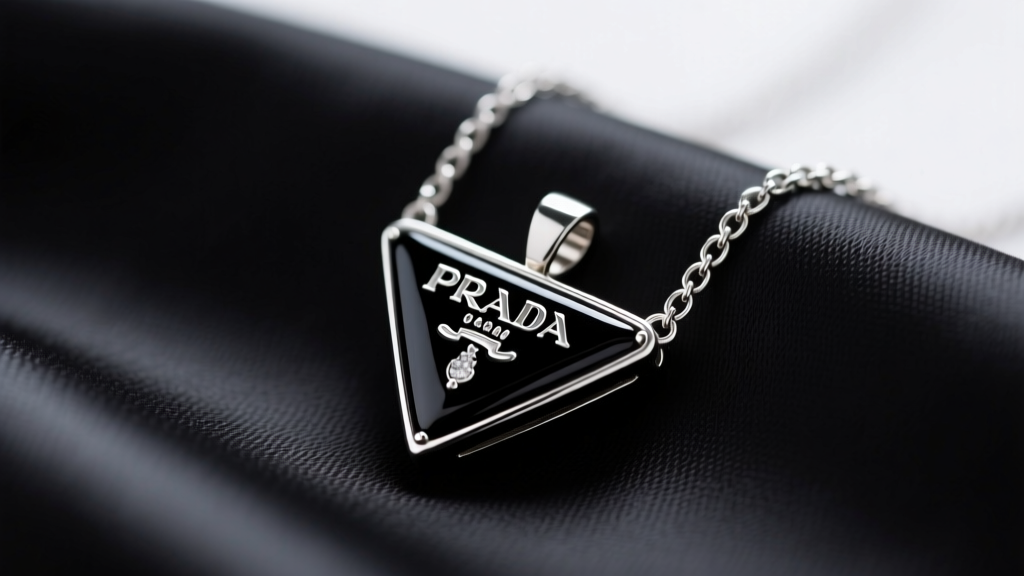
When evaluating a Prada necklace, collectors and buyers must navigate two entirely distinct material universes. On one side sits Prada’s avant-garde fashion jewelry, heavily reliant on enameled brass, cast resins, and tech-polymers. On the other lies their fine jewelry division, utilizing 925 sterling silver, 18-karat gold, and precious gemstones. As of 2026, the brand’s material engineering has evolved, blending industrial aesthetics with luxury finishing. However, the physical properties, failure modes, and long-term value retention of these materials vary drastically. Understanding the metallurgical and chemical realities behind Prada’s iconic triangle pendants, chunky resin chains, and delicate silver cables is essential for making an informed luxury purchase.
The Core Materials in Prada Necklaces
Sterling Silver (925) & Rhodium Plating
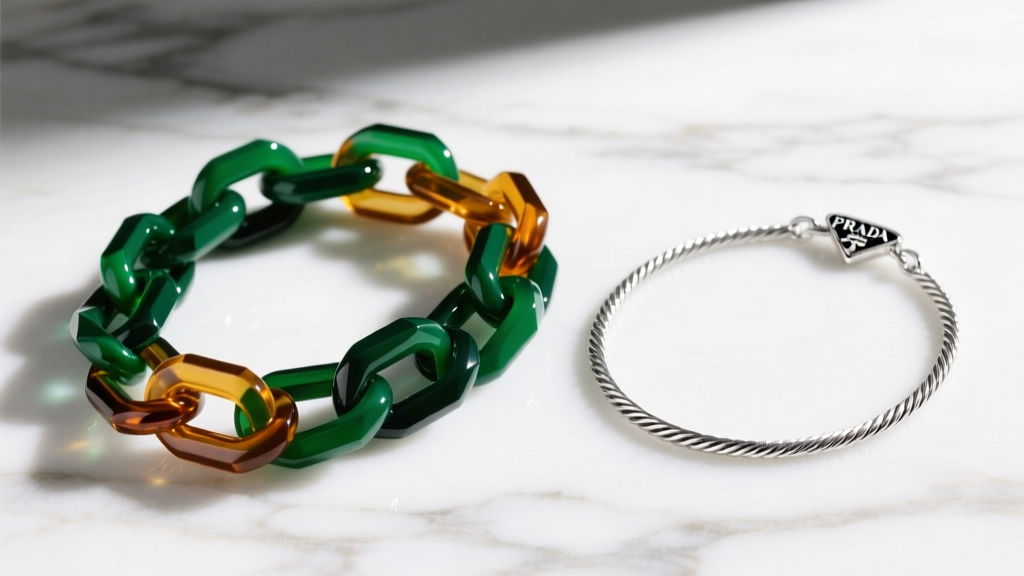
Prada’s fine jewelry and premium fashion lines frequently utilize 925 sterling silver, an alloy comprising 92.5% pure silver and 7.5% copper for structural rigidity. To combat the natural tarnishing caused by the copper content reacting with atmospheric sulfur, Prada typically applies a rhodium plating. According to metallurgical standards cited by the Gemological Institute of America (GIA), luxury houses generally apply rhodium at a thickness of 0.75 to 1.0 microns. This micro-thin layer provides a brilliant, white-gold-like finish and acts as a temporary oxidation barrier. Once this plating wears away from friction against the skin or clothing, the underlying copper will eventually oxidize, requiring professional re-plating.
Epoxy Enamel Over Jeweler’s Brass
The iconic Prada triangle logo pendant is rarely solid precious metal; it is predominantly crafted from jeweler’s brass (a copper-zinc alloy) and coated in epoxy resin enamel. Unlike traditional vitreous (glass) enamel which requires kiln firing at over 1400°F, epoxy enamel is a cold-applied polymer. This allows for Prada’s signature deep, glossy black, white, and red finishes without warping the brass base. The epoxy cures to a hardness of roughly 80 on the Shore D scale, making it highly resistant to scratching but vulnerable to blunt-force chipping.
Cast Resin and Acetate
For its chunky, oversized chain necklaces and geometric pendants, Prada utilizes injection-molded ABS (Acrylonitrile Butadiene Styrene) and cast epoxy resins. These materials are chosen for their high strength-to-weight ratio, allowing for massive, architectural links that would be impossibly heavy if cast in solid brass or silver. However, these polymers sit at roughly 2.5 on the Mohs hardness scale, making them highly susceptible to micro-scratches and chemical degradation from common cosmetics.
Material Comparison Matrix
| Material | Base Composition | Mohs Hardness | Tarnish Resistance | Weight Profile |
|---|---|---|---|---|
| 925 Sterling Silver | 92.5% Ag, 7.5% Cu | 2.5 - 3.0 | Moderate (Requires Rhodium) | Heavy / Dense |
| Enameled Brass | Cu/Zn Alloy + Epoxy | 3.0 (Metal) / 80 Shore D (Enamel) | High (Until enamel chips) | Medium / Substantial |
| Cast Resin / ABS | Synthetic Polymer | 2.0 - 2.5 | High (No oxidation) | Ultra-Lightweight |
Durability & Failure Modes: What Actually Breaks?
Luxury pricing does not equate to indestructibility. Each material used in a Prada necklace has specific failure modes that buyers must anticipate.
- Enamel Micro-Chipping: The most common complaint with vintage and heavily worn Prada triangle pendants is edge chipping. Because the epoxy enamel and the brass base expand and contract at different rates under temperature fluctuations, drops onto hard surfaces (like marble or tile) frequently cause the enamel to separate from the metal lip.
- Brass Oxidation (Verdigris): If the protective rhodium or clear-coat plating on a brass-based Prada necklace wears through, the copper in the brass will react with the acidity and salts in human sweat. This produces copper chloride, commonly known as verdigris, which leaves a green residue on the skin and degrades the structural integrity of the clasp joints.
- Resin UV Degradation & Solvent Melting: White and translucent Prada resin chains are prone to UV yellowing over 3 to 5 years of regular sun exposure. More critically, acetone-based nail polish removers and alcohol-heavy perfumes will chemically melt the surface of ABS resins, causing permanent clouding and stickiness.
- Silver Clasp Fatigue: While the silver links remain durable, the spring-ring or lobster clasps on delicate Prada silver chains often suffer from internal spring fatigue, exacerbated by the microscopic buildup of lotions and skin oils inside the clasp mechanism.
Authenticity Markings & Material Hallmarks
When authenticating a Prada necklace, the material markings provide the most reliable forensic evidence. Authentic Prada sterling silver pieces will feature a deeply laser-engraved or stamped '925' hallmark, alongside the 'PRADA' logo and 'Made in Italy'. The depth and crispness of this stamp are critical; counterfeiters often use shallow acid etching that blurs under a 10x jeweler's loupe. For enameled brass pieces, the reverse side of the triangle will feature the PRADA stamp, but it will lack the '925' mark. Furthermore, the epoxy enamel on authentic pieces is perfectly domed and leveled, whereas fakes often show meniscus pooling at the edges where the liquid resin failed to level before curing.
Pricing Tiers & Value Retention by Material
The secondary market and retail pricing for Prada necklaces are heavily dictated by their material composition rather than just the brand name.
Entry-Level Fashion (Resin & Acetate)
Retailing between $500 and $850, these pieces suffer the steepest depreciation. Because resins cannot be polished or restored once deeply scratched, secondary market values often drop by 50-60% unless the piece is a rare, discontinued runway artifact.
Mid-Tier Iconic (Enameled Brass)
The classic triangle pendant necklaces retail from $650 to $950. These hold their value moderately well, provided the enamel is flawless. A pristine, unchipped black enamel triangle retains about 60-70% of its retail value on the pre-owned market, driven by continuous demand for the brand's core logo aesthetic.
Fine Jewelry (Sterling Silver & Gold)
Prada’s fine jewelry necklaces, featuring 925 silver with diamond accents or 18k gold, range from $1,500 to over $10,000. While they offer intrinsic melt value and superior longevity, they still face the standard luxury jewelry depreciation curve, retaining roughly 40-50% of their retail price upon immediate resale, unless part of a highly limited high-jewelry capsule collection.
Care Protocols by Material Grade
Maintaining a Prada necklace requires abandoning generic jewelry cleaning methods. The protocols must be strictly tailored to the specific material.
Caring for Enameled Brass
Never use ultrasonic cleaners or silver polishing cloths on enameled Prada pieces. The high-frequency vibrations of an ultrasonic bath will shatter the epoxy resin, and the mild abrasives in polishing cloths will permanently dull the glass-like finish of the enamel. Clean only with a damp microfiber cloth and a drop of pH-neutral dish soap, drying immediately to prevent water spotting on the brass hardware.
Caring for Sterling Silver
To preserve the rhodium plating on Prada silver necklaces, avoid exposing the metal to chlorine (pools) and sulfur (hot springs). When the silver eventually tarnishes after the rhodium wears thin, use a specialized liquid silver dip for no more than 10 seconds, followed by a thorough distilled water rinse. Do not rub aggressively, as this will strip the remaining rhodium layer.
Caring for Resin & Polymers
Resin necklaces must be stored away from direct sunlight to prevent UV-induced yellowing. Keep them in their original felt pouches or lined jewelry boxes. Never spray perfume directly onto the neck before putting on a resin Prada chain; the alcohol and essential oils will degrade the polymer matrix over time, leading to irreversible surface crazing.
Final Verdict: Choosing Your Material
Ultimately, selecting the right Prada necklace depends on your lifestyle and expectations. If you seek a durable, everyday piece with intrinsic material value, the 925 sterling silver cable chains and fine jewelry pendants are the superior choice. If you are buying into the brand’s cultural zeitgeist and avant-garde fashion identity, the enameled brass triangles and architectural resin chains offer unmatched aesthetic impact—provided you are willing to adhere to strict, material-specific care protocols to preserve their pristine condition.


