Guide to Choosing a Fingerprint Necklace for Deceased Loved Ones
Discover how to choose a meaningful fingerprint necklace for deceased loved ones. Explore materials, engraving techniques, and sympathy gift etiquette.

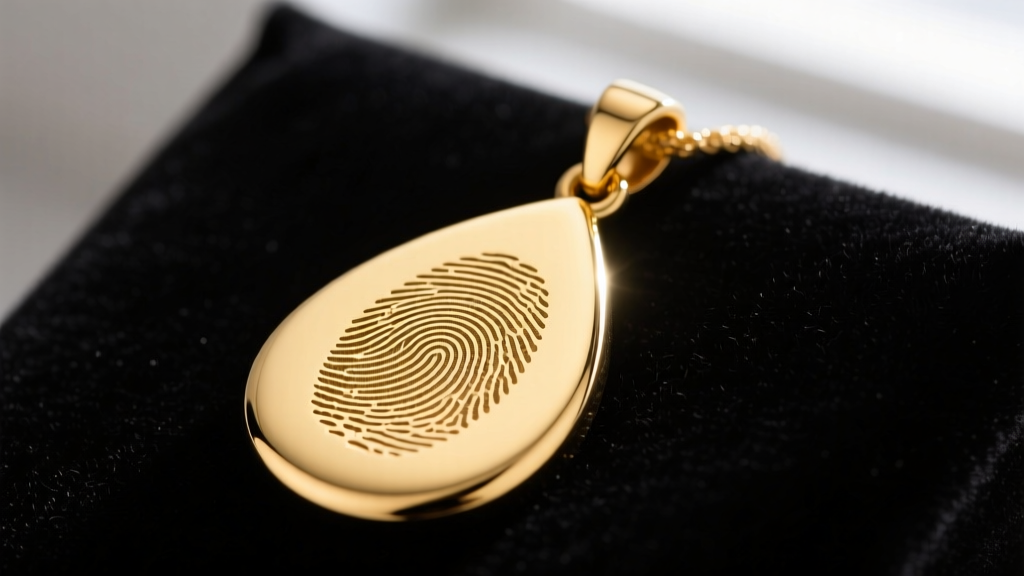
The Emotional Significance of Memorial Fingerprint Jewelry
Losing a loved one is a profound experience that reshapes our daily lives. In the aftermath of grief, finding tangible ways to maintain a connection with those who have passed can be a crucial part of the healing process. Memorial jewelry has long served this purpose, but modern technology has elevated the practice. Choosing a fingerprint necklace for deceased family members or partners offers a deeply intimate, biometric connection that standard engraved text simply cannot replicate. According to grief counselors and resources like the Hospice Foundation of America, tactile reminders—objects you can touch and hold—can provide significant psychological anchoring during acute grieving phases. A fingerprint pendant resting against the collarbone serves as a constant, physical reminder of a unique bond, offering comfort in moments of sorrow.
How to Capture the Print: Ink vs. Digital Scanning
Before selecting the metal or chain, you must secure a high-quality impression of the fingerprint. The clarity of the final engraving is entirely dependent on the resolution of the source image. There are two primary methods for capturing this data:
Traditional Ink Impressions
Using a specialized archival ink pad and smooth, heavy-weight paper, press the finger firmly but evenly. Avoid rolling the finger, which distorts the ridges. Once captured, the paper must be scanned at a minimum of 600 DPI (dots per inch) to ensure the micro-ridges and whorls are sharply defined for the jeweler's laser software.
Digital Biometric Scanning
Many modern memorial jewelers now accept high-resolution smartphone photographs or digital scans from funeral homes. If using a smartphone, ensure the camera lens is macro-capable, use natural, diffused lighting to prevent harsh shadows in the fingerprint grooves, and hold the phone perfectly parallel to the finger. Digital files should be saved in lossless formats like PNG or TIFF, never compressed JPEGs, to preserve ridge integrity.
Engraving Techniques: Laser vs. Chemical Etching
Not all engravings are created equal. When commissioning a fingerprint necklace for deceased loved ones, the method used to transfer the image onto the metal dictates both the aesthetic contrast and the longevity of the piece.
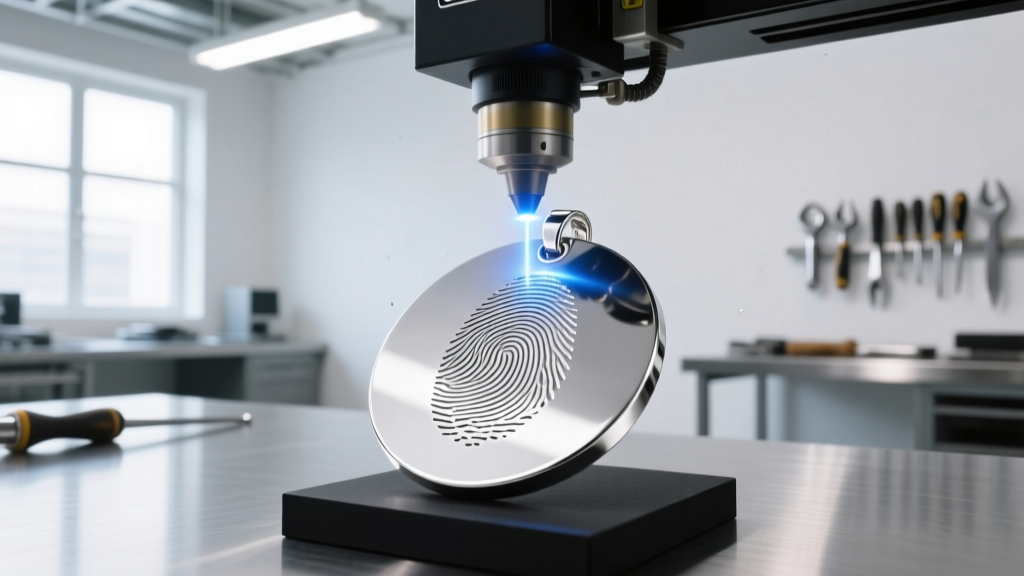
Fiber Laser Engraving (The Industry Standard)
Fiber lasers operate at a 1064 nm wavelength, which is ideal for marking metals. This technique physically alters the surface of the metal, creating a permanent, high-contrast mark. A quality fiber laser will etch to a depth of 0.2mm to 0.5mm. This depth is critical; anything shallower risks wearing away from years of friction against clothing and skin. Lasers can also achieve grayscale shading, capturing the subtle valleys and peaks of the fingerprint ridges with photographic realism.
Chemical Etching
Chemical etching uses an acid bath to bite into the metal through a resist stencil. While effective for deep, bold lines, it struggles with the microscopic nuances of a fingerprint. The result is often a high-contrast, binary (black and white) image that lacks the three-dimensional depth of laser engraving. For memorial pieces where detail is paramount, laser engraving is vastly superior.
Material Grades and Durability for Everyday Wear
Memorial necklaces are typically worn daily, meaning the metal must withstand exposure to sweat, cosmetics, and environmental pollutants. The Federal Trade Commission Jewelry Guides strictly regulate metal stamping, ensuring you get the purity you pay for. Here is a breakdown of the best metals for memorial pendants:
- 316L Surgical Stainless Steel: Highly resistant to tarnish and corrosion. It is hypoallergenic and provides excellent contrast for laser engravings. Ideal for those on a budget or with active lifestyles.
- 925 Sterling Silver: Composed of 92.5% pure silver and 7.5% copper. It offers a brilliant, reflective canvas for fingerprints but requires occasional polishing to remove tarnish caused by the copper alloy.
- 14k Solid Gold (Yellow, White, or Rose): Containing 58.5% pure gold, 14k is the sweet spot for jewelry. It is durable enough to resist scratching and denting, unlike softer 18k or 24k gold, while retaining the intrinsic value and prestige of a precious metal.
- Grade 5 Titanium (Ti-6Al-4V): Exceptionally lightweight and completely hypoallergenic. Titanium yields a striking, bright white contrast when laser-engraved, though it cannot be easily resized or repaired by traditional jewelers if damaged.
Sizing, Chain Types, and Clasp Security
The pendant is only half of the equation; the chain must be engineered to support it securely. A common failure mode in sentimental jewelry is a weak chain snapping, leading to the devastating loss of the irreplaceable pendant.
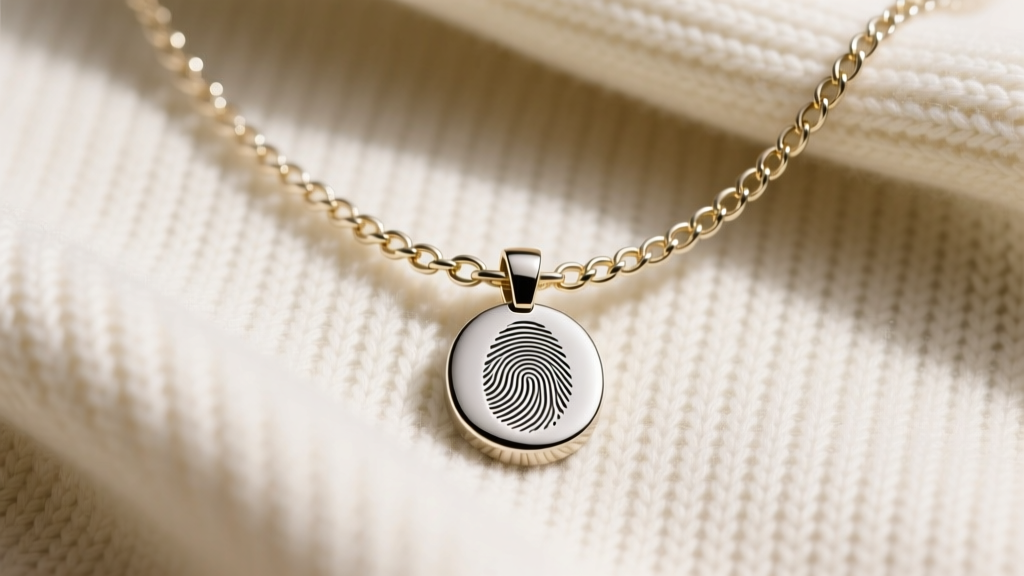
Chain Gauge and Style
For pendants weighing between 3 and 8 grams, a chain gauge of 1.2mm to 1.5mm is required. Avoid delicate 0.8mm chains, which are prone to kinking and snapping under tension. In terms of style, Rolo chains (featuring uniform, interlocking round links) and Cable chains offer the best structural integrity. Avoid box chains, as their folded-metal construction can easily crush and weaken if bent.
Clasp Mechanics
Never use a spring-ring clasp for a priceless memorial pendant. The internal coil springs in these clasps are notoriously weak and prone to failing over time. Always opt for a lobster clasp or a magnetic locking clasp, which provide a secure, positive lock that will not accidentally open if the chain is snagged on clothing.
Sympathy Gift Etiquette: When and How to Give
Gifting a fingerprint necklace for deceased loved ones requires immense tact and emotional intelligence. Timing is everything. Presenting such a deeply personal gift immediately at the funeral or wake can be overwhelming for the bereaved, who are already inundated with condolences and floral arrangements.
The Ideal Window: The most appropriate time to gift memorial jewelry is typically 4 to 8 weeks after the passing, once the initial shock has subsided and the quiet reality of the loss sets in. Alternatively, gifting the piece on a significant milestone—the deceased's birthday, the first holiday season without them, or the one-year anniversary of their passing—provides a profound source of comfort when grief often resurfaces most acutely.
Presentation: Include a handwritten note explaining why you chose the specific piece and acknowledging the unique bond they shared with the deceased. Avoid overly ornate packaging; a simple, elegant wooden or velvet presentation box conveys respect and solemnity.
Comparison Chart: Top Metals for Memorial Necklaces
| Metal Grade | Durability & Tarnish Resistance | Engraving Contrast | Average Price Range (Pendant Only) |
|---|---|---|---|
| 316L Stainless Steel | Excellent / Will not tarnish | High (Darkened via oxidation) | $45 - $90 |
| 925 Sterling Silver | Good / Requires occasional polishing | Medium-High (Oxidized grooves) | $80 - $150 |
| 14k Solid Yellow Gold | Very Good / Highly tarnish resistant | Medium (Subtle matte contrast) | $250 - $600+ |
| Grade 5 Titanium | Excellent / Scratch resistant | Very High (Bright white mark) | $60 - $120 |
Caring for Engraved Memorial Pendants
To ensure the fingerprint engraving lasts for generations, proper maintenance is essential. The grooves created by the laser can trap dead skin cells, lotions, and environmental dust, which can dull the contrast of the print over time.
Cleaning Protocol: Use a soft-bristled baby toothbrush and a mild, phosphate-free dish soap mixed with warm water. Gently brush the engraved surface in a circular motion to lift debris from the microscopic ridges. Rinse thoroughly and pat dry with a microfiber cloth.
What to Avoid: Never use ultrasonic jewelry cleaners on laser-engraved pieces. The high-frequency acoustic cavitation bubbles can aggressively strip away the darkened oxidation that provides contrast in the fingerprint grooves, leaving the print looking faded and washed out. Similarly, avoid harsh chemical silver dips, which can cause irreversible discoloration to the etched areas.
Final Thoughts on Memorializing a Legacy
Selecting a fingerprint necklace for deceased loved ones is more than a jewelry purchase; it is an act of preserving a physical legacy. By prioritizing high-resolution capture methods, opting for deep fiber-laser engraving, and selecting a durable metal and secure chain, you ensure that this intimate keepsake will endure as a lasting testament to a life well-lived and a bond that transcends time.


