The Fishing Hook Necklace: 2026 Coastal Trend Guide
Discover how the fishing hook necklace evolved into a 2026 high-fashion staple. Explore metal grades, hook silhouettes, and expert layering techniques.

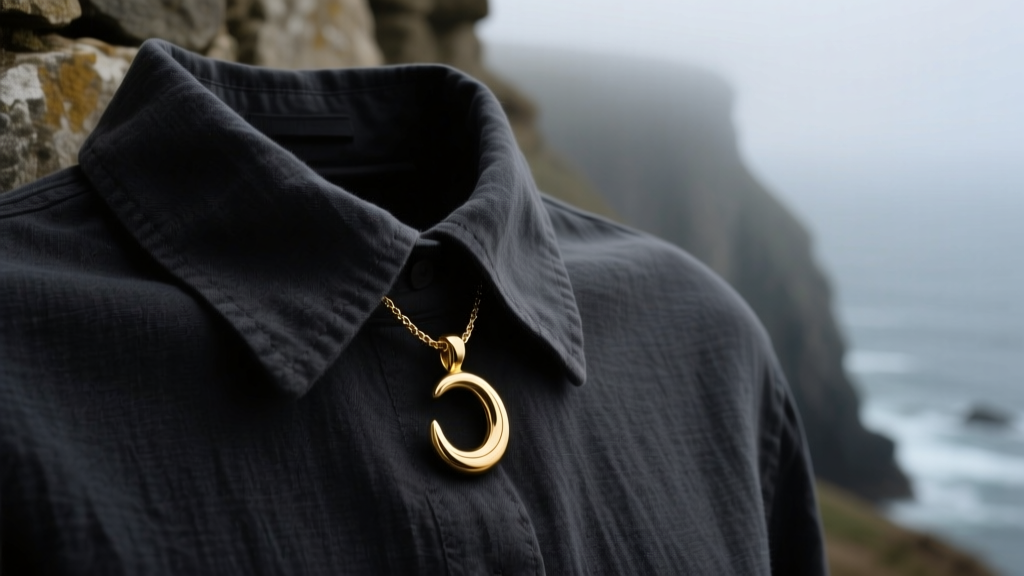
The fishing hook necklace has completely shed its early-2010s surf-shop reputation. In 2026, it stands as a cornerstone of the "dark nautical" and "elevated coastal" aesthetics, bridging the gap between rugged maritime heritage and refined, minimalist jewelry design. No longer just a novelty piece for beach vacations, the modern hook pendant is an exercise in sculptural metalwork, demanding careful consideration of metallurgy, proportion, and chain mechanics. Whether you are navigating the fine jewelry market or exploring artisan silversmiths, understanding the anatomy of this trend is critical for building a versatile, water-resistant wardrobe.
The 2026 Style Shift: From Surf Casual to Dark Nautical
Over the past decade, coastal fashion has bifurcated. On one end, the "quiet coastal" movement favors understated, high-polish 14k gold pieces that mimic sunlight on water. On the other, the "dark nautical" trend embraces oxidized metals, heavy textures, and motifs inspired by deep-sea commercial fishing and antique maritime tools. The fishing hook necklace thrives in both camps, provided the silhouette and finish are correctly matched to the wearer's aesthetic. According to trend forecasts analyzed by Vogue, maritime motifs in 2026 are leaning heavily into historical accuracy and weighty, tactile finishes rather than the hollow, mass-produced charms of the past.
Metallurgy and Marine Environments: Choosing Your Alloy
If you intend to wear your hook necklace in actual saltwater or high-humidity coastal environments, material selection is not just an aesthetic choice—it is a structural necessity. Saltwater is highly corrosive and will rapidly degrade inferior alloys.
- 316L Marine-Grade Stainless Steel: The inclusion of molybdenum in 316L steel provides exceptional resistance to pitting and crevice corrosion in chloride environments (like seawater). It is the ultimate utilitarian choice for daily surfers, though it lacks the prestige and resale value of precious metals.
- 925 Sterling Silver: While beautiful, standard sterling silver (92.5% silver, 7.5% copper) will tarnish rapidly when exposed to salt and sulfur. To combat this, premium 2026 designs utilize thick rhodium plating over the silver, creating an inert barrier. As noted by the Gemological Institute of America (GIA), proper care and immediate rinsing in fresh water after ocean exposure are mandatory to prevent permanent silver sulfide staining.
- 14k and 18k Solid Gold: The gold standard for luxury coastal jewelry. 14k gold (58.5% pure gold) offers a superior strength-to-weight ratio compared to 18k, making it less prone to bending if the hook snags on clothing. White gold requires rhodium dipping, whereas yellow and rose gold maintain their integrity indefinitely in saltwater.
- Avoid Gold-Plated Brass: Often sold in the $20–$40 range, brass cores will undergo galvanic corrosion when the thin gold plating wears off in saltwater, resulting in structural failure and severe skin discoloration.
Hook Silhouettes and Proportions
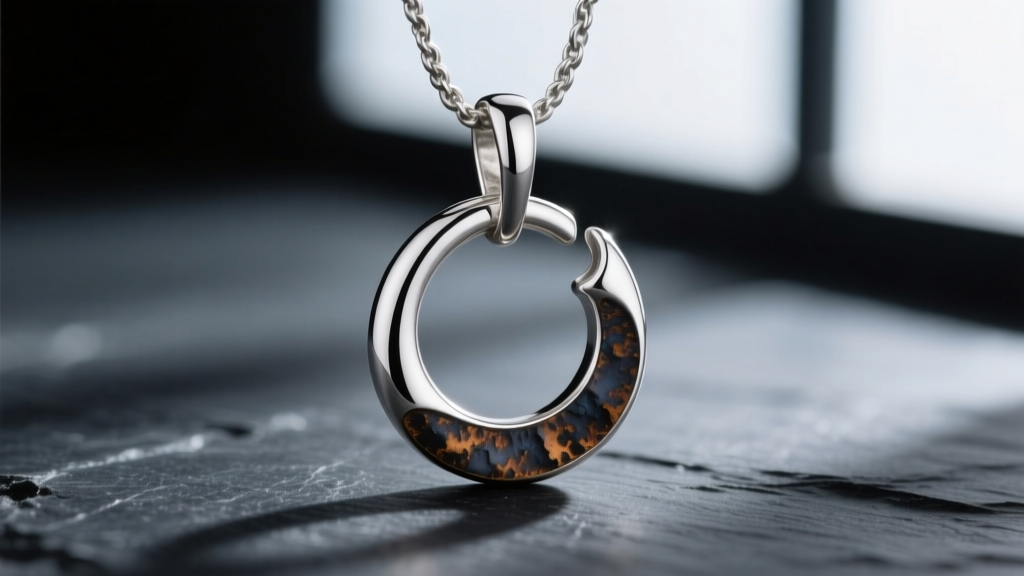
The term "fishing hook" encompasses several distinct shapes, each carrying a different visual weight and styling application. Selecting the right silhouette depends on your neckline and layering strategy.
| Hook Type | Silhouette & Vibe | Ideal Length (mm) | Best Chain Pairing |
|---|---|---|---|
| Classic J-Hook | Traditional, elongated curve with a sharp barb. Rugged and heritage-focused. | 35mm - 50mm | 3.0mm - 4.5mm Oxidized Rope Chain |
| Circle Hook | Continuous, almost circular loop with an inward-pointing tip. Minimalist and modern. | 20mm - 30mm | 1.5mm - 2.0mm High-Polish Box Chain |
| Treble Hook | Three-pronged, aggressive geometry. Edgy, streetwear-adjacent, high visual impact. | 25mm - 35mm | 2.5mm Cuban Link or Figaro Chain |
| Aberdeen | Long shank, wide bend, delicate wire gauge. Elegant, vintage, and lightweight. | 40mm - 60mm | 1.0mm - 1.5mm Delicate Cable Chain |
Chain Pairings and Bail Mechanics
A common failure point in hook necklaces is the bail—the loop that connects the pendant to the chain. Many mass-market hooks use a simple open jump ring soldered to the top of the shank. Under tension, or if snagged, these can pull apart. For a piece meant to endure active coastal lifestyles, look for a solid cast bail or a seamless soldered tube bail integrated directly into the hook's design.
Furthermore, the inner diameter (ID) of the bail must be mathematically matched to your chain. A 3mm rope chain requires a bail with an absolute minimum ID of 4.5mm to allow the chain to lay flat and prevent the clasp from getting stuck inside the bail. If you prefer a heavy, 5mm maritime rope chain, you must source a hook pendant with an oversized, custom-forged bail, often found only through bespoke silversmiths.
Advanced Layering Frameworks
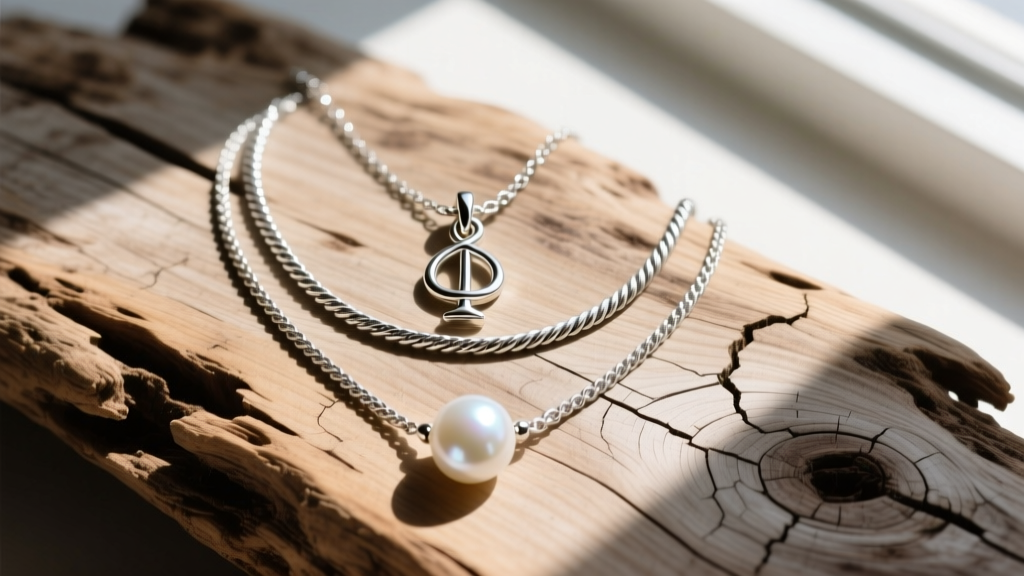
Wearing a fishing hook necklace in isolation can sometimes skew too casual or costume-like. The 2026 approach relies on strategic layering to integrate the hook into a broader, sophisticated jewelry narrative. We recommend the 2-1-3 Framework:
- The Anchor (16-18 inches): Start with a simple, unadorned chain or a small, smooth bezel-set gemstone (like a black onyx or lapis lazuli cabochon) to establish a baseline near the collarbone.
- The Focal Point (20-22 inches): This is where your fishing hook necklace sits. A 40mm J-hook in oxidized silver resting on the upper chest creates a striking visual anchor without interfering with shirt collars.
- The Terminator (24-26 inches): Finish with a heavier, textural piece, such as a raw pearl pendant, a compass rose, or a simple heavy-gauge signet link, to draw the eye downward and elongate the torso.
Pricing Tiers and Market Benchmarks
Understanding the pricing landscape prevents overpaying for plated base metals masquerading as solid precious metals. In the current 2026 market, expect the following tiers:
- Fast Fashion / Base Metal ($15 - $45): Typically brass or zinc alloy with thin electroplating. High risk of tarnish and skin irritation. Acceptable only for temporary, seasonal wear.
- Artisan / Mid-Tier ($80 - $250): The sweet spot for 925 sterling silver and 316L steel. These pieces feature hand-finished textures, secure soldered bails, and accurate maritime proportions. Brands in this tier often use lost-wax casting for intricate details.
- Fine Jewelry / Heritage ($400 - $1,500+): Solid 14k or 18k gold, often accented with genuine diamonds or sapphires set into the hook's eyelet. These are investment pieces meant to be passed down, offering complete immunity to saltwater corrosion.
Maintenance: Embracing or Erasing Patina
If you choose an un-plated sterling silver hook, you have two stylistic paths. You can maintain a high-polish "yacht club" shine using a microfiber cloth and specialized silver dips, or you can lean into the "dark nautical" aesthetic by intentionally accelerating oxidation. Jewelers use liver of sulfur to force a deep, blackened patina into the crevices of the hook, highlighting the metal's texture and giving it an authentic, relic-like appearance. If you choose the latter, simply polish the high-contact edges with a jeweler's cloth to create a striking two-tone contrast that mimics decades of wear at sea.


