Troubleshooting Gold Necklace Chain Types: Breaks, Tangles & Fixes
Discover expert troubleshooting for gold necklace chain types. Learn how to fix breaks, prevent tangles, and match chain strength to pendants.

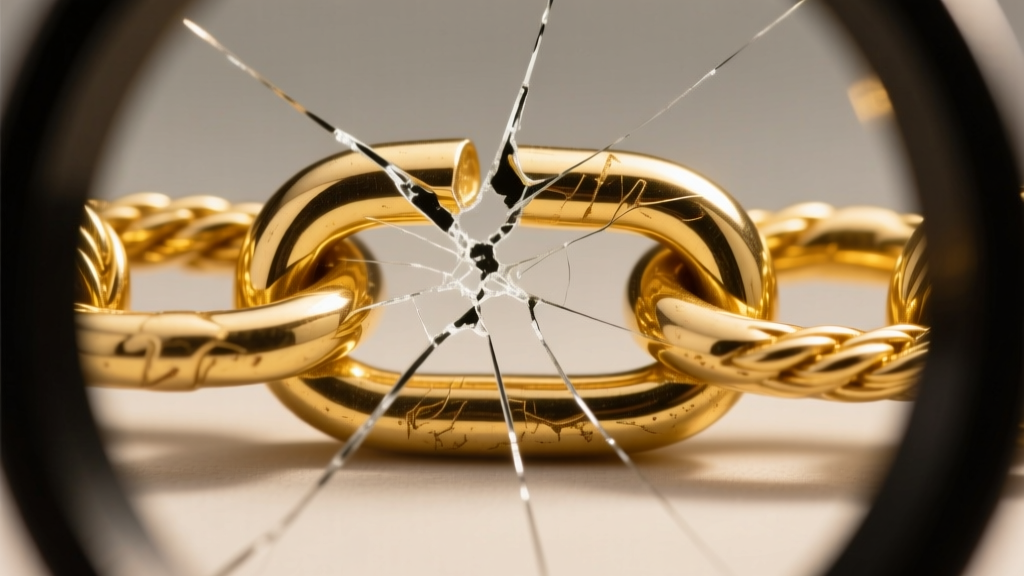
The Anatomy of Chain Failure: Why Gold Necklaces Break
There are few things more frustrating than feeling the sudden, weightless snap of a beloved necklace. To effectively troubleshoot gold necklace chain types, you must first understand the metallurgy of gold itself. Pure 24-karat gold has a Vickers hardness of roughly 25, making it far too malleable for daily wear. It will stretch, deform, and eventually snap under the weight of even a light pendant. This is why jewelers alloy gold with metals like copper, silver, and zinc.
According to the Gemological Institute of America (GIA), 14k gold (58.3% pure gold) boasts a Vickers hardness of approximately 140, making it the undisputed champion for structural integrity in chain manufacturing. Conversely, 18k gold (75% pure) sits around 125 on the Vickers scale. While 18k offers a richer, warmer hue, its softer alloy matrix means that intricate links—like those found in box or wheat chains—are highly susceptible to crushing and micro-fractures over time. If you are experiencing frequent breakage, check your hallmark. An 18k or 22k chain worn daily with a heavy pendant is a structural failure waiting to happen.
Diagnosing Tangles and Knots by Gold Necklace Chain Types
Tangling is not merely an annoyance; it is a mechanical flaw dictated by link geometry. When evaluating different gold necklace chain types, the surface area and friction points determine how easily they knot. Flat chains, such as Herringbone and Snake, lay flush against the skin but act like a series of overlapping scales. When bent backward against their natural articulation, the links catch on one another, creating severe, sometimes permanent kinks.
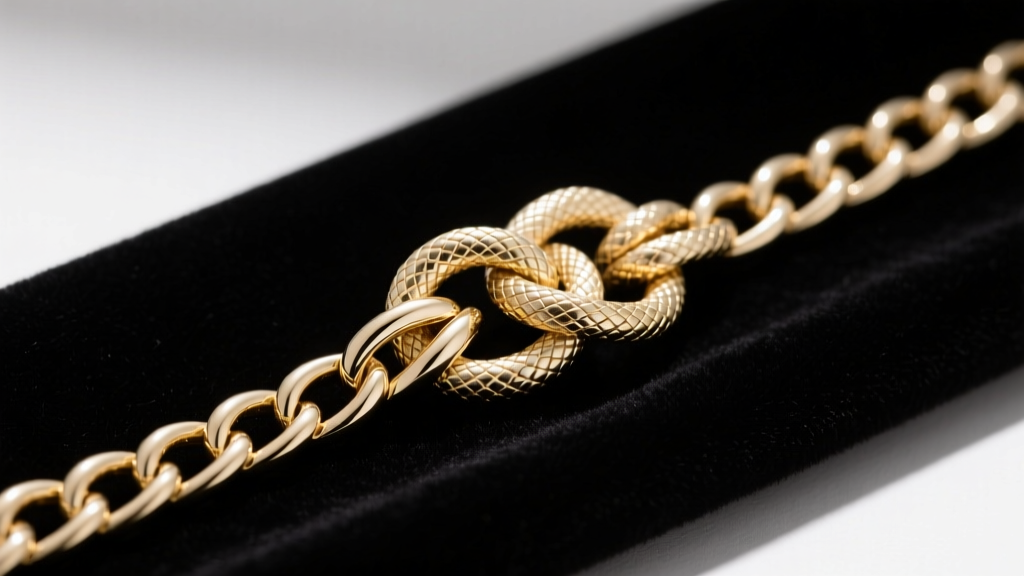
On the other hand, Cable and Curb chains feature symmetrical, interlocking oval links that naturally lay flat and resist catching. If you are battling a severe knot in a delicate rope or snake chain, do not pull. Pulling tightens the friction lock. Instead, lay the chain on a smooth glass surface, apply a drop of mineral oil or baby powder to reduce friction, and use two fine sewing needles to gently coax the center of the knot outward. The Jewelers of America explicitly recommends this dry-lubricant method to prevent link deformation during untangling.
Matching Chain Strength to Pendant Weight (Troubleshooting Guide)
The most common reason for a chain snapping at the bail (the loop holding the pendant) is a mismatch in tensile strength and load distribution. A heavy, solid gold medallion will act like a pendulum, generating kinetic force that concentrates entirely on the single weakest link at the center of the chain. Below is a technical troubleshooting matrix to help you diagnose and prevent load-bearing failures.
| Chain Type | Tensile Durability | Tangle Risk | Max Pendant Weight | Repair Difficulty |
|---|---|---|---|---|
| Wheat (Spiga) | Very High | Low | Up to 25 grams | Moderate |
| Curb / Cuban | High | Very Low | Up to 20 grams | Easy |
| Rope | Moderate-High | Moderate | Up to 15 grams | Difficult |
| Box | Moderate | Low | Up to 10 grams | Difficult |
| Snake | Low (Prone to Kinking) | Very High | Under 5 grams | Nearly Impossible |
As noted by technical jewelry suppliers like Rio Grande, rope chains are particularly deceptive. While they look thick and robust, their twisted-link structure means that if a single solder joint fails, the entire chain can rapidly unravel. Always pair heavy pendants with Wheat or Curb chains, which distribute kinetic energy across multiple interlocking planes.
Clasp Malfunctions: The Weakest Link in Your Gold Chain
If your necklace keeps slipping off, the issue rarely lies with the chain itself, but rather the clasp mechanism. Spring ring clasps—the small circular ones with a tiny lever—rely on an internal steel spring. Over time, exposure to lotions, sweat, and heat causes this spring to fatigue or corrode, resulting in a lever that fails to snap shut completely.
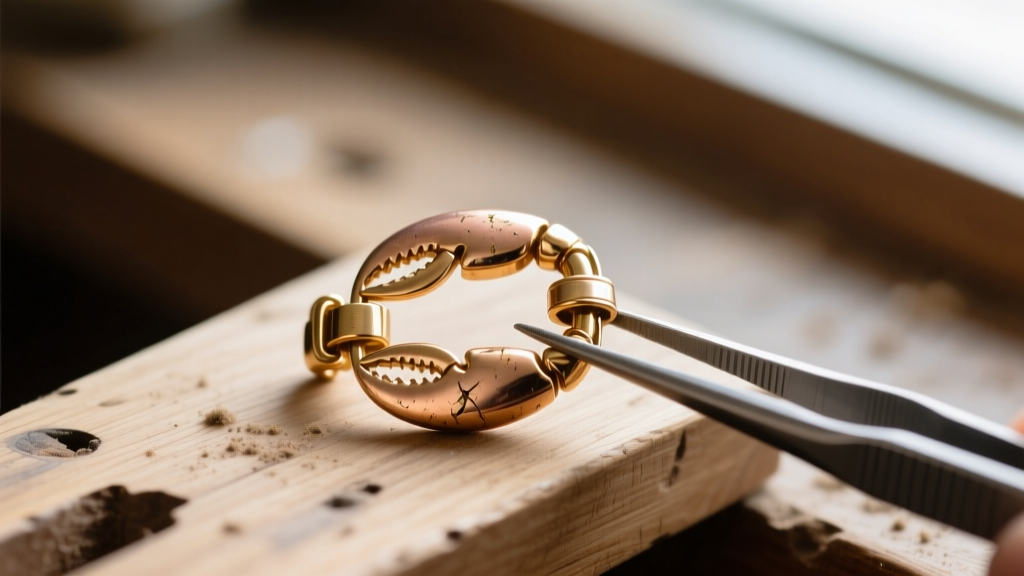
To troubleshoot this, perform the 'catch test': hook the clasp to the jump ring and give it a gentle, sharp tug. If the lever pulls away from the housing by even a millimeter, the internal tension is gone. Upgrade to a Lobster clasp, which features a solid gold or platinum internal spring mechanism and a wider, more secure jaw. For chains over 20 inches, consider adding a secondary safety catch—a tiny figure-8 wire loop that bridges the jump ring and the clasp housing, providing a backup if the primary mechanism fails.
Step-by-Step Repair: When to DIY and When to See a Jeweler
Knowing when to attempt a repair and when to hand it over to a professional is crucial for preserving the value of your jewelry. If a simple jump ring at the clasp has pulled open, you can carefully squeeze it closed using two pairs of flat-nose pliers. Never pull the ring apart laterally; always twist the ends in opposite directions to maintain the perfect circle.
However, if the chain links themselves have snapped, professional intervention is mandatory. Traditional torch soldering uses a gold alloy solder that melts at a lower temperature than the chain. While effective for Curb or Cable chains, torch soldering can melt the intricate, tightly packed links of a Rope or Box chain. For these complex gold necklace chain types, jewelers use laser welding. A laser welder focuses a microscopic beam of light to fuse the exact break point without transferring heat to the surrounding links, preserving the chain's structural integrity and preventing the unsightly 'dark spots' associated with traditional flux and torch soldering.
Preventative Maintenance for Long-Lasting Gold Chains
Troubleshooting is reactive; maintenance is proactive. To extend the lifespan of your gold chains, remove them before sleeping to prevent micro-kinks, and take them off before swimming, as chlorine in pools can chemically attack the copper and zinc alloys in 14k and 18k gold, causing 'stress corrosion cracking.' Store chains individually in soft anti-tarnish pouches or hang them vertically to eliminate gravity-induced tangling. By understanding the mechanical limitations of your specific chain type, you can ensure your necklaces remain both beautiful and structurally sound for decades.


