Why Your 14k Gold Chain Necklace Keeps Breaking and How to Fix It
Is your 14k gold chain necklace snapping or tangling? Discover the structural reasons behind chain failure and expert troubleshooting steps to fix it.

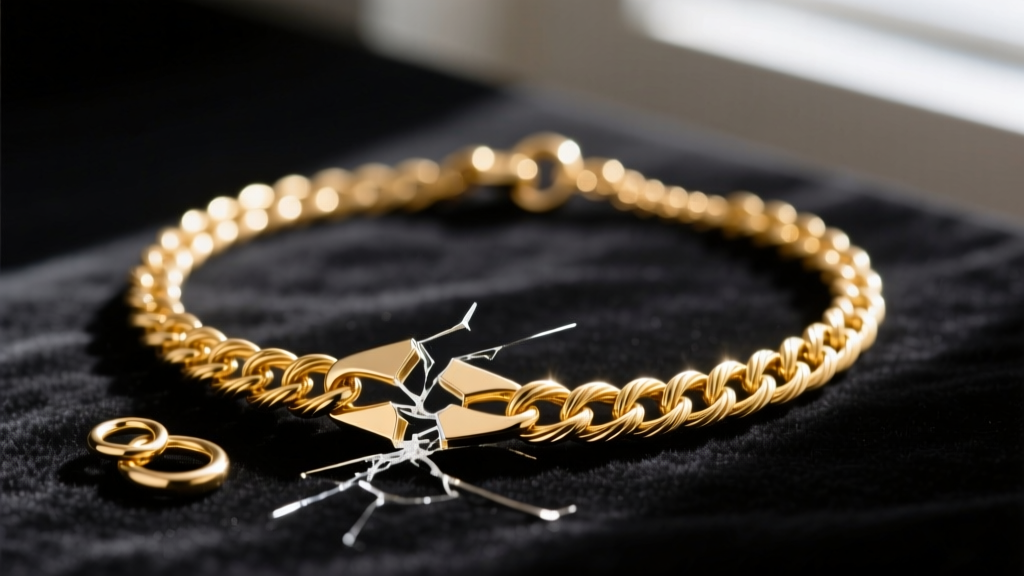
There are few things more frustrating in jewelry ownership than hearing the faint snap of a beloved necklace giving way. While 14k gold is celebrated for its perfect balance of rich color and everyday durability, a 14k gold chain necklace is still susceptible to mechanical failure, metal fatigue, and structural weaknesses. If your favorite piece keeps breaking, tangling, or stretching, the issue rarely lies in the gold itself. Instead, the culprit is usually hidden in the chain's geometry, the clasp mechanics, or improper weight distribution.
In this comprehensive troubleshooting guide, we will dissect the exact reasons why 14k gold chains fail and provide actionable, expert-level solutions to repair and reinforce your jewelry for long-term wear.
The Anatomy of Chain Failure: Why 14k Gold Snaps
To troubleshoot a broken chain, you must first understand the metallurgy of 14k gold. According to the Gemological Institute of America (GIA), 14k gold consists of 58.5% pure gold and 41.5% alloy metals (typically copper, silver, and zinc). This alloy mix makes 14k gold significantly harder and more scratch-resistant than 18k or 24k gold. Therefore, when a 14k gold chain necklace breaks, it is almost never due to the metal being 'too soft.'
Instead, failures occur at stress concentration points:
- The Jump Ring: The tiny circle connecting the chain to the clasp. If the jump ring is not soldered shut, it can easily pull apart under tension.
- The Clasp Mechanism: Internal springs in standard clasps are often made of steel, which can rust or lose tension, causing the gold exterior to fail.
- Link Friction Points: Where individual links rub against each other, gradual metal thinning occurs over years of wear, eventually leading to a snap.
Troubleshooting Common 14k Gold Chain Necklace Issues
Issue 1: The Chain Keeps Breaking at the Clasp
If your necklace consistently snaps right at the end, the problem is your clasp assembly. Most mass-market chains come equipped with a standard spring-ring clasp and a thin, unsoldered jump ring. When you pull the chain (or if it gets caught on a sweater), the unsoldered jump ring acts as a weak link, pulling open and releasing the clasp entirely.
The Fix: Take the necklace to a jeweler and request a lobster claw clasp upgrade paired with a soldered jump ring. Ensure the jeweler uses a jump ring that matches or exceeds the wire gauge of the chain itself (typically 18-gauge or 1.0mm thickness for medium chains). A soldered jump ring requires a physical cut to open, making it virtually impossible to pull apart under normal tension.
Issue 2: Micro-Tangles in Delicate Links
Delicate 14k gold chains, particularly cable and box chains under 1.0mm in thickness, are notorious for forming microscopic knots. This happens when the links twist and catch on one another, often exacerbated by sleeping in the necklace or storing it loosely in a drawer.
The Fix: Never pull a tangled 14k gold chain, as this will warp the links and weaken the metal. Instead, lay the chain flat on a hard surface. Dust the knot lightly with talcum powder or cornstarch to eliminate friction. Using two fine-tipped sewing pins or specialized jeweler's tweezers, gently work the center of the knot outward. The powder allows the microscopic gold links to slide past one another without catching.
Issue 3: Links Stretching and Warping
Chains like the Herringbone or flat Rope are beautiful but structurally vulnerable. Because their links lie completely flat, they lack the 360-degree flexibility of a cable chain. If a herringbone chain is bent sharply (a 'kink'), the structural integrity of that specific section is permanently compromised, leading to stretching and eventual snapping.
The Fix: Unfortunately, you cannot 'un-kink' a herringbone chain at home without risking a total break. A master jeweler can sometimes use a rolling mill to gently compress and realign the links, but if the metal has thinned, the section must be cut out and laser-welded back together.
Chain Link Durability Comparison Chart
Not all 14k gold chain necklaces are created equal. The weave pattern dictates the chain's tensile strength, repairability, and resistance to daily wear. Use this chart to evaluate your current chain or choose a more durable replacement.
| Chain Style | Durability Rating | Tangle Resistance | Repair Difficulty | Best Use Case |
|---|---|---|---|---|
| Cable / Link | High | Medium | Easy | Everyday wear, lightweight pendants |
| Curb / Cuban | Very High | High | Medium | Heavy pendants, standalone statement pieces |
| Box | Medium-High | Very High | Medium | Geometric pendants, modern aesthetics |
| Rope (Solid) | High | Low | Hard | Heavy pendants, luxurious layering |
| Herringbone | Low | High (but kinks) | Very Hard | Occasional wear, collarbone-length chokers |
DIY vs. Professional Repair: When to Call a Jeweler
When your 14k gold chain necklace breaks, the immediate question is whether you can fix it yourself. As a general rule of thumb from Jewelers of America, any repair requiring heat or structural reshaping should be left to professionals to avoid irreversible damage to the gold alloy.
Traditional Torch Soldering vs. Laser Welding
Historically, jewelers repaired broken gold chains using a micro-torch and gold solder. However, torch soldering requires heating a large area of the chain, which can melt nearby delicate links, alter the color of the 14k gold (due to fire scale), and leave a visible, brittle seam.
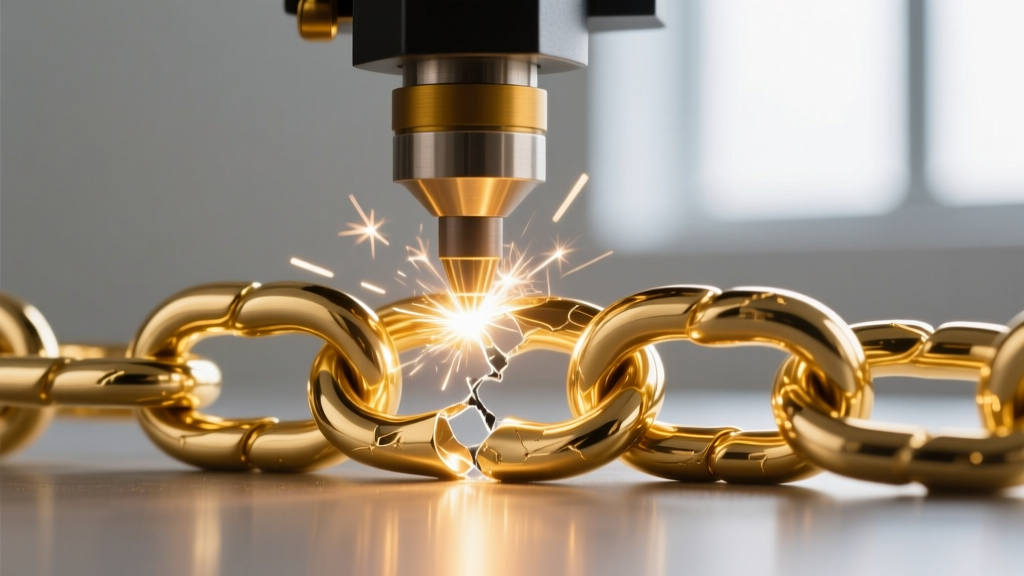
Today, the industry standard for high-quality chain repair is laser welding. A laser welder uses a highly focused, microscopic pulse of light to fuse the broken 14k gold link back together.
Expert Insight: 'Laser welding allows us to repair a 14k gold chain right next to a heat-sensitive gemstone or a delicate hollow link without transferring heat to the surrounding metal. We use a filler wire that perfectly matches the 14k alloy, making the repair virtually invisible and restoring up to 95% of the original tensile strength.' — Master Bench Jeweler
Cost Expectations: In 2026, you can expect to pay between $45 and $85 for a standard laser weld on a solid 14k gold chain. Hollow chains or complex rope weaves may cost upwards of $125 due to the time required to prep the microscopic links under a microscope.
Preventative Maintenance for Longevity
Troubleshooting is essential, but prevention is the hallmark of a savvy jewelry collector. To ensure your 14k gold chain necklace survives decades of wear, adhere to these structural guidelines:
1. The Pendant-to-Chain Weight Ratio
The most common cause of chain failure is pairing a heavy pendant with a delicate chain. A good rule of thumb is the 1:3 ratio. Your chain should weigh at least three times as much as the pendant it holds. If you have a 5-gram gold pendant, your 14k gold chain should weigh a minimum of 15 grams and have a thickness of at least 1.5mm to withstand the kinetic friction of the pendant sliding back and forth.
2. Proper Storage to Prevent Metal Fatigue
Never ball up your chains or toss them loosely into a jewelry box. The constant friction of gold rubbing against gold in a confined space causes micro-abrasions. Store your 14k gold chains hanging vertically on a jewelry stand, or lay them completely flat and extended in a soft-lined drawer. If traveling, thread the chain through a plastic drinking straw and clasp it to prevent tangling and bending during transit.
3. Routine Chemical Avoidance
While 14k gold is highly resistant to tarnish, the alloy metals (specifically copper and silver) can react to harsh chemicals. Chlorine in swimming pools and hot tubs is the ultimate enemy of 14k gold. It attacks the alloy metals, causing a phenomenon known as 'stress corrosion cracking,' which makes the chain brittle and prone to snapping without warning. Always remove your necklace before swimming or using harsh household cleaning agents.
By understanding the mechanical limits of your jewelry and addressing weak points before they fail, your 14k gold chain necklace will remain a secure, beautiful staple in your collection for a lifetime.


