Silver Mens Cross Necklace: 2026 Trend & Style Guide
Discover 2026 trends for the silver mens cross necklace. Explore chain pairings, silver grades, pendant weights, and styling tips for modern menswear.

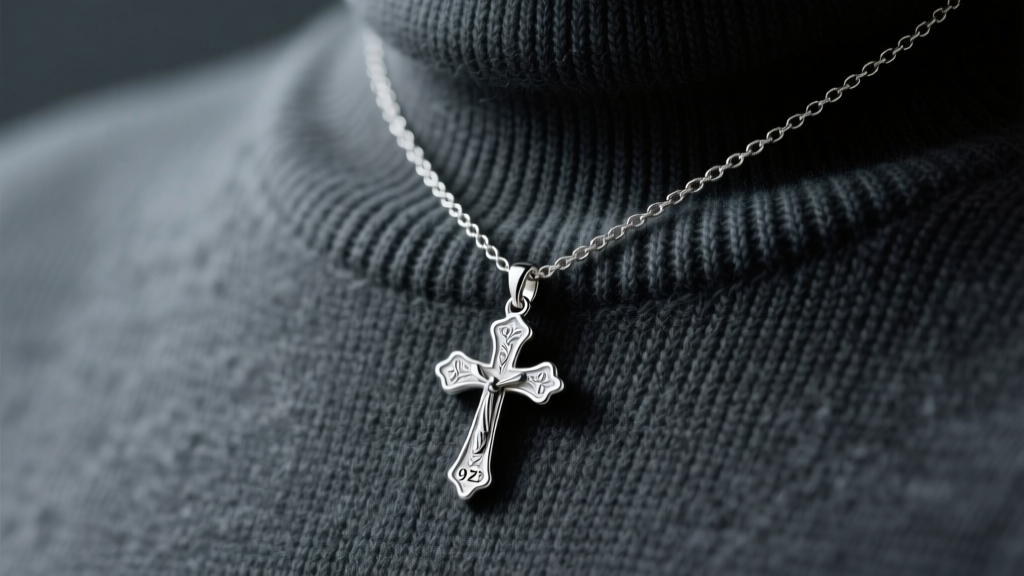
The Evolution of the Silver Mens Cross Necklace in 2026
The silver mens cross necklace has undergone a significant metamorphosis over the last decade, transitioning from a purely traditional or religious emblem into a cornerstone of contemporary menswear. As we navigate the style landscape of 2026, the cross pendant is no longer confined to the maximalist hip-hop aesthetics of the early 2000s or the subcultural goth movements of the 2010s. Today, it serves as a versatile anchor piece that bridges the gap between rugged utilitarianism and refined minimalism. Whether cast in raw, unpolished textures or machined to a mirror finish, the modern cross is defined by its proportions, its metallurgical integrity, and how it interacts with the rest of a curated wardrobe.
This comprehensive style and trend analysis breaks down the exact specifications, material grades, and styling frameworks you need to master this timeless accessory in the current era.
Decoding Silver Grades: .925 vs. .950 vs. .999
Not all silver is created equal, and understanding the metallurgy behind your jewelry is critical for daily wear. Pure silver (.999) is exceptionally malleable, boasting a Vickers hardness (HV) of roughly 25. While it offers the highest luster, a .999 fine silver cross will dent, scratch, and warp under the minor impacts of daily life. To counter this, jewelers alloy silver with copper or other metals.
The industry standard remains Sterling Silver (.925), comprising 92.5% silver and 7.5% copper. This bumps the Vickers hardness to approximately 60-70 HV, providing the necessary structural integrity for intricate casting and daily friction. However, 2026 has seen a massive surge in Argentium Silver (.935 or .960). By replacing some of the copper with germanium, Argentium offers extreme tarnish resistance while maintaining a brilliant, bright white luster that traditional sterling lacks.
Silver Purity & Durability Chart
| Grade | Composition | Hardness (HV) | Tarnish Resistance | Best Application |
|---|---|---|---|---|
| Fine (.999) | 99.9% Silver | ~25 | High | Display pieces, bezel settings |
| Sterling (.925) | 92.5% Silver, 7.5% Copper | ~65 | Moderate | Standard pendants, heavy chains |
| Argentium (.935) | 93.5% Silver, Germanium | ~75 | Very High | Premium daily wear, low-maintenance |
| Coin (.900) | 90.0% Silver, 10% Copper | ~85 | Low | Vintage reproductions, rugged textures |
Chain Pairings: The Mechanics of the Bail and Link
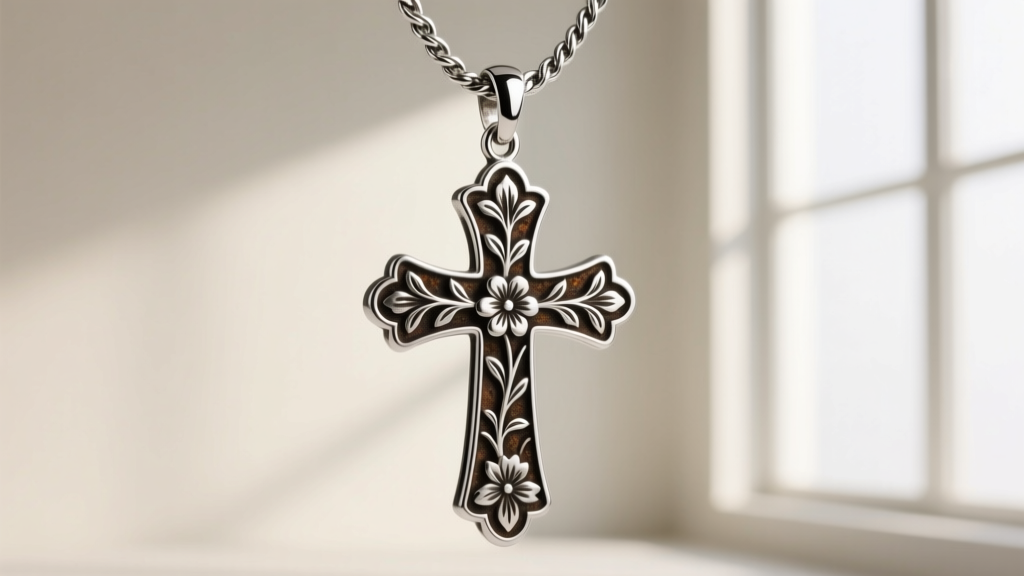
A frequent point of failure in men's jewelry is the mismatch between the pendant's bail (the loop that connects the cross to the chain) and the chain's link profile. The friction caused by a thick chain grinding against a small silver bail will eventually saw through the metal. When selecting a chain for your silver mens cross necklace, you must account for both the inner diameter of the bail and the weight capacity of the link.
- Box Chains (2mm - 3.5mm): The ideal pairing for minimalist, geometric crosses. Box chains lay flat, reflect light uniformly, and possess high tensile strength. A 2.5mm box chain can easily support a 15-gram pendant without stretching.
- Rope Chains (3mm - 5mm): Best suited for ornate, oxidized, or gothic crosses. The twisted links catch the light and complement the intricate detailing of the pendant. Ensure the bail is at least 5mm wide to accommodate a 4mm rope chain.
- Cuban Link Chains (4mm - 8mm): Reserved for heavy, statement-making crosses (25g+). Because Cuban links are rigid, they require a large, reinforced bail. Never force a thick Cuban link through a narrow bail, as the lateral stress will snap the silver loop.
Proportions and Weight: Sizing the Pendant
The visual weight of a cross necklace is dictated by its dimensions and gram weight. In 2026, the trend has bifurcated into two distinct camps: the 'Micro-Architectural' and the 'Brutalist Statement'.
For the minimalist approach, look for crosses measuring between 12mm x 18mm and 18mm x 25mm, typically weighing 3 to 6 grams. These sit perfectly in the suprasternal notch and disappear effortlessly under an unbuttoned collar. Conversely, the brutalist trend favors oversized, raw-cast crosses measuring 40mm x 60mm or larger, with gram weights exceeding 20 grams. These pieces feature hammered textures, matte finishes, and intentionally irregular edges that mimic ancient artifacts.
"The key to pulling off a heavier silver cross is letting the metal's natural oxidation tell a story. A pristine, high-polish 30-gram cross looks like costume jewelry, but a deeply oxidized, matte-finished piece of the same weight looks like a genuine heirloom." — Marcus Thorne, Menswear Accessories Director
Styling Frameworks: Necklines and The 2-Inch Layering Rule
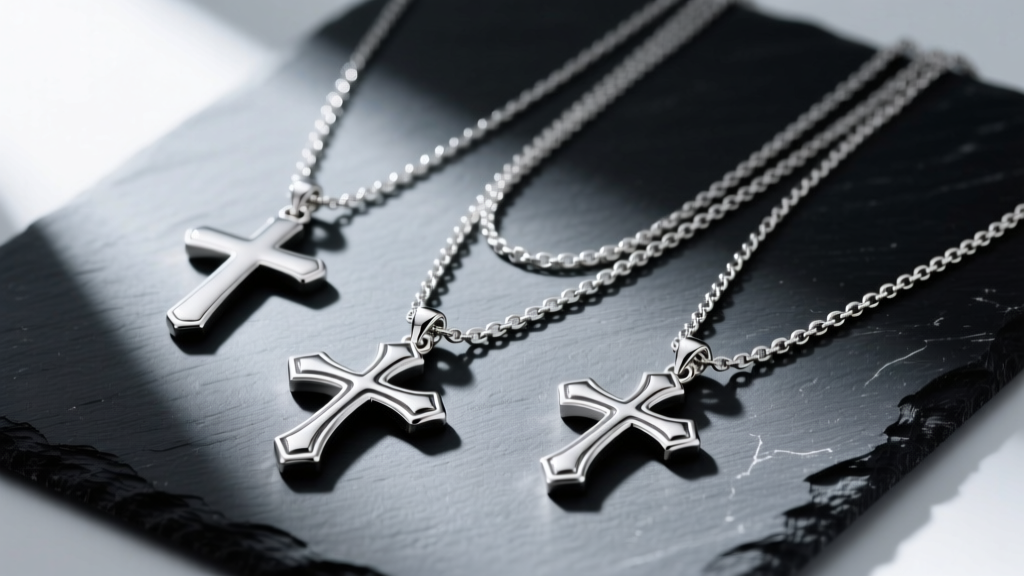
Styling a silver mens cross necklace requires an understanding of neckline geometry and spatial distribution. The cross is inherently a vertical motif, which means it naturally elongates the neck. This makes it the perfect companion for crewnecks and mock necks, as the pendant breaks up the horizontal block of fabric and draws the eye downward. For V-necks or open camp collars, opt for a shorter chain (18 to 20 inches) so the cross rests against the skin rather than getting lost in the fabric folds.
If you are layering the cross with other chains, adhere strictly to the 2-Inch Rule. If your base chain (perhaps a simple silver bead or curb chain) is 20 inches, the chain holding your cross pendant must be at least 22 or 24 inches. This spatial gap prevents the chains from tangling, stops the clasps from scratching the pendants, and ensures each piece is visually distinct. Mixing textures—such as pairing a matte, sandblasted cross on a box chain with a high-polish Figaro chain—creates depth without looking cluttered.
Maintenance: Preserving the Patina
Silver is a reactive metal. The copper in .925 sterling silver reacts with sulfur and moisture in the air to create silver sulfide, commonly known as tarnish. However, how you manage this reaction depends on the style of your cross.
For high-polish, modern crosses, regular maintenance is required to keep the mirror finish intact. According to the Gemological Institute of America (GIA), the safest method for cleaning sterling silver is using a dedicated microfiber polishing cloth impregnated with mild anti-tarnish agents. Avoid liquid dips, as they can be overly abrasive and strip away protective rhodium platings.
Conversely, if you own an oxidized or 'antiqued' cross where the recesses are intentionally blackened to highlight the relief carving, never use ultrasonic cleaners or silver dips. As noted by the jewelry care experts at Jewelers Mutual, harsh chemical baths will strip the intentional patina, leaving you with a flat, grey piece that has lost its three-dimensional contrast. For oxidized pieces, simply wipe the high points gently with a dry, soft-bristled brush or a dry polishing cloth, avoiding the deep grooves.
Final Verdict: Investing in a Timeless Anchor Piece
The silver mens cross necklace remains an indispensable asset in the modern jewelry rotation. By prioritizing structural integrity through proper silver grades like .925 or Argentium, respecting the mechanical relationship between the bail and the chain, and applying deliberate styling frameworks, you elevate a simple pendant into a sophisticated style statement. Whether you lean toward the micro-minimalist aesthetic or the heavy, brutalist trend of 2026, the cross endures as a symbol of both personal conviction and impeccable taste.


