Blood Drip Necklace Materials: Resin vs Glass vs Enamel
Explore the technical anatomy of a blood drip necklace. We compare resin, glass, and enamel materials, chain gauges, and durability for gothic jewelry.

The Anatomy of Alternative Jewelry: Beyond the Novelty
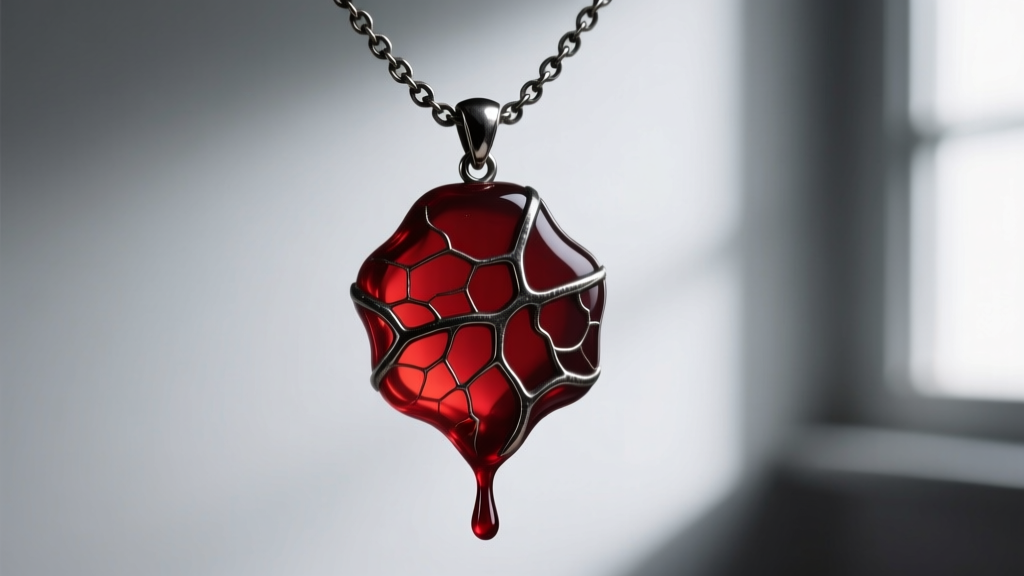
The blood drip necklace has evolved significantly from its origins as a mass-produced, injection-molded plastic novelty into a highly specialized staple of artisanal gothic and alternative jewelry. As of 2026, collectors and enthusiasts of dark fashion demand pieces that offer visceral realism, structural integrity, and long-term wearability. Crafting a high-quality blood drip pendant requires a deep understanding of material science, specifically how different mediums interact with light, skin chemistry, and physical stress.
Whether you are a jeweler looking to refine your craft or a collector seeking an heirloom-grade piece, understanding the technical distinctions between epoxy resin, borosilicate glass, and vitreous enamel is critical. Each material presents unique challenges in pigment suspension, thermal dynamics, and structural mounting. In this expert deep dive, we dissect the engineering and chemistry behind the modern blood drip necklace.
The Core Mediums: Resin, Borosilicate Glass, and Vitreous Enamel
The visual impact of a blood drip pendant relies entirely on the refractive index and translucency of its base material. The three dominant mediums used by professional jewelers today each offer distinct advantages and technical limitations.
1. Jewelry-Grade Epoxy Resin
Resin is the most accessible medium for creating complex, multi-layered drip effects. However, not all resins are suitable for wearable art. Professional jewelers utilize high-viscosity, UV-stable epoxy resins that cure to a Shore D hardness of 80-85. This hardness ensures the pendant resists micro-scratches from daily wear. The critical factor in resin selection is the inclusion of Hindered Amine Light Stabilizers (HALS) and Ultraviolet Absorbers (UVAs). Without these chemical additives, the red pigments suspended in the resin will rapidly degrade, shifting from a vibrant arterial crimson to a muddy brown within months of UV exposure. For a comprehensive breakdown of UV resistance in jewelry resins, refer to the technical guidelines provided by ArtResin.
2. Borosilicate Glass (Lampworking)
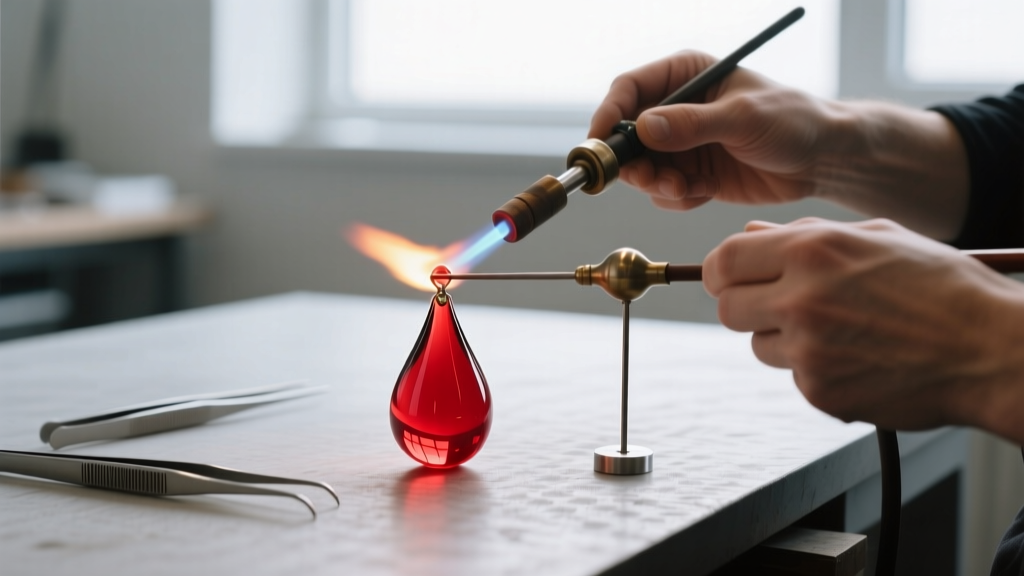
For unparalleled optical clarity and permanence, borosilicate glass is the gold standard. Lampworkers manipulate glass rods with a COE (Coefficient of Expansion) of 33 using specialized torches. The 'blood' effect is achieved by encasing ruby-red glass stringers within a clear borosilicate matrix. Because borosilicate glass is highly resistant to thermal shock and chemical degradation, a glass blood drip necklace will maintain its exact color and brilliance indefinitely. The technical challenge lies in the annealing process; the finished pendant must be slowly cooled in a kiln at approximately 1050°F to relieve internal stresses. Failure to properly anneal the glass will result in spontaneous shattering.
3. Vitreous Enamel on Metal
Vitreous enamel involves fusing powdered glass to a metal substrate (usually fine silver or copper) at temperatures between 1400°F and 1500°F. Creating a 3D 'drip' effect with enamel requires advanced techniques such as champlevé or building up thick layers of plique-à-jour enamel. The resulting piece is essentially a metal framework holding suspended, jewel-toned glass. While incredibly durable and scratch-resistant, enamel is brittle. The technical expertise required to fire enamel without burning the organic red oxides makes this the rarest and most expensive iteration of the blood drip necklace. The Ganoksin Project offers extensive metallurgical data on enamel firing schedules for jewelry applications.
| Material | Shore Hardness / MOHS | UV Stability | Impact Resistance | Average Price Range (Artisan) |
|---|---|---|---|---|
| UV-Stable Epoxy Resin | Shore D 80-85 | High (with HALS/UVAs) | High (Flexible) | $45 - $120 |
| Borosilicate Glass | MOHS 6.0 - 6.5 | Absolute (Inorganic) | Low (Brittle) | $150 - $400+ |
| Vitreous Enamel | MOHS 5.5 - 6.0 | Absolute (Inorganic) | Very Low (Chips easily) | $250 - $800+ |
Chain Metallurgy and Bail Mechanics
A common failure point in alternative jewelry is the hardware. A solid borosilicate glass blood drip pendant can easily weigh between 25 and 45 grams. Suspending this weight requires careful consideration of chain metallurgy and bail engineering.
Optimal Chain Alloys
Standard brass or cheap zinc alloys will quickly corrode when exposed to skin oils and the acidic environment of the décolletage. For a 2026-standard gothic necklace, the chain must be forged from one of the following:
- 316L Surgical Stainless Steel: Contains molybdenum for enhanced corrosion resistance. Ideal for heavy, oxidized-looking curb or rope chains (minimum 1.5mm gauge).
- Grade 23 Titanium (Ti-6Al-4V ELI): Hypoallergenic, incredibly lightweight, and possesses a high strength-to-weight ratio. Often anodized to achieve deep gunmetal or black hues without the use of toxic plating.
- Oxidized Sterling Silver: For high-end pieces, sterling silver is chemically oxidized using liver of sulfur to achieve a black patina, then sealed with a micro-crystalline wax or rhodium flash to prevent unwanted tarnishing on the skin.
Bail Stress Distribution
The bail (the loop connecting the pendant to the chain) bears the entire dynamic load of the piece. For heavy glass or solid resin drips, a simple glued-on metal loop is a catastrophic failure waiting to happen. Expert jewelers utilize wrap bails or hidden pinch bails that are mechanically bonded or cast directly into the resin/glass matrix during the creation process. If a jump ring is used, it must be soldered closed or feature a heavy-gauge split ring mechanism to prevent the ring from pulling apart under the pendulum effect of walking.
Pigment Chemistry: Achieving Arterial Realism
The illusion of liquid blood relies on manipulating light absorption and scattering. Human blood is not a uniform, flat red; it exhibits varying levels of opacity and undertones depending on oxygenation. Master jewelers replicate this using specific pigment chemistries.
Mica Powders vs. Alcohol Inks
In resin work, alcohol inks are preferred for the translucent, 'venous' portions of the drip, as they allow light to pass through while tinting the medium. However, alcohol inks are highly susceptible to UV fading. To counter this, artisans mix inorganic iron oxide mica powders into the 'arterial' (bright red) sections. Mica provides a pearlescent, light-reflecting quality that mimics the wet, glossy appearance of fresh blood, while remaining completely UV-stable.
The Role of Refractive Index (RI)
To make the drip look truly liquid, the refractive index of the pigment suspension must closely match the base material. Borosilicate glass has an RI of approximately 1.47. By using specialized cadmium-selenium red glass frits with a matching RI, lampworkers can create internal 'bleeds' that appear to have no physical boundary, tricking the eye into perceiving actual suspended liquid. The Glass Art Society frequently publishes technical papers on the optical properties of rare-earth doped glass frits used in these advanced applications.
Long-Term Failure Modes and Maintenance
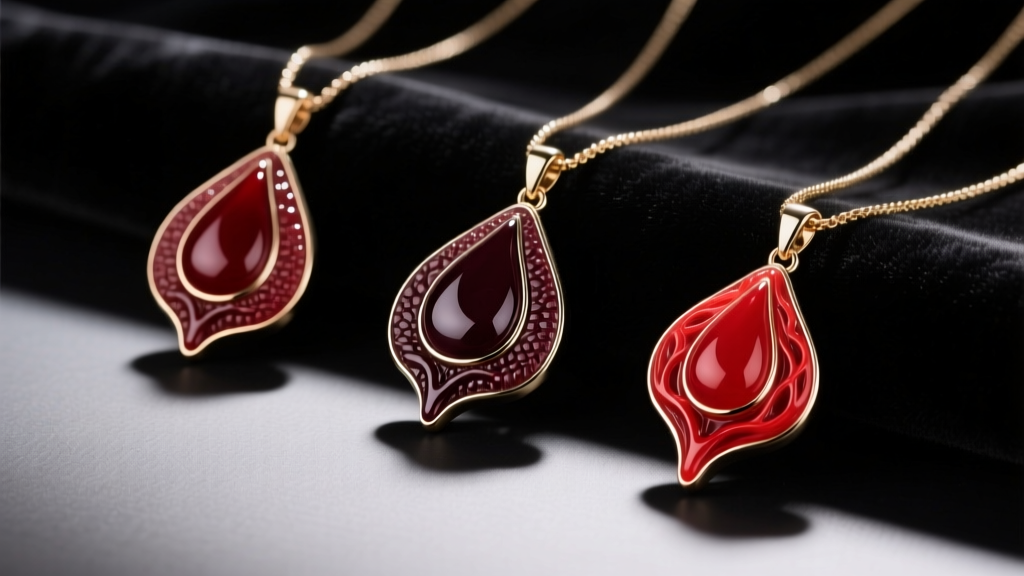
Even the most meticulously crafted blood drip necklace is subject to environmental degradation and physical wear. Understanding these failure modes allows collectors to properly maintain their investment pieces.
Expert Troubleshooting Tip: If your resin blood drip necklace begins to feel tacky or soft in high heat, it was likely formulated with an improper hardener ratio or a low-grade polyurethane base. True jewelry-grade epoxy has a glass transition temperature (Tg) well above 140°F and should never soften during normal summer wear.
Resin Yellowing and Delamination
Despite the use of HALS, all organic polymers will eventually undergo photo-oxidation. To extend the life of a resin drip, store it in a UV-blocking jewelry box when not in use. Delamination (the separation of the resin from a metal bail) occurs when the metal is not properly abraded and treated with a silane coupling agent before casting. If a bail pulls loose, it must be re-bonded using a two-part structural acrylic adhesive, not standard cyanoacrylate (super glue), which will degrade and turn white over time.
Glass Micro-Fractures
Borosilicate glass is highly resistant to thermal shock, but it is vulnerable to point-impact trauma. Dropping a glass blood drip pendant onto a ceramic tile or granite countertop will often cause internal micro-fractures. These fractures may not be immediately visible but will catch light differently and weaken the structural integrity of the piece. Always remove glass pendants before engaging in physical activities or bathing, as hard water deposits can obscure the optical clarity of the glass.
Enamel Chipping and Oxidation
Vitreous enamel is essentially glass fused to metal. While it will never fade or yellow, it will chip if struck against a hard surface. Furthermore, if the enamel is fired on a copper base, any exposed copper edges must be sealed, as copper will rapidly oxidize and form verdigris when exposed to sweat and cosmetics, potentially staining the skin green and undermining the enamel's adhesion at the edges.
Conclusion: Investing in Dark Artistry
The blood drip necklace is a testament to the intersection of macabre aesthetics and rigorous material science. Whether you are drawn to the lightweight, impact-resistant nature of UV-stabilized epoxy, the eternal optical clarity of annealed borosilicate glass, or the historical prestige of vitreous enamel, understanding the technical anatomy of these pieces elevates your appreciation of the craft. By prioritizing proper chain metallurgy, bail mechanics, and pigment chemistry, you ensure that your alternative jewelry remains a striking, enduring artifact of personal style for decades to come.


