2026 Guide: Buying the Perfect Light Blue Statement Necklace
Discover how to choose a light blue statement necklace in 2026. Expert guide on gemstones, chain gauges, clasps, and neckline pairings for bold jewelry.

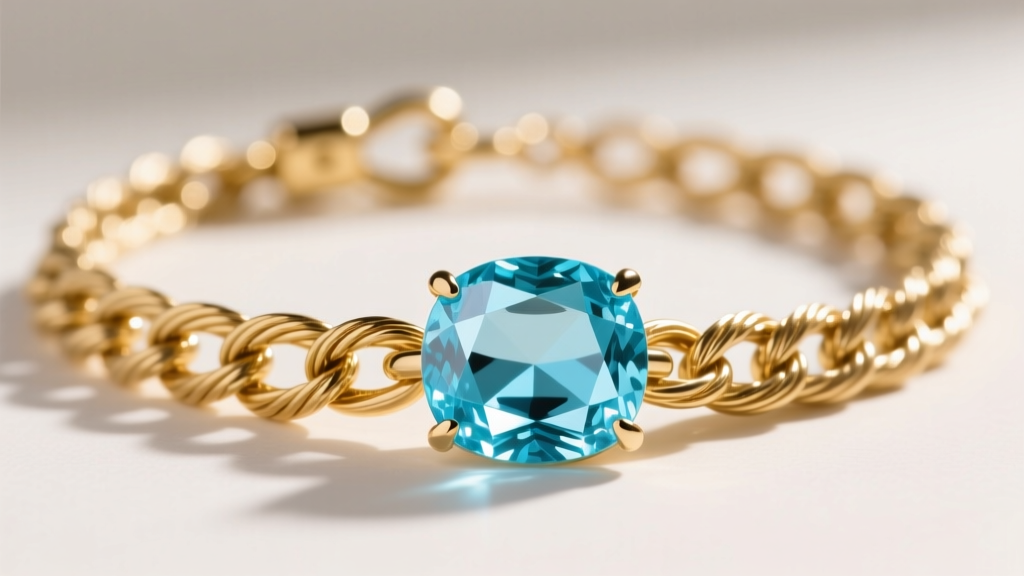
The light blue statement necklace has evolved from a fleeting seasonal trend into a cornerstone of modern jewelry wardrobes. As we navigate 2026, the demand for bold, shoulder-grazing silhouettes and architectural collars featuring cerulean, aqua, and icy blue tones continues to dominate both high jewelry runways and demi-fine collections. However, buying a statement piece requires a vastly different technical approach than purchasing a delicate everyday chain. The sheer weight, material porosity, and structural hardware demands mean that a poorly constructed piece will break, tarnish, or warp within months.
The Anatomy of a Statement Piece: Weight, Gauge, and Hardware
A true statement necklace typically weighs between 45 grams and 120 grams. This extreme weight fundamentally changes the hardware requirements. Standard 18-gauge (1.0mm) or 20-gauge (0.8mm) chains used in commercial jewelry will stretch, kink, or snap under the kinetic load of a heavy pendant or multi-strand collar.
Chain Gauge and Tensile Strength
When evaluating a light blue statement necklace, inspect the chain gauge. For pieces exceeding 50 grams, you need a minimum of a 14-gauge (1.6mm) cable chain or a 12-gauge (2.0mm) curb chain. According to manufacturing standards highlighted by JCK Online, the link welds on heavy chains must be laser-welded rather than simply soldered to withstand the constant pull of a heavy gemstone or resin centerpiece.
Clasp Mechanics for Heavy Loads
Standard lobster claws are a major failure point in statement jewelry. The internal steel spring mechanism degrades under constant tension. For 2026 statement designs, look for:
- Toggle Clasps: The T-bar must be at least 1.5 times the width of the ring to prevent slipping.
- Neodymium Magnetic Clasps: High-end pieces now use rare-earth magnets rated for a 15kg pull force, encased in 14k gold or surgical steel.
- Box Clasps with Figure-8 Safety Latches: Essential for multi-strand light blue chalcedony or topaz bib necklaces.
"A true statement piece should feel substantial, not heavy. If a 100-gram necklace pulls uncomfortably on your nape, the chain gauge is too thin and the center of gravity is poorly calibrated."
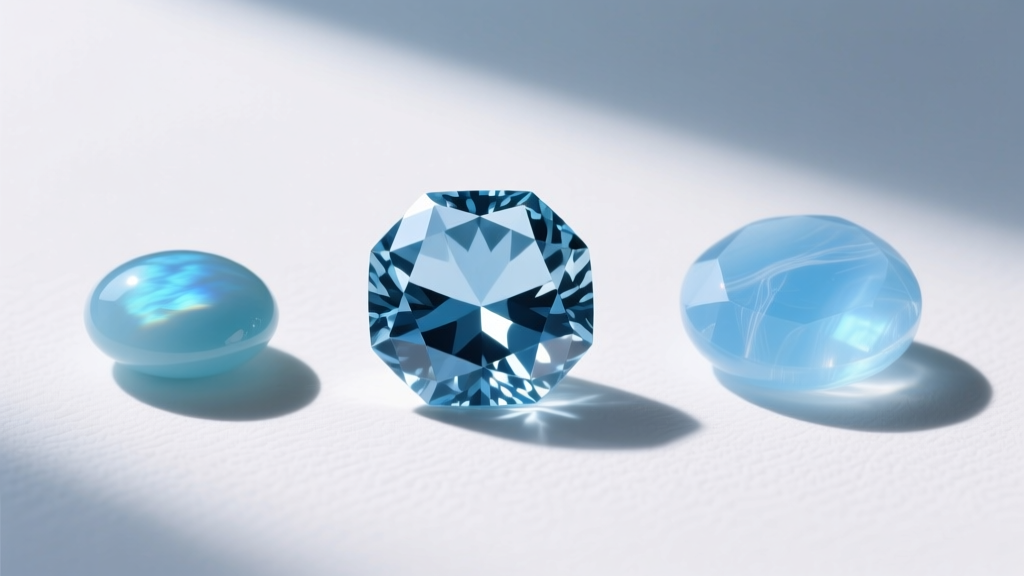
Decoding Light Blue Gemstones and Materials
The term "light blue" encompasses a wide spectrum of geological and synthetic materials. Understanding the Mohs hardness and treatment history of these stones is critical for long-term wearability, especially for statement pieces that are prone to striking desks, doorways, and other surfaces.
| Material | Mohs Hardness | Treatment / Origin | Best Setting Style | Price Tier |
|---|---|---|---|---|
| Aquamarine (Beryl) | 7.5 - 8.0 | Heat-treated to remove green zones | Prong or V-prong | High ($$$) |
| Swiss Blue Topaz | 8.0 | Irradiated and heated colorless topaz | Bezel or Channel | Medium ($$) |
| Blue Chalcedony | 6.5 - 7.0 | Naturally occurring, occasionally dyed | Cabochon Bezel | Low-Medium ($) |
| Larimar | 4.5 - 5.0 | Untreated, rare Dominican pectolite | Full Bezel (No prongs) | Medium ($$) |
| Guilloché Enamel | N/A (Glass-based) | Fired over engraved metal | Flush / Collar | High ($$$) |
When shopping for aquamarine, the Gemological Institute of America (GIA) notes that virtually all commercial aquamarine is heat-treated to around 400°C to eliminate yellowish-green pleochroism, resulting in the pure, stable light blue hue consumers desire. This treatment is permanent and universally accepted in the trade.
Conversely, if you opt for a light blue topaz statement piece, be aware that the GIA confirms natural blue topaz is exceedingly rare. The vivid "Swiss" or "Sky" blue shades are achieved through neutron bombardment and subsequent heat treatment of colorless topaz. While perfectly safe to wear and stable in color, this means you are paying for the cutting and carat weight, not the rarity of the color itself.
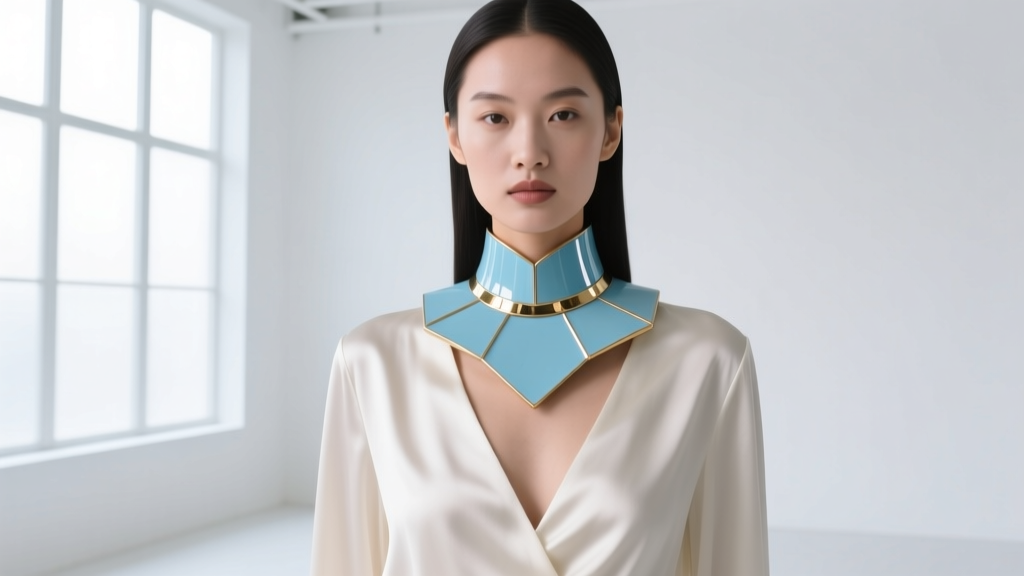
Neckline Architecture: Pairing Your Necklace with 2026 Silhouettes
A statement necklace is an architectural element that must interact seamlessly with the geometry of your clothing. The 2026 fashion landscape favors structured, asymmetric, and deeply plunging necklines, which require specific necklace lengths and drops.
The Plunging V-Neck and Yoke-Length Drops
For deep V-neck silk blouses or wrap dresses, a standard 16-inch or 18-inch choker will visually choke the outfit. Instead, opt for a Yoke-length (20-22 inches) light blue statement necklace with a centralized 3-inch drop. The vertical line of the aquamarine or chalcedony pendant mirrors the V-neck, elongating the torso without resting directly on bare skin where body oils can degrade porous stones.
The Asymmetric One-Shoulder and Collar Styles
One-shoulder gowns and tops create an unbalanced canvas. Counteract this with a rigid, light blue enamel or carved resin collar that sits flush against the collarbone (14-15 inches). A rigid collar provides a horizontal anchor that balances the diagonal line of the fabric.
The Crew Neck and the Bib Silhouette
When wearing a simple, high-neck crew sweater, a multi-strand bib necklace featuring 6mm to 10mm light blue topaz beads is the ideal choice. The bib should rest entirely on the fabric, not the skin, preventing the metal findings from catching on the knitwear. Ensure the backing of the bib is lined with leather or suede to prevent friction damage to delicate cashmere.
Investment Tiers: What to Expect Across Price Points
Budgeting for a statement piece requires understanding where the money actually goes. Unlike delicate chains where labor and brand markup dominate, statement necklaces are heavily driven by raw material volume.
- Fashion / Costume ($40 - $150): Expect light blue resin, dyed howlite, or glass stones set in gold-plated brass. Chains will be hollow and prone to denting. Acceptable for seasonal wear, but expect the plating to degrade within 12 months of heavy use.
- Demi-Fine ($150 - $600): The sweet spot for 2026. Features genuine blue chalcedony, treated topaz, or larimar set in heavy gold vermeil (minimum 2.5 microns of 14k gold over sterling silver) or solid 10k gold. Hardware is robust, often featuring custom-cast toggles.
- Fine Jewelry ($1,500 - $10,000+): Features large-carat, unheated or expertly heat-treated aquamarines, custom Guilloché enamel work, and solid 18k gold or platinum hardware. These pieces utilize laser-welded links and often include hidden articulated joints to allow the collar to drape fluidly over the collarbone.
Red Flags to Avoid When Shopping Online
When evaluating a light blue statement necklace on a digital storefront, look out for these critical warning signs:
- Missing Weight Disclosures: If the retailer does not list the total gram weight of the piece, it is likely constructed from lightweight, hollow-cast base metals or cheap acrylic that lacks the premium drape of a true statement piece.
- Prong-Set Soft Stones: If you see larimar, turquoise, or malachite (often dyed to look like light blue chrysocolla) set in delicate prongs rather than a protective bezel, avoid it. A single knock against a table edge will chip the stone.
- "One Size Fits All" Collars: Rigid statement collars must be sized to your specific neck circumference. A generic 15-inch collar will suffocate a 14.5-inch neck and slide around awkwardly on a 16-inch neck. High-end jewelers will offer collars in half-inch increments or provide custom bending services.
Care and Maintenance for Porous vs. Non-Porous Blues
Finally, the longevity of your necklace depends on material-specific care. Non-porous stones like aquamarine and topaz can be safely cleaned in an ultrasonic machine using a mild degreasing solution. However, porous light blue materials like larimar, stabilized turquoise, and dyed chalcedony will absorb the liquid, leading to irreversible clouding or color bleeding. For these pieces, use only a dry, untreated microfiber cloth to gently buff the surface after each wear, and always apply perfumes and hairsprays at least ten minutes before putting the necklace on to prevent chemical degradation of the stone's polish.


