Fixing a Choker Necklace With Flower Pendants: A Troubleshooting Guide
Is your choker necklace with flower pendants flipping, tarnishing, or causing irritation? Discover expert troubleshooting tips to fix and maintain it.

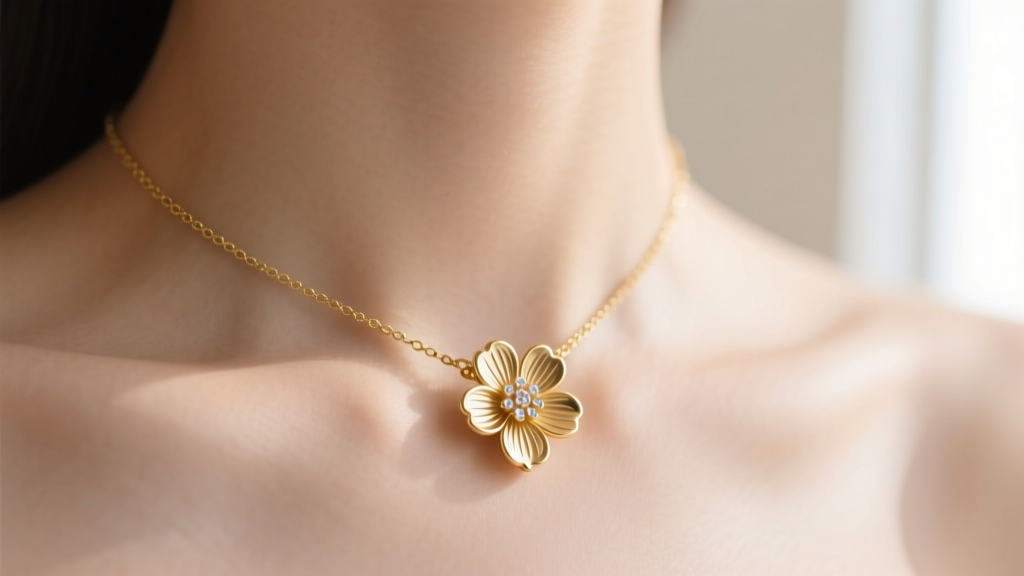
The floral choker has cemented its place in modern jewelry boxes, blending vintage nostalgia with contemporary minimalism. However, owning a choker necklace with flower motifs often comes with a unique set of mechanical and chemical frustrations. From pendants that stubbornly flip upside down to delicate enamel petals that yellow over time, these pieces require specific troubleshooting techniques that standard chain necklaces do not. As jewelry styles evolve through 2026, the market has seen an influx of mass-produced floral chokers that prioritize aesthetics over structural integrity. This guide serves as your comprehensive troubleshooting manual to diagnose, repair, and maintain your floral chokers like a professional bench jeweler.
The Anatomy of a Floral Choker Failure
Before applying fixes, it is crucial to understand why floral pendants fail more frequently than simple geometric charms. A flower pendant inherently possesses an asymmetrical center of gravity. Unlike a perfectly round bezel-set gemstone, a daisy or rose motif has protruding petals that catch on clothing and shift the weight distribution. Furthermore, chokers sit at the base of the throat—a high-movement zone where swallowing, talking, and head-turning create constant kinetic friction. When you combine a top-heavy floral silhouette with a high-friction environment, structural failures are inevitable. Below, we break down the four most common issues and their precise, actionable solutions.
Issue #1: The Upside-Down Pendant Flip
There is nothing more frustrating than adjusting your necklace, only to look down five minutes later and see the back of the pendant's bail instead of the flower. This occurs due to a mismatch between the chain's thickness and the bail's inner diameter.
The Bail-to-Chain Weight Ratio
Most commercial floral chokers use a standard 0.8mm cable chain. If the flower pendant has a wide, stamped bail (the loop connecting the charm to the chain), the chain slides freely inside the loop. When the heavier bottom petals shift slightly, the entire pendant rotates 180 degrees.
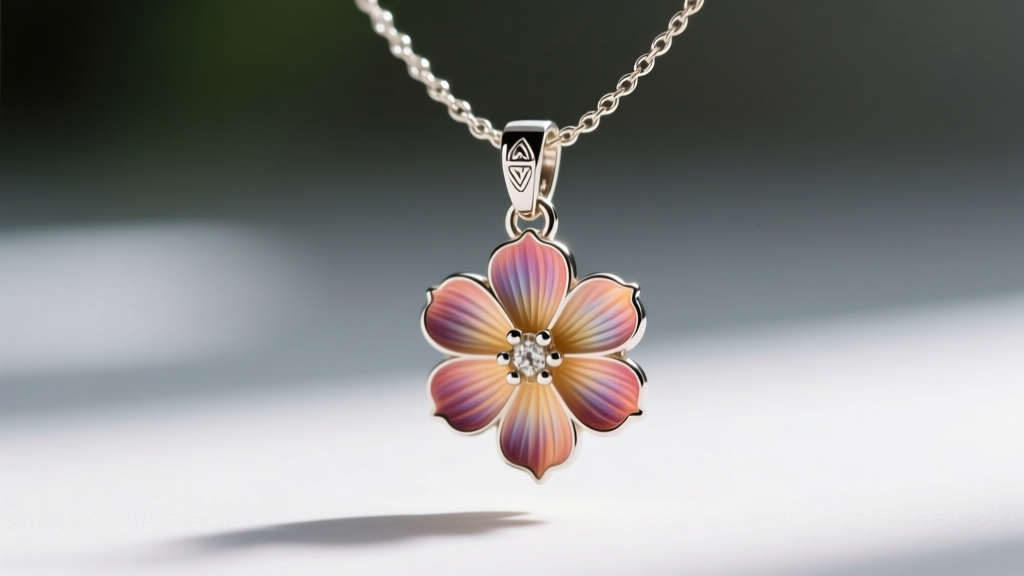
The Troubleshooting Fix:
- The Silicone O-Ring Method: Purchase a pack of 1mm clear silicone jewelry o-rings (often sold for beading). Thread the chain through the o-ring, then through the pendant bail. The silicone creates high friction against the metal bail, locking the flower in place without altering the metal.
- Chain Swapping: Replace the 0.8mm round cable chain with a 1.2mm flat curb chain or a box chain. The flat edges of these chains physically cannot rotate smoothly inside a rounded bail, effectively eliminating the flip.
- Bail Crimping: Using nylon-jaw pliers (to avoid marring the metal), gently squeeze the sides of the bail to narrow its opening. Reduce the gap until it is just 0.2mm wider than your chain's gauge.
Issue #2: Enamel Discoloration and Resin Yellowing
Many floral chokers utilize enamel to create vibrant, opaque petals. However, not all enamel is created equal, and misidentifying the material will ruin your piece during cleaning.
Cold Enamel vs. Vitreous Enamel
Mass-market chokers typically use "cold enamel" (a two-part epoxy resin). While cheap to produce, epoxy resin is highly porous and susceptible to UV degradation and chemical staining from perfumes or lotions. Within 12 to 18 months of daily wear, white resin petals will develop a distinct yellow tint. Conversely, high-end artisan chokers use vitreous enamel (powdered glass fused to metal at 1,500°F), which is impervious to UV light and chemicals but can shatter upon impact.
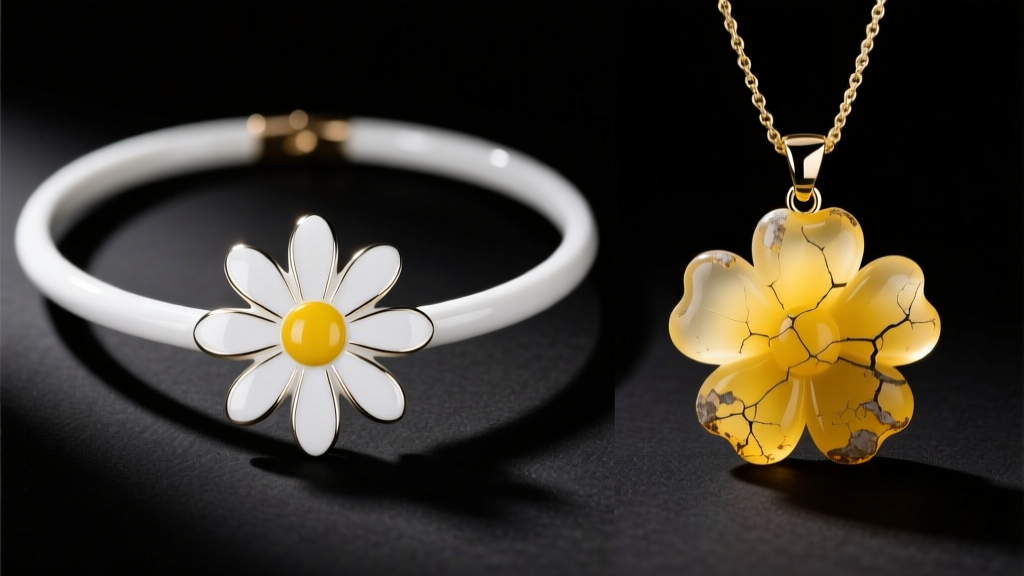
| Material Type | Symptom | Cause | Corrective Action |
|---|---|---|---|
| Cold Enamel (Resin) | Yellowing / Cloudiness | UV exposure, perfume oils | Polish gently with Novus 2 Fine Scratch Remover; avoid ultrasonic cleaners. |
| Cold Enamel (Resin) | Sticky surface | Improper curing or heat damage | Irreversible; replace the pendant or coat with a UV-cure jewelry resin topcoat. |
| Vitreous (Glass) | Dullness / Smudges | Hard water spots, skin oils | Wipe with isopropyl alcohol and a microfiber cloth; safe for ultrasonic cleaning. |
| Vitreous (Glass) | Crazing (micro-cracks) | Thermal shock or impact | Irreversible; structural integrity is compromised. Retire the piece. |
Issue #3: Contact Dermatitis and Base Metal Leaching
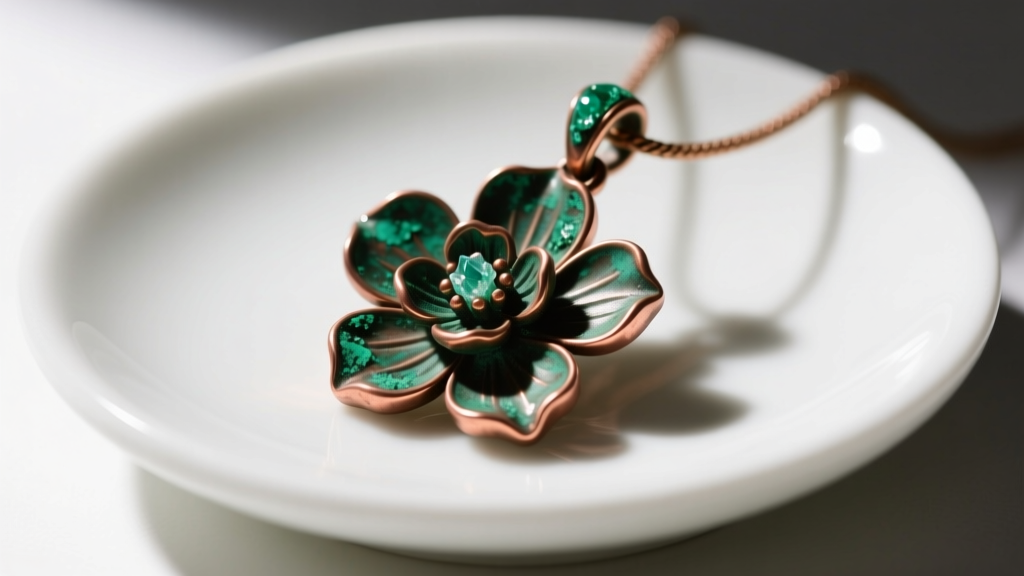
A choker sits directly against the pulse points of the neck, where body heat and sweat accelerate chemical reactions. If your choker necklace with flower charms is leaving a green ring or causing an itchy, red rash, you are experiencing base metal leaching or a nickel allergy.
The Nickel Leaching Problem
According to the Gemological Institute of America (GIA), nickel is a common alloying agent used to whiten gold and harden silver. However, in cheap brass or copper-alloy floral pendants, nickel is often used as a barrier layer beneath thin gold plating. Once the 0.5-micron gold plating wears off at the friction point of the bail, the nickel is exposed to sweat, creating nickel salts that cause severe contact dermatitis. The Federal Trade Commission (FTC) Jewelry Guides strictly regulate "nickel-free" claims, yet many imported fast-fashion chokers bypass these standards.
The Troubleshooting Fix:
- The Clear Coat Barrier: For an immediate, temporary fix, paint the back of the flower pendant and the bail with a layer of clear, non-toxic nail polish or a specialized jewelry shield spray. This creates a physical barrier between the alloy and your skin. Reapply every 30 days.
- Rhodium Re-Plating: Take the choker to a local bench jeweler and request a rhodium flash. Rhodium is a hypoallergenic platinum-group metal that will permanently seal the base metal and provide a brilliant, tarnish-resistant white-gold finish.
- Verdigris Removal: If the copper alloy has already developed green verdigris tarnish, do not use harsh commercial dips. Create a paste of baking soda and distilled water, apply it with a soft baby toothbrush to the crevices of the flower petals, rinse thoroughly, and dry completely with a microfiber cloth.
Issue #4: Micro-Kinking in Ultra-Fine Chains
To maintain a delicate, "barely-there" aesthetic, many floral chokers utilize ultra-fine chains (0.6mm to 0.9mm). While beautiful, these chains are highly susceptible to micro-kinking—a phenomenon where the tiny links fold in on themselves and lock, creating a weak point that will eventually snap.
Kinking rarely happens during wear; it almost always occurs during removal. Pulling a fine chain over the head without fully unclasping it, or tossing the choker into a jewelry box where the flower pendant's weight tangles the links, guarantees kinks.
The Troubleshooting Fix:
- The Book Method: Never pull a kinked chain. Lay the choker flat on a hard, smooth surface. Place a piece of parchment paper over the kinked section, and gently roll a smooth, heavy cylindrical object (like a glass spice jar) back and forth over the area. This applies even pressure and forces the microscopic links back into alignment without stretching them.
- Clasp Upgrades: Replace the standard 4mm lobster clasp with a 6mm magnetic neodymium clasp or a specialized "lock-and-slide" safety clasp. This allows you to remove the choker with zero tension on the chain, entirely preventing future kinks.
Expert Maintenance Protocol for Floral Chokers
To ensure your choker necklace remains a staple in your wardrobe rather than a discarded frustration, adopt this bi-weekly maintenance protocol:
- Post-Wear Wipe: After removing the choker, wipe the flower pendant and chain with a dry, untreated microfiber cloth to remove acidic skin oils and perfume residue.
- Friction Point Check: Inspect the bail and the two jump rings connecting the clasp. Look for thinning metal. If the wire looks flattened or deeply grooved, take it to a jeweler for soldering before it snaps.
- Flat Storage: Never hang a floral choker on a jewelry tree. The weight of the flower pendant will slowly stretch the fine links over time. Store it flat in an anti-tarnish ziplock bag with a silica gel packet to control ambient humidity.
By understanding the specific mechanical vulnerabilities of floral motifs and applying these targeted troubleshooting techniques, you can rescue damaged pieces and protect your investments. A well-maintained choker necklace with flower details should be a timeless expression of style, free from the annoyances of flipping, tarnishing, and breaking.


