How to Fix and Clean a Necklace with Butterfly Pendant
Learn how to troubleshoot, repair, and clean your necklace with butterfly pendant. Expert tips on fixing kinked chains, loose prongs, and delicate enamel.

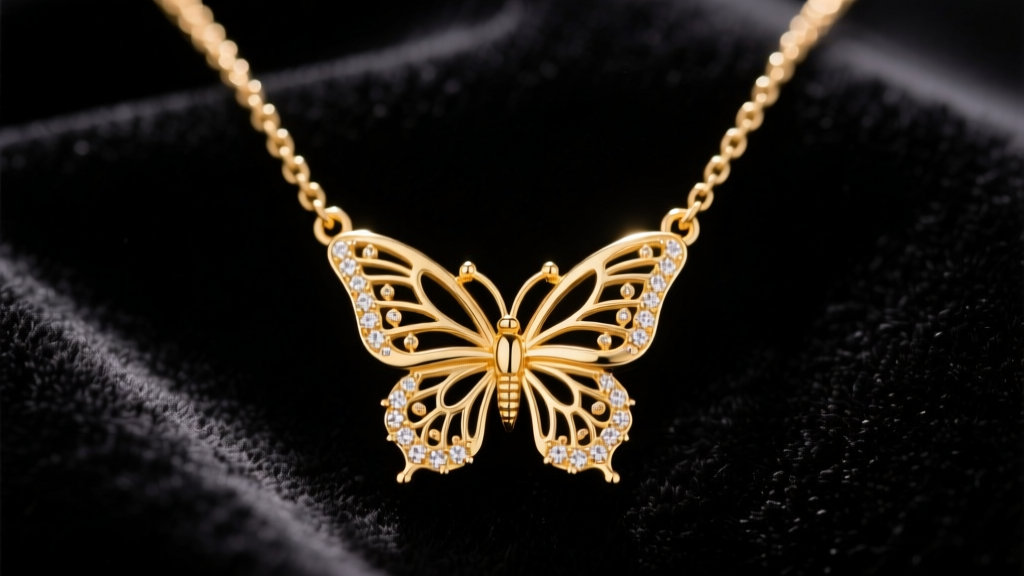
The necklace with butterfly pendant has transcended fleeting Y2K nostalgia to become a permanent staple in modern jewelry wardrobes. Symbolizing transformation and delicacy, these pieces are beloved for their intricate details. However, that same intricate anatomy makes them highly susceptible to specific types of damage. From kinked micro-chains to clouded enamel wings, troubleshooting these delicate accessories requires a specialized approach.
In this comprehensive 2026 troubleshooting guide, we will dissect the common failure points of butterfly pendants and provide actionable, professional-grade solutions to restore your jewelry to its original glory.
The Anatomy of a Butterfly Pendant Necklace (And Where It Fails)
To effectively troubleshoot, you must first understand the structural vulnerabilities of your jewelry. A typical butterfly pendant relies on three high-stress components:
- The Bail: The small loop connecting the pendant to the chain. Because butterfly pendants are often asymmetrical or slightly top-heavy, the bail experiences uneven friction, leading to premature thinning.
- The Micro-Chain: To maintain a dainty aesthetic, these necklaces usually feature chains between 0.8mm and 1.0mm in width. While beautiful, chains in this gauge range lack the tensile strength to withstand snagging.
- The Wing Inlays: Whether crafted from guilloché enamel, mother-of-pearl (MOP), or paved with melee diamonds, the wings are the most fragile element and require material-specific care.
Troubleshooting Chain & Clasp Failures
The Slipping Spring Ring & Lobster Clasp
If your necklace constantly slips off, the issue likely lies in the clasp's internal tension mechanism. Spring ring clasps, common on delicate chains, contain a microscopic internal spring. Over time, exposure to lotions and skin oils causes this spring to gum up, preventing the latch from closing flush against the jump ring.
The Fix: Do not bend the little lever backward; this will snap the internal spring. Instead, use a wooden toothpick dipped in high-purity isopropyl alcohol (90% or higher) to gently scrub the crevice of the clasp. Work the lever back and forth until the snap action returns. If the lever itself is bent out of shape, use flat-nose nylon-jaw pliers to gently realign it without marring the metal.
Fixing a Kinked Delicate Cable Chain
A 0.9mm cable or box chain will inevitably kink if stored improperly or caught on clothing. Pulling a kinked chain will cause the links to warp or snap.
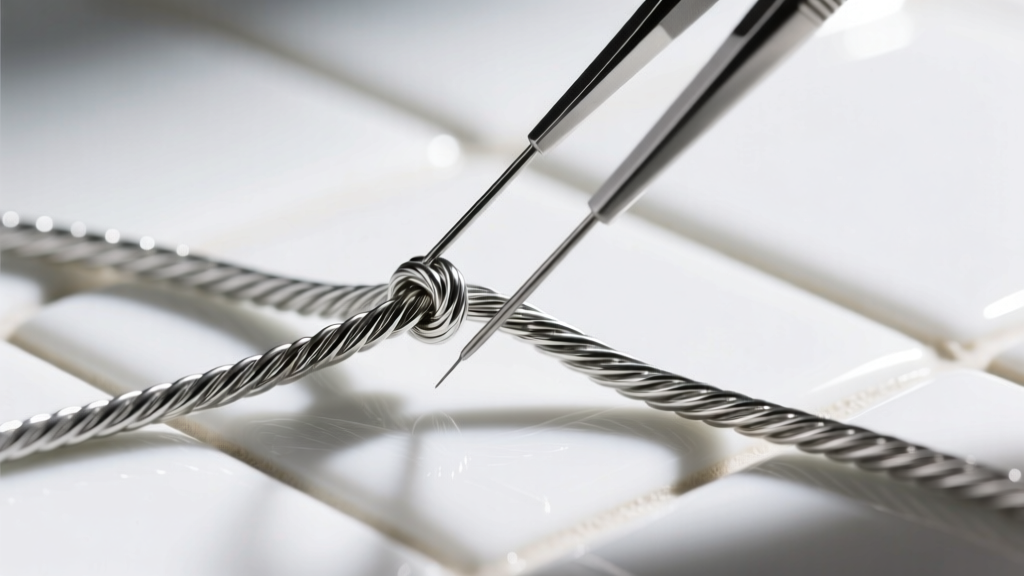
The Fix: Lay the chain flat on a smooth, hard surface like a ceramic tile or glass cutting board. Apply a single drop of mineral oil or specialized chain lubricant directly to the kink. Using two fine sewing needles, gently coax the overlapping links apart by working them in opposing directions. Never use tweezers, as the serrated teeth will scratch soft 14k or 18k gold alloys.
Rescuing the Pendant: Prongs, Enamel, and Inlays
Tightening Loose Gemstone Wings
Butterfly pendants featuring pavé or prong-set melee diamonds (typically 1.0mm to 1.5mm in diameter) are prone to losing stones. This happens because the delicate prongs catch on knitwear and bend outward.
Pro-Tip: If you notice a loose stone, immediately apply a tiny piece of jeweler's tape or medical tape over the wing to secure the stone in place until you can have the prongs professionally tightened. Attempting to push down micro-prongs at home without a microscope and proper bezel pushers often results in scratching the adjacent stones or cracking the diamond's girdle.
Restoring Dull Mother-of-Pearl and Enamel
Many butterfly pendants utilize mother-of-pearl or cold enamel for the wings. According to the Gemological Institute of America (GIA), organic gems like MOP are composed of calcium carbonate, making them highly porous and sensitive to acids. Commercial silver dips or ultrasonic cleaners will permanently etch the surface of MOP and shatter fragile enamel.
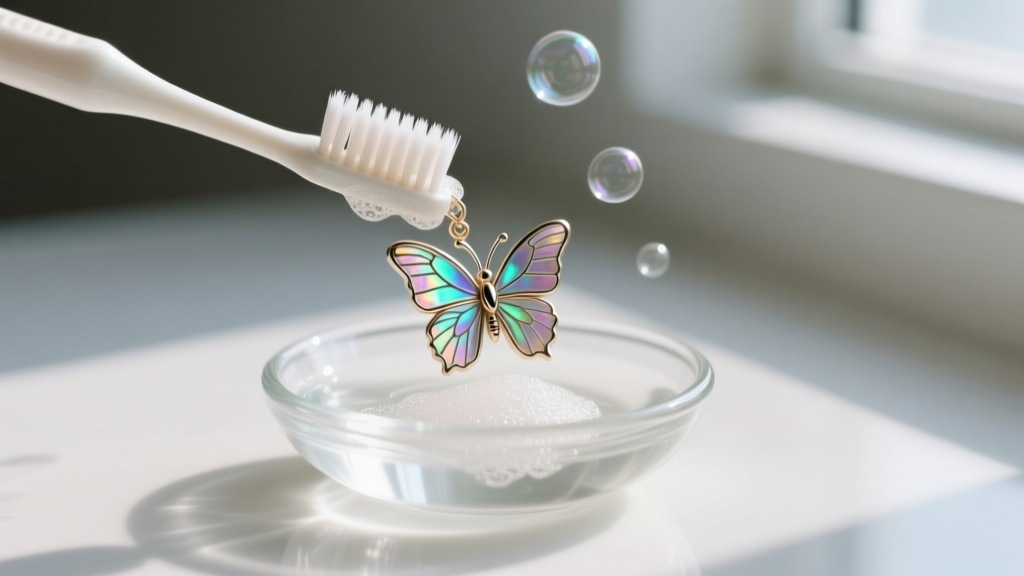
The Fix: Create a mild cleaning solution using lukewarm distilled water and a single drop of pH-neutral dish soap (like Dawn). Dip a soft-bristled baby toothbrush into the solution and gently sweep it across the wings in the direction of the grain. Rinse quickly under a slow stream of distilled water and pat dry with a lint-free microfiber cloth. Never soak an enameled or MOP pendant.
Material-Specific Troubleshooting Guide
Different wing materials require vastly different maintenance protocols. Use this chart to identify your pendant's material and avoid catastrophic cleaning errors.
| Wing Material | Common Failure Mode | Safe Home Cleaning Method | Critical Warnings |
|---|---|---|---|
| Guilloché Enamel | Clouding, micro-cracking | Dry polishing with a microfiber cloth | Never use ultrasonic cleaners; thermal shock will shatter the glass. |
| Mother-of-Pearl | Loss of iridescence, etching | Damp cloth wipe, immediate drying | Avoid all acids, perfumes, and commercial silver dips. |
| Pavé Diamonds | Dullness from skin oils, lost stones | Soft brush with mild soapy water | Check prongs with a loupe before cleaning; do not clean over an open drain. |
| Solid Sterling Silver | Sulfide tarnish (blackening) | Silver polishing cloth (impregnated) | Do not use liquid dips if the pendant has an oxidized (blackened) detail finish. |
Preventative Maintenance for Delicate Pendants
The Jewelers of America consistently emphasizes that preventative care is vastly superior to reactive repair. To protect your necklace with butterfly pendant from structural failure:
- The "Last On, First Off" Rule: Always put your necklace on after applying makeup, hairspray, and perfume. The alcohol and volatile organic compounds (VOCs) in cosmetics can degrade the epoxy used to secure MOP inlays.
- Proper Storage: Never toss your necklace into a communal jewelry box. The heavier chains and gemstones of other pieces will crush the butterfly wings. Store it flat in an anti-tarnish ziplock bag, or hang it on a dedicated velvet-lined jewelry valet to prevent chain kinking.
- Sleeping Hazards: Removing your necklace before bed is non-negotiable. The friction against cotton pillows and the weight of your body rolling over can easily snap a 0.8mm chain or crush delicate filigree wings.
When to See a Professional Jeweler
While home troubleshooting can resolve surface dirt and minor kinks, certain failures require professional intervention. If your delicate chain has completely snapped, do not attempt to twist the links back together.
Modern jewelers utilize laser welding to repair micro-chains. Unlike traditional torch soldering, which requires heating a large area of the chain and risks melting adjacent links or destroying heat-sensitive enamel wings, laser welding uses a highly focused beam to fuse a microscopic point of metal. This ensures the repair is virtually invisible and maintains the structural integrity of the ultra-fine gauge chain. Similarly, if a melee diamond has fallen out of the butterfly's wing, a bench jeweler will need to source a precisely matched stone (down to the 0.01 carat) and re-tip the worn prongs under a stereo microscope.
By understanding the unique vulnerabilities of your jewelry and adhering to these targeted troubleshooting steps, you can ensure your favorite pieces remain pristine, allowing the symbolic beauty of the butterfly to endure for decades.


