Troubleshooting Your Ornate Gold Necklace: Repairs & Care
Learn how to troubleshoot common issues with an ornate gold necklace. Expert tips on untangling filigree, cleaning crevices, and repairing clasps.

The Hidden Structural Challenges of Ornate Gold
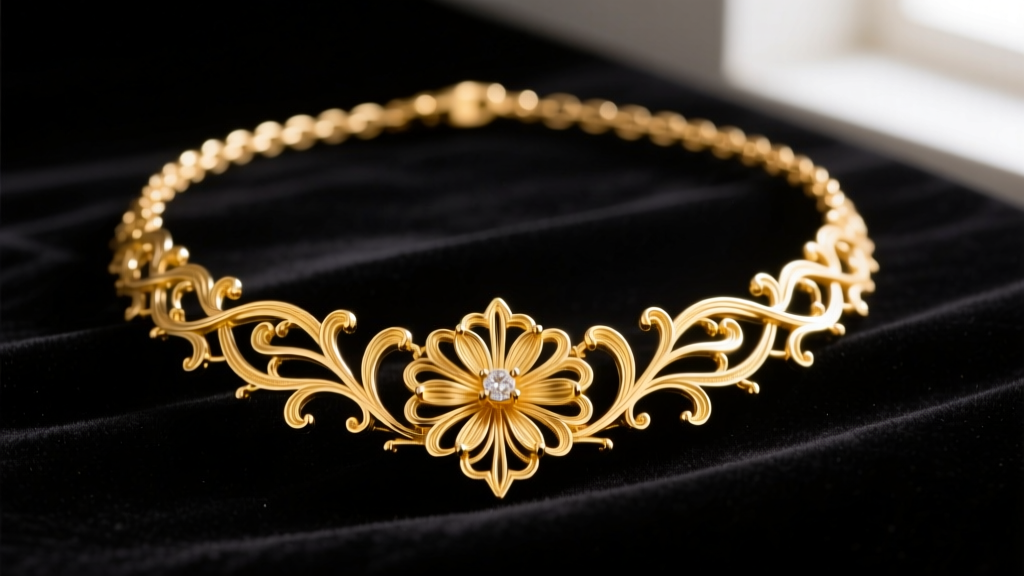
An ornate gold necklace is a masterclass in metallurgical artistry. Whether it features Etruscan revival granulation, delicate Victorian filigree, or heavy Byzantine chain links, these pieces demand specialized care. Unlike simple cable chains or minimalist pendants, ornate designs possess complex geometries that trap debris, snag on fabrics, and place uneven tensile stress on their hardware. In 2026, as vintage and artisan-crafted jewelry continues to surge in popularity, understanding the mechanical and chemical vulnerabilities of these pieces is essential for preservation.
This guide bypasses generic jewelry advice to provide bench-level troubleshooting for the most common structural and maintenance failures associated with highly detailed gold necklaces.
Issue 1: Severe Tangling in Filigree and Multi-Strand Designs
Filigree and multi-strand ornate gold necklaces are notorious for knotting. The microscopic hooks and loops created by intricate metalwork act like velcro when agitated in a jewelry box. A common, yet disastrous, DIY fix is applying baby oil or olive oil to lubricate the knot. Oil attracts microscopic dust and dirt, which then grinds into the gold crevices, creating an abrasive paste that damages the metal and ruins any antique patina.
The Talc and Needle Extraction Method
To safely detangle a complex ornate gold necklace, you must reduce surface friction without leaving a residue.
- Step 1: Lay the necklace flat on a non-porous, brightly lit surface (a glass pane over white paper works best).
- Step 2: Generously dust the knot with cosmetic talcum powder or cornstarch. Avoid baking soda, as its crystalline structure can cause micro-abrasions on high-karat gold.
- Step 3: Using two size 10 or 12 beading needles (or specialized micro-knot picks), gently work the powder into the center of the knot. Do not pull the chain ends; this tightens the tensile load on the solder joints.
- Step 4: Wiggle the needles to create slack, then carefully lift the central link upward to collapse the knot from the inside out.
Issue 2: Grime Buildup in Repoussé and Crevices
Ornate techniques like repoussé (hammered relief) and chasing create deep valleys that trap sebum, cosmetics, and environmental pollutants. Many owners mistakenly use ultrasonic cleaners to blast away this grime. However, the Gemological Institute of America (GIA) warns that high-frequency cavitation bubbles collapsing near microscopic solder seams can fracture the delicate joints of filigree or loosen tension-set gemstones.
Karat-Specific Cleaning Protocols
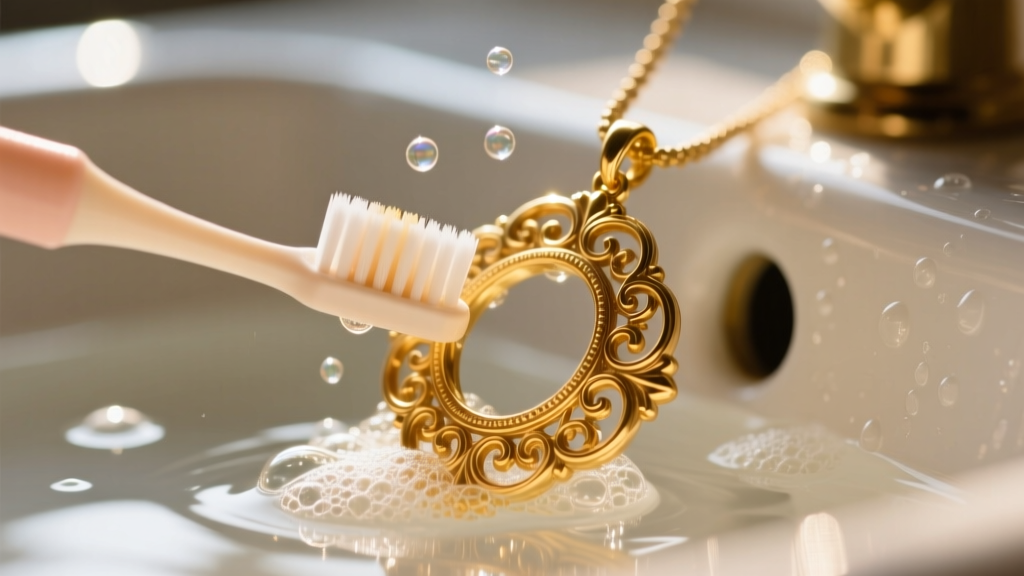
The cleaning approach must be dictated by the gold alloy's Vickers Hardness (HV). Pure gold is exceptionally soft, while lower karats are alloyed with copper, silver, or zinc for durability. Scrubbing a 22k ornate piece with a standard toothbrush will result in permanent micro-scratching.
| Gold Karat | Vickers Hardness (HV) | Cleaning Vulnerability | Recommended Tool |
|---|---|---|---|
| 10k / 14k | 135 - 160 HV | Low (Highly scratch-resistant) | Soft nylon brush |
| 18k | 125 - 140 HV | Moderate | Extra-soft baby toothbrush |
| 22k / 24k | 60 - 90 HV | High (Prone to micro-scratches) | Microfiber cloth and cotton swab |
For safe manual cleaning, use a 5% solution of phosphate-free dish soap in distilled water. Dip your chosen tool, gently agitate the crevices, and rinse with lukewarm distilled water to prevent hard water mineral deposits from drying in the ornate grooves.
Issue 3: Clasp Failure and Structural Stress
Ornate gold necklaces are inherently heavy. A solid 18k gold Byzantine chain or a pendant featuring extensive granulation can easily weigh between 15 and 40 grams. Standard 5mm or 7mm spring-ring clasps are engineered for lightweight chains and will suffer from spring fatigue, warping, or complete failure under this load.
Upgrading Hardware for Heavy Ornate Pieces
If your ornate gold necklace frequently slips off or the clasp feels stiff, the hardware is undersized. You must upgrade the clasp and the accompanying jump rings.
- The Clasp: Replace the spring-ring with a solid cast lobster clasp (minimum 12mm for pieces under 25g; 15mm+ for heavier items). Lobster clasps feature a thicker internal spring and a wider jaw that distributes tensile stress more evenly.
- The Jump Rings: The jump ring connecting the clasp to the chain is the most common point of failure. If the wire gauge is too thin (e.g., 0.8mm), the heavy pendant will pull the ring open. Have a bench jeweler replace it with a soldered-closed jump ring or a heavy-gauge split ring (minimum 1.2mm wire thickness).
Issue 4: Identifying and Fixing Gold Wear (Vermeil vs. Solid)
Many vintage ornate necklaces, particularly from the Victorian and 1940s Retro eras, are not solid gold. They are often gold-filled, rolled gold plate, or vermeil (gold over sterling silver). Over decades of wear, the high points of the ornate relief work rub against the skin and clothing, wearing away the microscopic gold layer and exposing the base metal (usually brass or copper) beneath.
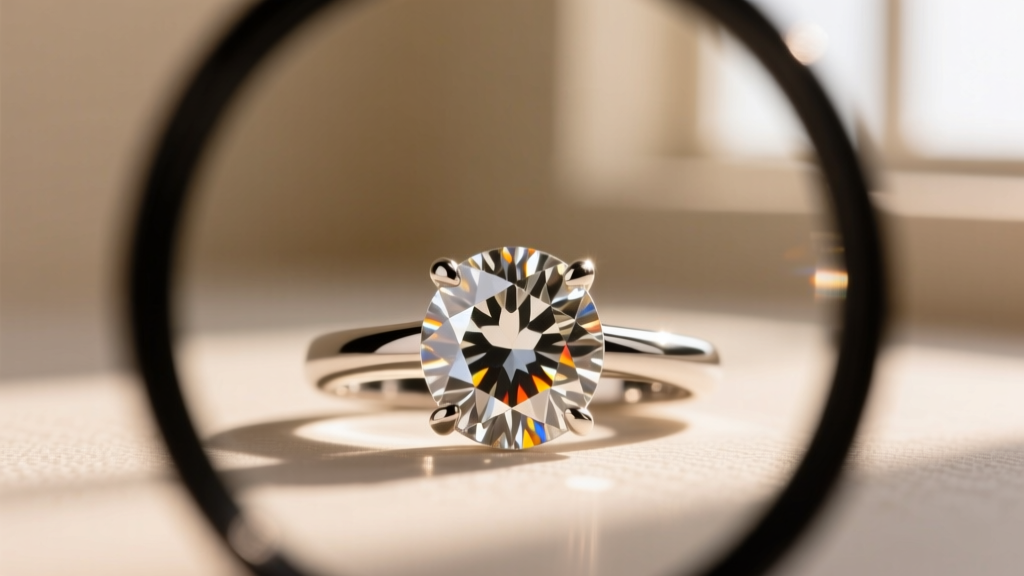
Expert Diagnostic Tip: Never use a polishing cloth on a suspected gold-plated ornate necklace. Polishing compounds contain mild abrasives that will instantly strip the remaining gold layer from the raised repoussé details. Instead, use a 10x jeweler's loupe to inspect the high points and the clasp for a 'GP', 'GEP', or '1/20 14K GF' hallmark.
If base metal is showing through on an ornate piece, DIY fixes are non-existent. The piece must be sent to a professional plating facility. The jeweler will need to carefully strip the remaining gold, polish the base metal without destroying the ornate details, and re-plate it using a cyanide-based electroplating bath to ensure the gold adheres to the deep crevices evenly.
When to Seek Professional Bench Jeweler Intervention
While tangling and surface cleaning can be managed at home, certain structural failures require a laser welder and professional metallurgical expertise. According to conservation guidelines from the Smithsonian Museum Conservation Institute, improper soldering on antique gold can cause irreversible thermal damage to surrounding patinas and gemstones.
Take your ornate gold necklace to a master bench jeweler if you encounter:
- Fractured Filigree Wires: Traditional torch soldering will melt adjacent delicate wires. A jeweler must use a laser welder, which focuses intense heat on a microscopic point without transferring thermal energy to the rest of the necklace.
- Crushed Repoussé: If a hollow ornate pendant has been dented, it cannot simply be hammered out. It requires specialized pitch-filling and careful pushing from the interior to restore the three-dimensional relief.
- Blackening in Crevices: If deep crevices turn black and do not respond to soapy water, the piece may have oxidation or sulfur tarnish (common in lower-karat alloys or silver-backed vermeil). A jeweler can perform a controlled electrolytic reduction to reverse the tarnish without abrasive polishing.
By understanding the specific mechanical limits and chemical sensitivities of your ornate gold necklace, you can transition from reactive damage control to proactive preservation, ensuring these intricate wearable sculptures survive for generations.


