Stitch and Angel Necklace Buying Guide: What to Look For
Discover what to look for when buying a Stitch and Angel necklace. Compare materials, chain types, and interlocking mechanisms to avoid cheap knockoffs.

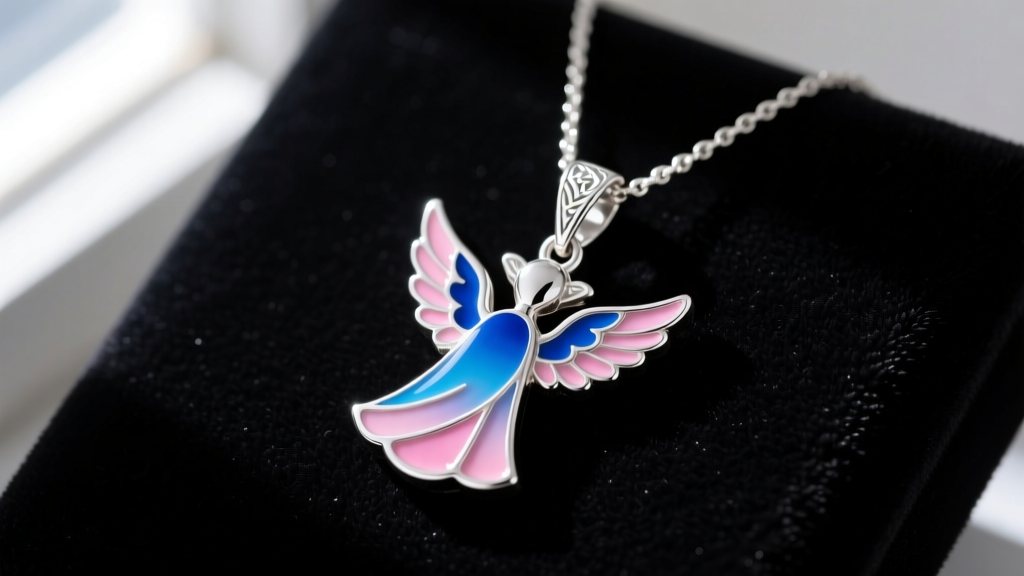
The Appeal of the Stitch and Angel Necklace
Since its debut, the emotional core of Disney's Lilo & Stitch has resonated deeply with fans, largely due to the concept of 'ohana' and the bond between Experiment 626 (Stitch) and Experiment 624 (Angel). In the jewelry world, this connection has translated into one of the most sought-after matching necklace designs for couples, best friends, and siblings. A well-crafted Stitch and Angel necklace serves as a tangible reminder of that bond, often featuring interlocking pendants or complementary magnetic halves.
However, the immense popularity of this specific character pairing has flooded the market with varying degrees of quality. As the secondary market for vintage and limited-edition Disney jewelry continues to surge in 2026, distinguishing between official releases, high-quality indie artisan pieces, and mass-produced fast-fashion knockoffs has never been more critical. This comprehensive buying guide will walk you through the exact metallurgical standards, mechanical designs, and chain anatomies you need to evaluate before making a purchase.
Material Breakdown: Avoiding the 'Green Neck' Effect
The most common complaint among buyers of character-themed jewelry is skin discoloration and contact dermatitis. This 'green neck' effect is not a sign of a toxic reaction, but rather a simple chemical oxidation process. When base metals like brass (an alloy of copper and zinc) react with the lactic acid and salts in human sweat, they produce copper chloride, which leaves a green residue on the skin. To avoid this, you must scrutinize the base metal of your Stitch and Angel necklace.
| Material | Composition | Tarnish Resistance | Price Range | Hypoallergenic? |
|---|---|---|---|---|
| 925 Sterling Silver | 92.5% Silver, 7.5% Copper | Moderate (Requires Polishing) | $60 - $150 | Yes (Mostly) |
| 316L Surgical Steel | Iron, Chromium, Nickel, Molybdenum | Excellent | $25 - $60 | Yes |
| Plated Brass/Zinc | Copper/Zinc core with thin plating | Poor (Wears off quickly) | $10 - $25 | No |
According to the Federal Trade Commission (FTC), jewelry stamped with '925' must contain at least 92.5% pure silver. Sterling silver is an excellent choice for a Stitch and Angel necklace because it holds intricate laser-cut details beautifully and can be polished indefinitely. However, if you live in a humid climate or plan to wear the necklace daily without removal, 316L surgical stainless steel is vastly superior. It contains molybdenum, which provides exceptional resistance to corrosion and pitting, ensuring the pendant will never turn your skin green.
Enamel Quality: Cold vs. Vitreous
Stitch's blue fur and Angel's pink hue are almost always rendered using enamel. It is vital to understand the difference between the two types of enamel used in modern jewelry manufacturing. The vast majority of licensed Disney jewelry and indie fan-art pieces utilize 'cold enamel,' which is actually a pigmented epoxy resin. While cold enamel allows for vibrant, precise color filling in tiny recesses, it is relatively soft (around a 2-3 on the Mohs hardness scale) and can scratch or yellow over time if exposed to UV light and harsh chemicals.
Vitreous enamel, on the other hand, is finely ground glass powder fused to metal at temperatures exceeding 1,400°F. While incredibly durable and scratch-resistant, vitreous enamel is rarely used for complex character pendants because the extreme heat limits color gradients and fine detail. When buying, assume you are getting cold enamel and adjust your care routine accordingly to prevent micro-scratches.
Interlocking Mechanics: Magnets vs. Puzzle Cuts
The defining feature of the best Stitch and Angel necklaces is how the two pendants interact. There are two primary engineering approaches to this design, each with distinct failure points you must inspect.
Magnetic Coupling Mechanisms
Magnetic necklaces feature two separate pendants that snap together to form a single cohesive image (often Stitch and Angel embracing or forming a heart). The quality of these necklaces hinges entirely on the grade of the magnet and the adhesive used to secure it. High-end jewelers use N52-grade neodymium magnets, which provide a strong, reliable hold that can support the weight of solid silver pendants. Cheaper alternatives use N35 magnets, which frequently snap apart when the chain catches on a sweater.
Furthermore, inspect how the magnet is housed. Mass-produced factories often use cyanoacrylate (super glue) to secure the magnet inside the metal cavity. Over time, body heat and moisture cause this glue to become brittle and fail, resulting in the magnet falling out. Look for artisan jewelers who use a two-part jeweler's epoxy or mechanically crimp the magnet into a bezel setting.
Precision Laser-Cut Puzzle Pieces
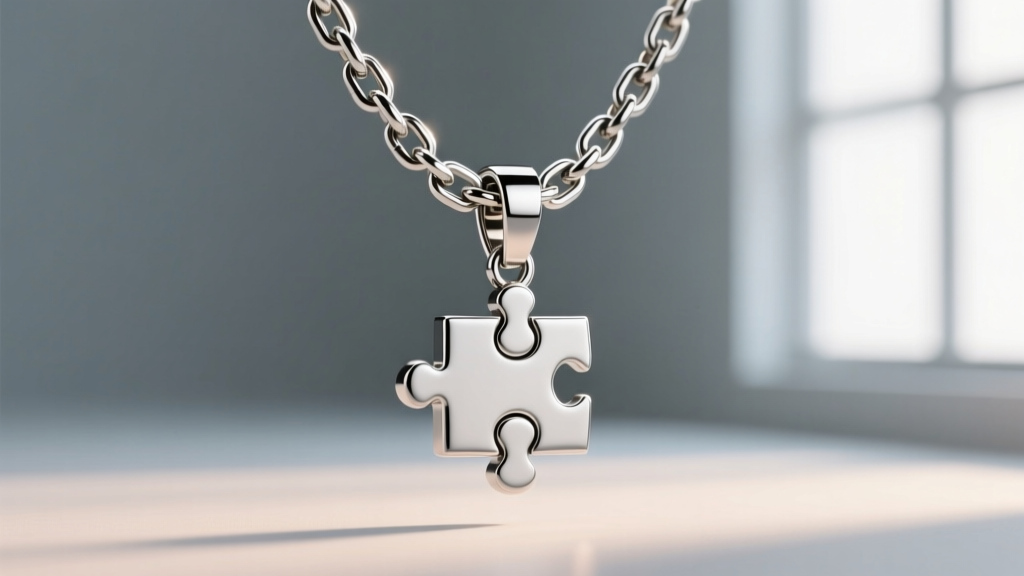
Alternatively, many designs feature a jigsaw-style puzzle cut, where Stitch forms one piece and Angel forms the other. This requires high-precision CNC laser cutting. When evaluating a puzzle-cut necklace, hold the two pieces together and look for 'light bleed.' If you can see gaps of light between the interlocking tabs, the manufacturing tolerance is too loose, and the pendants will rattle and wear down each other's edges through friction. A well-made puzzle pendant should slide together with a satisfying, nearly airtight friction fit.
Chain Anatomy: Gauge, Length, and Clasps
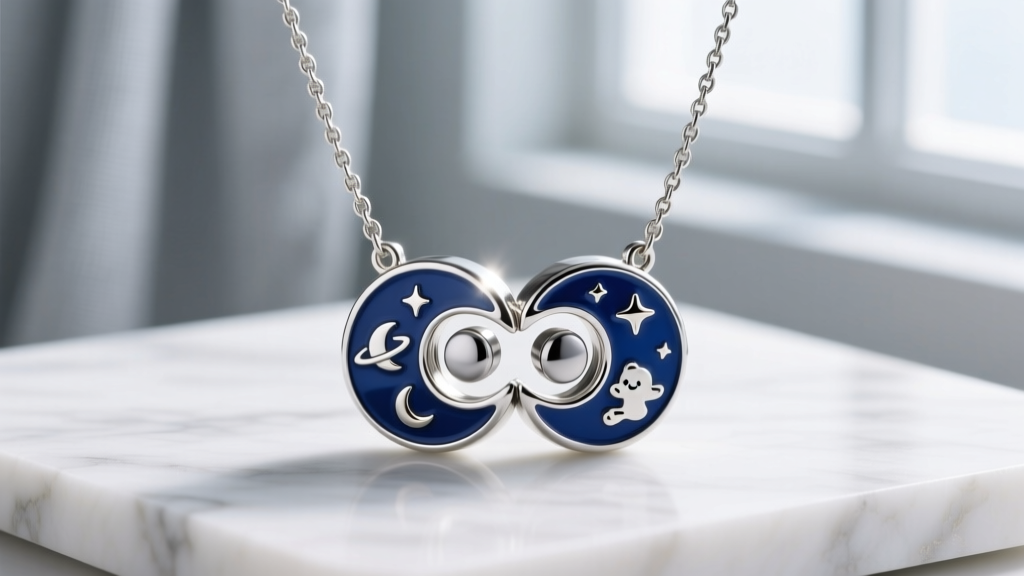
A pendant is only as secure as the chain holding it. For character pendants, which typically weigh between 4 to 12 grams, you need a chain that balances durability with aesthetic subtlety. Avoid chains thinner than 0.8mm; they are prone to kinking and snapping under sudden tension.
- 1.0mm to 1.2mm Cable Chain: The industry standard for lightweight pendants. The uniform oval links lay flat and are easy to repair if a single link bends.
- 1.2mm Rolo Chain: Featuring round, interlocking links, rolo chains are structurally stronger than cable chains and resist kinking, making them ideal for daily wear.
- Box Chains: While visually appealing, thin box chains (under 1.5mm) are notorious for snapping at the solder points and are difficult for jewelers to repair.
Always ensure the necklace is finished with a lobster claw clasp rather than a spring ring clasp. Spring rings rely on a tiny internal wire spring that frequently jams or weakens over time, whereas lobster clasps feature a solid metal lever mechanism that provides a much more secure closure.
Official Licensing vs. Indie Artisan Creations
When shopping for a Stitch and Angel necklace, you will encounter both officially licensed merchandise and independent fan art. Officially licensed pieces, available through authorized retailers like ShopDisney or licensed partners like Pandora, guarantee adherence to strict brand guidelines and reliable baseline material standards. They will typically feature a stamped copyright mark on the back of the pendant.
However, many buyers prefer indie artisan platforms like Etsy for more dynamic, custom poses that official licensing restricts. When buying from an indie jeweler, prioritize shops that provide explicit material breakdowns (e.g., specifying 'solid 925 silver' rather than vague terms like 'silver-tone' or 'Tibetan silver,' which are often toxic lead-based alloys). The Gemological Institute of America (GIA) strongly warns against purchasing unverified 'silver' jewelry from unregulated markets due to the risk of heavy metal contamination.
Care and Maintenance for Enamel and Silver
To ensure your necklace survives the years, proper maintenance is non-negotiable. Because the Stitch and Angel designs rely heavily on cold enamel, you must never clean the pendant in an ultrasonic jewelry cleaner. The high-frequency sound waves and heat generated by modern 2026 ultrasonic models will cause the epoxy resin to micro-fracture, cloud, or detach entirely from the metal recesses.
Instead, clean the metal portions using a specialized silver polishing cloth that contains anti-tarnish chemicals. Gently buff the silver or steel around the enamel, avoiding direct friction on the colored resin. When not wearing the necklace, store it in an airtight ziplock bag with a silica gel packet and a 3M anti-tarnish strip. This neutralizes the sulfur compounds in the air that cause sterling silver to oxidize and turn black, ensuring your matching pendants remain as vibrant as the bond they represent.


