Troubleshooting a Cloudy Moissanite Necklace Gold Pendant
Learn how to fix a cloudy moissanite necklace gold pendant. Expert troubleshooting for oil slick stains, gold chain tarnish, and loose prongs.

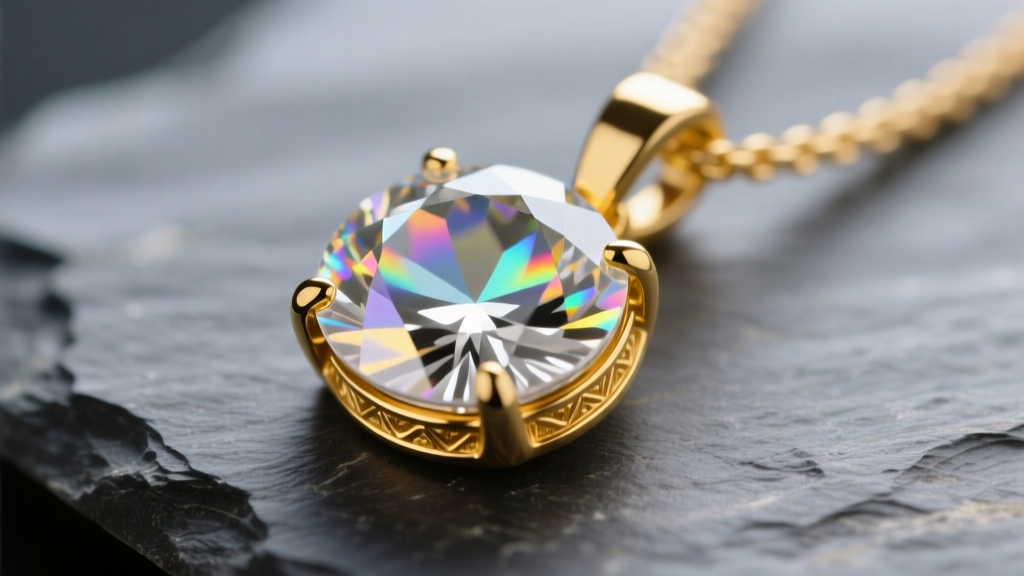
The Unique Chemistry of Moissanite and Gold
When you invest in a moissanite necklace gold setting, you are combining two highly durable materials: silicon carbide (moissanite) and a precious metal alloy (gold). Moissanite ranks at 9.25 on the Mohs hardness scale, making it exceptionally resistant to scratching. However, as of 2026, while lab-grown manufacturing has largely eliminated the internal milky cloudiness seen in early 2010s stones, surface-level cloudiness and setting degradation remain common complaints. If your once-brilliant pendant now looks dull, or if the gold chain is leaving dark smudges on your collarbone, you are dealing with superficial chemical reactions and mechanical wear, not permanent damage to the stone itself.
Troubleshooting these issues requires understanding the exact metallurgical and chemical properties of your jewelry. According to the Gemological Institute of America (GIA), moissanite is highly stable, but its surface can interact with environmental contaminants in ways that mimic diamond cloudiness. Below, we break down the three most frequent problems associated with moissanite gold necklaces and provide professional-grade solutions to restore them.
Issue 1: The Dreaded 'Oil Slick' Stain on Moissanite
The most alarming issue for moissanite owners is the sudden appearance of a rainbow-colored, oily film on the surface of the stone. This is not an actual oil, nor is it a scratch. It is a superficial interference film caused by a chemical reaction between the silicon carbide surface and hard water minerals (calcium and magnesium), sulfur compounds found in lotions, or chlorine from swimming pools.
Why Standard Cleaning Fails
Wiping the stone with a standard microfiber cloth or using mild dish soap will not remove an oil slick stain. The mineral buildup bonds to the microscopic pores of the stone's surface. To remove it, you must break down the mineral matrix without damaging the gold setting.
The Step-by-Step Removal Protocol
- The Ammonia Soak: Mix one part clear household ammonia with six parts distilled water. Submerge the moissanite pendant for exactly 15 minutes. Ammonia is highly effective at dissolving the calcium bonds causing the rainbow film.
- Ultrasonic Agitation: For stubborn stains, place the necklace in an ultrasonic jewelry cleaner. Ensure the machine operates at 42-45 kHz. Frequencies below 30 kHz can be too aggressive for delicate gold prongs, while 42 kHz provides the ideal cavitation to blast microscopic debris from the pavilion facets.
- The Soft Brush Finish: Use a baby-soft toothbrush to gently agitate the culet (the bottom point of the stone) where lotion and dead skin cells accumulate, blocking light return and causing the stone to look gray or cloudy.
Note: Never use harsh liquid silver dip cleaners (like Tarn-X) on a moissanite necklace. These chemicals contain thiourea, which can permanently etch the surface of the moissanite and strip the rhodium plating off white gold settings.
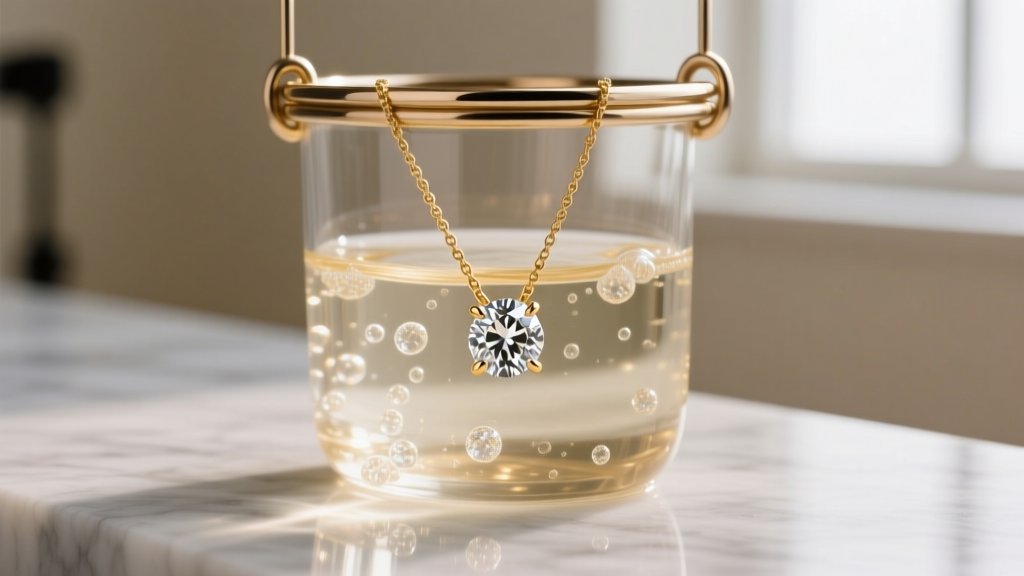
Issue 2: Gold Chain Tarnish and Clasp Failure
While pure gold does not tarnish, the alloys mixed with gold to create jewelry do. If your moissanite necklace gold chain is turning your skin green or black, or if the links are looking dull and brownish, you are witnessing alloy oxidation. Furthermore, the type of gold karat you choose heavily dictates the mechanical failure points of the chain.
Gold Karat Troubleshooting Matrix
| Gold Karat | Pure Gold % | Alloy Composition | Tarnish Risk | Prong & Chain Durability |
|---|---|---|---|---|
| 10k Gold | 41.7% | High Copper/Zinc/Nickel | High (Oxidizes easily) | Excellent (Hardest, resists stretching) |
| 14k Gold | 58.3% | Moderate Copper/Silver | Moderate (Occasional dulling) | Very Good (Ideal for daily pendants) |
| 18k Gold | 75.0% | Low Alloy (Mostly Silver/Copper) | Low (Highly tarnish-resistant) | Fair (Soft, prone to clasp stretching) |
Fixing Tarnish and Chain Kinks
If your 14k or 10k gold chain has tarnished, avoid abrasive polishing pastes that can wear down the links over time. Instead, use a treated jeweler's polishing cloth embedded with micro-abrasives and anti-tarnish agents. Gently pull the chain through the cloth. For box chains that have kinked—a common issue when sleeping in a necklace—do not try to bend them back with your fingers. Use two pairs of flat-nose nylon-jaw pliers to gently realign the crushed links, or take it to a jeweler for a quick steam press.
Clasp failure is another major troubleshooting point. Spring ring clasps on 18k gold chains frequently fail because the soft gold cannot maintain the tension of the internal spring mechanism. If your pendant keeps falling off, upgrade the clasp to a solid 14k white gold lobster claw, which offers superior tensile strength and secures heavier moissanite pendants much more reliably.
Issue 3: Prong Wear and Stone Rattling
Moissanite is significantly harder than gold. On the Mohs scale, moissanite is a 9.25, while 14k gold is roughly a 2.5 to 3. This massive disparity in hardness creates a unique troubleshooting scenario: if the stone becomes even slightly loose in its setting, the microscopic movements of the moissanite against the gold prongs will act like sandpaper, rapidly grinding away the metal from the inside out.
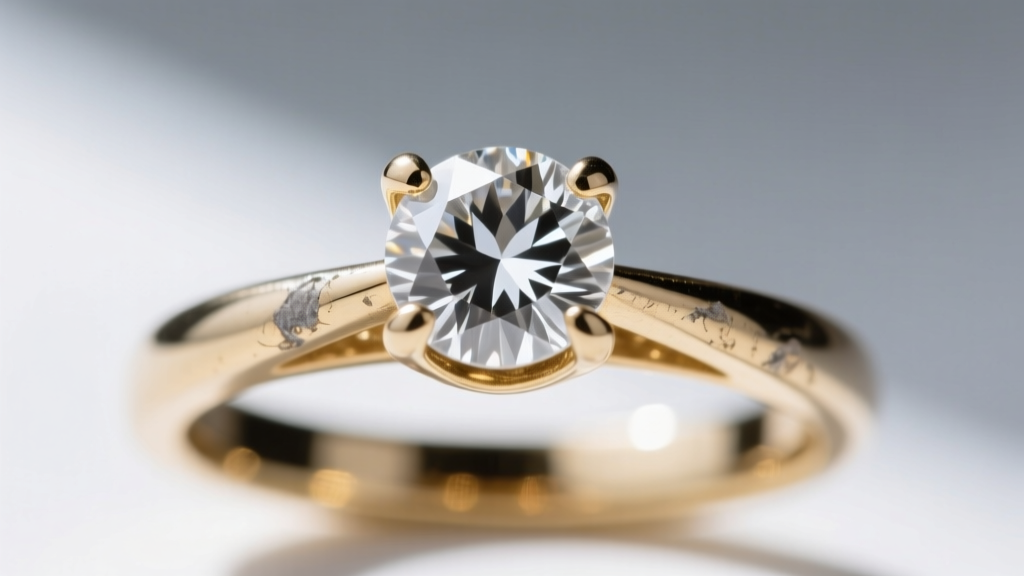
Diagnosing Prong Degradation
If you hear a faint rattling sound when you tap the pendant, or if the stone shifts when you gently push it with a wooden toothpick, your prongs are compromised. The GIA Gem Care Guidelines recommend having prongs checked every six months for daily-wear pendants.
The Retipping Solution
Do not attempt to squeeze the prongs tighter yourself with standard pliers; you risk chipping the girdle of the moissanite. A professional jeweler will perform a 'retip.' This involves using a laser welder to add a tiny bead of matching gold alloy to the tip of the worn prong, then filing and shaping it over the crown of the moissanite. Laser welding is crucial here, as traditional torch soldering requires heating the entire gold setting, which can sometimes cause thermal shock or alter the color of treated moissanite stones.
Expert Insight: Always ensure your jeweler uses a laser welder for prong retipping on moissanite. While moissanite is highly heat resistant, localized laser welding eliminates the risk of thermal stress fractures that can occur when quenching hot gold in water or pickle solutions.
Daily Prevention Framework
Troubleshooting is only necessary when prevention fails. To keep your moissanite necklace gold setting pristine, implement the following daily and weekly protocols:
- The 'Last On, First Off' Rule: Always put your necklace on after applying cosmetics, perfumes, and hairspray. The aerosolized chemicals in hairspray are notorious for creating a cloudy, adhesive-like film on moissanite that traps dirt.
- Weekly Degreasing: Once a week, soak the pendant in a bowl of warm water with three drops of degreasing dish soap (like Dawn) for 10 minutes. Rinse with distilled water—not tap water—to prevent hard water spots from forming as it dries.
- Storage Separation: Store the necklace in a soft, anti-tarnish flannel pouch. Because moissanite is harder than gold, tossing the necklace into a jewelry box where the stone can rub against the gold chain will result in micro-scratches on the gold links over time.
By understanding the specific material interactions between silicon carbide and gold alloys, you can easily diagnose and resolve the most common issues plaguing your jewelry. For more information on precious metal standards and alloy compositions, refer to the Federal Trade Commission (FTC) Gold Jewelry Guidelines. With proper care, your moissanite pendant will maintain its fire and brilliance for a lifetime.


