Troubleshooting Your Cross Sideways Necklace: Fix Flipping & Tangling
Is your cross sideways necklace constantly flipping or tangling? Discover expert troubleshooting tips for bails, chains, and metal stress points.

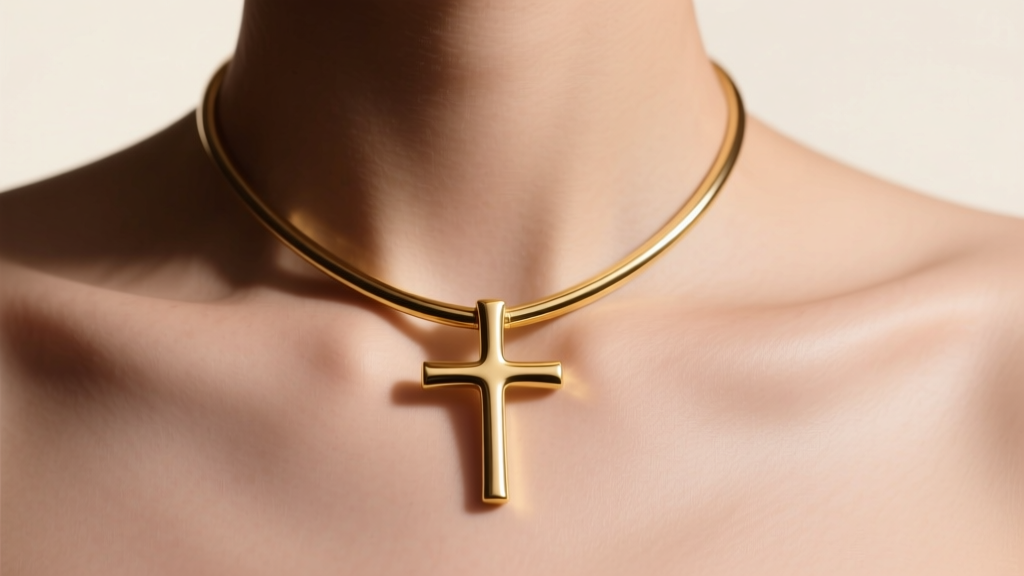
The sideways cross, historically known as the Saint Peter's cross, has evolved from a niche religious symbol into a mainstream staple of modern jewelry layering. However, the horizontal orientation introduces a unique set of mechanical and aesthetic challenges that standard vertical pendants simply do not face. If your cross sideways necklace is constantly flipping upside down, tangling into knots, or suffering from bent arms, you are experiencing the physical limitations of horizontal center-of-gravity design.
In this comprehensive troubleshooting guide, we will dissect the structural failures common to horizontal pendants and provide exact specifications—from bail mechanics to Vickers hardness metal grades—to ensure your necklace lays perfectly flat and remains structurally sound.
The Physics of the Flip: Why Your Pendant Won't Lay Flat
The most frequent complaint regarding a cross sideways necklace is its tendency to tilt or flip entirely upside down. This is not a defect in the chain, but a failure in the bail design relative to the pendant's center of gravity. A traditional vertical cross is top-heavy; gravity naturally pulls the bottom down, keeping it upright. A horizontal cross, however, has a wide, lateral center of gravity. If it is suspended from a single, standard loop bail, the chain will naturally seek the lowest point of friction inside the bail. The moment you move, the chain slides through the loop, pulling the cross off its horizontal axis.
Troubleshooting Bail Types for Horizontal Pendants
To solve the flipping issue, you must eliminate the chain's ability to slide asymmetrically through the bail. Below is a breakdown of bail configurations and their effectiveness for sideways crosses.
| Bail Type | Flipping Risk | Troubleshooting Solution |
|---|---|---|
| Standard Loop Bail | High | Avoid. The chain slides freely, causing immediate tilting. |
| Tube Bail (Soldered) | Low | Ideal. A hollow tube is soldered horizontally across the back, locking the chain's distribution. |
| Hidden / V-Bail | Medium | Requires a stiff chain. The chain can still slide if the V-bail opening is too wide. |
| Direct Drill-Through | None | Best. The chain threads directly through a horizontal channel drilled into the cross itself. |
If your current pendant features a standard loop bail, a jeweler can easily remove it and solder a 1.5mm to 2.0mm horizontal tube bail onto the back of the cross. This single modification will permanently solve the flipping dilemma. For deeper insights into pendant mechanics and structural jewelry design, the GIA Gem Encyclopedia offers extensive resources on how gravity and metal casting intersect in wearable art.
Chain Selection: Preventing Tangles and Slippage

Horizontal pendants act as wide anchors. When paired with the wrong chain, the lateral arms of the cross will catch the links, wrapping the chain around the pendant and creating a frustrating tangle. This is especially prevalent with fluid, snake-like chains.
Chains to Avoid
- Snake Chains: Their smooth, continuous surface creates high friction against the bail, forcing the pendant to twist rather than allowing the chain to glide.
- Herringbone Chains: These lay flat against the skin but lack the structural rigidity to support a wide horizontal pendant. The cross will pull the herringbone into a permanent kink.
- Micro-Cable (Under 0.9mm): Too flimsy; the thin links will easily wrap around the tapered ends of the cross arms.
The Optimal Chain Specifications
For a standard 15mm to 25mm wide sideways cross, the optimal choice is a 1.2mm to 1.5mm Box Chain. Box chains feature interlocking square links that provide enough structural rigidity to resist wrapping around the pendant arms, while remaining smooth enough to glide through a tube bail. Alternatively, a 1.0mm Wheat (Spiga) Chain offers a woven, directional texture that naturally resists tangling while providing a beautiful, textured contrast to the clean lines of the cross.
Proportional Pitfalls: Sizing for Visual Balance
Because human eyes naturally follow horizontal lines, a sideways cross visually widens the area it rests upon. A common styling error is choosing a cross that is too wide for the wearer's frame or pairing it with the wrong chain length, resulting in a cramped, chest-plate effect.
The Width-to-Chain Length Matrix
- Petite Frames (Under 5'4"): Opt for a cross width of 12mm to 18mm. Pair with a 16-inch or 17-inch chain to keep the pendant resting on the upper sternum, avoiding the visual widening of the shoulder line.
- Average Frames (5'4" to 5'7"): A 20mm to 25mm width is ideal. An 18-inch chain allows the horizontal line to break the visual space of the neckline perfectly.
- Tall/Broad Frames (Over 5'7"): You can easily carry a 30mm+ wide cross. Utilize a 20-inch to 22-inch chain to drop the pendant lower, creating a slimming, elongating effect that counters the horizontal width of the pendant.
Material Stress Points: Preventing Arm Breakage
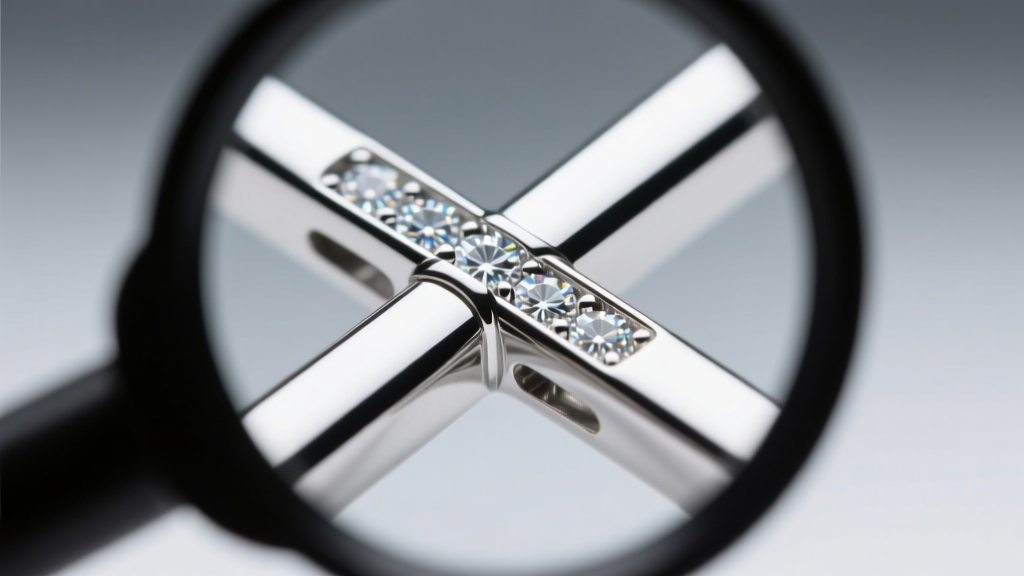
The structural Achilles heel of any cross sideways necklace is the junction where the horizontal arms meet the vertical post. When a horizontal arm snags on a sweater or a seatbelt, the lateral shear force is transferred directly to this 90-degree joint. If the metal is too soft, or the casting is porous, the arm will snap off cleanly.
Understanding Vickers Hardness (HV) in Pendant Metals
When selecting or commissioning a sideways cross, you must consider the Vickers Hardness scale, which measures a metal's resistance to deformation and shear stress. According to manufacturing standards outlined by jewelry supply authorities like Rio Grande, the alloy composition drastically dictates the lifespan of horizontal appendages.
| Metal Grade | Avg. Hardness (HV) | Suitability for Sideways Cross |
|---|---|---|
| 24k Pure Gold | ~25 HV | Poor. Arms will bend or snap under minimal lateral stress. |
| 18k Yellow Gold | ~125 HV | Fair. Acceptable for thick, chunky designs, but thin arms will bend. |
| 14k Gold (Alloyed) | ~135-150 HV | Excellent. The ideal balance of durability, shear strength, and malleability. |
| 925 Sterling Silver | ~60-70 HV | Fair. Requires a thicker casting or rhodium plating for structural rigidity. |
| Platinum 950/Ru | ~135 HV | Superior. Highly durable; will bend rather than snap, allowing for easy repair. |
If you are purchasing a delicate, minimalist sideways cross, insist on 14k gold or platinum. If you are buying sterling silver, ensure the horizontal arms are at least 1.5mm thick to compensate for the metal's lower shear strength. Furthermore, look for pendants that feature a slight fillet (a curved, reinforced corner) at the inner joints rather than a sharp 90-degree angle, which concentrates stress and invites micro-fractures.
Styling Troubleshooting: Neckline Clashes
Finally, the geometry of your clothing must be considered when troubleshooting the visual impact of your necklace. A cross sideways necklace creates a strong horizontal vector. If you wear it over a deep V-neck top, the horizontal line of the cross will clash aggressively with the diagonal lines of the neckline, creating visual dissonance and making the chest area look boxed-in.
The Fix: Reserve your sideways cross for scoop necks, boat necks, crew necks, or open button-down shirts. These necklines either parallel the horizontal geometry of the cross or provide a blank canvas that allows the pendant's unique orientation to stand out without competing with the garment's architecture. By aligning your metal hardness, bail mechanics, and styling geometry, your sideways cross will transition from a frustrating accessory to a flawless, permanent fixture in your jewelry rotation.


