How to Fix and Protect Your Crystal Purple Necklace From Fading
Is your crystal purple necklace fading or breaking? Learn expert troubleshooting tips to restore amethyst, sugilite, and synthetic purple gems.

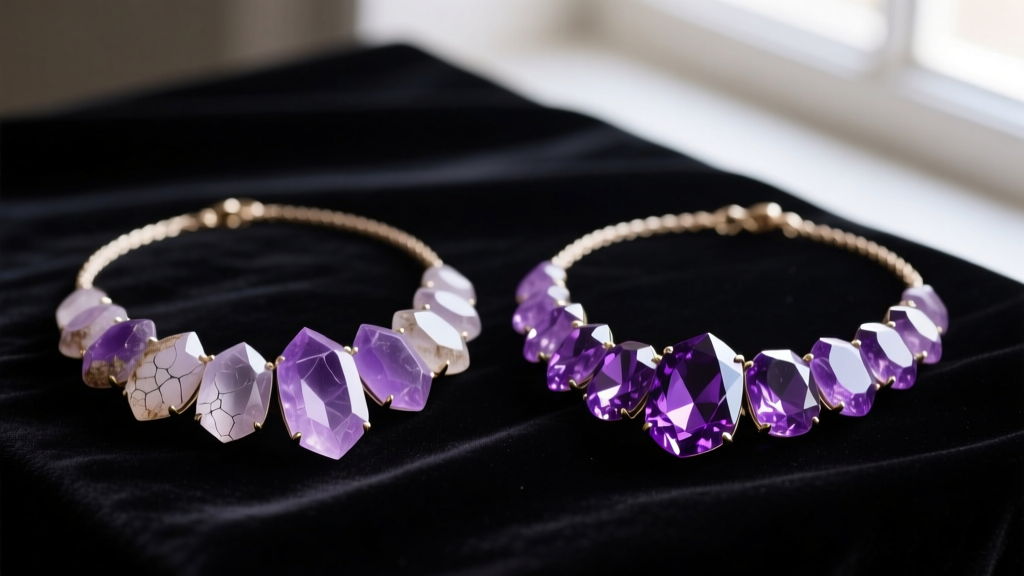
There are few things more heartbreaking for a jewelry collector than pulling a beloved crystal purple necklace out of its storage box, only to find that the once-vibrant violet hues have dulled to a washed-out gray or pale yellow. Whether your piece features natural amethyst, rare sugilite, or a synthetic purple crystal, color loss and structural degradation are common issues that plague poorly maintained gemstones. As we move through 2026, advancements in gemological science have given us a much clearer understanding of why purple crystals degrade and, more importantly, how to reverse or prevent this damage.
In this comprehensive troubleshooting guide, we will diagnose the root causes of fading, stringing failures, and coating degradation in purple crystal necklaces, providing you with actionable, expert-level solutions to restore and protect your jewelry.
The UV Fading Crisis: Why Your Purple Gems Lose Color
The most frequent complaint regarding a natural crystal purple necklace—specifically those featuring amethyst or kunzite—is sudden color fading. This is not a defect in the stone, but a photochemical reaction. According to the Gemological Institute of America (GIA), the purple color in amethyst is caused by iron impurities and natural irradiation within the crystal lattice. When exposed to prolonged ultraviolet (UV) light or extreme heat, these color centers become unstable, causing the stone to bleach.
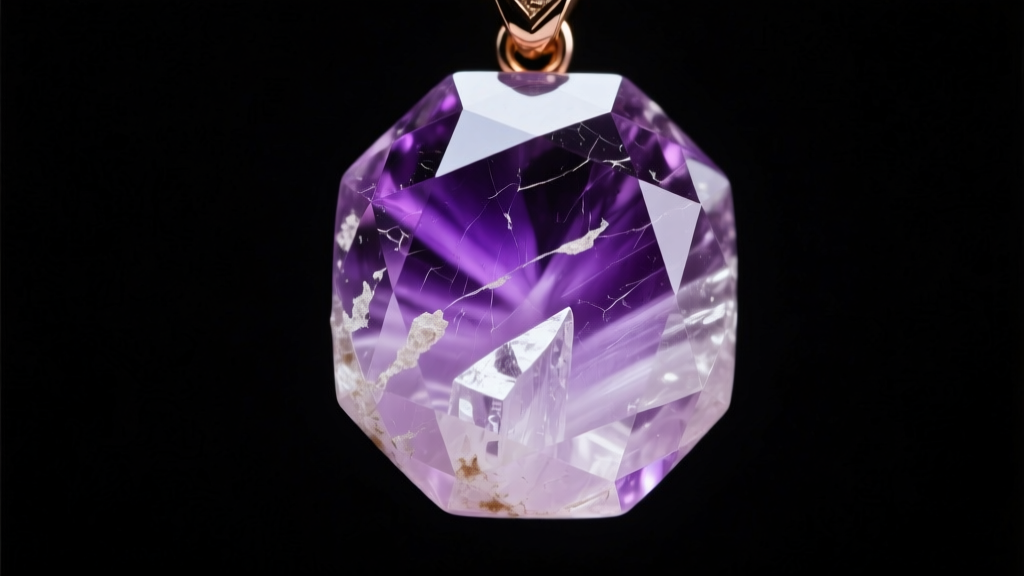
Troubleshooting UV Damage
If your amethyst necklace has already faded, the damage is unfortunately permanent at the consumer level. Restoration requires professional re-irradiation in a controlled laboratory setting, which is often cost-prohibitive for standard jewelry. Therefore, prevention is your only viable strategy.
- Monitor Lux Levels: Do not store your necklace in direct sunlight or near high-UV LED display cases. Keep ambient light exposure below 5,000 lux when the piece is not being worn.
- Upgrade Your Storage: Standard jewelry boxes do not block UV rays. Invest in archival-quality, UV-blocking flannel pouches or storage boxes lined with activated carbon to absorb ambient pollutants that can accelerate surface degradation.
- Identify Heat Sources: Never wear your purple crystal necklace in saunas, hot tubs, or while baking. Sustained temperatures above 300°C (572°F) will permanently alter the crystal structure, turning amethyst yellow or brown (creating citrine).
Troubleshooting Stringing and Bead Breakage
Purple crystals like sugilite (Mohs 6-6.5) and charoite (Mohs 5-6) are relatively heavy and possess varying degrees of brittleness. A common structural failure in a crystal purple necklace is the snapping of the stringing material or the chipping of the bead holes. This usually occurs when jewelers use outdated or inappropriate stringing materials that cannot handle the tensile stress of heavy gemstone beads.
Stringing Material Comparison Chart
To prevent catastrophic breakage, you must match the stringing material to the specific weight and hardness of your purple crystals. Refer to the data table below to troubleshoot your necklace's structural integrity:
| Stringing Material | Tensile Strength | Best For | Failure Mode |
|---|---|---|---|
| Silk Thread (Size F) | ~12 lbs | Lightweight synthetic crystals, small amethyst chips | Stretches and snaps under heavy bead weight; rots if exposed to moisture. |
| Nylon Cord (1mm) | ~25 lbs | Medium-weight tumbled purple agate | Fraying inside sharp bead holes; stiff drape. |
| 7-Strand Beading Wire | ~30 lbs | Standard faceted amethyst beads | Kinks easily; if kinked, structural integrity drops by 60%. |
| 49-Strand Micro Wire (0.018') | ~40+ lbs | Heavy sugilite, charoite, large carved pendants | Requires proper crimping; can saw through soft bead holes over time. |
Expert Fix: If your heavy sugilite necklace keeps breaking at the clasp, it is likely strung on silk or cheap nylon. Take it to a professional bench jeweler to be restrung on 49-strand stainless steel micro-wire. Ensure the jeweler uses French wire (bullion) at the clasp loops to prevent the metal clasp from sawing through the wire over time.
Coating Failures: Synthetic and Aura Quartz Troubleshooting
Not every crystal purple necklace is made of natural, unenhanced stone. The market is flooded with 'Aura Quartz' or coated synthetic crystals that achieve their vibrant, iridescent purple hues through vapor-deposited metallic coatings (often titanium or gold). By 2026, manufacturing standards for these coatings have improved, but older or cheaper pieces are highly susceptible to peeling and scratching.
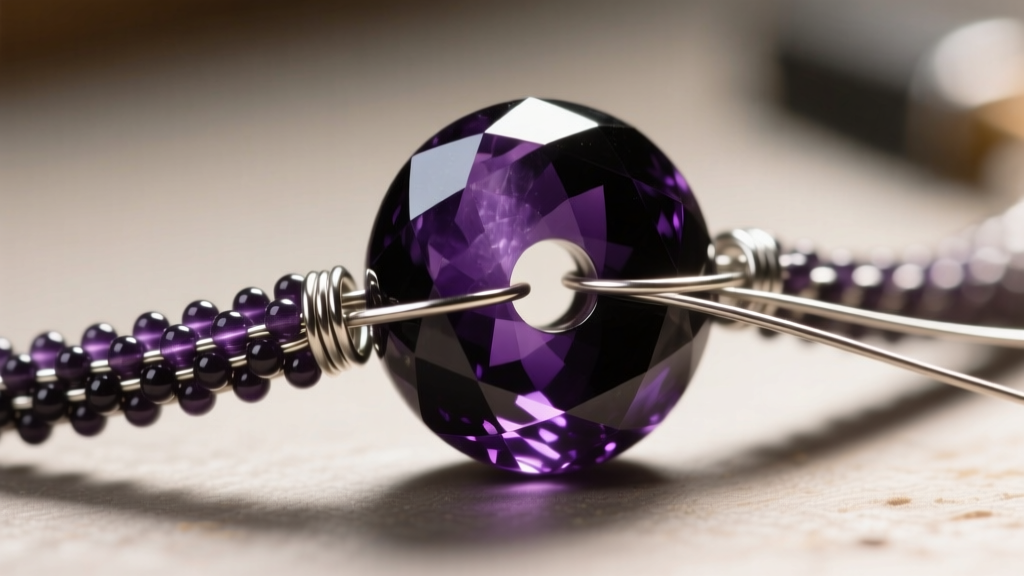
Diagnosing Coating Degradation
If your purple crystal necklace looks like it is 'flaking' or losing its iridescent shine, you are dealing with a coating failure. This is often mistakenly diagnosed as the stone 'drying out' or 'leeching color.'
- The Acetone Test: Dab a cotton swab in pure acetone (nail polish remover) and gently rub an inconspicuous bead. If purple or metallic residue comes off, your necklace is coated. (Note: Never do this on porous stones like charoite, as it will stain the stone).
- The Fix: Once a vapor coating peels, it cannot be repaired at home. You must either accept the patchy aesthetic or have a professional lapidary tumble the beads to completely remove the remaining coating, revealing the clear or milky quartz beneath.
- Prevention: Never clean coated purple crystals with ultrasonic cleaners, steamers, or harsh chemical dips. The high-frequency vibrations will shatter the microscopic metallic bonds, causing the purple color to flake off in sheets.
Silver Tarnish and Chemical Reactions
Many natural purple crystals, particularly high-grade Zambian amethyst, are set in sterling silver to complement their cool undertones. However, sulfur compounds in the air, combined with the natural oils from your skin, cause sterling silver to tarnish rapidly. When heavy black tarnish builds up around the prongs or bead caps of a crystal purple necklace, it creates an optical illusion that makes the purple crystal itself look dark, muddy, and lifeless.
Safe Cleaning Protocols
According to mineralogical data from Mindat.org, amethyst has a Mohs hardness of 7, making it relatively durable, but it often contains liquid inclusions and micro-fractures. This makes standard silver dip cleaners incredibly dangerous, as the chemicals can seep into the fractures and permanently cloud the stone from the inside.
- Isolate the Metal: Use a Q-tip dipped in a specialized, non-abrasive silver polishing paste to carefully clean only the metal settings. Avoid touching the crystal.
- Wash the Crystal: Use a mild, phosphate-free dish soap and lukewarm water. Gently scrub the crystal with a baby-soft toothbrush to remove skin oils that block light refraction.
- Dry Thoroughly: Use a microfiber cloth. Leaving water spots on faceted purple crystals will create a hazy film that mimics color fading.
Final Thoughts on Gemstone Longevity
Maintaining a crystal purple necklace requires moving beyond basic jewelry care and understanding the specific mineralogical properties of your stones. Whether you are protecting natural amethyst from UV degradation, restringing heavy sugilite beads on high-tensile wire, or carefully handling the delicate vapor coatings of aura quartz, targeted troubleshooting is the key to preserving your collection. By implementing these expert-level storage, stringing, and cleaning protocols, you can ensure your purple crystals remain as vibrant and structurally sound as the day they were mined.


